
In my experience working on rice cultivation in a region with a humid subtropical climate, pests and diseases such as stem borers, planthoppers, and rice blast have consistently threatened crop yields, often leading to reductions of 20% to 60%. To address this, we explored the use of agricultural drones for pest control during the rice heading stage. This analysis details our findings from a 2019 trial, comparing the application of agricultural drones with conventional sprayers. The results highlight significant advantages in efficiency, cost savings, and environmental impact, underscoring the transformative potential of agricultural drones in modern farming.
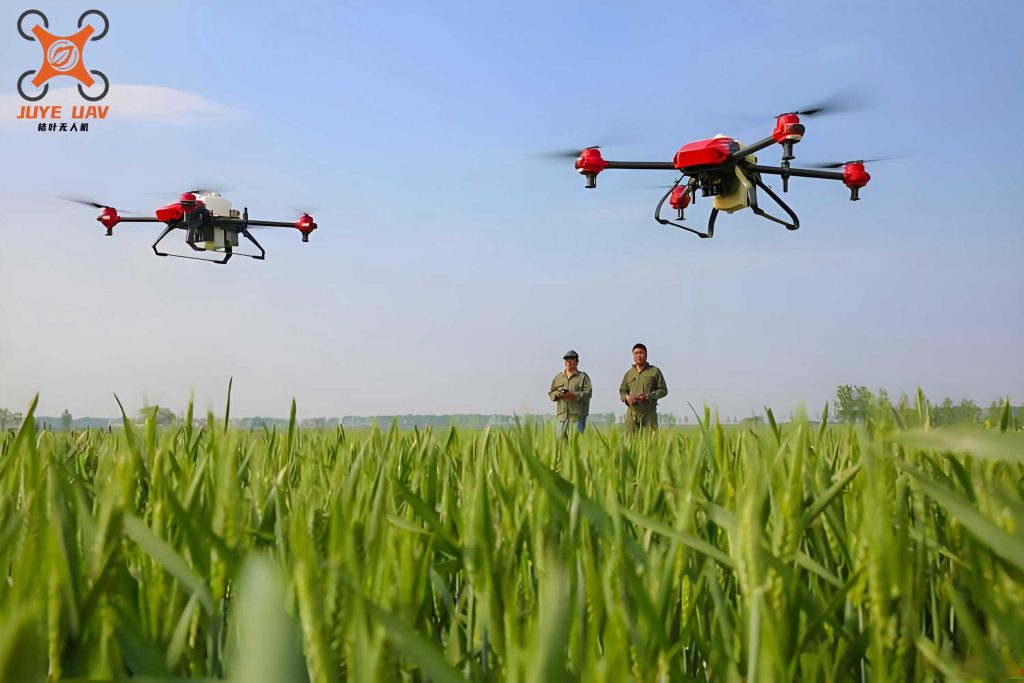
The region where we conducted this study is characterized by low mountain hills and a climate conducive to rice growth, with average annual temperatures around 17.7°C and rainfall of 1,162 mm. Rice is a staple crop, typically planted in March and harvested in August. However, climatic challenges like unstable spring temperatures, prolonged rainy periods in May and June, and summer droughts exacerbate pest outbreaks. Traditional control methods rely heavily on manual spraying with electric sprayers, which are labor-intensive, inefficient, and prone to uneven pesticide distribution. In contrast, the adoption of agricultural drones offers a promising alternative. An agricultural drone is an unmanned aerial vehicle equipped with spraying systems, designed for precision agriculture. Its ability to cover large areas quickly while minimizing human effort makes it ideal for integrated pest management. Our trial aimed to quantify the benefits of using an agricultural drone compared to conventional methods, focusing on pesticide reduction, cost efficiency, and crop yield improvements.
We conducted the trial across multiple towns during June and July 2019, a period marked by high humidity and frequent rainfall that favored pest proliferation. Key pests included stem borers, leaf rollers, and rice caseworms, with disease pressures from rice blast and sheath blight. We selected rice varieties such as C Liangyou Huazhan and Shen Liangyou 5814, grown under standard local practices. The experimental setup involved two treatments: one using an agricultural drone and the other using farmers’ conventional electric sprayers (3WBD-20 type). For the agricultural drone treatment, we employed models like the P20 and TY-D10, each with a 10 L tank capacity. These agricultural drones were operated at a height of 1.5 meters above the crop, with spraying parameters optimized for uniform coverage. We used water-sensitive papers to assess droplet distribution on rice leaves, ensuring consistent application. Pesticides included compounds like emamectin benzoate, chlorantraniliprole, thiamethoxam, and kasugamycin, formulated at precise concentrations. In the conventional treatment, farmers used their sprayers with higher pesticide volumes diluted in more water, as per their usual practices. Data were collected on pesticide usage, water consumption, labor time, pest control efficacy, and final yields. We applied statistical methods to analyze differences, using formulas to calculate savings rates. For example, the pesticide reduction rate was derived as:
$$ \text{Pesticide Reduction Rate} = \frac{\text{Pesticide}_{\text{conventional}} – \text{Pesticide}_{\text{drone}}}{\text{Pesticide}_{\text{conventional}}} \times 100\% $$
Similarly, water and labor savings were computed to provide a comprehensive comparison. Throughout the process, we emphasized the role of the agricultural drone in enabling precise, data-driven applications.
The results demonstrated clear superiority of the agricultural drone over conventional methods. In terms of input savings, the agricultural drone consistently used less pesticide, water, and labor. For instance, across all surveyed areas, the average pesticide application per 667 m² was 0.12 L for the agricultural drone versus 0.246 L for conventional sprayers. This translates to a pesticide reduction of 51.2%, calculated as:
$$ \text{Pesticide Reduction} = \frac{0.246 – 0.12}{0.246} \times 100\% = 51.2\% $$
Water usage was drastically lower with the agricultural drone, averaging 1 L per 667 m² compared to 45.4 L for conventional methods, yielding a water saving rate of 97.8%. Labor time was reduced from 54 minutes to just 3 minutes per 667 m², representing a 94.4% time saving. The cost implications are summarized in Table 1, which breaks down the economic benefits per 667 m².
| Parameter | Agricultural Drone | Conventional Sprayer | Savings | Savings Rate |
|---|---|---|---|---|
| Pesticide Used (L) | 0.12 | 0.246 | 0.126 L | 51.2% |
| Pesticide Cost (USD) | 2.0 | 4.3 | 2.3 USD | 53.5% |
| Water Used (L) | 1 | 45.4 | 44.4 L | 97.8% |
| Labor Time (min) | 3 | 54 | 51 min | 94.4% |
| Labor Cost (USD) | 0.75 | 13.5 | 12.75 USD | 94.4% |
Note: Costs are approximated based on local prices; 1 USD ≈ 6.5 CNY for conversion. The agricultural drone’s efficiency stems from its ability to apply pesticides uniformly at low volumes, reducing waste and environmental runoff.
Regarding pest control efficacy, the agricultural drone achieved higher reduction rates for key pests. For leaf rollers, the average decrease in pest population after spraying was 91% with the agricultural drone, compared to 83% with conventional methods. For rice caseworms, the figures were 86% versus 75%, respectively. The control effect, measured as the percentage reduction in pest damage, was consistently above 90% for the agricultural drone, outperforming conventional sprayers by over 5 percentage points. This can be expressed using the formula for control effect:
$$ \text{Control Effect} = \left(1 – \frac{\text{Pest Count}_{\text{after}}}{\text{Pest Count}_{\text{before}}}\right) \times 100\% $$
In our trials, the agricultural drone’s control effect for leaf rollers averaged 95%, while conventional methods reached only 87%. The enhanced performance is attributed to the agricultural drone’s precise spraying, which ensures better canopy penetration and pesticide adherence. Table 2 illustrates the pest dynamics across different locations, highlighting the agricultural drone’s consistent advantage.
| Location | Treatment | Leaf Roller Reduction (%) | Rice Caseworm Reduction (%) | Control Effect (%) |
|---|---|---|---|---|
| Area A | Agricultural Drone | 93 | 88 | 96 |
| Area A | Conventional Sprayer | 84 | 78 | 87 |
| Area B | Agricultural Drone | 91 | 86 | 95 |
| Area B | Conventional Sprayer | 83 | 80 | 86 |
| Area C | Agricultural Drone | 89 | 85 | 94 |
| Area C | Conventional Sprayer | 82 | 74 | 84 |
The yield outcomes further validated the benefits of using an agricultural drone. Rice plots treated with the agricultural drone produced an average yield of 567 kg per 667 m², compared to 534 kg for conventional methods and 452 kg for untreated controls. This represents a 6% yield increase over conventional spraying and a 25% increase over no treatment. The yield gain can be modeled as:
$$ \text{Yield Increase} = \frac{\text{Yield}_{\text{drone}} – \text{Yield}_{\text{conventional}}}{\text{Yield}_{\text{conventional}}} \times 100\% $$
For our data, this calculates to a 6.2% increase. The yield components, such as effective panicles per unit area, grains per panicle, and grain weight, were all superior in agricultural drone-treated plots. Specifically, the agricultural drone plots had an average of 131,000 effective panicles per 667 m², 196 grains per panicle, a seed-setting rate of 85%, and a 1000-grain weight of 26 g. In contrast, conventional plots had 129,800 panicles, 200 grains per panicle, an 83% seed-setting rate, and a 24.8 g 1000-grain weight. The overall economic benefit, including savings on pesticides and labor, plus increased yield, amounted to approximately 100 USD per 667 m². This holistic advantage underscores why the agricultural drone is a game-changer in rice production.
Beyond direct metrics, the agricultural drone offers ancillary benefits. For example, it reduces human exposure to pesticides, minimizes soil compaction from foot traffic, and decreases packaging waste from pesticide containers. The agricultural drone’s speed allows for timely interventions during pest outbreaks, which is critical in humid conditions where pests multiply rapidly. Moreover, the precision of the agricultural drone aligns with green pest management principles, supporting sustainable agriculture by curbing chemical runoff into water bodies. We observed that farmers, especially older individuals, welcomed the agricultural drone for its labor-saving nature, enhancing social acceptance of technology in farming communities.
In discussion, these findings align with global trends promoting precision agriculture. The agricultural drone’s efficiency stems from advanced features like GPS guidance, variable rate technology, and real-time monitoring. However, challenges remain, such as initial investment costs, regulatory hurdles, and the need for operator training. Future advancements could integrate sensors for disease detection, enabling the agricultural drone to apply pesticides only where needed, further reducing inputs. Our trial confirms that the agricultural drone is not just a tool for spraying but a component of integrated pest management. By combining resistant varieties, optimal fertilization, and timely drone applications, farmers can achieve higher productivity with lower environmental impact. The formula for overall cost-benefit analysis can be extended to include externalities like ecosystem health, where the agricultural drone’s role becomes even more significant.
To conclude, our experience demonstrates that the agricultural drone is highly effective in rice pest control, offering substantial reductions in pesticide use, water consumption, and labor costs while improving pest control and yields. The agricultural drone represents a leap toward sustainable farming, and its adoption should be encouraged through policy support and education. As we move forward, continuous innovation in agricultural drone technology will further enhance its capabilities, making it indispensable for food security and environmental stewardship. In summary, the agricultural drone is more than a machine; it is a catalyst for transforming agriculture into a smarter, greener enterprise.