
The transformation of China’s agricultural sector from labor-intensive, traditional practices to a technology-driven, precision-oriented paradigm is one of the most significant socioeconomic shifts of our time. At the heart of this modernization lies the urgent need to bridge the substantial gap in aerial application capabilities compared to developed nations. The rapid advancement and adoption of agricultural drone technology have emerged as a critical catalyst for this transition, offering a leapfrog solution for tasks ranging from spraying to remote sensing. This analysis delves into the innovation landscape of this vital sector by examining the patent filing trends within China, providing a quantitative lens through which to understand the technological priorities, key players, and future trajectory of agricultural drone development.
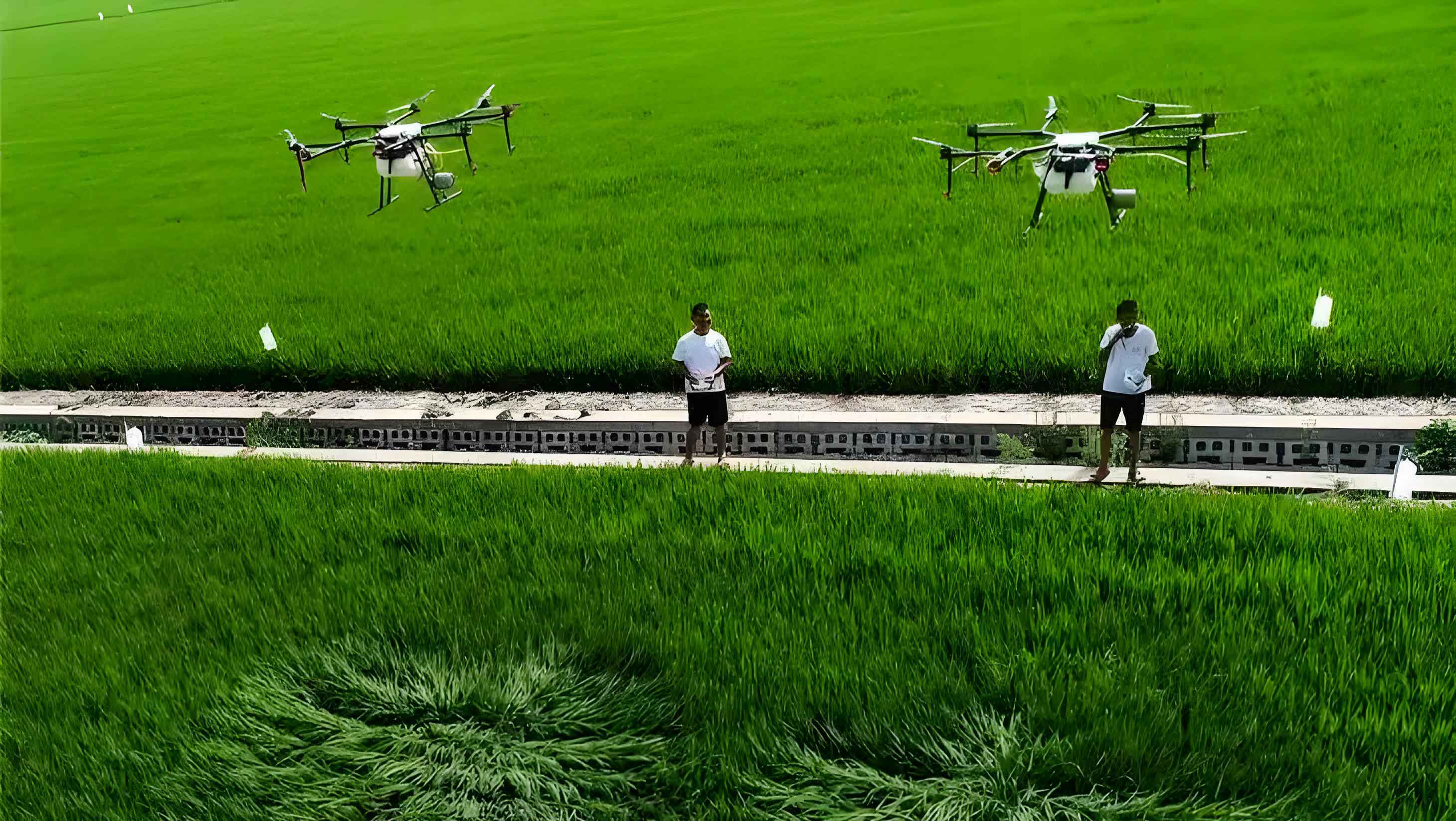
My methodological approach centers on patentometrics, analyzing data extracted from the Chinese Patent Retrieval System Abstract Database (CPRSABS). By scrutinizing patent documents related to agricultural drones, I map the evolution of domestic innovation through metrics such as application volume trends, technological domain distribution, applicant composition, and the activity of major patentees. This data-driven perspective offers an unparalleled view into the research and development (R&D) dynamics shaping China’s agricultural drone industry.
Quantifying the Boom: Patent Application Trends and Growth Dynamics
The genesis of dedicated R&D for agricultural drones in China can be traced back to around 2009. The initial period, from 2009 to 2011, was characterized by minimal activity, with annual patent filings remaining below six. A pivotal moment occurred in March 2012, which served as a definitive inflection point for the industry. A high-profile demonstration of an unmanned helicopter system for high-efficiency pesticide application captured significant national attention, effectively igniting commercial and technological interest. The subsequent surge in patent activity is stark, illustrating a sector transitioning from experimental curiosity to fervent innovation.
The data reveals an explosive growth pattern post-2012. By 2014, annual patent applications for agricultural drones had skyrocketed to 199, representing a staggering compound annual growth rate (CAGR). This growth can be modeled to understand the pace of innovation:
$$CAGR(t_0, t_n) = \left( \frac{V(t_n)}{V(t_0)} \right)^{\frac{1}{t_n – t_0}} – 1$$
Where \( V(t_0) \) is the patent volume at the start period (e.g., 2011) and \( V(t_n) \) is the volume at the end period (e.g., 2014). Applying this to the observed leap demonstrates an innovation CAGR exceeding 200% during that phase, signaling the onset of a highly active period of technological development and intellectual property (IP) protection.
| Period | Characteristic | Patent Type Distribution (Cumulative Sample) | Implied Innovation Nature |
|---|---|---|---|
| 2009-2011 | Nascent Stage | Very Low Volume | Foundational R&D |
| 2012-2015+ | Exponential Growth | Invention: ~46.5%, Utility Model: ~48.1%, Design: ~5.4% | High technical content with rapid practical implementation |
The composition of patent types is particularly telling. In a representative sample, invention patents (which undergo substantive examination for novelty and inventive step) constituted approximately 46.5% of the filings. Utility model patents (protecting practical, functional improvements with a shorter term) accounted for about 48.1%, with design patents making up the remainder. The near-equal split between invention and utility model patents indicates a robust ecosystem: substantial pioneering research is being conducted (reflected in invention patents), while there is simultaneous, intense focus on incremental improvements and practical engineering solutions for immediate market deployment (reflected in utility model patents). This dual-track approach accelerates the maturation of agricultural drone technology.
The Architects of Innovation: Applicant Composition and Strategic Posture
Analyzing the entities behind these patents unveils the driving forces of China’s agricultural drone revolution. The applicant profile is dominated by commercial enterprises, which account for roughly 63% of the filings. This overwhelming majority underscores a market-centric innovation model where R&D is closely aligned with commercial application, cost reduction, and scalability. The development of an agricultural drone is not merely an academic exercise but is fundamentally geared toward solving pressing agrarian challenges like labor shortage and chemical overuse.
Research institutions, including universities and specialized academies, form the second-largest bloc, comprising about 20% of applicants. They serve as crucial engines for basic research, talent cultivation, and exploring more advanced, long-horizon technologies. Individual inventors and collaborative filings make up the rest. The strategic posture can be summarized by the following relationship, where the innovation output (I) is a function of market pull (M) and research push (R):
$$I_{agdrone} = f(M_{commercial}, R_{academic}) \approx 0.63M + 0.20R + \epsilon$$
Here, the coefficients 0.63 and 0.20 represent the approximate proportional contribution from enterprises and research institutions, respectively, and \( \epsilon \) encompasses other minor contributors. This structure ensures a continuous feedback loop between theoretical advancement and practical field testing.
Deconstructing the Technology: Core Domains of Patent Focus
The patent landscape is not homogeneous; it reveals clear priorities in technological development. By categorizing patents into core functional domains, we can identify where innovators are concentrating their efforts. The distribution highlights the primary technical challenges and opportunities perceived within the agricultural drone sector.
| Technological Domain | Approximate Share | Key Focus Areas |
|---|---|---|
| Flight Platform & Airframe | 36% | Durability, payload capacity, aerodynamic efficiency for low-altitude flight, VTOL capabilities, modular designs. |
| Spraying & Application System | 31% | Precision nozzle technology, flow control, tank design, anti-clogging systems, integration of sensing for variable-rate application. |
| Remote Sensing & Monitoring | 12% | Multispectral/ hyperspectral camera integration, real-time data transmission, onboard processing algorithms for NDVI, pest/disease detection. |
| Control & Navigation | 7% | Autonomous path planning (AB Line, terrain following), swarm coordination, obstacle avoidance, GNSS/RTK precision enhancement. |
| Seeding & Fertilization Systems | 3% | Precise seed placement mechanisms, granular fertilizer spreaders, depth control. |
| Other & Ancillary Technologies | 11% | Charging stations, safety features, data management platforms, specialized attachments (e.g., for pollination). |
The dominance of flight platform and spraying system patents (together accounting for 67%) aligns perfectly with the primary use case of agricultural drones in China: plant protection. The core value proposition has been to replace backpack sprayers and manned aircraft for crop-dusting. Innovations here aim to enhance reliability, reduce operating costs, and improve chemical utilization efficiency. The significant focus on remote sensing indicates a growing second wave of application, moving from pure application tools to data-gathering “field sentinels” that enable precision agriculture decisions. The relatively lower share for seeding and fertilization suggests these are emerging or niche applications within the current patent landscape.
The Vanguard: Profile of Leading Patent Applicants
A closer look at the most prolific applicants provides a microcosm of the industry’s structure. The top ranks are exclusively occupied by Chinese entities, a mix of specialized agricultural drone companies and agri-tech research universities. Notably absent in the early data are major global consumer drone giants, indicating a sector initially cultivated by specialized, vertically-focused players.
These leading firms and institutes have built portfolios centered on integrated systems. Their patents cover not just the airframe but the entire workflow: mission planning software, ground control stations, proprietary spraying mechanisms, and data analytics interfaces. This holistic approach to IP strategy suggests an intention to control key aspects of the technology stack and establish de facto standards. The competitive intensity can be modeled by a concentration ratio, where the innovation market share (S) of the top N applicants is calculated. A high ratio indicates a less fragmented, more strategically controlled early market.
$$CR_N = \sum_{i=1}^{N} S_i$$
Where \( S_i \) is the patent share of the i-th largest applicant. The subsequent entry of broad-based technology leaders into the agricultural drone fray, marked by product launches in the mid-2010s, introduced a new dynamic. These entrants brought vast resources in mass manufacturing, advanced flight control systems, and global supply chains, significantly raising the competitive bar and shifting the innovation battleground towards AI, autonomy, and ecosystem integration.
| Applicant Type | Early Specialists (Pre-2015) | Late-Entry Tech Giants (Post-2015) |
|---|---|---|
| Core Advantage | Deep domain knowledge in agriculture, direct field validation, customized solutions for specific crops/terrains. | Superior core drone technology (flight control, gimbals, batteries), economies of scale, robust software platforms, global distribution. |
| Patent Focus | Application-specific hardware (spray systems, durable airframes for harsh conditions), integration with agri-chemicals. | Intelligent operation systems, swarm intelligence, AI-powered analytics of field data, automated mission workflows. |
| Strategic Goal | To establish dominance in the professional agricultural service provider market. | To platformize agriculture, making the drone a node in a larger smart farming data ecosystem. |
Global Context and Evolving Technological Frontiers
While China’s domestic patent activity is vigorous, positioning its agricultural drone sector requires a global view. Comparative analysis shows that pioneering work in precision agriculture and UAV-based remote sensing originated in countries like the United States, Japan, and Israel. However, China’s patent surge reflects a unique model of rapid industrialization and scaling tailored to its smallholder farm structure. The global innovation landscape for agricultural drones is increasingly defined by convergence:
- Autonomy and AI: The next frontier lies in full autonomy, moving beyond pre-programmed routes to real-time, adaptive decision-making. Patents are increasingly filed for systems where the agricultural drone uses onboard machine vision to identify individual weeds and apply herbicide micro-doses, or to diagnose nutrient deficiencies and adjust fertilizer blends mid-flight.
- Swarm Technology: Coordinated fleets of agricultural drones, operating as a unified system, promise to dramatically scale operational coverage. Patent activity covers communication protocols, collision avoidance within swarms, and distributed task allocation algorithms.
- Data Fusion and Digital Twins: The role of the agricultural drone is expanding from actor to sensor. The integration of drone-collected data with satellite imagery, IoT soil sensors, and weather models to create dynamic “digital twins” of farms is a burgeoning area of IP creation. The value shifts from the physical application to the actionable intelligence generated.
Synthesis and Future Trajectory
The analysis of China’s patent landscape leads to several conclusive insights and forecasts. First, the innovation cycle for agricultural drones has progressed from foundational platform development to sophisticated subsystem optimization and is now entering the era of cognitive, data-centric systems. The high proportion of invention patents confirms the growing complexity and novelty of these advancements.
Second, the market-driven innovation model, led by enterprises, has been effective in solving immediate, large-scale problems like crop protection. This has positioned China as the world’s largest market for and manufacturer of agricultural drones. However, sustained leadership will require deeper forays into the next-generation technologies currently being patented by both agile startups and tech giants.
Third, future patent trends will likely see a relative decrease in mechanical platform patents and a sharp increase in software, algorithm, and system integration patents. The formula for success is evolving from hardware specifications to intelligence and data fidelity:
$$ \text{Future Value}_{AgDrone} = \alpha(\text{Hardware Reliability}) + \beta(\text{Operational Autonomy}) + \gamma(\text{Data Insights}) $$
where the coefficients \( \beta \) and \( \gamma \) are growing rapidly relative to \( \alpha \).
Finally, the regulatory environment will become an increasingly important factor shaping patent strategy. Innovations in geo-fencing, remote identification, spray drift mitigation, and certified safety systems will see rising IP activity as governments worldwide establish frameworks for safe, widespread agricultural drone use.
In conclusion, the story told by China’s patent filings is one of explosive, pragmatic, and market-responsive innovation in agricultural drone technology. From a standing start, the nation has leveraged its manufacturing prowess and acute agricultural needs to foster a world-leading industry. The patent maps chart a course from mechanical replicators of manned aircraft to intelligent, interconnected field robots that will form the central nervous system of the digital farm. The continued analysis of this IP corpus will remain an essential tool for understanding the pace and direction of the ongoing revolution in precision agriculture.