
The rapid proliferation of civilian Unmanned Aerial Vehicles (UAVs) represents a transformative shift in aviation, unlocking unprecedented applications from precision agriculture and infrastructure inspection to logistics and emergency response. However, this exponential growth introduces profound challenges for traditional Air Traffic Management (ATM) systems, which were designed for manned, cooperative aircraft operating under established procedural and technological frameworks. The integration of a vast, heterogeneous population of civilian UAVs, particularly small and very small UAVs operating at low altitudes, necessitates a fundamental re-evaluation of regulatory and operational paradigms. This article, drawing from international best practices and conceptual frameworks, explores a comprehensive, risk-based Air Traffic Management model for civilian UAVs, built upon the core principle of multi-attribute classification.
The inherent diversity of civilian UAVs is the primary source of complexity. Unlike manned aviation with its standardized certification paths, the civilian UAV ecosystem encompasses everything from sub-250-gram recreational drones to large, aircraft-like systems performing long-endurance missions. This variability in mass, performance, operational intent, and technological capability directly correlates with the potential risk posed to other airspace users, people on the ground, and critical infrastructure. A one-size-fits-all regulatory approach is therefore infeasible and inefficient. The cornerstone of a sustainable integration strategy is a nuanced classification system that assesses risk based on multiple attributes, enabling proportionate and scalable management measures.
Multi-Attribute Classification of Civilian UAVs
Effective management begins with categorization. International civil aviation authorities have converged on evaluating civilian UAVs through several key attribute dimensions, which collectively determine the associated risk profile.
1. Classification by Control Paradigm: This fundamental distinction, highlighted by the International Civil Aviation Organization (ICAO), separates systems based on the level of human intervention in the flight control loop.
- Remotely Piloted Aircraft Systems (RPAS): A human pilot controls the aircraft from a remote station, remaining in the decision-making loop. The system comprises the aircraft, the control link, and the ground control station.
- Autonomous Aircraft Systems: The aircraft operates based on pre-programmed instructions or real-time AI-driven decision-making without direct human pilot intervention during flight. This category presents distinct certification and safety assurance challenges.
The operational concept for integrating civilian UAVs into non-segregated airspace initially focuses on RPAS, where a licensed remote pilot assumes responsibility akin to a pilot-in-command.
2. Classification by Aircraft Performance: Physical and performance parameters are strong initial indicators of kinetic energy and operational scope, which correlate with potential harm. Weight is the most commonly used primary metric. Table 1 summarizes classification thresholds from different regions.
| Category | Typical Weight Threshold | Common Operational Limitations (Illustrative) | Regulatory Approach (Example) |
|---|---|---|---|
| Micro / Nano | < 250 g (e.g., USA, Canada) | VLOS, away from crowds, altitude limits. | Open/Exempted (may require registration). |
| Small | 250 g – 25 kg (e.g., EU, USA under Part 107) | VLOS/BVLOS with mitigation, altitude ceiling (e.g., 400 ft AGL), distance from airports. | Specific/Simplified Certification (Operator & Pilot rules). |
| Large | > 25 kg | Operational approval required, often aiming for IFR integration. | Certified (akin to manned aircraft – Type/Airworthiness Certificate). |
Other performance attributes like maximum speed, endurance, and service ceiling further refine the classification. A risk score $R_{performance}$ can be conceptualized as a function of these factors:
$$ R_{performance} = f(M_{TOW}, V_{max}, H_{max}, E) $$
where $M_{TOW}$ is maximum take-off weight, $V_{max}$ is maximum speed, $H_{max}$ is maximum operational altitude, and $E$ is endurance.
3. Classification by Mission and Operational Context: The purpose and environment of the operation critically influence risk. Key attributes include:
- Mission Type: Recreational/Hobby vs. Commercial vs. Public Operations (e.g., police, firefighting). Commercial and public operations typically imply higher scrutiny.
- Operational Environment: Population density (over sparse, rural, suburban, or urban areas), proximity to airports or sensitive sites.
- Operational Volume: Visual Line of Sight (VLOS) vs. Beyond Visual Line of Sight (BVLOS), day vs. night operations.
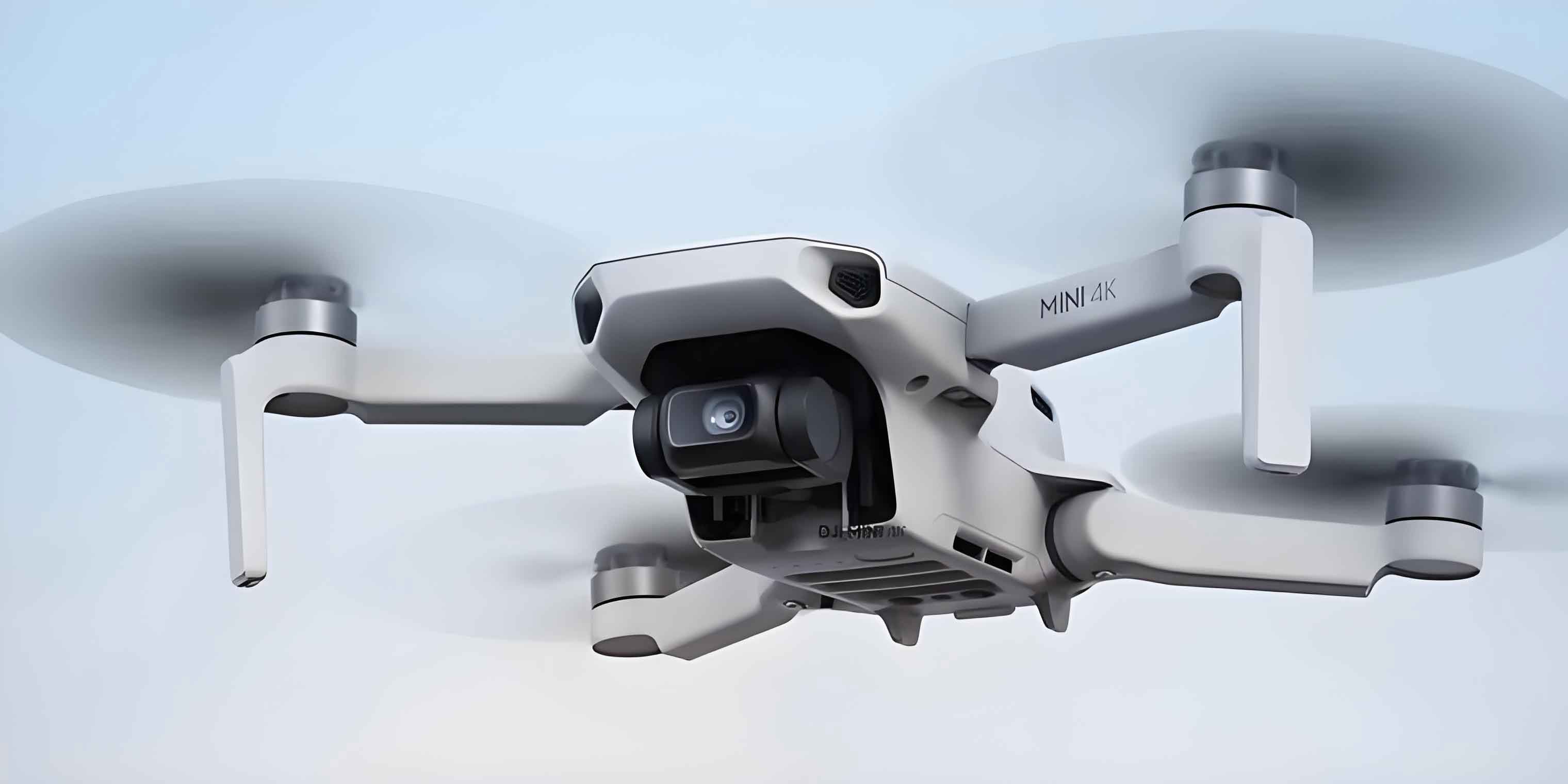
The convergence of these attributes defines a specific operational risk profile. For instance, a 2 kg civilian UAV flying VLOS over a remote farm field for crop surveying presents a fundamentally different risk than a 20 kg civilian UAV conducting BVLOS infrastructure inspection near a busy airport approach path or over a densely populated city center.
A Risk-Based, Tiered Management Framework
Building upon multi-attribute classification, a tiered regulatory framework aligns the intensity of oversight with the identified risk. The European Union Aviation Safety Agency (EASA) model provides a clear and influential structure, defining three distinct categories: ‘Open’, ‘Specific’, and ‘Certified’.
| Tier | Risk Level | Key Attribute Thresholds (Example) | Management & Oversight Principle | Typical Requirements |
|---|---|---|---|---|
| Open | Low | Low mass (<25kg), VLOS, safe distance from people, max altitude (e.g., 120m), away from sensitive areas. | Pre-defined, minimal oversight. Compliance with standard set of rules. No prior authorization required. | Operator registration (may be for pilot), basic pilot competency (e.g., online test), product safety standards for UAV. |
| Specific (or Special) | Medium | Operations outside ‘Open’ limits. e.g., BVLOS, flight over assemblies of people, heavier UAVs in controlled airspace. | Risk assessment required prior to operation. Operational authorization granted by authority (or delegated entity) based on mitigated risk. | Detailed operational risk assessment (SORA methodology), specific technical & operational mitigations, higher pilot training/rating, possibly C2 link reliability standards. |
| Certified | High | Risk level equivalent to manned aviation. e.g., Large UAVs carrying passengers or dangerous goods, operations in high-density airspace. | Full certification of aircraft, systems, operators, and pilots, similar to manned aviation regulations. | Type Certification, Airworthiness Certificate, Approved Maintenance, Licensed Remote Pilots, ATM/ATC integration compliant with applicable standards. |
The transition between tiers is not solely based on weight but on a holistic risk assessment. A formal risk assessment for a ‘Specific’ category operation, such as using the JARUS SORA (Specific Operations Risk Assessment) methodology, evaluates:
- Ground Risk: Likelihood and severity of impact on people and property on the ground. This is a function of population density, UAV characteristics (e.g., kinetic energy), and operational mitigations (e.g., parachutes, geofencing).
- Air Risk: Likelihood and severity of a mid-air collision with manned aircraft. This depends on airspace class, traffic density, detect-and-avoid capability, and ATC procedural integration.
A simplified conceptual risk score $R_{op}$ for an operation can be modeled as a weighted sum:
$$ R_{op} = w_g \cdot R_g + w_a \cdot R_a $$
where $R_g$ is the assessed ground risk, $R_a$ is the assessed air risk, and $w_g$, $w_a$ are weighting factors reflecting regulatory priorities (e.g., emphasis on ground safety for small UAVs). The outcome of this assessment determines if the operation falls into the ‘Specific’ category and what specific mitigation measures (M1…Mn) are required to bring the residual risk to an acceptable level for operational authorization.
Strategic Management: Airspace Organization and Geofencing
At the strategic level, the primary ATM task is the organization of airspace to accommodate civilian UAV operations safely and efficiently. The core concept is the delineation between segregated and non-segregated (integrated) operations.
1. Segregated Airspace for Civilian UAVs: This involves dedicating specific blocks of airspace, typically at lower altitudes (e.g., below 400-500 ft AGL in rural areas), exclusively for civilian UAV operations, separating them from manned traffic. This is a pragmatic starting point for high-density or complex UAV operations (like drone delivery corridors). Management within this airspace is the domain of a UAS Traffic Management (UTM) system.
2. Integrated Operations in Non-Segregated Airspace: The long-term goal is the seamless integration of certified civilian UAVs (particularly larger RPAS) into all classes of airspace alongside manned aircraft. This requires the civilian UAV to meet equivalent performance standards for communication, navigation, surveillance (CNS), and particularly Detect and Avoid (DAA). The integration follows a performance-based trajectory, where the required capabilities are defined by the airspace environment and operational concept.
3. Dynamic and Static Geofencing: A critical strategic tool, especially for managing smaller civilian UAVs, is geofencing. This is a virtual geographic boundary, enforced by software, that can prevent a civilian UAV from entering a restricted zone or trigger alerts.
- Static Geofencing: Pre-programmed, permanent boundaries around critical infrastructure like airports, power plants, government buildings, and national borders. For airports, these can be designed using adaptations of ICAO Annex 14 Obstacle Limitation Surfaces (OLS), creating 3D “no-fly” or “authorization-required” zones.
- Dynamic Geofencing: Temporary boundaries created in response to real-time events such as wildfire fighting operations, major public events, or emergency vehicle routes. This allows for flexible and responsive airspace management.
The activation of a geofence $G$ at a location defined by coordinates $(lat, lon)$ and altitude bounds $[h_{min}, h_{max}]$ at time $t$ can be represented as a function:
$$ G(lat, lon, h, t) = \begin{cases} 1 & \text{if access prohibited/restricted} \\ 0 & \text{if access permitted} \end{cases} $$
A UTM or Flight Information Management System must maintain a dynamic, authoritative database of all active geofences $G_{total} = \sum{G_i(t)}$ and disseminate this information to civilian UAV operators and onboard systems.
Tactical Management: Flight Planning and Air Traffic Services
Tactical management deals with the real-time or near-real-time processes to ensure the safe execution of authorized civilian UAV flights. The level of service is directly tied to the operational category and airspace.
1. Pre-flight: Strategic Deconfliction and Flight Plan Approval
For operations beyond the basic ‘Open’ category, a formal flight planning and approval process is essential. The operator submits a digital flight plan containing key attributes: UAV identification, performance parameters, 4D trajectory (latitude, longitude, altitude, time), contingency procedures, and communication details. A UTM service provider or an Air Navigation Service Provider (ANSP) evaluates this plan against:
- Active airspace restrictions (geofences).
- Other approved flight plans for strategic deconfliction.
- Weather and wind forecasts.
- Terrain and obstacle databases.
Approval is conditional upon no conflicts being detected at this strategic stage. For integrated operations in controlled airspace, this process interfaces directly with the existing ATM flight planning systems (e.g., IFPS in Europe).
2. In-flight: Situational Awareness, Conflict Management, and Contingency Handling
During the flight, different service paradigms apply:
- In Segregated UTM Airspace: The UTM system provides situational awareness by aggregating the positions (via tracking technologies like Remote ID, ADS-B like, or cellular) of cooperative civilian UAVs. It performs continuous conformance monitoring (checking if the UAV adheres to its approved flight plan) and tactical conflict detection between UAVs. Alerts are sent to the remote pilot or, in more advanced systems, resolution advisories are generated. The system also monitors for incursions into dynamic geofences.
- In Non-Segregated (Controlled) Airspace: Certified civilian UAVs interacting with ATC must be capable of providing surveillance data (e.g., via ADS-B Out or Mode S) and complying with ATC instructions. The remote pilot communicates with ATC like a manned aircraft pilot. The critical challenge is ensuring an equivalent level of safety for conflict avoidance, relying on DAA systems.
A fundamental conflict detection logic between two aircraft (or civilian UAVs) $i$ and $j$ can be modeled by checking if their predicted 4D trajectories violate minimum separation standards $S_{horizontal}$ and $S_{vertical}$ within a look-ahead time $T$:
$$ \text{Conflict} = \exists t \in [t_{current}, t_{current}+T] : \sqrt{(x_i(t)-x_j(t))^2 + (y_i(t)-y_j(t))^2} < S_{horizontal} \ \cap \ |h_i(t) – h_j(t)| < S_{vertical} $$
For civilian UAVs in very low-level airspace, ground risk mitigation, such as automatic landing in case of system failure or loss of link, is a crucial part of tactical contingency management defined in the flight plan.
Design Recommendations for a UAS Traffic Management (UTM) System
The UTM system is the cornerstone for managing high-density civilian UAV operations, particularly in segregated or lower-level airspace. It is a federated, service-oriented architecture rather than a monolithic system. Key design principles and functional recommendations include:
1. Federated Architecture: Multiple UTM Service Providers (UTMSPs) compete to offer services to operators, all interfacing with a common, government-managed Registry and Authority Coordination System. This central system holds:
- UAV and Remote Pilot registrations.
- Authoritative airspace constraint data (geofencing).
- Terrain, obstacle, and aeronautical data.
2. Core Functional Modules: A UTMSP’s system should implement the services outlined in Table 3.
| Module | Primary Function | Key Inputs | Outputs/Services |
|---|---|---|---|
| Flight Planning & Authorization | Strategic deconfliction and approval. | Operator-submitted flight plan, airspace rules, other active plans. | Approved/Rejected flight plan with constraints, deconflicted corridor. |
| Real-Time Tracking & Surveillance | Aggregate real-time position of cooperative UAVs. | Remote ID broadcasts, ADS-B like data, cellular network data. | Common operational picture (situational display), conformance monitoring alerts. |
| Tactical Conflict Management | Detect and resolve potential conflicts between UAVs. | Real-time tracks, flight intent, performance models. | Conflict alerts, suggested resolution advisories to pilots/automation. |
| Contingency & Alert Management | Handle emergencies and boundary violations. | Loss-of-link signals, geofence incursion alerts, distress signals. | Alerts to ATC/ANSP, neighboring UAVs, and first responders; activation of contingency procedures. |
| Information Service | Disseminate relevant data to operators. | Weather, temporary airspace restrictions (TFRs), airspace status. | Pre-flight and in-flight advisories (UTM equivalent of ATIS/AWOS). |
3. Interoperability and Standards: The system must be built on open Application Programming Interfaces (APIs) and adhere to international standards (e.g., from ASTM, EUROCAE, RTCA) for data exchange formats (e.g., UAS Traffic Management (UTM) UAS Service Supplier (USS) Interoperability), remote ID, and flight planning. This ensures different UTMSPs and ANSP systems can share information seamlessly.
4. Scalability and Performance: The architecture must be cloud-native to handle potentially millions of concurrent operations. It requires robust conflict detection algorithms optimized for dense, low-altitude traffic. Performance can be measured by metrics such as:
- Latency in conflict detection and alerting ($\Delta t_{alert}$).
- System capacity (maximum managed flights per unit volume per unit time).
- Success rate of strategic deconfliction ($\eta_{deconflict}$).
5. Security and Resilience: As a critical digital infrastructure, the UTM system must have strong cybersecurity measures to prevent spoofing, hacking, or denial-of-service attacks. It must also be resilient, with failover mechanisms to ensure continuity of service.
The relationship between the UTM ecosystem, traditional ATM, and other actors can be conceptualized as follows, highlighting the flow of information and authority:
UTM Information Flow & Architecture:
[Central Registry & Authority System] $\leftrightarrow$ [UTM Service Provider 1, UTM Service Provider 2, …]
$\Updownarrow$ (Service APIs)
[Civilian UAV Operator / Remote Pilot]
$\Updownarrow$ (Surveillance Data, Alerts)
[Network of Cooperative Civilian UAVs in Low-Altitude Airspace]
$\uparrow$ (Interface for Airspace Delegation/Coordination)
[Traditional ATM / ATC System]
Conclusion
The integration of civilian UAVs into the global airspace system is one of the most significant challenges and opportunities in modern aviation. A safe, efficient, and scalable integration cannot rely on adapting legacy frameworks designed for a different era of flight. The path forward is unequivocally grounded in a risk-based, multi-attribute classification philosophy. By systematically evaluating civilian UAV operations based on their mass, performance, operational intent, and environment, regulators can apply a proportionate and tiered set of rules—from the simplicity of the ‘Open’ category to the full rigor of the ‘Certified’ category.
Strategic management, through intelligent airspace organization and dynamic geofencing, lays the foundational layer for safe operations. Tactical management, facilitated by advanced UAS Traffic Management systems for low-altitude density and traditional ATC procedures for integrated operations, provides the real-time assurance needed for scalability. The envisioned UTM system, built on federated principles, open standards, and cloud-based scalability, is not merely a technological project but the operational manifestation of the new management paradigm.
As the technology of civilian UAVs continues to evolve at a rapid pace, the regulatory and ATM frameworks must remain agile and performance-based, focusing on achieving safety outcomes rather than prescribing specific technologies. The collaborative efforts of international bodies like ICAO, regional authorities like EASA and the FAA, and industry stakeholders are crucial in harmonizing these approaches. By embracing this structured yet flexible model, the immense economic and social potential of civilian UAVs can be realized while steadfastly upholding the paramount priority of safety for all airspace users and people on the ground.