
As a researcher deeply immersed in the field of unmanned aerial systems, I have witnessed the transformative impact of civilian UAVs across numerous sectors. The ground control station (GCS) serves as the critical nexus between human operators and the unmanned vehicle, enabling precise command, control, and monitoring. In this comprehensive analysis, I will delve into the development trajectory, structural composition, categorization, core technologies, and emerging trends of civilian UAV ground stations. My aim is to synthesize current knowledge and project future advancements, emphasizing the pivotal role these stations play in the safe and efficient deployment of civilian UAVs. Throughout this discussion, I will frequently reference the term “civilian UAV” to underscore its application context beyond military domains.
The proliferation of civilian UAVs has been nothing short of revolutionary. From agricultural monitoring to infrastructure inspection, these systems offer unparalleled advantages in terms of cost, accessibility, and risk mitigation. The ground station is the brain behind the operation, translating operator intent into flight commands and interpreting sensor data for actionable intelligence. I recall the early days when GCS technology was rudimentary, often limited to basic telemetry displays. Today, we stand at the cusp of an era where civilian UAV ground stations are becoming increasingly intelligent, integrated, and specialized. This evolution is driven by relentless innovation in hardware miniaturization, software algorithms, and communication protocols. In the following sections, I will unpack this journey, drawing on my own observations and the broader technological landscape.
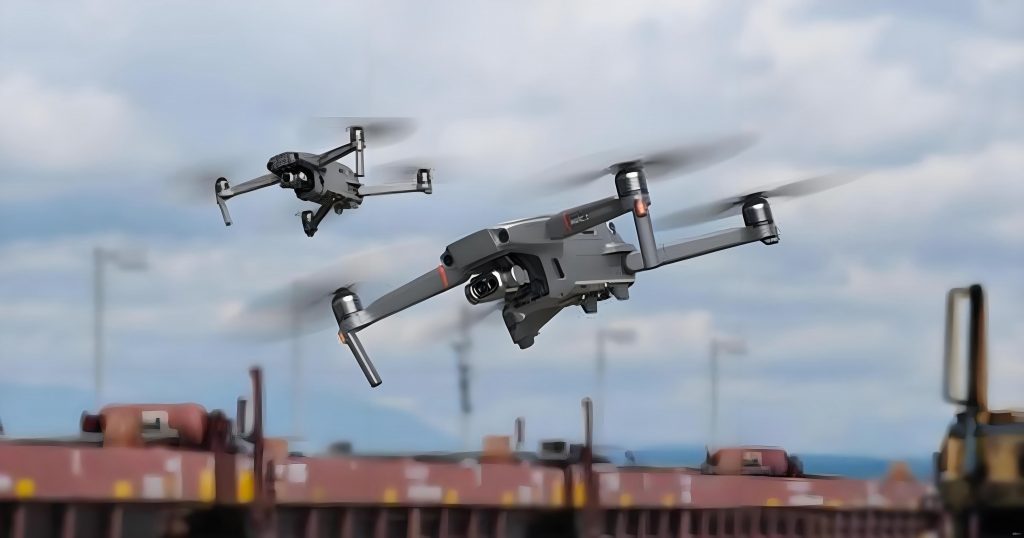
Reflecting on the historical development, I note that civilian UAV ground stations have their roots in military applications. Initial systems in the mid-20th century were monolithic and complex, designed for specific reconnaissance or strike missions. However, the democratization of UAV technology in the 21st century catalyzed a shift towards more user-friendly, adaptable ground stations for civilian use. Today, we see a vibrant ecosystem where civilian UAV ground stations cater to diverse industries. For instance, in precision agriculture, stations incorporate algorithms for automated flight path generation over irregular crop fields, optimizing pesticide distribution. In urban management, they enable real-time video analytics for traffic monitoring or违章 detection. Each application domain imposes unique requirements on the ground station, pushing developers to create specialized solutions. This trend towards application-specific customization is a hallmark of modern civilian UAV ground station development, ensuring that operators have tools tailored to their precise needs.
To understand how a civilian UAV ground station functions, I find it essential to dissect its composition. Fundamentally, every station comprises hardware and software components that work in concert. The hardware forms the physical interface, while the software provides the intelligence and user interface. Let me break down each layer.
The hardware suite of a typical civilian UAV ground station can be systematically categorized. It is the tangible equipment that operators interact with directly. I often conceptualize it in layers: the communication layer, the operation layer, and the display layer, along with auxiliary systems. Below is a table summarizing the key hardware components and their primary functions.
| Layer | Component | Primary Function |
|---|---|---|
| Communication | Remote Control Transmitter, Data Link Antenna, Video Downlink Antenna | Establishes bidirectional wireless link for command uplink and telemetry/video downlink. |
| Operation | Joystick/Control Sticks, Knobs & Switches, Keyboard, Mouse | Provides physical interface for manual UAV piloting, camera/gimbal control, and software interaction. |
| Display | High-Brightness Display Monitor(s) | Presents flight data, video feed, electronic maps, and system status to the operator. |
| Auxiliary | Computer Platform, Power Supply, Carrying Case | Provides computational power, energy, and portability for the entire system. |
The communication layer is particularly crucial for civilian UAV operations. It ensures a reliable command and control (C2) link. The effectiveness of this link can be modeled by the Shannon-Hartley theorem, which defines the channel capacity \( C \):
$$C = B \log_2\left(1 + \frac{S}{N}\right)$$
where \( B \) is the bandwidth, \( S \) is the signal power, and \( N \) is the noise power. For a civilian UAV ground station, maximizing \( C \) is key to ensuring high-quality video transmission and low-latency command response, especially over long ranges or in cluttered urban environments.
On the other hand, the software architecture is the intelligence core. From my experience, modern civilian UAV ground station software is modular, typically encompassing several key functional blocks. I visualize it as an integrated system handling data parsing, state management, alerting, and mission planning. The following table outlines the core software modules.
| Software Module | Key Responsibilities |
|---|---|
| Data Parsing & Communication | Encodes outgoing commands and decodes incoming telemetry/data packets from the civilian UAV. |
| Vehicle State Management | Displays and logs real-time UAV attitude, position, velocity, battery level, and system health. |
| Alert & Warning System | Monitors parameters for anomalies (e.g., low battery, lost link, geofence breach) and triggers visual/audible alarms. |
| Mission Planning & Navigation | Provides interface for pre-flight and in-flight path planning, waypoint setting, and automated mission execution. |
| Visualization & Mapping | Renders an electronic map, overlays UAV position, planned route, and sensor data (e.g., orthophotos). |
The interplay between hardware and software defines the operator’s workflow. Commands from the joystick or mission planner are packaged and sent via the data link. The civilian UAV responds by sending back status and sensor data, which the software decodes and presents. This continuous loop, often running at rates of several Hertz, is fundamental to safe operation. I often emphasize that the robustness of this loop determines the operational efficacy of the entire civilian UAV system.
Given the diverse applications of civilian UAVs, ground stations have evolved into distinct categories. I classify them primarily along two axes: system complexity and intended scope of use. This classification helps users and developers select or design the appropriate station for their specific civilian UAV mission profile.
Based on system complexity and deployment logistics, I identify three main types of civilian UAV ground stations.
| Category | Description | Typical Components | Use-Case Example |
|---|---|---|---|
| Portable GCS | Handheld or backpack-sized, designed for single-operator, field-deployable use. | Ruggedized tablet, integrated radio, compact display. | Quick infrastructure inspection, emergency response reconnaissance. |
| Deployable GCS | Larger, semi-mobile station requiring brief setup, often with multiple operator consoles. | Laptop/desktop arrays, external antennas, dedicated control consoles. | Professional aerial surveying, long-duration environmental monitoring. |
| Distributed/Fixed GCS | Permanent or vehicle-mounted installation with components possibly separated (e.g., local launch control and remote command center). | Server racks, large-screen displays, vehicle-integrated systems. | Persistent border surveillance, large-scale agricultural operations. |
Alternatively, when considering the market and application depth, I distinguish between consumer-grade and professional-grade civilian UAV ground stations.
| Category | Key Characteristics | Primary Applications | Example Technology Focus |
|---|---|---|---|
| Consumer-Grade GCS | User-friendly interface, compact form factor, often app-based, lower cost. | Aerial photography, hobbyist flying, basic videography. | Intuitive touch controls, social media integration, automated flight modes. |
| Professional-Grade GCS | High reliability, ruggedized design, advanced features, support for specialized payloads and protocols. | Precision agriculture, industrial inspection, mapping & surveying, public safety. | High-precision RTK GPS integration, multi-spectral sensor support, advanced data analytics suites. |
The choice between these categories directly impacts the operational capabilities of the civilian UAV. A professional inspecting a wind turbine needs the robustness and data fidelity of a professional-grade station, while a filmmaker might prioritize the creative flexibility of a consumer-grade system.
Underpinning the functionality of any modern civilian UAV ground station are several key technologies. In my research and practice, I have identified a few that are particularly critical for enabling advanced, reliable operations.
Communication Technologies: The lifeline between the ground station and the civilian UAV is the communication link. With the advent of 5G, we are witnessing a paradigm shift. 5G offers enhanced mobile broadband (eMBB), ultra-reliable low-latency communication (URLLC), and massive machine-type communication (mMTC), which are ideal for civilian UAV applications. The potential data rate \( R \) in such networks can be approximated by factors like bandwidth and spectral efficiency. For instance, considering multiple input multiple output (MIMO) systems, the achievable rate scales with the number of antennas. A simplified model is:
$$R \approx \min(N_t, N_r) \cdot B \cdot \log_2(1 + \text{SNR})$$
where \( N_t \) and \( N_r \) are transmit and receive antennas. This technology enables high-definition real-time video streaming and precise control for civilian UAVs over vast areas, far beyond traditional line-of-sight radio. Furthermore, techniques like frequency hopping and adaptive modulation are employed for anti-jamming, ensuring the link remains stable in congested RF environments.
Path Planning Algorithms: Autonomous mission execution is a cornerstone of professional civilian UAV use. The ground station software must compute optimal or near-optimal flight paths. This is a complex optimization problem often formulated as minimizing a cost function \( J \) subject to constraints:
$$\min_{u(t)} J = \int_{t_0}^{t_f} \left[ w_1 \cdot \text{Fuel}(x,u) + w_2 \cdot \text{Risk}(x) + w_3 \cdot \text{Time} \right] dt$$
$$ \text{subject to: } \dot{x} = f(x, u), \quad g(x,u) \leq 0, \quad h(x,u) = 0$$
Here, \( x \) is the state vector (position, velocity), \( u \) is the control input, \( f \) defines the dynamics, and \( g, h \) represent constraints like obstacle avoidance or no-fly zones. Algorithms to solve this range from graph-based methods (A*, Dijkstra) for discrete grids to artificial intelligence techniques like rapidly-exploring random trees (RRT) or deep reinforcement learning for continuous, dynamic 3D environments. The integration of these algorithms into the ground station allows operators to simply define areas of interest, and the system generates a safe, efficient coverage path—a boon for applications like crop scouting or solar panel inspection.
Electronic Map and Geospatial Visualization: Situational awareness is paramount. Modern civilian UAV ground stations integrate sophisticated electronic mapping engines. These are not static maps but dynamic GIS platforms that can overlay real-time UAV position, sensor data (thermal, multispectral), and planned routes. The core technology involves coordinate transformation and projection. For example, converting between the UAV’s global positioning system (GPS) coordinates (latitude \( \phi \), longitude \( \lambda \), height \( h \)) to local map coordinates (East \( E \), North \( N \), Up \( U \)) often uses a simplified formula based on a reference point (\( \phi_0, \lambda_0 \)):
$$E = (R_N + h) \cos \phi (\lambda – \lambda_0)$$
$$N = (R_M + h) (\phi – \phi_0)$$
where \( R_M \) and \( R_N \) are radii of curvature of the Earth. This enables precise placement of the civilian UAV icon on the map. Furthermore, technologies like WebGL allow for 3D terrain rendering, giving operators a realistic view of the operational environment.
Communication Protocols: The language spoken between the civilian UAV and its ground station is defined by protocols. MAVLink (Micro Air Vehicle Link) is a ubiquitous, lightweight open-source protocol. It structures messages into packets containing system ID, component ID, and a message payload. While its openness fosters innovation, it necessitates additional security layers, such as message authentication codes, to prevent spoofing or hijacking. Another common protocol is SBUS (Serial Bus), used primarily for transmitting multiple RC channel commands over a single wire, which is efficient for direct control links. The ground station software must robustly implement these protocols to ensure seamless interoperability with various civilian UAV autopilots.
Looking ahead, based on my analysis of technological trajectories and market needs, I foresee several dominant trends for civilian UAV ground stations.
First, the push for long-endurance ground station operations is accelerating. While UAV flight time is often limited by battery technology, the ground station itself—especially portable ones—also faces power constraints. Future stations will likely incorporate high-efficiency power systems, perhaps leveraging solar panels or fuel cells, to support multi-day continuous operations in remote areas. This is critical for applications like wildfire monitoring or pipeline patrol over vast distances.
Second, I advocate for the development of modular and standardized ground station architectures. Currently, many systems are proprietary, locking users into specific hardware or software ecosystems. A move towards plug-and-play modules for communication, processing, and display would reduce costs, ease maintenance, and accelerate innovation. Imagine a ground station where the communication module can be swapped between a 4G/LTE, 5G, or satellite link based on mission needs, all while running the same core software. This modularity would greatly enhance the flexibility and adoption of civilian UAV technology across different sectors.
Third, the future lies in multi-UAV swarm control and hybrid simulation capabilities. Advanced civilian UAV ground stations will evolve from controlling a single vehicle to orchestrating fleets. This requires sophisticated fleet management software capable of decentralized task allocation and collision avoidance. The ground station interface will need to present a unified picture of the swarm’s health and mission progress. Furthermore, integrating hardware-in-the-loop (HIL) or virtual simulation environments into the ground station will allow for extensive mission rehearsal and operator training without risking physical assets. This “virtual-to-real” pipeline will be essential for complex operations like coordinated search and rescue or large-scale precision agriculture.
In conclusion, my exploration of civilian UAV ground stations reveals a field rich with innovation and critical to the broader ecosystem. From their humble beginnings to the sophisticated, application-specific systems of today, these stations have become the indispensable command centers for unleashing the potential of civilian UAVs. The convergence of advanced communication like 5G, intelligent path planning algorithms, and immersive geospatial visualization is pushing the boundaries of what’s possible. As we look to the future, the trends towards endurance, modularity, and swarm intelligence will undoubtedly shape the next generation of ground control stations. I am convinced that continued investment and research in these areas will not only enhance operational efficiency but also unlock new, transformative applications for civilian UAVs, solidifying their role as key tools for progress in the 21st century. The journey of the civilian UAV ground station is far from over; it is, in fact, ascending to new heights of capability and integration.