
As an expert in radio frequency management and technological governance, I have closely monitored the explosive growth of the civilian UAV (Unmanned Aerial Vehicle) industry and the subsequent rise of countermeasure devices. The proliferation of civilian UAVs has revolutionized sectors from agriculture to logistics, but it has also introduced significant security risks, such as data breaches and airspace intrusions. In response, civilian UAV countermeasure devices have emerged as a critical tool to mitigate these threats. However, their unregulated use poses new dangers, including interference with critical radio systems like GPS and ADS-B. This article explores the landscape of civilian UAV countermeasure devices, analyzes management challenges, and proposes comprehensive solutions to ensure safe and effective deployment.
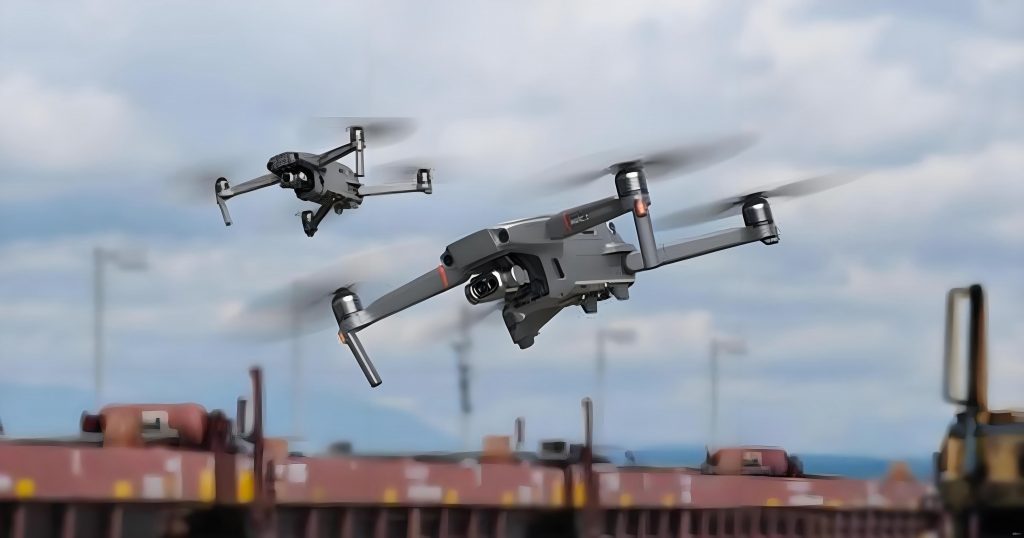
The civilian UAV market has expanded at an unprecedented rate, driven by advancements in technology and broadening applications. According to industry reports, the global civilian UAV sector is projected to exceed $180 billion by 2025, with an annual growth rate of over 25%. This surge is fueled by the versatility of civilian UAVs in fields such as surveillance, delivery, and environmental monitoring. For instance, civilian UAVs are increasingly used for crop monitoring, where they collect data to optimize agricultural yields. The rise of civilian UAVs has, however, led to incidents of “rogue flights” that compromise airspace safety and privacy. As a result, the demand for civilian UAV countermeasure devices has skyrocketed, with manufacturers developing tools to disrupt UAV operations through radio frequency interference.
Civilian UAV countermeasure devices typically function by jamming communication signals between the UAV and its controller, forcing the UAV to land, return to base, or cease operation. These devices operate on principles of electromagnetic interference, often targeting frequencies used by civilian UAVs for control, navigation, or data transmission. The effectiveness of a countermeasure device can be modeled using the Friis transmission equation, which describes the power received by a receiver in free space:
$$P_r = P_t G_t G_r \left( \frac{\lambda}{4\pi d} \right)^2$$
Here, \(P_r\) is the received power, \(P_t\) is the transmitted power from the countermeasure device, \(G_t\) and \(G_r\) are the antenna gains of the transmitter and receiver, \(\lambda\) is the wavelength, and \(d\) is the distance between the devices. For civilian UAV countermeasure devices, increasing \(P_t\) or optimizing \(G_t\) can enhance jamming range, but this also raises the risk of collateral interference. The table below summarizes common types of civilian UAV countermeasure devices and their operational characteristics:
| Device Type | Target Frequency Band | Interference Method | Typical Range | Risks to Other Systems |
|---|---|---|---|---|
| Radio Frequency Jammer | 2.4 GHz, 5.8 GHz | Broadband noise injection | 100-500 meters | High (affects Wi-Fi and Bluetooth) |
| GPS Spoofer | 1.575 GHz (L1 band) | Signal mimicry | Up to 1 kilometer | Moderate (disrupts navigation systems) |
| Directional Antenna System | Specific UAV protocols | Focused beam disruption | 300-800 meters | Low (if precisely calibrated) |
| Net-based Physical Interceptor | N/A (physical capture) | Mechanical entanglement | 50-200 meters | None (non-electronic) |
The rapid adoption of civilian UAV countermeasure devices has exposed gaps in regulatory frameworks. In many regions, these devices are sold online without restrictions, leading to misuse. For example, in 2019, an incident at an airport involved GPS signal loss due to unauthorized countermeasure devices, highlighting the urgent need for oversight. The probability of such interference events can be estimated using a Poisson distribution model, where \(\lambda\) represents the average rate of interference incidents per year:
$$P(k) = \frac{\lambda^k e^{-\lambda}}{k!}$$
Here, \(P(k)\) is the probability of \(k\) interference events occurring in a given time frame. As the deployment of civilian UAV countermeasure devices increases, \(\lambda\) rises, necessitating stronger controls. The lack of standards exacerbates this issue; currently, there are no comprehensive technical specifications for civilian UAV countermeasure devices, leading to variability in performance and safety. The table below contrasts existing standards with missing elements for civilian UAV countermeasure devices:
| Aspect | Existing Standards (e.g., GB 9159-2008) | Missing Standards for Civilian UAV Countermeasures |
|---|---|---|
| Frequency Bands | General radio emission limits | Specific bands for UAV countermeasures |
| Power Output | Broad safety requirements | Maximum power levels to avoid interference |
| Testing Protocols | Basic emission tests | Real-world scenario simulations |
| Certification Processes | Voluntary compliance | Mandatory safety and efficacy certifications |
From my perspective, the management of civilian UAV countermeasure devices is lagging due to three core issues: incomplete technical standards, a delayed regulatory system, and unpredictable countermeasure effects. Technical standards are absent, as highlighted above, causing manufacturers to produce devices with inconsistent quality. The regulatory system fails to cover the entire lifecycle of civilian UAV countermeasure devices, from development to disposal. In the development phase, many devices skip quality and safety testing, resulting in products that may malfunction or cause harm. During sales, platforms like e-commerce websites freely list “UAV jamming guns” without oversight, creating a regulatory vacuum. In use, scenarios for deploying civilian UAV countermeasure devices are poorly defined, leading to arbitrary applications that risk interfering with legitimate radio services, such as aviation communications.
The effectiveness of civilian UAV countermeasure devices is difficult to predict because of the diversity of civilian UAV models and their operational environments. Civilian UAVs vary in size, frequency usage, and robustness to interference, making it challenging to design one-size-fits-all countermeasures. Moreover, the impact on surrounding radio systems is often overlooked. To assess this, we can use a signal-to-interference-plus-noise ratio (SINR) model to evaluate how countermeasure devices affect nearby receivers:
$$\text{SINR} = \frac{P_s}{P_i + N}$$
Here, \(P_s\) is the signal power of a legitimate radio service (e.g., GPS), \(P_i\) is the interference power from a civilian UAV countermeasure device, and \(N\) is the background noise. If \(\text{SINR}\) falls below a threshold \(\gamma\), the service is disrupted. For civilian UAV countermeasure devices, minimizing \(P_i\) in non-target bands is crucial to prevent accidents like the airport GPS outages mentioned earlier. The table below outlines key regulatory gaps across different stages of civilian UAV countermeasure device management:
| Management Stage | Current Challenges | Potential Consequences |
|---|---|---|
| Development | Lack of technical standards and testing | Unreliable devices that fail or cause interference |
| Sales | Unregulated online and offline markets | Widespread access to dangerous equipment |
| Usage | Vague operational guidelines and power limits | Collateral damage to radio infrastructure |
| Decommissioning | No disposal protocols | Environmental and security risks from discarded devices |
To address these issues, I propose a multi-faceted approach to govern civilian UAV countermeasure devices. First, establishing a robust management system is essential. Drawing from regulations like the Radio Management Ordinance, which authorizes radio authorities to suppress illegal transmissions, we can create a framework that designates specific entities—such as public security, aviation, and radio management agencies—as the only authorized users of civilian UAV countermeasure devices. This would prevent abuse and ensure that countermeasures are deployed only in necessary situations, like protecting sensitive areas from rogue civilian UAVs. A coordinated mechanism involving multiple departments could streamline responses to UAV threats while minimizing risks.
Second, developing technical standards and specifications for civilian UAV countermeasure devices is critical. In production, standards should define key parameters such as frequency bands, power output, and interference precision. For instance, a standard might limit devices to targeted bands to reduce broad-spectrum interference. In usage, guidelines should categorize scenarios—such as no-fly zones, border regions, or major events—and specify allowable power levels and durations. This can be expressed through a regulatory function \(R(f, P, t)\), where \(f\) is the frequency, \(P\) is the power, and \(t\) is the time, with constraints to protect other services:
$$R(f, P, t) = \begin{cases}
\text{Permitted} & \text{if } f \in F_{\text{target}}, P \leq P_{\text{max}}, t \leq t_{\text{limit}} \\
\text{Prohibited} & \text{otherwise}
\end{cases}$$
Here, \(F_{\text{target}}\) is the set of frequencies used by civilian UAVs, \(P_{\text{max}}\) is the maximum safe power, and \(t_{\text{limit}}\) is the time limit to avoid prolonged disruption. Collaboration with technical institutions, civilian UAV manufacturers, and aviation authorities can accelerate standard development, ensuring that civilian UAV countermeasure devices are both effective and safe.
Third, building a监管 platform for civilian UAV countermeasure devices can enhance oversight. This platform should integrate testing, certification, and monitoring functions. We need to define safety and reliability benchmarks, such as emission stability and environmental resilience, and establish accredited laboratories to verify compliance. For example, a device’s jamming efficacy \(E\) can be quantified as the ratio of successful UAV neutralizations to total attempts, adjusted for collateral interference \(C\):
$$E = \frac{N_{\text{success}}}{N_{\text{total}}} – \alpha C$$
Here, \(\alpha\) is a penalty factor for interference, incentivizing precision. Certification should require \(E\) to exceed a threshold, like 0.8, for approval. The platform could also track device usage via embedded GPS modules, enabling real-time location monitoring and rapid response to misuse. This aligns with the goal of safeguarding radio systems while allowing legitimate countermeasures against threatening civilian UAVs.
Fourth, strengthening监管 of sales channels is vital. Regulators should partner with e-commerce platforms to implement溯源 systems that trace civilian UAV countermeasure devices from production to end-users. By integrating with radio equipment备案 databases, we can monitor sales data and block unauthorized listings. Platforms can be urged to screen product information and keywords, suppressing ads for illegal devices and promoting legal awareness. Joint operations with law enforcement can target offline markets, creating a联防 network that deters illicit trade. The table below summarizes recommended actions for sales监管:
| Action | Implementation Method | Expected Outcome |
|---|---|---|
| Online Platform Partnerships | API integration for sales data sharing | Reduced availability of unapproved devices |
| Keyword Filtering | Automated scans for “UAV jammer” terms | Prevention of misleading advertisements |
| Legal Information推送 | Pop-up alerts on radio法规 | Increased user awareness of risks |
| Cross-Department Raids | Coordinated inspections of physical stores | Disruption of underground sales networks |
Fifth,规范 the use of civilian UAV countermeasure devices is paramount. Clear rules should designate where and how these devices can be operated, focusing on high-risk areas like airports, government facilities, and crowded venues. For instance, in no-fly zones, civilian UAV countermeasure devices might be allowed only during confirmed intrusions, with power capped to avoid affecting adjacent communications. Additionally, only authorized personnel—such as police or aviation staff—should handle these devices, and each unit could include a unique identifier for accountability. This approach ensures that countermeasures are reserved for genuine threats from rogue civilian UAVs, not for casual or malicious purposes.
In conclusion, the rise of civilian UAV countermeasure devices is a double-edged sword: they offer protection against UAV-related hazards but introduce new risks if mismanaged. As the civilian UAV industry continues to grow, so does the urgency for comprehensive governance. By implementing the建议 outlined—完善ing管理制度,制定ing标准规范,搭建ing监管平台,加强ing销售监管, and规范ing usage—we can foster a safe ecosystem where civilian UAV countermeasure devices serve their purpose without compromising radio秩序. The key is to balance innovation with regulation, ensuring that technological advancements like civilian UAVs and their countermeasures contribute positively to society. Through collaborative efforts and continuous refinement of policies, we can mitigate the dangers while harnessing the benefits of civilian UAV technology for years to come.
Reflecting on this, I believe that the future of civilian UAV countermeasure devices hinges on proactive governance. As civilian UAVs become more integrated into daily life—from delivery services to emergency response—their countermeasures must evolve in tandem. This requires ongoing research into adaptive technologies, such as smart jammers that dynamically adjust frequencies based on real-time threats, minimizing collateral effects. Moreover, international cooperation can harmonize standards, as civilian UAV operations often cross borders. By prioritizing safety and accountability, we can transform civilian UAV countermeasure devices from potential hazards into reliable tools for security, ensuring that the skies remain safe for all.