
In the pursuit of advanced aerial platforms, the development of civilian UAV technology places significant emphasis on achieving an optimal balance between structural integrity, mission payload capacity, and operational endurance. A primary pathway to enhancing performance is through rigorous weight reduction without compromising strength. This article delves into the systematic optimization of a critical airframe component: the composite material main load-bearing frame. As a principal structural member often compromised by necessary access openings, its design presents a complex engineering challenge. I will explore a multi-stage optimization framework, integrating topology, shape, and laminate stacking sequence optimization, specifically tailored for civilian UAV applications.
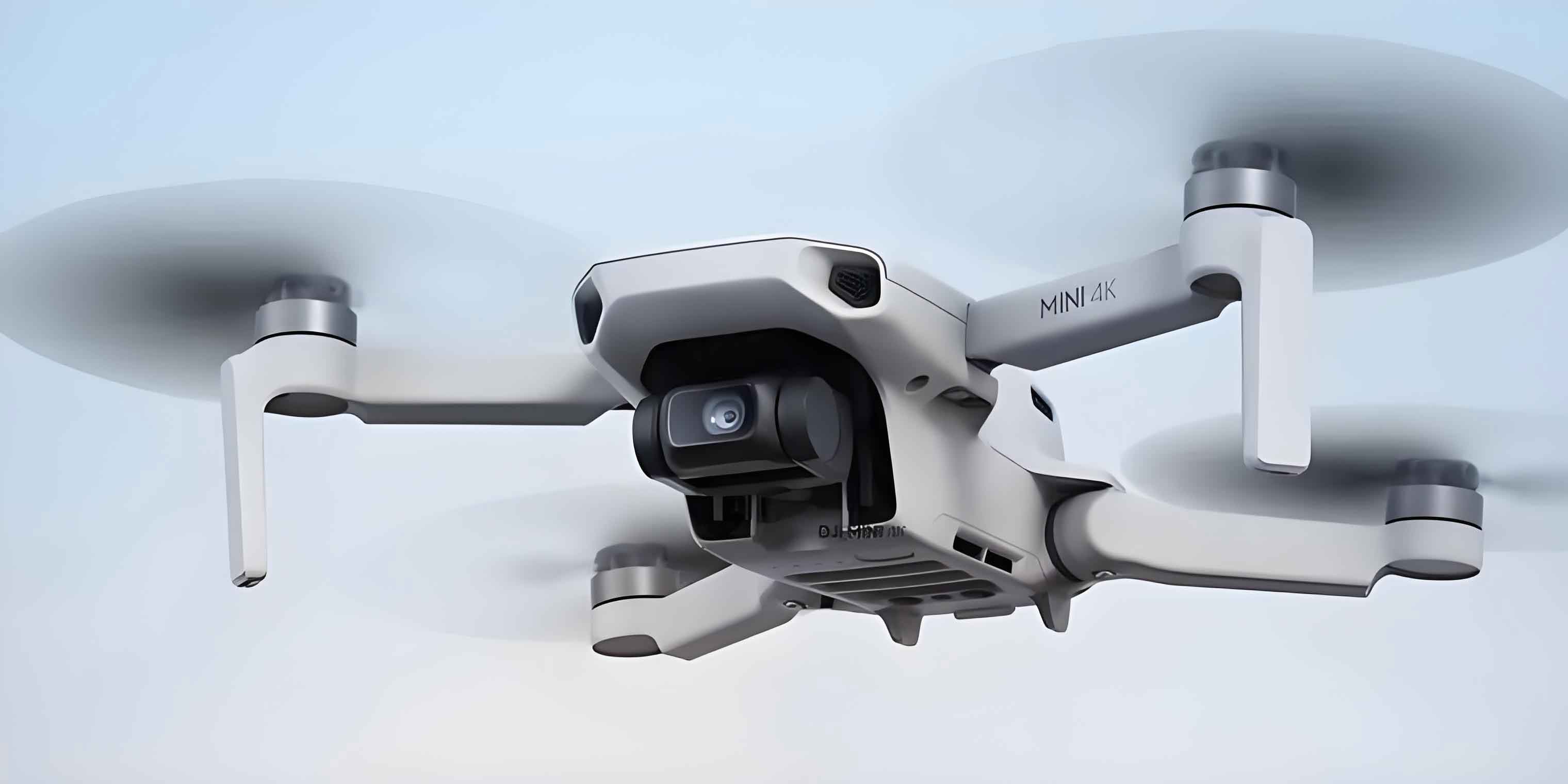
The main frame in a civilian UAV typically serves as the central backbone, transferring critical loads from the wings and supporting internal systems. A common design conflict arises when this primary load path must be interrupted by an opening, for instance, to accommodate a fuel tank or payload bay. This discontinuity creates stress concentrations, threatening the structural integrity of the entire civilian UAV. Traditional metallic designs offer limited optimization potential post-manufacturing. However, the advent of advanced composite materials, with their superior specific strength and stiffness and unparalleled tailorability, opens a new paradigm. The optimization of a composite main frame is not a singular task but a holistic, multi-disciplinary process. It requires the synthesis of finite element analysis (FEA), numerical optimization algorithms, and composite mechanics to navigate a vast design space efficiently.
Characteristics and Challenges in Main Frame Optimization
The optimization of a composite main frame for a civilian UAV is distinguished by several key characteristics that elevate its complexity beyond conventional structural design.
Firstly, the component is a precision, integral structure where load paths are intricate. Predicting its static and dynamic behavior demands sophisticated analytical methods, often making closed-form solutions impractical. High-fidelity computational models, primarily based on the Finite Element Method (FEM), become indispensable. Secondly, the optimization process itself is iterative and data-intensive. It involves automated or semi-automated analysis loops where the structural response (stresses, displacements, frequencies) is evaluated for countless design permutations. Thirdly, sensitivity analysis—the calculation of how structural performance metrics change with respect to design variables—is a cornerstone. This guides the optimization algorithm toward the most efficient design modifications. Finally, the problem is inherently multi-scale and multi-objective. It involves the global allocation of material across the frame (topology) down to the microscopic definition of ply angles and sequences (laminate optimization), all while balancing competing goals like minimum weight and maximum stiffness or strength.
The core challenge for a civilian UAV main frame lies in the fundamental contradiction between structural continuity and functional necessity. The frame must withstand significant bending moments and shear forces, primarily from aerodynamic lift transferred through the wing attachments. Introducing an opening severely disrupts this load flow, creating localized high-stress regions. The optimization challenge is to reintroduce alternative load paths and reinforce the opening in the most mass-efficient manner possible. The anisotropic nature of composites transforms this challenge into an opportunity, allowing engineers to strategically place material and orient fibers precisely where they are needed to carry loads around the discontinuity.
A Multi-Stage Optimization Framework for Civilian UAV Structures
To manage the complexity, a structured, sequential optimization approach is adopted for the civilian UAV main frame. This framework typically progresses from conceptual layout to detailed sizing, as outlined in the table below:
| Optimization Stage | Primary Objective | Design Variables | Key Outcome |
|---|---|---|---|
| Topology Optimization | Find optimal material distribution within a given design space. | Element density (pseudo-density). | Conceptual load path layout; identification of critical and redundant areas. |
| Shape Optimization | Refine boundaries and contours to minimize stress concentrations. | Node coordinates defining edges, fillet radii, hole geometry. | Smoothed structural shape with improved stress flow, especially around openings. |
| Composite Laminate Optimization | Determine optimal ply orientations, thicknesses, and stacking sequence. | Ply angle per layer, ply thickness, number of plies. | Detailed laminate definition that meets stiffness, strength, and manufacturing constraints. |
| Local Feature Optimization (e.g., Flange) | Optimize specific reinforcement features for maximum efficiency. | Feature dimensions (width, thickness). | Mass-efficient detailed design of reinforcing elements. |
Stage 1: Topology Optimization for Conceptual Design
The journey begins with topology optimization. For a civilian UAV frame with a mandated opening, the goal is to discover the most efficient material layout within the permissible envelope that connects load application points (wing attachments) to support points while circumventing the opening. The Solid Isotropic Material with Penalization (SIMP) method is widely used. It defines a pseudo-density variable, \( x_e \), for each finite element, ranging from 0 (void) to 1 (solid material). The material’s effective elastic properties are interpolated based on this density:
$$ E_e(x_e) = E_{min} + x_e^p (E_0 – E_{min}) $$
$$ \rho_e(x_e) = x_e \rho_0 $$
where \( E_e \) is the effective Young’s modulus of the element, \( E_0 \) and \( \rho_0 \) are the modulus and density of the solid composite material, \( E_{min} \) is a very small modulus assigned to void regions to avoid numerical singularity, and \( p \) (typically \( p \ge 3 \)) is a penalty factor that steers the solution towards a clear 0-1 (void-solid) distribution. The optimization problem can be formulated to minimize compliance (maximize stiffness) or weight subject to a volume fraction constraint:
$$
\begin{aligned}
& \underset{x}{\text{minimize}} & & C(\mathbf{x}) = \mathbf{U}^T \mathbf{K}(\mathbf{x}) \mathbf{U} \\
& \text{subject to} & & \frac{V(\mathbf{x})}{V_0} \le f \\
& & & \mathbf{K}(\mathbf{x}) \mathbf{U} = \mathbf{F} \\
& & & 0 \le x_e \le 1, \quad e = 1, \ldots, N
\end{aligned}
$$
Here, \( C \) is structural compliance, \( \mathbf{K} \) is the global stiffness matrix, \( \mathbf{U} \) and \( \mathbf{F} \) are displacement and force vectors, \( V \) is the volume of material, \( V_0 \) is the design domain volume, and \( f \) is the allowed volume fraction. The result is a conceptual “bone-like” structure that visually reveals the primary load paths for the civilian UAV frame, clearly showing where material is essential and where it can be removed.
Stage 2: Shape Optimization for Stress Reduction
Following topology optimization, the derived conceptual shape is parameterized for shape optimization. This stage focuses on refining geometric details, most critically the region around the opening. Sharp corners are potent stress concentrators. Shape optimization adjusts the contour of the opening, defining optimal fillet radii or transition curves to smooth the load flow. The design variables become the parameters controlling these curves (e.g., control point coordinates for splines). The objective is often to minimize the peak stress (\( \sigma_{max} \)) or stress concentration factor (SCF) around the opening, which can be expressed as:
$$ \text{SCF} = \frac{\sigma_{max}}{\sigma_{nom}} $$
where \( \sigma_{nom} \) is the nominal stress remote from the discontinuity. This stage is crucial for ensuring the durability and damage tolerance of the composite structure in the civilian UAV, as composites are particularly sensitive to stress concentrations due to their lack of plastic deformation.
Stage 3: Laminate Stacking Sequence Optimization
With the macro geometry defined, the next layer of optimization addresses the composite laminate itself. This is where the true power of composites for civilian UAV structures is harnessed. The laminate optimization determines the number of plies, their individual fiber orientation angles (\( \theta \)), and their stacking sequence. The goal is to meet stiffness, strength, and buckling requirements with minimum mass. Common constraints include:
- Strength Criteria: Using failure criteria like Tsai-Wu or Maximum Stress to ensure each ply’s stress state is within allowables with a defined safety factor (SF). For a given ply, the Max Stress criterion requires:
$$ -\sigma_{1}^{C} < \sigma_{1} < \sigma_{1}^{T}, \quad -\sigma_{2}^{C} < \sigma_{2} < \sigma_{2}^{T}, \quad |\tau_{12}| < \tau_{12}^{S} $$
where \( \sigma_1, \sigma_2, \tau_{12} \) are ply stresses in the material direction, and the superscripts \( T, C, S \) denote tensile, compressive, and shear strengths, respectively.
- Blending Rules: Ensuring ply drop-offs are gradual to avoid inducing new stress concentrations.
- Manufacturing Constraints: Limiting the number of unique ply angles (e.g., to 0°, ±45°, 90°) and enforcing symmetry and balance to prevent warpage.
The optimization problem searches the discrete space of ply sequences to find the lightest configuration that satisfies all constraints under the prescribed loads for the civilian UAV.
Stage 4: Local Reinforcement and Flange Optimization
A highly effective method for reinforcing an opening in a composite civilian UAV frame is to incorporate co-cured or bonded flanges (or doublers). The optimization of this local feature is a final refinement step. The design variables describe the flange geometry, such as its width (\( W \)) and the additional laminate added. A symmetric flange configuration is typical. The objective is to minimize the added volume (or mass) of the flange while satisfying strength constraints in the reinforced region.
| Design Variable | Symbol | Description |
|---|---|---|
| Half-Width of Flange | \( W \) | Extent of reinforcement spreading from the hole edge. |
| Thickness of added 90° plies | \( T_{90} \) | Contributes to load transfer perpendicular to the primary load direction. |
| Thickness of added 0° plies | \( T_{0} \) | Directly reinforces the primary load-bearing direction. |
The total added volume \( V_{add} \) for two symmetric flanges can be approximated as:
$$ V_{add} = 2 \cdot W \cdot (T_0 + T_{90} + t_{base}) $$
where \( t_{base} \) is the thickness of the base laminate. The optimization algorithm adjusts \( W, T_0, T_{90} \) to minimize \( V_{add} \) while ensuring that the stress in the critical flange and adjacent base laminate, evaluated via FEA, remains below the allowable limits with the specified safety factor (e.g., SF ≥ 2.5 for a civilian UAV).
Comparative Analysis and Performance Gains
Implementing this multi-stage optimization process yields substantial benefits for the civilian UAV. The following table contrasts key attributes of an initial design versus a fully optimized design:
| Performance Metric | Initial Design (Baseline) | Fully Optimized Composite Design | Relative Improvement |
|---|---|---|---|
| Structural Mass | \( M_0 \) | \( 0.745 \cdot M_0 \) | 25.5% Reduction |
| Peak Stress at Opening | \( \sigma_{0} \) | \( 0.72 \cdot \sigma_{0} \) | 28% Reduction |
| Global Stiffness (Compliance Inverse) | \( S_0 \) | \( \approx 1.15 \cdot S_0 \) | ~15% Increase |
| Safety Factor (Critical Location) | SF0 | 1.39 \cdot SF0 | 39% Increase |
The mass reduction of over 25% is a direct enabler for increased payload or extended flight time for the civilian UAV. Concurrently, the significant increase in the safety factor and reduction in peak stress translate to enhanced structural reliability and longevity. These gains are made possible by the synergistic application of topology optimization to define the global form, shape optimization to refine stress fields, and laminate/flange optimization to tailor the local material response. The final optimized structure embodies a highly efficient load path architecture where composite material is placed precisely according to the stress flux, with a rationally designed flange seamlessly mitigating the impact of the necessary opening.
Conclusion
The structural optimization of composite main load-bearing frames represents a critical technological lever in the advancement of civilian UAV platforms. As demonstrated, it is not merely a weight-saving exercise but a comprehensive re-imagining of structural form and function through computational guidance. The sequential integration of topology, shape, and laminate optimization, followed by detailed local reinforcement design, forms a robust methodology to resolve the inherent conflict between structural continuity and functional access. This process leverages the unique tailorability of composites to create structures that are significantly lighter, stronger, and more efficient than their conventionally designed counterparts. The resulting performance enhancements in weight, strength, and stiffness directly contribute to the expanded operational capabilities and economic viability of civilian UAVs, solidifying composites and advanced optimization techniques as indispensable tools in modern aerial vehicle design.