
As an observer of technological advancements and legal frameworks, I have witnessed the rapid rise of civilian unmanned aerial vehicles (UAVs), commonly known as drones, which are transforming various sectors while posing significant challenges to privacy rights. In this analysis, I explore the development of civilian UAVs, their potential for侵犯 privacy, existing legal regulations, and propose enhanced measures to safeguard individuals. My focus is on the intersection of innovation and privacy, emphasizing the need for robust oversight to balance utility with protection. I will incorporate tables and formulas to summarize key points, ensuring a comprehensive discussion that meets the required depth.
The proliferation of civilian UAVs has been driven by advancements in communication technology and the internet economy, making them accessible tools for hobbies, commerce, and surveillance. I recall how, in recent years, these devices have evolved from niche military applications to widespread civilian use, with market projections indicating substantial growth. For instance, global drone markets are expected to reach significant values, underscoring their economic impact. Below, I present a table summarizing the growth trends and applications of civilian UAVs to contextualize their expansion.
| Year | Global Market Size (USD billions) | Primary Applications | Key Drivers |
|---|---|---|---|
| 2010 | ~10 | Military, limited civilian use | Defense spending |
| 2015 | ~20 | Agriculture, filming, inspections | Consumer adoption, tech innovation |
| 2020 | ~40 | Delivery, infrastructure, entertainment | AI integration, regulatory easing |
| 2024 (projected) | ~67.3 | Healthcare, security, personal use | 5G connectivity, cost reduction |
From this table, I infer that civilian UAVs are becoming ubiquitous, with applications diversifying into areas like agriculture, where they monitor crops, and infrastructure, where they inspect bridges and power lines. This growth, however, amplifies privacy concerns, as these devices can easily capture sensitive data without consent. I often ponder how the very features that make civilian UAVs valuable—such as high-resolution cameras, long flight times, and GPS tracking—also enable intrusive surveillance. To quantify this risk, I propose a simple formula for privacy侵犯 probability: $$ P_{侵犯} = \frac{A \times T}{D} $$ where \( P_{侵犯} \) is the probability of privacy侵犯, \( A \) represents the accessibility of civilian UAVs (e.g., low cost, easy operation), \( T \) denotes the time spent in surveillance, and \( D \) is the distance from protected spaces (e.g., homes). As \( A \) and \( T \) increase or \( D \) decreases, the risk escalates, highlighting the need for regulatory intervention.
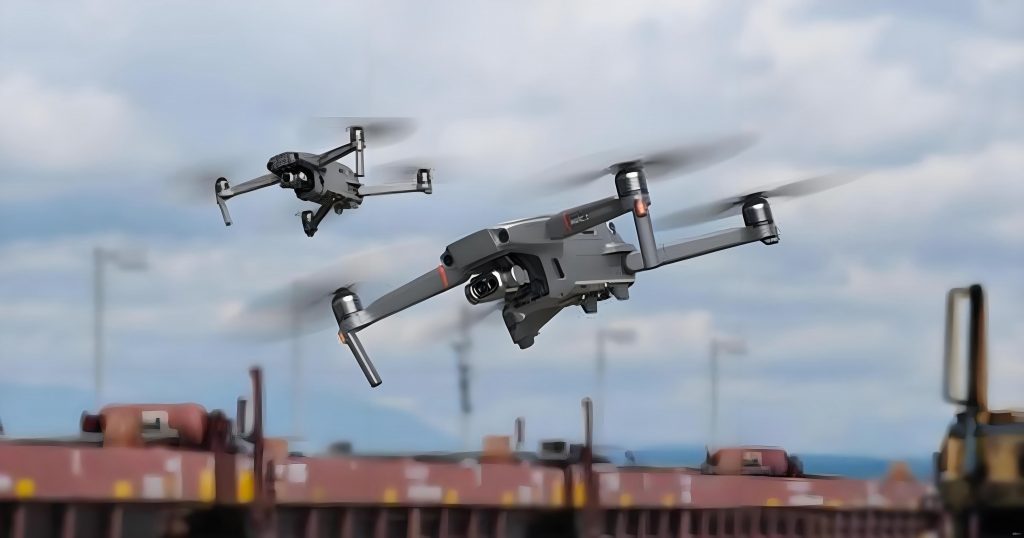
In my view, the privacy侵犯 by civilian UAVs manifests in multiple ways. These devices can hover near residences, track individuals’ movements, or gather data in public spaces, compiling profiles that include personal habits, health information, and financial details. I have seen cases where civilian UAVs were used to peer into private yards or follow people without their knowledge, leading to distress and potential misuse of data. The data collected by civilian UAVs often flows through internet networks, where it might be stored, shared, or exploited by users, developers, or third parties. To illustrate, consider the types of data vulnerable to civilian UAV surveillance, as shown in the table below.
| Data Type | Examples of Collection by Civilian UAV | Potential Misuse |
|---|---|---|
| Location Data | GPS tracks of daily commutes, home addresses | Stalking, targeted advertising |
| Visual Information | Photos/videos of private activities, property layouts | Blackmail, property theft planning |
| Behavioral Patterns | Shopping habits, social interactions in public areas | Profiling, discrimination |
| Health-Related Data | Images from hospitals or fitness areas | Insurance fraud, privacy breaches |
This table underscores how civilian UAVs can intrude on various aspects of life, often without individuals realizing it. I believe that the stealth and capability of civilian UAVs exacerbate these issues, as they can operate at altitudes or angles that avoid detection. Moreover, the lack of direct legal规制 in many jurisdictions leaves gaps that allow such侵犯 to persist. From my research, I note that existing laws often focus on airspace safety or operator licensing, rather than privacy-specific measures for civilian UAVs. For example, regulations might require registration of civilian UAVs or restrict flights near airports, but they rarely address data minimization or consent for surveillance. To model the effectiveness of regulation, I use a formula: $$ E = \frac{C \times M}{R} $$ where \( E \) is regulatory effectiveness, \( C \) is compliance rate among civilian UAV users, \( M \) represents monitoring and enforcement mechanisms, and \( R \) is the risk level of privacy侵犯. Higher \( C \) and \( M \) can improve \( E \), but if \( R \) is high due to technological advances, continuous updates are needed.
Turning to legal frameworks, I observe that privacy protection laws have evolved to include concepts like the right to privacy and data protection, but they are not tailored to the unique challenges posed by civilian UAVs. In many countries, privacy laws derive from constitutional provisions or civil codes that prohibit unauthorized intrusion into private life, yet they lack specifics on aerial surveillance by civilian UAVs. For instance, laws may protect against wiretapping or trespass, but applying them to civilian UAV operations can be complex due to issues like airspace rights and data transmission. I compiled a comparison of legal approaches to civilian UAV隐私侵犯 in the table below, drawing from global examples without citing specific nations or authors.
| Legal Aspect | Traditional Privacy Laws | Gaps for Civilian UAVs | Proposed Enhancements |
|---|---|---|---|
| Data Collection | Requires consent for personal data gathering | Civilian UAVs often operate without notice or consent in public/private spaces | Mandate geofencing or privacy zones for civilian UAV flights |
| Storage and Sharing | Laws regulate data retention and disclosure | Civilian UAV data may be automatically uploaded to clouds or shared online | Implement privacy-by-design in civilian UAV software, with automatic deletion features |
| Accountability | Penalties for violations exist, but may be limited | Difficulty in identifying civilian UAV operators or proving侵犯 | Strengthen registration and real-time tracking of civilian UAV activities |
| Remedies | Civil damages or criminal charges available | Victims may lack evidence or resources to pursue cases involving civilian UAVs | Create simplified legal procedures for civilian UAV-related privacy claims |
From this analysis, I conclude that current laws are insufficient to curb privacy侵犯 by civilian UAVs, necessitating targeted reforms. In my opinion, a multi-faceted approach is required, combining technical standards, regulatory oversight, and public awareness. For example, I advocate for “privacy-by-design” principles in civilian UAV development, where manufacturers integrate features like data encryption, user-controlled data sharing, and automatic flight restrictions near sensitive areas. Mathematically, this can be expressed as a design goal: $$ \text{Privacy Score} = \sum_{i=1}^{n} w_i \cdot F_i $$ where \( \text{Privacy Score} \) rates a civilian UAV’s privacy safeguards, \( w_i \) are weights for factors like data protection (e.g., encryption strength), and \( F_i \) are normalized scores for each feature. Higher scores indicate better privacy alignment, encouraging innovation in safe civilian UAV technologies.
Furthermore, I emphasize the need for enhanced监管 of civilian UAV operations. This includes mandatory registration in national databases, real-time flight monitoring via systems like UAV traffic management (UTM), and clear rules on flight altitudes and distances from private properties. For instance, setting a minimum distance of, say, 10 meters from residences could reduce privacy risks. I also propose laws that require civilian UAV users to declare flight purposes and obtain permissions for sensitive areas, similar to permits for photography in certain zones. To assess the impact of such监管, consider a cost-benefit formula: $$ \text{Net Benefit} = B_{\text{privacy}} – C_{\text{reg}} $$ where \( B_{\text{privacy}} \) represents the benefits from reduced privacy侵犯 (e.g., increased public trust, lower legal costs), and \( C_{\text{reg}} \) denotes the costs of implementing监管 (e.g., administrative expenses, compliance burdens). By maximizing this net benefit through iterative policy adjustments, authorities can foster responsible civilian UAV use.
In addition, data management for civilian UAVs warrants strict legal规制. I suggest that laws should mandate secure storage limits, such as automatic deletion after a fixed period, and prohibit unauthorized data transmission. For example, civilian UAV data should only be shared for legitimate purposes, like emergency response or research, with anonymization techniques applied. This aligns with broader data protection principles but requires specificity for civilian UAV contexts. The table below summarizes key data规制 measures for civilian UAVs.
| Data Lifecycle Stage | Current Practices | Recommended Legal规制 |
|---|---|---|
| Collection | Often indiscriminate, with high-resolution sensors | Limit data collection to mission-essential purposes; require civilian UAVs to blur faces or license plates by default |
| Storage | Data stored on devices or clouds indefinitely | Impose maximum retention periods (e.g., 30 days) for civilian UAV data unless needed for legal reasons |
| Transmission | Wireless uploads to internet servers common | Encrypt all transmissions from civilian UAVs; require user consent for cloud backups |
| Usage | Used for analytics, marketing, or unspecified goals | Restrict usage to stated purposes; ban sale of civilian UAV data without explicit consent |
Reflecting on these proposals, I acknowledge that challenges remain, such as enforcement across borders and keeping pace with rapid technological change in civilian UAVs. However, I am optimistic that a proactive legal framework can mitigate risks. For instance, international cooperation could standardize civilian UAV regulations, while public education campaigns raise awareness about privacy rights. In my view, the dual role of civilian UAVs as tools for progress and potential threats necessitates balanced solutions. To model this balance, I use an optimization equation: $$ \max U = \alpha \cdot I_{\text{innovation}} + \beta \cdot P_{\text{protection}} $$ subject to constraints like safety and cost, where \( U \) is overall utility, \( \alpha \) and \( \beta \) are weights for innovation (driven by civilian UAV adoption) and privacy protection, respectively. By calibrating these weights through democratic processes, societies can harness civilian UAV benefits while safeguarding freedoms.
In conclusion, as civilian UAVs continue to evolve, their impact on privacy demands urgent attention from lawmakers, industry, and citizens. I have outlined how civilian UAVs can侵犯 privacy through data collection and surveillance, highlighted gaps in existing laws, and proposed regulatory enhancements involving design standards, operational controls, and data management. Through tables and formulas, I summarized key points, such as growth trends, risk factors, and legal comparisons, to provide a structured analysis. Ultimately, the goal is to foster a sustainable ecosystem where civilian UAVs contribute to societal well-being without compromising individual privacy. By embracing innovative规制 and continuous dialogue, we can navigate this technological landscape responsibly, ensuring that civilian UAVs serve as allies rather than adversaries in our quest for security and progress.