
In recent years, the civilian UAV (unmanned aerial vehicle) industry has experienced explosive growth globally, particularly in China. This surge has driven industrial transformation, enhanced economic development, and opened new avenues for applications in logistics, agriculture, surveillance, and entertainment. However, this rapid expansion has been accompanied by significant regulatory lag, leading to frequent incidents such as airspace disruptions, public safety threats, privacy violations, and national security breaches. As a researcher focused on aviation safety and regulatory frameworks, I believe that addressing these challenges requires a balanced approach that fosters innovation while mitigating risks. This article delves into the current dilemmas in civilian UAV regulation, analyzes existing legislative gaps, and proposes comprehensive strategies to establish a robust oversight system. By integrating tables, formulas, and empirical insights, I aim to provide a detailed perspective on how to harmonize the growth of civilian UAV operations with societal safety and security.
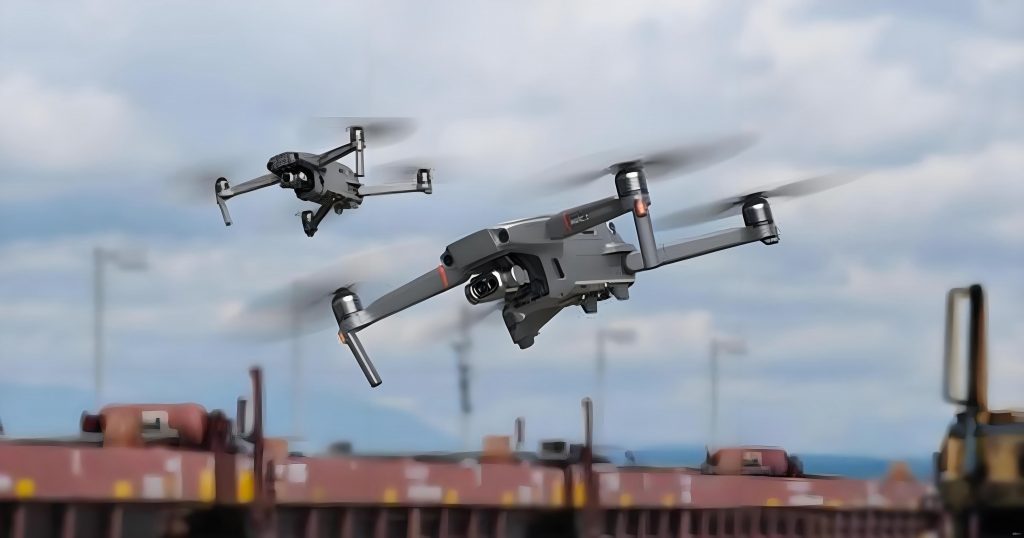
The proliferation of civilian UAV technology has revolutionized various sectors, but it has also exposed critical vulnerabilities in our regulatory infrastructure. From my analysis, the core issues stem from fragmented laws, unclear jurisdictional boundaries, and technological complexities inherent to civilian UAV systems. For instance, the lightweight and accessible nature of civilian UAVs makes them prone to misuse, whether through accidental interference with manned aircraft or deliberate criminal activities. In this context, I will explore the multifaceted problems associated with civilian UAV usage, evaluate the current legislative landscape, and outline actionable solutions. By emphasizing the keyword “civilian UAV” throughout this discussion, I underscore the need for specialized frameworks tailored to these devices, distinct from traditional aviation or hobbyist models. The subsequent sections are structured to provide a holistic view, incorporating data summaries via tables and conceptual models through formulas to enhance clarity and depth.
One of the most pressing concerns in civilian UAV regulation is the frequency of airspace incursions that disrupt commercial aviation. Data from civil aviation authorities indicate a sharp rise in incidents where civilian UAVs have encroached on controlled airspace, causing flight delays, diversions, and near-misses. For example, in 2017 alone, multiple airports across China reported over 30 significant disturbances linked to civilian UAV operations, with some cases leading to emergency landings and substantial economic losses. The table below summarizes key incident trends over recent years, highlighting the escalating nature of this problem:
| Year | Number of Reported Civilian UAV Interference Incidents | Primary Affected Airports | Estimated Economic Impact (in millions USD) |
|---|---|---|---|
| 2015 | 4 | Major hubs in eastern regions | 2.5 |
| 2016 | 23 | Spread across southwestern and central airports | 15.7 |
| 2017 | 45 | Concentrated in Chengdu, Chongqing, Kunming | 50.2 |
| 2018 | 38 (partial year) | Nationwide, including coastal areas | 40.1 |
This trend underscores the urgency for enhanced monitoring and enforcement mechanisms. From my perspective, these incidents often result from a lack of awareness among civilian UAV operators about no-fly zones or from intentional negligence. The economic ramifications extend beyond immediate flight disruptions to include increased insurance costs and reputational damage to the aviation industry. Therefore, regulating civilian UAV activities in proximity to airports is paramount to safeguarding air traffic management systems.
Beyond airspace safety, civilian UAV operations pose direct threats to public security due to technical limitations and human error. A fundamental issue lies in the vulnerability of civilian UAV systems to electromagnetic interference. Most civilian UAV models rely on gyroscopic stabilization and GPS signals, which can be easily disrupted by strong magnetic fields or radio frequencies. This weakness was starkly demonstrated during a large-scale civilian UAV light show in 2018, where signal interference caused a fleet of over a thousand drones to malfunction, creating chaotic patterns and risking collisions. Such events highlight the inherent risks when civilian UAVs are deployed in densely populated areas without adequate safeguards. To quantify this risk, we can model the probability of a civilian UAV failure due to interference using a simple formula:
$$ P_f = 1 – e^{-\lambda t} $$
where \( P_f \) represents the failure probability, \( \lambda \) is the rate of interference events per unit time, and \( t \) is the exposure duration. For typical civilian UAV operations in urban environments, \( \lambda \) can be estimated from empirical data, often ranging from 0.05 to 0.2 per hour, indicating a non-negligible risk over extended flights.
Moreover, operator incompetence exacerbates public safety hazards. Many civilian UAV enthusiasts lack formal training, leading to reckless maneuvers that endanger people and property. Incidents of civilian UAVs crashing into crowds or buildings are increasingly common, with some resulting in severe injuries. For instance, a tourist suffered eye damage after being struck by a civilian UAV at a scenic spot, underscoring the need for mandatory pilot certification. Additionally, the absence of unified product standards for civilian UAVs complicates risk assessment. Key parameters like maximum altitude, speed, and geofencing capabilities vary widely across manufacturers, creating a patchwork of safety profiles. I advocate for the development of stringent technical standards, which could be summarized in a compliance table:
| Technical Parameter | Proposed Standard for Civilian UAVs | Current Industry Variability |
|---|---|---|
| Maximum Altitude | 120 meters above ground level | 50-500 meters |
| Remote Control Range | 500 meters line-of-sight | 200-2000 meters |
| Geofencing Requirement | Mandatory for all models | Optional in many devices |
| Collision Avoidance | Basic sensors required | Limited to high-end civilian UAVs |
Implementing such standards would reduce “uncontrolled” flights and enhance the overall safety of civilian UAV operations.
The stealth and payload capacity of civilian UAVs also raise national security and privacy concerns. From my research, civilian UAVs can be easily modified to carry cameras or sensors, enabling unauthorized surveillance of sensitive locations like military bases, government facilities, or private residences. There have been documented cases of civilian UAVs breaching restricted airspace to capture classified information, though timely interventions have prevented major leaks. This vulnerability underscores the dual-use nature of civilian UAV technology, where benign recreational devices can be repurposed for espionage. To assess the exposure risk, we can use a formula that considers the likelihood of intrusion and the value of protected assets:
$$ R = P_i \times C $$
where \( R \) is the risk score, \( P_i \) is the probability of a civilian UAV intrusion (derived from historical breach data), and \( C \) represents the criticality of the asset (e.g., on a scale from 1 to 10). For high-security zones, \( C \) values approach 10, making even low-probability events significant. Therefore, regulatory frameworks must include robust no-fly designations and real-time detection systems for civilian UAVs near sensitive areas.
Privacy infringement is another critical issue tied to civilian UAV proliferation. The ability of civilian UAVs to conduct aerial photography or thermal imaging without consent poses a growing threat to individual and commercial privacy. Instances of voyeurism or corporate espionage using civilian UAVs are on the rise, facilitated by the lack of legal precedents and enforcement mechanisms. In my view, this calls for clear guidelines on data collection and usage by civilian UAV operators, possibly借鉴ing from existing drone regulations in countries like the United States. A balanced approach might involve zoning regulations that designate privacy-sensitive areas where civilian UAV flights are restricted or require explicit permits.
Furthermore, civilian UAVs have emerged as tools for criminal activities, adding complexity to regulatory efforts. Smuggling and drug trafficking networks have adopted civilian UAVs to transport contraband across borders, leveraging their small size and low detectability. For example, a major smartphone smuggling ring used civilian UAVs to ferry goods over barriers, illustrating how these devices can circumvent traditional security measures. More alarmingly, the potential for weaponizing civilian UAVs—by attaching explosives or harmful payloads—poses a direct terrorism threat. While such attacks remain rare, the accessibility of civilian UAVs makes them an attractive option for malicious actors. To mitigate this, regulatory strategies must encompass the entire supply chain, from production to end-use, ensuring that civilian UAVs are not easily convertible into weapons.
Turning to the legislative landscape, the current regulatory framework for civilian UAVs is fragmented and inadequate. At the national level, laws such as the Civil Aviation Act and Criminal Law provide some basis for penalizing misuse, but they lack specificity for civilian UAV operations. For instance, the Civil Aviation Act broadly prohibits objects that endanger flight safety, but it does not explicitly address the unique characteristics of civilian UAVs, such as their autonomous capabilities or low-altitude flight patterns. Similarly, the Criminal Law’s provisions on endangering public safety can be applied to severe civilian UAV incidents, but they are reactive rather than preventive. From my analysis, this legal vagueness creates enforcement challenges, as authorities struggle to classify offenses and impose consistent penalties. The table below contrasts key legislative gaps:
| Legal Instrument | Relevance to Civilian UAVs | Shortcomings |
|---|---|---|
| Civil Aviation Act | General airspace safety rules | No dedicated clauses for civilian UAVs; analogies to manned aviation are often misapplied |
| Criminal Law | Penalties for serious harm | Limited to post-incident prosecution; lacks preventive measures |
| Administrative Regulations (e.g., UAV Registration Rules) | Specific to UAV operations | Fragmented across agencies; low enforcement efficacy |
In recent years, regulatory bodies have introduced measures like mandatory registration for civilian UAVs weighing over 250 grams, yet these are often poorly implemented due to jurisdictional overlaps and limited resources. As a result, many civilian UAV users operate outside the legal framework, exacerbating safety risks.
The practical difficulties in enforcing civilian UAV regulations are multifaceted. A primary obstacle is the ambiguity in regulatory authority. In many countries, airspace management is split between military, civil aviation, and local agencies, leading to confusion over who oversees civilian UAV activities. For example, while the military controls airspace, civil aviation departments handle flight approvals, and law enforcement agencies respond to violations. This disjointed approach results in gaps where civilian UAV flights go unmonitored. From my experience, establishing a centralized regulatory body with clear mandates is crucial for effective oversight. Additionally, current approval processes for civilian UAV flights are often cumbersome, requiring lengthy applications that deter compliance. The formula for regulatory efficiency can be expressed as:
$$ E = \frac{C}{T} \times A $$
where \( E \) is efficiency, \( C \) is the compliance rate among civilian UAV operators, \( T \) is the time required for approval, and \( A \) is the accuracy of monitoring. When \( T \) is high due to bureaucratic delays, \( E \) decreases, encouraging “black flights” of civilian UAVs. Simplifying these procedures through digital platforms could enhance compliance and safety.
Moreover, technological limitations hinder real-time tracking of civilian UAVs. Unlike manned aircraft, many civilian UAVs lack transponders or unique identifiers, making them difficult to detect on radar. This invisibility complicates efforts to enforce no-fly zones or respond to incidents. I propose investing in surveillance technologies, such as radio frequency detectors or acoustic sensors, specifically tailored for civilian UAV detection. Integrating these with existing air traffic management systems would improve situational awareness and enable proactive interventions.
To address these challenges, a comprehensive regulatory strategy for civilian UAVs must be implemented. First, legislative reforms should establish a three-tiered legal system encompassing national laws, administrative regulations, and local ordinances. At the national level, amendments to aviation and security laws should include explicit provisions for civilian UAVs, covering aspects like manufacturing standards, operator qualifications, and flight rules. For instance, a dedicated “Civilian UAV Safety Act” could mandate design requirements, such as automatic return-to-home functions or altitude limiters, to reduce accident risks. The relationship between regulatory strictness and innovation can be modeled as:
$$ I = k \cdot \frac{S}{R} $$
where \( I \) represents innovation in the civilian UAV sector, \( S \) is the level of safety assurance from regulations, \( R \) is regulatory rigidity, and \( k \) is a constant factor. Balancing \( S \) and \( R \) is key to fostering growth while ensuring safety—too rigid rules may stifle innovation, but too lax ones increase hazards.
Second, regulatory content must be细化 across the civilian UAV lifecycle. In the production phase, a licensing system for manufacturers should be established, requiring adherence to unified technical standards. This would prevent substandard civilian UAVs from entering the market and simplify subsequent regulation. For sales, a verification process should link each civilian UAV to its owner through a national database, akin to vehicle registration. This could involve scanning QR codes or using blockchain for tamper-proof records. The table below outlines proposed lifecycle controls:
| Lifecycle Stage | Regulatory Measure | Expected Outcome for Civilian UAVs |
|---|---|---|
| Production | Mandatory certification for safety features | Standardized quality; reduced malfunction risks |
| Sales | Real-time buyer registration and background checks | Traceability; prevention of sales to malicious actors |
| Operation | Digital flight permits and geofencing enforcement | Controlled airspace usage; fewer incidents |
| Post-flight | Data logging and incident reporting requirements | Improved accountability and risk analysis |
In the usage phase, simplifying flight approvals is essential. I recommend an online portal where civilian UAV operators can request permissions for specific areas and times, with automated checks against no-fly zones. This would replace the current tedious paperwork and encourage legal compliance. Additionally, no-fly zones should be scientifically demarcated using risk assessment models that consider factors like population density, infrastructure sensitivity, and historical incident data. For example, areas within 5 kilometers of airports or critical facilities could be automatically restricted for civilian UAV flights, with dynamic adjustments based on real-time conditions.
Third, clarifying regulatory authorities and their responsibilities is vital. A multi-agency coordination mechanism should be established, with clear divisions of labor. For instance, civil aviation departments could oversee airworthiness and flight planning for civilian UAVs, while law enforcement agencies handle on-ground violations and criminal investigations. Local governments might manage urban airspace usage, and industry associations could promote self-regulation. This collaborative approach would eliminate jurisdictional gaps and enhance overall governance. The efficiency of such a system can be evaluated using a coordination index:
$$ CI = \sum_{i=1}^{n} w_i \cdot C_i $$
where \( CI \) is the coordination index, \( w_i \) are weights assigned to different agencies (e.g., aviation, police, local administration), and \( C_i \) represent their compliance with shared protocols. A higher \( CI \) indicates smoother inter-agency cooperation, leading to better oversight of civilian UAV activities.
Furthermore, public education and awareness campaigns are crucial to complement regulatory efforts. Many civilian UAV-related incidents stem from ignorance of rules or safety practices. By disseminating guidelines through media, training programs, and community outreach, we can cultivate a culture of responsible civilian UAV usage. Incentives, such as discounts on insurance for certified operators, could also promote adherence to regulations.
In conclusion, the regulation of civilian UAVs is a complex but urgent task that requires systemic and forward-thinking solutions. As I have elaborated, the current landscape is marred by legislative gaps, enforcement challenges, and evolving threats from misuse. However, by implementing a tiered legal framework,细化 lifecycle controls, and fostering inter-agency collaboration, we can strike a balance between nurturing the civilian UAV industry and safeguarding public interests. The integration of technology, such as digital tracking and automated compliance systems, will be pivotal in this endeavor. Moving forward, continuous monitoring and adaptation of regulations will be necessary to keep pace with advancements in civilian UAV technology. Ultimately, a well-regulated civilian UAV ecosystem can contribute significantly to economic growth while minimizing risks, ensuring that these innovative devices serve society beneficially.
To summarize key points, I have emphasized the importance of “civilian UAV” specificity in regulations, proposed practical measures through tables and formulas, and highlighted the need for global cooperation in standard-setting. The journey toward effective civilian UAV regulation is ongoing, but with concerted efforts from policymakers, industry stakeholders, and the public, we can achieve a safe and prosperous future for civilian UAV applications. The image inserted earlier visually represents the ubiquitous presence of civilian UAVs in modern life, reminding us of both their potential and the imperative for careful oversight.