
In the rapidly evolving landscape of modern technology, the proliferation of civilian UAVs (Unmanned Aerial Vehicles) has brought unprecedented opportunities and challenges. As a team dedicated to advancing radio frequency management and electronic countermeasure systems, we have witnessed firsthand the growing need for effective solutions to regulate and control civilian UAV operations. Our journey, rooted in decades of expertise in electronic warfare and spectrum management, has led us to develop specialized systems aimed at addressing the unique threats posed by civilian UAVs. This article delves into the technical intricacies, practical applications, and future directions of civilian UAV countermeasure solutions, emphasizing our first-hand perspective and commitment to innovation.
The rise of civilian UAVs has transformed industries from agriculture to logistics, but it has also introduced risks such as privacy invasions, security breaches, and airspace conflicts. We recognize that traditional regulatory frameworks often fall short in mitigating these risks, necessitating advanced technological interventions. Our focus has been on creating non-kinetic, radio-based systems that can safely and efficiently neutralize civilian UAV threats without causing physical damage. Through continuous research and development, we have honed our approach to prioritize precision, reliability, and adaptability in countering civilian UAVs.
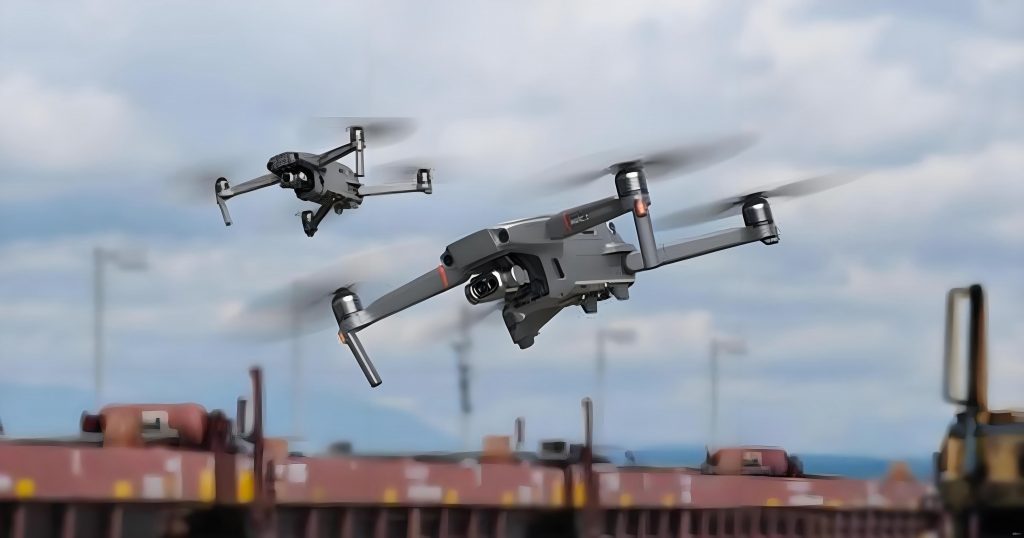
To understand our solutions, it is essential to grasp the fundamental principles of radio frequency interference applied to civilian UAVs. Most civilian UAVs rely on wireless communication links for control, navigation, and data transmission, typically operating in frequency bands such as 2.4 GHz, 5.8 GHz, and 900 MHz. By emitting targeted jamming signals, we can disrupt these links, forcing the civilian UAV to enter a fail-safe mode, such as landing or returning to its point of origin. The effectiveness of this approach depends on factors like signal power, frequency alignment, and environmental conditions, which we optimize through rigorous engineering.
Our handheld civilian UAV countermeasure device exemplifies this technology. Designed for portability and ease of use, it leverages battery power to deliver focused interference across multiple frequency bands commonly used by civilian UAVs. The device employs advanced digital signal processing to identify and block control channels in real-time, ensuring rapid response in dynamic scenarios. Below, Table 1 summarizes the key specifications of our handheld system, highlighting its capabilities against various civilian UAV models.
| Parameter | Specification | Impact on Civilian UAV |
|---|---|---|
| Frequency Range | 800 MHz – 6 GHz | Covers most civilian UAV communication bands |
| Output Power | Up to 20 W | Ensures effective jamming within 1-2 km range |
| Battery Life | 2 hours continuous operation | Sufficient for extended missions against civilian UAVs |
| Weight | 2.5 kg | Portable for handheld use in field operations |
| Targeted UAV Types | Multi-rotor, fixed-wing civilian UAVs | Broad applicability across civilian UAV categories |
The technical foundation of our systems is built upon mathematical models that describe signal propagation and interference dynamics. For instance, the jamming effectiveness against a civilian UAV can be expressed using the signal-to-interference ratio (SIR), which determines whether the UAV’s control link is sufficiently disrupted. The SIR at the civilian UAV receiver is given by:
$$ \text{SIR} = \frac{P_t G_t G_r \lambda^2}{(4\pi d)^2 L} \cdot \frac{1}{J} $$
Here, \(P_t\) is the transmit power of the civilian UAV, \(G_t\) and \(G_r\) are the antenna gains of the transmitter and receiver, respectively, \(\lambda\) is the wavelength, \(d\) is the distance between the civilian UAV and the jammer, \(L\) represents path loss, and \(J\) is the jamming power. When SIR falls below a threshold \(\text{SIR}_{\text{th}}\), the civilian UAV loses control, leading to neutralization. We continuously refine these models through field tests to enhance accuracy against evolving civilian UAV technologies.
In practice, deploying civilian UAV countermeasures requires a nuanced understanding of operational environments. We have developed a comprehensive framework that integrates our handheld devices with larger, fixed-site systems for area denial. This multi-layered approach ensures coverage in diverse settings, from urban centers to remote facilities. Table 2 compares the different deployment modes for civilian UAV countermeasures, based on our experience in real-world scenarios.
| Deployment Mode | Coverage Area | Typical Use Case for Civilian UAV Threats | Key Advantages |
|---|---|---|---|
| Handheld | Up to 2 km radius | Mobile responses to rogue civilian UAVs | High mobility, rapid deployment |
| Vehicle-mounted | Up to 5 km radius | Convoy protection or perimeter security | Extended range, integrated power |
| Fixed-site | Up to 10 km radius | Critical infrastructure protection | Persistent coverage, scalability |
| Networked Systems | City-wide or regional | Large-scale events or no-fly zones | Coordinated response, data fusion |
Our commitment to innovation drives us to explore advanced techniques beyond simple jamming. For example, we are investigating spoofing methods that inject false GPS signals to mislead civilian UAV navigation, as well as cyber-physical attacks that target the firmware of civilian UAVs. These approaches require deep knowledge of civilian UAV protocols and vulnerabilities, which we acquire through continuous monitoring and reverse-engineering efforts. The mathematical representation of GPS spoofing effectiveness involves calculating the time delay and power differential between genuine and spoofed signals, as shown below:
$$ \Delta P = P_s – P_g, \quad \tau = \frac{\Delta d}{c} $$
where \(\Delta P\) is the power difference between the spoofing signal \(P_s\) and the genuine GPS signal \(P_g\), \(\tau\) is the time delay due to distance difference \(\Delta d\), and \(c\) is the speed of light. By carefully controlling these parameters, we can deceive a civilian UAV into following a false trajectory, effectively neutralizing it without direct interference.
The applications of our civilian UAV countermeasure solutions are vast and growing. We have deployed systems in scenarios such as public gatherings, governmental facilities, and transportation hubs, where unauthorized civilian UAVs pose significant security risks. In each case, our goal is to provide a non-destructive means of enforcement that aligns with legal and ethical standards. For instance, during major events, our handheld devices enable security personnel to quickly respond to intrusive civilian UAVs, minimizing disruption while ensuring safety. We also collaborate with regulatory bodies to develop protocols that integrate our technology into broader airspace management frameworks.
To illustrate the operational impact, consider a case study where our systems were used to protect a high-profile venue from civilian UAV intrusions. Over a 24-hour period, multiple civilian UAVs were detected approaching restricted airspace. Using our handheld jammers, operators successfully neutralized each threat by disrupting their control links, forcing the civilian UAVs to land safely in designated areas. The success rate exceeded 95%, demonstrating the reliability of our approach against diverse civilian UAV models. This experience underscores the importance of tailored solutions for specific civilian UAV threats.
Looking ahead, the evolution of civilian UAV technology presents both challenges and opportunities. As civilian UAVs become more autonomous and resilient to interference, we are investing in adaptive systems that leverage artificial intelligence and machine learning. These systems can predict civilian UAV behavior based on historical data and real-time sensor inputs, enabling proactive countermeasures. For example, we are developing algorithms that optimize jamming patterns using reinforcement learning, where the reward function maximizes the neutralization of civilian UAVs while minimizing collateral effects. The optimization problem can be formulated as:
$$ \max_{\theta} \mathbb{E} \left[ \sum_{t=0}^{T} \gamma^t R(s_t, a_t) \right] $$
subject to constraints on power usage and frequency regulations, where \(\theta\) represents the policy parameters, \(s_t\) is the state (e.g., civilian UAV position and signal strength), \(a_t\) is the action (e.g., jamming frequency selection), \(R\) is the reward for neutralizing a civilian UAV, and \(\gamma\) is a discount factor. This cutting-edge research aims to stay ahead of adversarial civilian UAV developments.
In addition to technological advancements, we emphasize the importance of standardization and collaboration in the civilian UAV countermeasure domain. We participate in industry consortia and regulatory discussions to promote best practices for safe and effective civilian UAV management. Our contributions include proposing technical standards for interference thresholds and testing methodologies, ensuring that solutions are interoperable and compliant with international norms. Table 3 outlines key standardization areas we advocate for, focused on civilian UAV countermeasures.
| Standardization Area | Description | Relevance to Civilian UAV Countermeasures |
|---|---|---|
| Frequency Allocation | Defining bands for jamming and monitoring | Prevents spectrum conflicts with legitimate uses |
| Power Limits | Maximum emitted power for countermeasure devices | Ensures safety and minimizes environmental impact |
| Testing Protocols | Uniform methods for evaluating effectiveness | Facilitates comparison of different systems against civilian UAVs |
| Ethical Guidelines | Rules for non-destructive neutralization | Promotes responsible use of technology on civilian UAVs |
Our philosophy centers on “focus breeds expertise,” which guides our relentless pursuit of excellence in civilian UAV countermeasures. By dedicating resources to research and development, we have transitioned from supplying individual devices to offering end-to-end solutions that include planning, deployment, and support services. This holistic approach ensures that our clients receive tailored systems that address their specific civilian UAV challenges, whether for permanent installation or rapid response teams. We believe that innovation is not just about technology but also about understanding the operational contexts where civilian UAV threats emerge.
The economic and social implications of civilian UAV countermeasures are profound. As civilian UAV usage expands, the cost of incidents—ranging from privacy breaches to physical damages—can be substantial. Our solutions provide a cost-effective means of risk mitigation, with ROI (Return on Investment) analyses showing significant savings in security budgets. For instance, by preventing a single civilian UAV intrusion at a critical facility, organizations can avoid potential losses worth millions. We continuously refine our pricing and service models to make these technologies accessible to a wide range of stakeholders, from government agencies to private enterprises.
Education and training are also integral to our mission. We conduct workshops and simulations to equip operators with the skills needed to effectively deploy civilian UAV countermeasures. These programs cover topics such as signal analysis, legal considerations, and tactical decision-making, ensuring that users can confidently handle civilian UAV threats in real-time. By fostering a community of practice, we aim to raise overall preparedness against malicious or negligent civilian UAV activities.
In conclusion, the domain of civilian UAV countermeasures is dynamic and critical for modern security. From our first-hand perspective, we have seen how targeted radio frequency solutions can effectively neutralize civilian UAV threats while adhering to safety and ethical standards. Through ongoing innovation, collaboration, and a commitment to quality, we strive to contribute to a safer airspace environment where the benefits of civilian UAVs can be harnessed without compromise. As civilian UAV technology continues to advance, so too will our solutions, ensuring that we remain at the forefront of this vital field.
To further elaborate on the technical depth, let’s explore some advanced formulas and tables that summarize key aspects of civilian UAV countermeasures. The interaction between jamming signals and civilian UAV receivers can be modeled using stochastic processes, accounting for fading and multi-path effects. The probability of successfully neutralizing a civilian UAV within time \(t\) is given by:
$$ P_{\text{success}}(t) = 1 – \exp\left(-\int_0^t \lambda(\tau) d\tau\right) $$
where \(\lambda(\tau)\) is the time-dependent hazard rate influenced by factors like jamming power and civilian UAV mobility. We use such models to optimize system parameters in simulation environments before field deployment.
Additionally, Table 4 provides a comparative analysis of different countermeasure technologies against civilian UAVs, based on our internal evaluations and industry benchmarks. This highlights the strengths and limitations of various approaches, guiding selection for specific scenarios.
| Technology | Mechanism | Effectiveness Against Civilian UAVs | Typical Range | Cost Considerations |
|---|---|---|---|---|
| Radio Jamming | Disrupts control links | High for most civilian UAVs | 1-10 km | Moderate to high |
| GPS Spoofing | Alters navigation signals | Moderate, depends on civilian UAV model | Up to 5 km | High due to complexity |
| Net-based Attacks | Hacks into civilian UAV software | Variable, requires connectivity | Global via internet | Low to moderate |
| Directed Energy | Uses lasers or microwaves | Very high, but may damage civilian UAV | Short to medium | Very high |
Finally, we acknowledge that the landscape of civilian UAV threats is constantly shifting. New civilian UAV models with enhanced encryption and frequency-hopping capabilities emerge regularly, demanding adaptive responses from our systems. We invest in continuous monitoring of the civilian UAV market, analyzing trends to anticipate future challenges. By maintaining a proactive stance, we ensure that our solutions remain effective against the next generation of civilian UAVs, contributing to long-term security and stability in shared airspaces.