
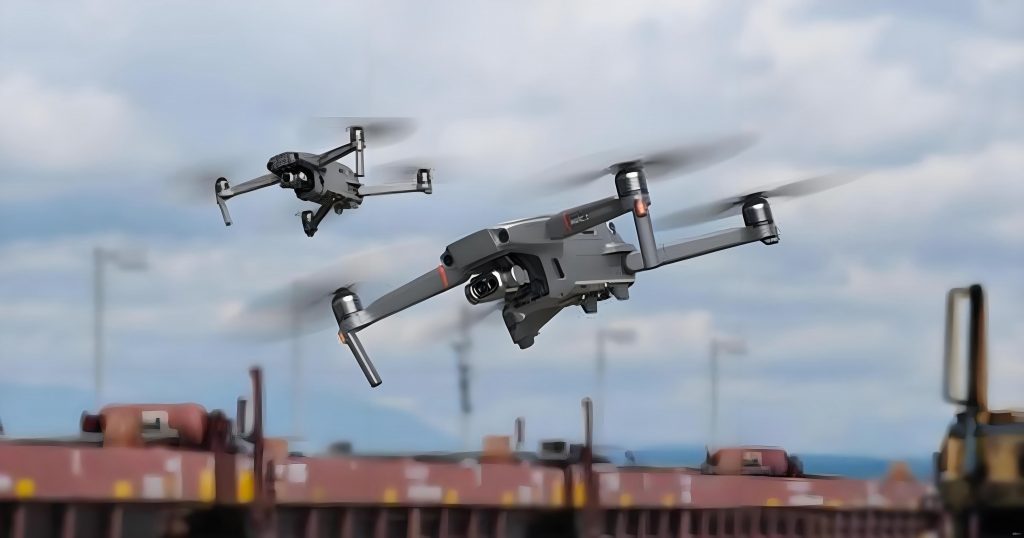
From my perspective as a researcher in aviation law and policy, the rapid ascent of civilian Unmanned Aerial Vehicles (UAVs) represents one of the most dynamic and challenging frontiers in modern regulatory science. These systems, born from military technology, have proliferated into civilian airspace, enabling transformative applications in aerial photography, logistics, precision agriculture, and emergency response. This integration into the fabric of daily life is profound. However, this very success has cast a stark light on the significant regulatory vacuum that exists. Incidents of reckless “rogue flights,” collisions, privacy infringements, and threats to public safety are frequent reminders that technological advancement has far outpaced legal frameworks. The current chorus calling for robust, coherent, and safety-centric legislation for civilian UAVs is not merely an academic exercise; it is a societal imperative to safeguard national airspace, protect citizens, and ultimately, to ensure the sustainable growth of the industry itself.
The evolution of law is often a reaction to societal change, and the domain of civilian UAV operation is a prime example. Initially, China’s civil aviation legal architecture was conceived for manned aviation, with no specific provisions for drones. Applying these traditional, pilot-centric regulations to the diverse, scalable, and remotely operated world of civilian UAVs proved immediately incongruous. In response, a patchwork of regulatory instruments has emerged. At the apex, the Civil Aviation Law was amended in 2018 to include Article 214, a broad, principle-based authorization allowing for separate regulations by the State Council and the Central Military Commission. This was a necessary first step but offered no operational guidance. The most anticipated development, the “Interim Regulations on the Flight Management of Unmanned Aerial Vehicles (Draft for Comments)” prepared by the office of the State Council and Central Military Commission Air Traffic Control Committee in 2018, promised a holistic approach. It proposed breakthroughs in classification, airspace design, and flight planning. Yet, years later, it remains a draft, not enacted law.
Consequently, the primary regulatory burden has fallen on the civil aviation administration, which has issued a series of normative documents. These cover operations, traffic management, real-name registration, pilot qualifications, commercial activities, airworthiness certification, and risk assessment. While these documents have constructed a basic administrative framework, their legal force is limited. The only department rule to explicitly mention “UAV,” the revised “Civil Aviation Air Traffic Management Rules,” provides only general principles. The current legislative landscape for civilian UAVs can be summarized by its hierarchy and substance, revealing a system under construction but not yet codified.
| Legislative Tier | Instrument | Status & Key Content Related to Civilian UAV | Legal Force & Operability |
|---|---|---|---|
| Law | Civil Aviation Law (2018 Amendment) | Article 214: Principle-based authorization for separate State/Military regulations. | High authority, zero operability. Provides a legal basis but no rules. |
| Administrative Regulation | Interim Regulations on UAV Flight Management (Draft) | Comprehensive draft covering classification, airspace, approvals, product quality, registration, piloting. | Not yet enacted. The critical missing piece. |
| Departmental Rule | Civil Aviation Air Traffic Management Rules | Chapter 18, Section 2: Principle-based provisions for UAV flight activities. | Medium authority, low operability. Lacks detailed procedures. |
| Normative Documents | e.g., Light Small UAV Operation Regulations, Real-Name Registration Rules, Pilot Management Rules | Multiple documents forming a basic management framework for operations, certification, and pilots. | Low legal authority, moderate operability. The de facto working rules but easily superseded. |
This fragmented landscape gives rise to several critical problems that hinder effective governance of civilian UAVs.
1. The Problem of Legislative Hierarchy and Coherence. The over-reliance on normative documents creates a fragile foundation. These documents lack the stability, authority, and public accountability of laws or regulations. They are inherently temporary and can create conflicts. For instance, the classification standards for civilian UAVs in different documents may not align, causing confusion for manufacturers and operators. The legal system’s overall “binding force” for civilian UAV activities remains weak. We can conceptualize this as a function of the hierarchy ($H$) and specificity ($S$) of the rules applicable to a given UAV operation ($O$).
$$ \text{Legal\_Strength}(O) = \sum_{i=1}^{n} (H_i \cdot S_i) $$
Where a high-score Legal_Strength indicates a clear, authoritative rule. Currently, for most civilian UAV operations, the sum is low because $H$ is low (normative documents dominate) and $S$ is often inconsistent.
2. Unclear Delineation of Regulatory Responsibilities. While the draft Ordinance designates a high-level leading committee, the operational division of labor among aviation, public security, industry, and spectrum regulators remains blurred. A critical gap is the enforcement against “rogue flights” (flights without registration, license, or approval). Nominally assigned to civil aviation authorities, these agencies lack the nationwide personnel and enforcement network to police a massively dispersed and mobile population of individual operators. This creates a dangerous accountability vacuum. The matrix below illustrates the confusion in enforcement jurisdiction for common violations.
| Violation Type | Draft Ordinance Stated Enforcer | Practical Enforcer Capability | Suggested Optimal Enforcer |
|---|---|---|---|
| Unlicensed/Unregistered Flight (“Rogue Flight”) | Civil Aviation Authority | Low. Lends to vast social management, not just industry oversight. | Public Security Organs (Police) |
| Operating in Controlled Airspace without Clearance | Flight Control Department / Civil Aviation | Moderate. Air traffic system can detect but ground response is limited. | Joint action: Flight Control to detect/order, Police to locate/arrest. |
| Reckless Endangerment (e.g., flying over crowds) | Unclear / Civil Aviation | Low for aviation authority, High for public order management. | Public Security Organs (under public safety laws) |
| Commercial Operation without Business License | Civil Aviation Authority / Market Regulation | Moderate to High for the respective domain. | Civil Aviation (safety audit) & Market Regulation (business license). |
3. Inadequate Supporting Regulatory Infrastructure. Law cannot function in a vacuum. Several key enablers for civilian UAV regulation are underdeveloped:
- National Integrated UAV Supervision Platform: The cornerstone of effective oversight is a system that provides “situational awareness”—seeing and tracking civilian UAV flights in near real-time. Without this, regulators are blind. While local prototypes exist, a unified national platform integrating flight plans, real-time telemetry, and remote ID data is not yet operational.
- Airspace Reform Stagnation: The promised categorization of low-altitude airspace into Controlled, Monitored, and Report-only categories, essential for freeing up safe zones for routine civilian UAV operations, has not been fully implemented. The draft Ordinance’s proposed “Fly-permissible Zones” remain theoretical without concrete charts and procedures.
- Immature Airworthiness and Operational Certification Systems: The processes for certifying novel civilian UAV designs and complex commercial operations are nascent. The regulatory body lacks the specialized personnel, standardized procedures, and experience needed to handle the influx of applications safely and efficiently.
- Resource Scarcity: The regulatory agencies simply do not have the human, technical, and financial resources commensurate with the scale and growth rate of the civilian UAV industry.
The risk posed by a civilian UAV operation can be modeled as inversely proportional to the maturity of this supporting infrastructure ($I$).
$$ \text{Risk}_{\text{UAV Op}} \propto \frac{\text{Complexity}_{\text{Op}} \cdot \text{Potential\_Harm}_{\text{Op}}}{I_{\text{Platform}} \cdot I_{\text{Airspace}} \cdot I_{\text{Cert}} \cdot I_{\text{Resources}}} $$
Currently, the denominator is small, leading to high systemic risk.
Therefore, to secure the future of civilian UAVs, a tripartite strategy focusing on top-level design, legal construction, and systemic enablers is essential.
I. Strengthening Top-Level Leadership and Strategic Design for Civilian UAV Legal Governance
First, central leadership must prioritize and accelerate high-level legislation. The draft Ordinance’s inclusion in the State Council’s legislative work plan is a crucial opportunity that must be seized with decisive leadership and coordinated effort to finalize and enact it. This is the single most important step to achieve “rule by law” for civilian UAVs.
Second, a holistic revision plan for the entire aviation legal system is needed. The current system is built around manned aircraft. A strategic roadmap should be drafted to methodically revise laws, regulations, and rules at all levels to incorporate provisions for civilian UAVs, creating an integrated legal ecosystem.
Third, legal governance must be coupled with institutional reform. Legislation on civilian UAVs will be hamstrung without parallel progress on low-altitude airspace management reform. These two policy streams—industry regulation and airspace liberation—must be developed in tandem.
II. Comprehensively Advancing the Legal Framework for Civilian UAVs
The legal construction must be systematic, covering all tiers from basic law to implementation rules.
1. Revise Foundational Laws. The Civil Aviation Law should be amended to include a dedicated chapter establishing the fundamental principles for civilian UAV governance: definitions, the principle of state sovereignty over airspace, basic requirements for registration, airworthiness, operator responsibility, and pilot licensing. This chapter would provide the authoritative anchor for all subordinate regulations. Concurrently, relevant sections of the Criminal Law and Public Security Administration Punishment Law should be reviewed to explicitly address severe infractions like malicious “rogue flying” that endangers public safety.
2. Enact and Refine the Administrative Regulation: The UAV Flight Management Ordinance. The 2018 draft is a solid foundation but requires key enhancements before enactment:
- Augment Safety-Centric Operational Duties: Explicitly mandate that no person may operate a civilian UAV under the influence of alcohol/drugs, or in a physically or mentally unfit state. Prohibit careless or reckless operation, the carriage of hazardous materials, and (as a default) flight over open-air assemblies of people.
- Introduce and Regulate the “UAS Operator”: Following international best practices (e.g., EU Regulation 2019/947), the concept of the UAS operator—the natural or legal person responsible for the operation—must be central. Regulations should specify operator obligations for maintenance, record-keeping, and safety management, with a formal certification process for complex operations.
- Clarify Enforcement Jurisdiction: As analyzed in the table above, articles must unambiguously assign enforcement power. Crucially, the primary responsibility for investigating and penalizing unlicensed “rogue flights” should vest with public security organs, leveraging their public order management mandate and nationwide presence.
- Liberalize Airspace and Simplify Approvals: The draft’s proposals are a start but must go further. Clearly chart and publish extensive “Fly-permissible Zones.” For operations in designated areas under certain conditions (e.g., visual line-of-sight, low weight), move towards a notification-based system instead of pre-approval.
- Define Accident Investigation Protocols: Establish clear procedures for reporting and investigating accidents involving civilian UAVs, identifying the responsible agency (likely the civil aviation accident investigation body for significant incidents).
3. Develop a Unified Departmental Rule for Civilian UAV Operations. Once the Ordinance is in force, the civil aviation authority should consolidate and elevate its various normative documents into a coherent, legally robust departmental rule. This rule would provide the detailed implementation procedures. Its structure should encompass:
| Module | Key Content (Derived from Existing Norms & New Needs) |
|---|---|
| General Operating Rules | Detailed safety obligations (alcohol, recklessness, overflight prohibitions), right-of-way rules, visual line-of-sight requirements, night operations. |
| Airworthiness Certification | Procedures and standards for design approval, production monitoring, and issuing airworthiness certificates for different categories of civilian UAVs. |
| Registration & Remote Identification | Mandatory real-name registration for all civilian UAVs above a minimal mass. Technical standards for broadcast Remote ID to enable in-flight identification. |
| Pilot & Training Organization Licensing | Classification of pilot certificates (e.g., basic, advanced) based on risk. Licensing and oversight standards for pilot training organizations. |
| UAS Operator Certification | Requirements for obtaining an operational authorization for specific (e.g., BVLOS, transport) categories of civilian UAV activities, including manuals, safety systems, and maintenance procedures. |
| Flight Activity Management | Procedures for airspace access, flight plan submission in controlled zones, and coordination with air traffic services. |
III. Perfecting Supporting Regulatory Mechanisms for Civilian UAVs
Finally, the legal framework must be supported by tangible systems.
- Deploy the National Integrated UAV Supervision Platform (NISP): This is the operational “central nervous system.” It must aggregate data from registration, flight plans, Remote ID, and possibly radar/layered sensing to create a common operational picture shared among aviation, public security, and military authorities.
- Develop the Civil Aviation UAS Operation Management (UOM) Platform: This industry-specific platform would handle the “lifecycle” services for compliant civilian UAV users: automated flight plan processing, airspace status queries, operator and pilot certificate management, and safety data reporting.
- Build Airworthiness and Operational Certification Capacity: Invest in training specialized certification teams and develop streamlined, risk-based certification pathways (like the Specific Operations Risk Assessment – SORA methodology) that are proportionate to the risk of the civilian UAV operation.
- Execute Low-Altitude Airspace Reform: This is the ultimate enabler. The legal categorization of airspace must be realized on the chart and in practice. Designating and publishing vast, accessible areas for low-risk civilian UAV activities is the only way to move the majority of users from illicit to legal flight.
The relationship between a successful regulatory regime ($R$), the legal framework ($L$), and the supporting infrastructure ($I$) can be expressed as a product, indicating that failure in any element reduces the overall outcome to zero.
$$ R_{\text{Effective UAV Governance}} = L_{\text{Comprehensive}} \cdot I_{\text{Robust}} $$
Both factors are currently sub-optimal, but focused effort can elevate their value.
In conclusion, the civilian UAV sector stands at a crossroads. Unchecked, it poses significant risks to safety, security, and public trust. Overly restrictive or incoherent regulation, however, will stifle innovation and economic potential. The path forward requires courageous and intelligent legal engineering. By implementing a strategy of decisive top-down leadership, constructing a coherent and safety-focused legal hierarchy, and building the essential digital and physical infrastructure, we can create an environment where the immense benefits of civilian UAV technology are realized safely, securely, and sustainably. The mission is clear: to build a legal corridor through which the boundless potential of civilian UAVs can truly take flight.