
In recent years, the rapid advancement of unmanned aerial vehicle (UAV) technology has significantly expanded the applications of civilian UAVs in various sectors such as logistics, agriculture, surveillance, and disaster response. As these systems become more integrated into airspace, ensuring their safety and reliability is paramount. One critical aspect of UAV safety is the ground station alerting system, which serves as the primary human-machine interface for operators. Based on my analysis of existing regulations and design principles, I explore the fundamentals of civilian UAV ground station alerting systems, focusing on airworthiness requirements, compliance verification, and key design considerations. This study aims to provide insights into developing effective alerting systems that mitigate human error, a leading cause of incidents in civilian UAV operations.
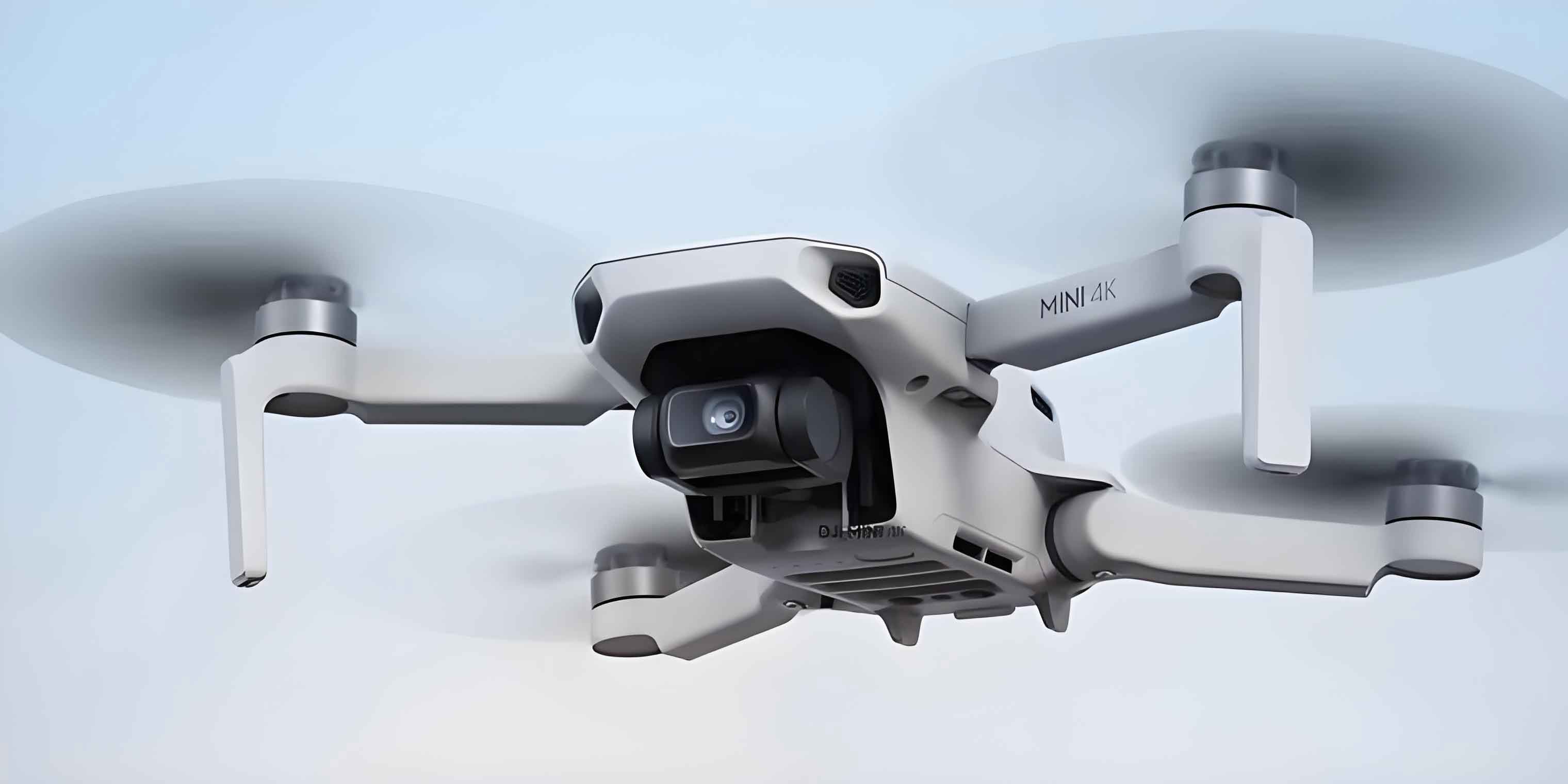
The integration of civilian UAVs into national airspace necessitates adherence to stringent airworthiness standards, similar to those for manned aircraft. Alerting systems play a crucial role in this context by notifying operators of abnormal conditions, system failures, or environmental threats, thereby reducing the impact of human factors. According to studies by regulatory bodies like the FAA, operator error accounts for a substantial percentage of civilian UAV accidents, highlighting the need for robust human-machine interfaces. In this article, I delve into the design and validation of alerting systems for civilian UAV ground stations, drawing parallels with manned aircraft standards while addressing unique challenges posed by unmanned operations. I will discuss the classification, levels, and methods of alerts, analyze airworthiness requirements, propose compliance verification strategies, and outline design issues that must be considered to enhance the safety and efficiency of civilian UAV systems.
To understand the foundation of alerting systems, it is essential to review the principles established for manned civil aircraft. These principles, as defined in standards like SAE ARP 4102/4 and ARINC 726, provide a framework that can be adapted for civilian UAVs. An alert is defined as a signal to the flight crew that draws attention to a non-normal condition, system fault, or aircraft state, enabling the crew to identify and respond appropriately. For civilian UAVs, this translates to alerts presented at the ground station to inform operators of similar conditions, albeit without direct onboard crew. The classification of alerts typically encompasses four main categories: aircraft configuration alerts, flight status alerts, flight environment alerts, and aircraft system alerts. These categories ensure comprehensive coverage of potential issues that could affect the safety of civilian UAV operations.
| Category | Sub-category | Examples for Civilian UAVs |
|---|---|---|
| Aircraft Configuration Alerts | Takeoff Configuration | Warnings for improper wing deployment or payload imbalance in civilian UAVs. |
| Landing Configuration | Alerts for gear not extended or flap settings incorrect during descent. | |
| Flight Status Alerts | Speed Alerts | Overspeed or stall warnings based on airspeed data from civilian UAV sensors. |
| Attitude Alerts | Excessive pitch or roll angles that could lead to loss of control. | |
| Altitude Alerts | Deviations from assigned altitude or proximity to terrain. | |
| Flight Environment Alerts | Terrain Proximity | Ground collision warnings using GPS and altimeter data in civilian UAVs. |
| Weather Alerts | Wind shear or icing conditions detected via onboard meteorological sensors. | |
| Air Traffic Alerts | Conflicts with other aircraft, based on ADS-B or TCAS systems. | |
| Aircraft System Alerts | Fire/Smoke Alerts | Detection of overheating or smoke in engine compartments of civilian UAVs. |
| System Fault Alerts | Failures in propulsion, navigation, or communication systems. | |
| System Status Alerts | Low battery or fuel levels, requiring operator intervention. |
The levels of alerts are critical for prioritizing operator responses. Based on ARINC 726, alerts are categorized into four levels: Warning, Caution, Advisory, and Information. Each level corresponds to the urgency of the situation and dictates the alerting characteristics, such as visual and auditory cues. For civilian UAV ground stations, these levels help operators quickly assess the severity of an issue and take appropriate action. The table below summarizes the alert levels and their features, adapted for civilian UAV applications. This hierarchical approach is vital for managing the cognitive load on operators, especially in complex missions involving multiple civilian UAVs.
| Level | State | Criteria | Visual Display | Auditory Cues | Tactile Cues |
|---|---|---|---|---|---|
| 3 (Warning) | Critical | Requires immediate corrective action to avoid hazardous conditions in civilian UAVs. | Red color, alphanumeric output | Attention sound (e.g., continuous tone) or voice alert | Vibration or stick shaker (if applicable) |
| 2 (Caution) | Abnormal | Requires awareness and subsequent corrective action for civilian UAV safety. | Amber color, alphanumeric output | Attention sound with optional voice | None |
| 1 (Advisory) | Operational | Requires awareness and possible action for civilian UAV system status. | Color other than red (e.g., green, blue), alphanumeric output | Optional sound | None |
| 0 (Information) | Informational | Provides status updates without immediate action needed for civilian UAVs. | Discrete lights or alphanumeric output in white or blue | Optional sound | None |
Alerting methods involve multi-sensory cues to ensure effective communication. According to AMC 25.1322, alerts should combine auditory, visual, and tactile elements where necessary, without interfering with operator tasks. For civilian UAV ground stations, this might include flashing lights on displays, audible tones through speakers, and haptic feedback via control sticks. The integration of these methods enhances situational awareness, particularly in noisy or visually cluttered environments common in civilian UAV operations. Mathematical models can be used to optimize alert timing and intensity. For instance, the urgency of an alert can be quantified using a priority function based on factors like time to impact or system degradation rate. Let me propose a simple formula to calculate alert priority for a civilian UAV:
$$ P = w_1 \cdot S + w_2 \cdot T + w_3 \cdot C $$
where \( P \) is the priority score, \( S \) represents the severity of the condition (e.g., on a scale from 0 to 10), \( T \) is the time available for response (in seconds), and \( C \) denotes the complexity of the required action (e.g., number of steps). The weights \( w_1, w_2, w_3 \) are adjusted based on mission-criticality for the civilian UAV. Higher \( P \) values indicate more urgent alerts, triggering higher-level warnings. This approach allows for dynamic prioritization in civilian UAV ground stations, adapting to real-time scenarios.
Turning to airworthiness requirements, regulatory frameworks for civilian UAVs are evolving. For example, the “High-Risk Cargo Fixed-Wing UAV System Airworthiness Standards (Trial)” issued by authorities includes provisions for indicators and alerts in the ground station. Specifically, it mandates color coding for alert messages: red for warnings, amber for cautions, green for safe operations, and other distinguishable colors for informational messages. This aligns closely with CCAR 25.1322 for manned aircraft, emphasizing consistency in human factors design. In my analysis, I find that these requirements aim to standardize alert presentation across civilian UAV systems, reducing the risk of operator confusion. The table below compares key airworthiness clauses for manned aircraft and civilian UAVs, highlighting similarities and adaptations.
| Aspect | Manned Aircraft (CCAR 25.1322) | Civilian UAV (Trial Standards) |
|---|---|---|
| Color Coding | Red for warnings, amber for cautions, green for safe indications | Red for warnings, amber for cautions, green for safe operations, other colors for information |
| Alert Levels | Warning, caution, advisory | Warning, caution, advisory, information |
| Display Visibility | Must be effective under all lighting conditions | Must be effective under all lighting conditions in ground station |
| Compliance Verification | Design description, safety assessment, flight tests, onboard inspection | Similar methods, adapted for ground station testing of civilian UAVs |
To demonstrate compliance with airworthiness requirements for civilian UAV ground station alerting systems, I propose a verification strategy based on methods used for manned aircraft. These include design description (MC1), safety assessment (MC3), flight testing (MC6), and ground station inspection (MC7). For design description, detailed documentation of the alerting system architecture, including logic diagrams and color specifications, should be provided. Safety assessment involves analyzing the alerting system’s impact on overall civilian UAV safety, considering scenarios like false alerts or alert loss. Flight testing simulates fault conditions during civilian UAV missions to validate alert triggers and displays. Ground station inspection checks the physical implementation, ensuring that alerts are visible and audible under operational conditions. This multi-faceted approach ensures that civilian UAV alerting systems meet regulatory standards while enhancing operational safety.
In designing alerting systems for civilian UAV ground stations, several issues must be addressed to optimize human-machine interaction. First, visibility design is crucial. According to human factors guidelines like GJB807A-2008, the normal line of sight is 15° below horizontal, and critical alert components should have a minimum angular size of 2° for perceptibility. For civilian UAV ground stations, primary warning lights or displays should be placed within the operator’s optimal field of view, typically centered on the main console. This can be expressed mathematically by calculating the visual angle \( \theta \) based on display size and distance:
$$ \theta = 2 \cdot \arctan\left(\frac{h}{2d}\right) $$
where \( h \) is the height of the alert display and \( d \) is the viewing distance. For civilian UAV operations, ensuring \( \theta \geq 2^\circ \) guarantees that alerts are easily noticeable, reducing response times.
Second, alert priority management is essential to handle multiple concurrent alerts. Based on FAA proposals, alerts should be grouped by level and prioritized within groups to minimize distraction. For civilian UAV ground stations, I recommend a hierarchical display where warnings appear at the top, followed by cautions, advisories, and information. Within each group, alerts can be sorted by urgency using the priority formula mentioned earlier. This prevents information overload and guides operators toward the most critical issues first, which is vital in multi-civilian UAV control scenarios.
Third, alert suppression design helps reduce nuisance alerts. Suppression mechanisms can be categorized into phase suppression, priority-based suppression, correlation suppression, and manual suppression. For civilian UAVs, phase suppression involves disabling non-critical alerts during high-workload phases like takeoff or landing. Priority-based suppression allows higher-level alerts to mute lower ones, while correlation suppression removes redundant alerts (e.g., if a system failure alert encompasses a sub-component fault). Manual suppression lets operators acknowledge and silence alerts when necessary. These strategies can be modeled using Boolean logic. For example, let \( A_i \) represent an alert condition, and \( S \) denote the suppression state. The effective alert \( E_i \) for a civilian UAV can be expressed as:
$$ E_i = A_i \land \neg (S_{\text{phase}} \lor S_{\text{priority}} \lor S_{\text{correlation}} \lor S_{\text{manual}}) $$
where \( \land \) is logical AND, \( \lor \) is logical OR, and \( \neg \) is negation. This ensures that alerts are presented only when relevant, enhancing the efficiency of civilian UAV operations.
Additionally, the integration of auditory alerts requires careful consideration. For civilian UAV ground stations, sound levels and patterns should be distinguishable from background noise, especially in outdoor or industrial environments. I suggest using frequency-modulated tones or voice messages that convey urgency without causing startle responses. The effectiveness of auditory alerts can be evaluated using signal detection theory, where the probability of correct alert perception \( P_d \) is a function of signal-to-noise ratio (SNR). For a civilian UAV system, optimizing SNR through speaker placement and sound design is key to reliable alerting.
To further illustrate design considerations, I present a table summarizing key issues and recommendations for civilian UAV ground station alerting systems. This table synthesizes insights from manned aircraft standards and adapts them to the unmanned context, emphasizing the unique challenges of civilian UAV operations.
| Design Issue | Description | Recommendation for Civilian UAVs |
|---|---|---|
| Visual Visibility | Ensuring alerts are within operator’s field of view and sufficiently large. | Place primary displays at eye level with minimum 2° angular size; use high-contrast colors. |
| Alert Prioritization | Managing multiple alerts to avoid cognitive overload. | Implement hierarchical sorting based on urgency and level; use dynamic priority scoring. |
| Suppression Logic | Reducing unnecessary or distracting alerts. | Incorporate phase, priority, correlation, and manual suppression; validate through simulation. |
| Auditory Design | Making alerts audible in noisy environments. | Use distinct tone patterns; integrate voice alerts for critical warnings; optimize speaker placement. |
| Color Coding | Adhering to airworthiness standards for color use. | Follow red/amber/green scheme; test under various lighting conditions for civilian UAV ground stations. |
| Compliance Verification | Demonstrating adherence to regulations. | Employ design docs, safety assessments, flight tests, and inspections tailored to civilian UAV systems. |
In conclusion, the development of effective alerting systems for civilian UAV ground stations is a multifaceted endeavor that requires careful integration of human factors, airworthiness standards, and technological innovation. By drawing on established principles from manned aviation, such as those in SAE ARP 4102/4 and ARINC 726, and adapting them to the unique demands of unmanned operations, we can create systems that enhance the safety and reliability of civilian UAVs. Key design issues like visibility, prioritization, and suppression must be addressed through mathematical modeling and empirical testing. As regulatory frameworks evolve, ongoing research and collaboration will be essential to refine these systems, ensuring that civilian UAVs can operate safely in increasingly complex airspace. This study serves as a foundational exploration, highlighting the importance of alerting systems in mitigating human error and advancing the integration of civilian UAVs into everyday applications.
Looking ahead, future work could involve developing standardized test protocols for civilian UAV alerting systems or exploring machine learning algorithms to predict and prioritize alerts based on historical data. The continuous improvement of these systems will not only meet airworthiness requirements but also foster public trust in civilian UAV technology. Through diligent design and validation, we can unlock the full potential of civilian UAVs while maintaining the highest safety standards.