
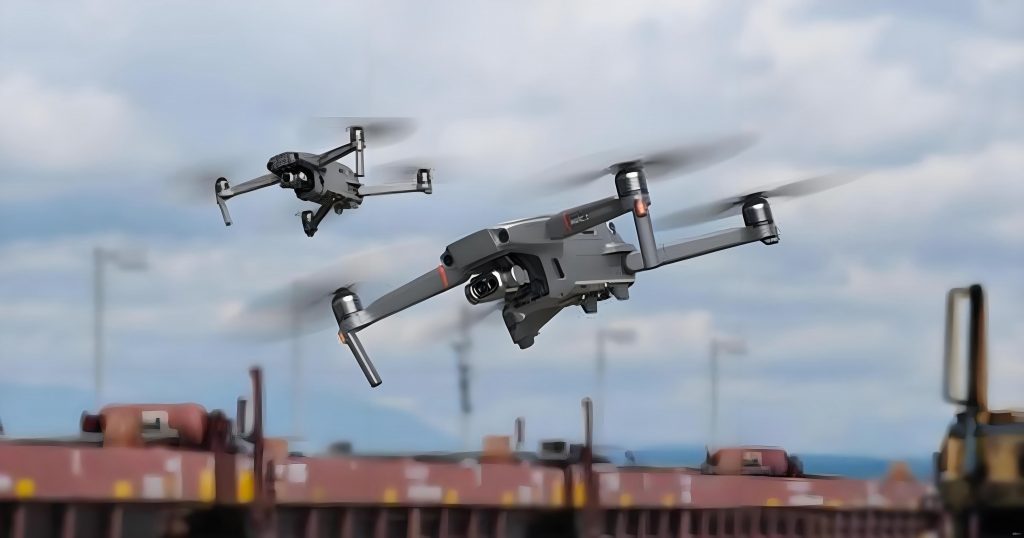
As a researcher deeply involved in the field of spectrum management and security, I have observed the rapid proliferation of civilian unmanned aerial vehicles (UAVs) with both fascination and concern. The surge in the civilian UAV market has been paralleled by a troubling rise in incidents involving unlicensed or unauthorized flights, often termed “black flights.” These pose significant threats to aviation safety, critical infrastructure, and national security. The inherent characteristics of civilian UAVs—their agility, programmability, and low cost—make them attractive tools for malicious actors, elevating the risk to public safety. Therefore, developing effective technologies for the detection and counteraction of rogue civilian UAVs has become a critical and complex challenge that demands immediate attention.
The operational spectrum of a civilian UAV is a key vulnerability for detection. Typically, a UAV maintains communication links for command & control (C2) and, often, for First-Person View (FPV) video downlink. The C2 link, usually operating in the 2.4 GHz or 5.8 GHz ISM bands, is essential for the pilot’s commands. The video downlink, often on 5.8 GHz or 1.2/1.3 GHz bands, transmits real-time footage. The signal features for identification can be modeled by a feature vector F:
$$ \mathbf{F} = [f_c, BW, M, R_s, \tau_d, H_p] $$
where:
- $f_c$ is the center frequency,
- $BW$ is the channel bandwidth,
- $M$ denotes the modulation type (e.g., FHSS, DSSS, OFDM),
- $R_s$ is the symbol rate,
- $\tau_d$ represents time-domain patterns or dwell time for frequency-hopping signals,
- $H_p$ describes the hopping pattern (if applicable).
This fingerprinting allows for the creation of a database to distinguish authorized from rogue civilian UAV signals.
1. The Dual-Edged Nature of Civilian UAV Proliferation
The civilian UAV industry represents a remarkable success story in high-tech manufacturing, becoming a global leader in consumer electronics. These systems have revolutionized sectors from aerial photography and precision agriculture to infrastructure inspection and logistics. However, this very success amplifies the associated risks. The accessibility and capability of modern civilian UAVs have lowered the barrier for their misuse, creating multifaceted security threats. The potential for unauthorized surveillance of sensitive sites, smuggling contraband, disrupting public events, or even enabling terrorist activities with weaponized platforms presents a clear and present danger. Furthermore, collisions with manned aircraft, privacy violations, and nuisance operations are frequent concerns that underscore the need for a robust counter-unmanned aircraft system (C-UAS) framework.
2. Detection and Identification: The Foundational Layer
Effective neutralization of a rogue civilian UAV is impossible without first reliably detecting and classifying it. No single sensor provides a perfect solution; each technology has inherent strengths and limitations. A layered, multi-sensor approach is therefore essential.
2.1 Radar Detection
Radar is a mature technology offering long-range detection and precise tracking. Modern radars can detect low-radar-cross-section (RCS) targets, with some systems capable of identifying objects with an RCS as low as 0.006 m² to 0.01 m², which encompasses many small civilian UAVs. The fundamental radar equation governs detection range:
$$ R_{max} = \sqrt[4]{\frac{P_t G_t G_r \lambda^2 \sigma}{(4\pi)^3 P_{rmin}}} $$
where:
- $P_t$ is the transmitted power,
- $G_t$ and $G_r$ are the transmit and receive antenna gains,
- $\lambda$ is the wavelength,
- $\sigma$ is the target’s RCS,
- $P_{rmin}$ is the minimum detectable received power.
The primary challenge lies in the low and fluctuating RCS ($\sigma$) of small, plastic/composite civilian UAVs, especially when hovering or moving slowly. Distinguishing a UAV from a bird or clutter remains difficult, and micro-UAVs may fall below the noise floor. Furthermore, radar emissions can cause interference and are not always suitable for dense urban environments.
| Technology | Primary Principle | Key Advantages | Major Limitations | Typical Effective Range |
|---|---|---|---|---|
| Radar | Radio wave reflection | Long range, all-weather, velocity data | Difficulty with low-RCS/slow targets, high false alarms from clutter, emits signals | 1-5 km+ |
| RF Sensing | Radio signal analysis | Passive, can identify model/fingerprint, fast detection on activation | Ineffective against pre-programmed/radio-silent UAVs, requires updated signature database | 0.5-3 km |
| Electro-Optical/Infrared (EO/IR) | Visual/thermal imaging | Provides positive visual identification (PID), passive | Short range, severely degraded by weather, high compute load for automatic recognition | < 1 km |
| Acoustic | Sound wave analysis | Passive, can work in RF-denied environments | Very short range, highly susceptible to ambient noise, requires large array for direction finding | < 100 m |
2.2 Radio Frequency (RF) Spectrum Monitoring
This is a cornerstone technology for civilian UAV detection. By monitoring the ISM bands (primarily 2.4 GHz and 5.8 GHz), a system can detect the unique RF signatures emitted by a UAV’s controller and video link. The process involves signal acquisition, feature extraction (as defined by vector F), and classification against a known database. A significant advantage is the potential for early warning—the moment a UAV is powered on and links to its controller. For unencrypted video downlinks, it may even be possible to view the UAV’s live feed for intent assessment. The core challenge is maintaining an exhaustive and up-to-date library of signal signatures for the ever-evolving market of civilian UAVs. This method fails completely against autonomous UAVs operating in a pre-programmed, radio-silent (“dark”) mode.
2.3 Electro-Optical (EO) and Infrared (IR) Tracking
EO/IR sensors provide the crucial capability of positive visual identification. They use cameras (visible light, thermal) to capture images or video streams, which are then processed by computer vision algorithms to detect and classify UAVs. Thermal imaging is particularly useful at night or against certain backgrounds. However, performance degrades rapidly with distance, weather conditions (fog, rain), and the diminishing pixel size of small UAVs at range. The probability of detection $P_d$ for an optical system can be modeled against the target’s apparent contrast and the system’s resolution. Achieving a high $P_d$ for a small civilian UAV beyond a few hundred meters often leads to an unacceptably high false alarm rate $P_{fa}$.
2.4 Acoustic Detection
Acoustic systems use arrays of microphones to capture the unique acoustic signature produced by a UAV’s motors and propellers. The sound pressure level $L_p$ at a distance $r$ from a point source is given by:
$$ L_p(r) = L_{w} – 20 \log_{10}(r) – 11 $$
where $L_{w}$ is the sound power level of the source. By analyzing the spectral components, typically in the 0.3 kHz to 20 kHz range, and using beamforming techniques, the system can estimate direction. While completely passive and immune to RF countermeasures, its utility is limited by very short range and vulnerability to environmental noise pollution, making it suitable only for perimeter defense or as a secondary confirmation sensor.
3. Neutralization and Countermeasure Technologies
Once a hostile or unauthorized civilian UAV is detected and identified, the next step is to mitigate the threat. Countermeasure technologies can be broadly categorized by their mechanism of action.
| Category | Sub-Category | Example Technologies | Mechanism of Action | Key Considerations |
|---|---|---|---|---|
| Kinetic/Physical | Direct Capture | Net guns, interceptor UAVs with nets, trained birds of prey | Physical entanglement and capture | Very short range, requires visual line-of-sight, risk of collateral damage from falling UAV. |
| Direct Destruction | Laser weapons, high-power microwaves (HPM), kinetic impactors | Physical damage to airframe or electronics | High cost, safety risks from falling debris, potential for escalation. Largely military-use only. | |
| Electronic Warfare (EW) | Radio Frequency Jamming | GNSS jammers, C2 channel jammers (wideband/targeted) | Denies navigation or control link, triggering failsafe | Can cause indiscriminate interference, illegal in many jurisdictions, UAV may crash unpredictably. |
| Spoofing | GNSS spoofing, C2 signal spoofing (protocol hijack) | Deceives UAV with false signals to take control or redirect | Technically complex, requires protocol knowledge, offers more controlled takeover. | |
| Directed Energy | Focused acoustic interference | Resonates with UAV gyroscopes to disrupt stability | Nascent technology, very short range, requires precise tracking. |
3.1 Jamming: The Dominant Electronic Countermeasure
Jamming aims to disrupt the critical communication and navigation links of a civilian UAV by overwhelming the receiver with higher-power noise on the same frequency. Its effectiveness is often measured by the Jamming-to-Signal Ratio (JSR) required at the UAV’s receiver:
$$ JSR_{req} = \frac{P_j G_{ju} / L_{ju}}{P_s G_{su} / L_{su}} $$
where:
- $P_j, P_s$ are the jamming and signal transmitter powers,
- $G_{ju}, G_{su}$ are the antenna gains from jammer to UAV and from signal source to UAV,
- $L_{ju}, L_{su}$ are the path losses.
A JSR above a certain threshold causes link failure.
3.1.1 Global Navigation Satellite System (GNSS) Jamming
Most civilian UAVs rely on GNSS (GPS, GLONASS, BeiDou) for positioning, navigation, and station-keeping. GNSS signals are extremely weak by the time they reach Earth, making them highly vulnerable to jamming. A jammer broadcasting noise across the GNSS L-band (e.g., ~1575 MHz for GPS L1) can easily deny service. The UAV’s reaction depends on its programming: it may hover, attempt to return-to-home (RTH) using last-known coordinates, or land immediately. The primary drawback is collateral damage—any device needing GNSS in the area will be affected.
3.1.2 Command & Control (C2) Link Jamming
This targets the 2.4 GHz/5.8 GHz link between the pilot and the civilian UAV.
- Barrage Jamming: The simplest form, involving wideband noise across the entire expected frequency band. It is effective but power-inefficient and highly disruptive to co-frequency services like Wi-Fi and Bluetooth. The required jamming power $P_j$ is high.
- Follow-on Jamming: A more sophisticated method that detects and jams only the specific frequency channel the UAV is using at any moment. It requires fast signal detection and agile jammers to track frequency-hopping signals. The dwell time $ \tau_{dwell} $ of the hopping signal limits the jammer’s response time $ \tau_{response} $. For successful jamming, we require:
$$ \tau_{detect} + \tau_{tune} + \tau_{ramp} < \tau_{dwell} $$
where the terms represent the time for detection, frequency synthesizer tuning, and power amplifier ramp-up. This method is more spectrally selective but technologically demanding.
3.2 Spoofing and Cyber Takeover
This represents a more elegant and targeted approach, aiming to seize control of the rogue civilian UAV rather than merely disabling it.
3.2.1 GNSS Spoofing
A spoofer generates counterfeit GNSS signals that are slightly more powerful than the authentic ones. By carefully controlling the spoofed signal’s timing and data content, the UAV’s receiver can be fooled. This enables several attack vectors:
- Forced Landing: Spoof coordinates of a manufacturer-enforced “no-fly zone” (NFZ) to trigger an automatic landing.
- Path Diversion: Spoof a false “home point” or manipulate the real-time position to divert the UAV to a safe capture area. The spoofed position $ \mathbf{P}_{spoof}(t) $ is calculated to create a believable trajectory away from the protected zone.
The challenge lies in generating a consistent and believable set of signals for all satellites in view.
3.2.2 Protocol Hijacking (Radio Takeover)
This is the most advanced form of electronic countermeasure. It involves reverse-engineering the proprietary communication protocol of a specific civilian UAV model. Once the protocol is understood, a system can transmit valid command packets with a higher signal strength, effectively “overpowering” the legitimate controller and establishing a new command link. The process can be summarized as:
- Intercept & Decode: Capture and analyze RF signals to understand modulation, packet structure, and encryption (if any).
- Impersonate: Generate spoofed packets that mimic the legitimate controller, often including necessary handshake sequences.
- Command: Issue commands to seize control, typically initiating an RTH or guided landing. The success condition requires the spoofed signal’s power $P_{spoof}$ at the UAV to exceed the legitimate signal’s power $P_{legit}$ by a protocol-specific margin $\alpha$:
$$ P_{spoof} \cdot G_{spoof-u} > \alpha \cdot P_{legit} \cdot G_{legit-u} $$
This method is highly selective, can preserve the UAV for forensic analysis, and minimizes collateral interference. However, it is resource-intensive, requiring continuous research to keep pace with new civilian UAV models and firmware updates that change protocols or enhance encryption.
4. Conclusion and the Path Forward
My analysis underscores that there is no single, perfect “silver bullet” for countering the threat posed by rogue civilian UAVs. The effectiveness of any C-UAS solution is context-dependent, hinging on the operational environment, rules of engagement, and available budget. A radar may be ideal for long-range perimeter defense of a military base, while RF detection and protocol hijacking might be preferred for protecting a crowded public event where collateral interference must be minimized. The trend is decisively toward integrated, multi-layered systems that synergistically combine various sensors (radar, RF, EO/IR) with the most appropriate effector (directional jammer, net launcher, radio takeover system). Such systems use sensor fusion algorithms to build a robust track and classification, enabling an informed and graded response—from warning and monitoring to soft-kill (jamming/spoofing) and, as a last resort, hard-kill measures. As civilian UAV technology continues to advance, with trends like AI-based autonomous navigation, advanced encryption, and swarm capabilities, the parallel evolution of detection and countermeasure technologies must accelerate. Sustained research, investment, and regulatory frameworks are essential to stay ahead of the threat curve and ensure the safe integration of beneficial civilian UAV applications into our airspace and society.