
From capturing breathtaking aerial photographs to revolutionizing agricultural practices, the civilian UAV (Unmanned Aerial Vehicle) industry has rapidly evolved from a niche hobbyist technology into a powerful tool with profound societal and economic implications. As an observer and researcher of this dynamic field, I have witnessed firsthand the incredible pace of innovation juxtaposed with the growing pains of integration into our daily lives. The very attributes that make civilian UAVs so revolutionary—their accessibility, versatility, and relative affordability—are also the source of significant regulatory and safety challenges. This report synthesizes findings from policy analysis, market research, and sectoral reviews to explore the current landscape of the civilian UAV ecosystem, diagnose its core dilemmas, and propose a framework for sustainable governance that fosters innovation while ensuring public safety and order.
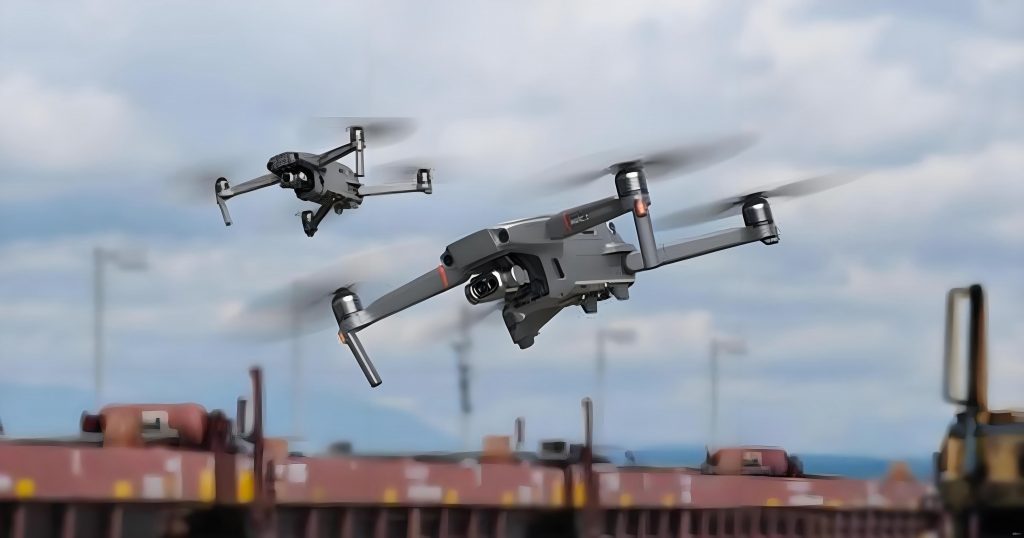
The image above encapsulates the dual nature of the modern civilian UAV: a sleek, technologically advanced tool poised against the backdrop of our shared urban airspace. It symbolizes both the immense potential and the inherent responsibility that comes with democratizing flight. The central thesis of my analysis is that the unchecked growth of the civilian UAV market is unsustainable without a parallel evolution in legal frameworks, technical standards, and societal awareness. The path forward requires a nuanced, “疏导结合” (combining guidance with regulation) approach that moves beyond mere restriction towards intelligent management.
The Soaring Market: A Quantitative and Qualitative Expansion
The market trajectory for civilian UAVs is nothing short of meteonic. What began predominantly in the consumer photography and videography sector has exploded into a multi-faceted industry. We can categorize the primary market drivers into three segments, as summarized in the table below:
| Market Segment | Key Applications | Growth Catalysts | Estimated Market Share (Representative) |
|---|---|---|---|
| Consumer & Recreational | Aerial photography, videography, racing, hobby flying. | Plummeting costs, user-friendly interfaces (smartphone apps), integration with social media. | ~40% (Volume), ~35% (Value) |
| Commercial & Enterprise | Precision agriculture (crop spraying, monitoring), infrastructure inspection (power lines, pipelines), surveying & mapping, logistics (last-mile delivery). | Government “Internet+”/modernization policies, proven ROI on tasks dangerous or tedious for humans. | ~35% (Volume), ~50% (Value) |
| Public Services & Specialized | Disaster response, search & rescue, law enforcement, traffic monitoring, scientific research (meteorology, ecology). | Need for rapid, cost-effective aerial data and intervention capabilities. | ~25% (Volume), ~15% (Value) |
The financial valuation of leading companies, often serving as a market barometer, tells a compelling story. A dominant player like DJI saw its valuation skyrocket from a modest base to tens of billions of dollars within a few years, attracting intense competition from tech giants and startups alike. This influx of capital and talent has accelerated technological diffusion, making sophisticated flight control systems, obstacle avoidance, and high-resolution cameras available at progressively lower price points. The democratization effect is captured by a simple relationship: as technological capability (TC) increases and cost (C) decreases, the adoption rate (AR) grows non-linearly.
$$ AR(t) = k \cdot \frac{TC(t)^{\alpha}}{C(t)^{\beta}} $$
Where \( k \) is a market constant, and \( \alpha, \beta > 1 \), indicating that adoption is highly sensitive to improvements in technology and reductions in cost.
Beyond entertainment, the most transformative impact is arguably in sectors like agriculture. Here, civilian UAVs or “ag-drones” enable precision farming. They can apply pesticides, fertilizers, or water with centimeter-level accuracy, minimizing chemical runoff and maximizing yield. The economic benefit can be modeled by comparing traditional broadcast application versus UAV-mediated precision application:
$$ Savings_{hectare} = (Q_{broadcast} – Q_{UAV}) \cdot P_{input} + (Yield_{UAV} – Yield_{broadcast}) \cdot P_{crop} – C_{UAV\_op} $$
Where \( Q \) is input quantity, \( P \) is price, \( Yield \) is crop output, and \( C_{UAV\_op} \) is the operational cost of the UAV. Pilot subsidy programs in various regions are effectively reducing \( C_{UAV\_op} \), further driving adoption.
The Tangled Web of Challenges: Regulatory and Operational Hurdles
Paradoxically, the very factors driving the success of civilian UAVs have created a complex web of regulatory, safety, and technical challenges. The current state can be described as a patchwork of reactive measures struggling to keep pace with proactive innovation.
1. The Daunting Task of Effective Oversight
Regulatory enforcement faces a trilemma: the sheer volume of devices, the ease of bypassing controls, and limited enforcement resources. While many jurisdictions have implemented mandatory registration for civilian UAVs above a certain weight (e.g., 250 grams), compliance is largely based on user goodwill. The supply chain presents a significant blind spot. Surveys in manufacturing hubs reveal that a substantial portion of sales channels do not verify buyer registration information. Furthermore, a thriving online subculture promotes “jailbreaking” kits or software modifications that disable built-in geofencing and altitude limiters. This creates a population of civilian UAVs invisible to regulatory frameworks. The enforcement challenge can be expressed as a probability function:
$$ P_{detection} = f(R_{compliance}, S_{backdoor}, T_{monitoring}) $$
Where \( R_{compliance} \) is the registration compliance rate, \( S_{backdoor} \) represents the prevalence of supply chain backdoors/DIY builds, and \( T_{monitoring} \) is the technological monitoring coverage. Currently, for many regions, \( P_{detection} \) for non-compliant flights remains unacceptably low.
2. The Under-Specified Acquisition and Operation Regime
Existing regulations often lack granularity concerning the user. There is frequently no minimum age requirement for purchasing or operating lightweight civilian UAVs, treating them akin to toys rather than potent aerial platforms. This oversight ignores a significant risk cohort: underage operators who may lack the maturity and judgment for safe operation. The legal liability framework becomes muddled when an incident involves a minor. Furthermore, pilot certification, where it exists, often focuses on operational skill with insufficient emphasis on aviation law, airspace etiquette, and privacy norms. The consequence is a user base with high operational capability but low regulatory literacy.
3. The Absence of Unified Quality and Performance Standards
The lack of comprehensive, mandatory industry standards for civilian UAV manufacturing leads to significant variability in product safety, reliability, and spectral hygiene. To achieve low cost and portability, some manufacturers may compromise on critical components like battery management systems (a leading cause of in-flight fires) or radio frequency (RF) shielding. Poor RF design can cause a civilian UAV to emit spurious signals that interfere with critical ground-based communications. The risk from non-standardized components can be conceptualized as a failure rate \( \lambda \), which is a function of adherence to standards (S):
$$ \lambda_{UAV} = \lambda_{base} \cdot e^{-\gamma S} $$
Here, \( \lambda_{base} \) is the inherent failure rate of the design, and \( \gamma \) is a positive constant. Without strong standards (low S), the aggregate failure rate across the fleet increases, raising the probability of incidents. The DIY and “kit-built” civilian UAV community operates entirely outside any quality assurance framework, compounding this risk.
4. The Immature Low-Altitude Airspace Management Framework
This is perhaps the most fundamental infrastructural bottleneck. Most national airspace systems were designed for manned aviation, with controlled corridors and strict protocols. The lower airspace (often termed “Class G” or unregulated in many countries below 400-500 feet), where most civilian UAVs operate, is a regulatory gray zone. There is no real-time, dynamic traffic management system equivalent to Air Traffic Control (ATC) for this densely populated layer. The challenge is to integrate a potentially vast number of slow, low-altitude civilian UAVs with traditional aviation and each other. The complexity of managing this airspace scales poorly with traditional methods; it requires a new, highly automated paradigm. The traffic density \( \rho \) in a low-altitude volume \( V \) can quickly approach problematic levels:
$$ \rho(t) = \frac{N_{UAV}(t)}{V} $$
Where \( N_{UAV}(t) \) is the number of active civilian UAVs in the volume. Without a digital management system, the risk of collision \( P_{collision} \) grows quadratically with \( \rho \).
Proposed Framework for Sustainable Integration
Addressing these challenges requires a multi-pronged strategy that leverages technology, clarifies law, and fosters industry co-responsibility. The goal is to construct a governance ecosystem that is as innovative as the technology it seeks to regulate.
1. Innovating the Regulatory Paradigm: From Registration to Digital Supervision
The future of civilian UAV oversight lies in “Digital Supervision” or “UAV Traffic Management” (UTM). This involves shifting from a passive, post-incident model to an active, preventive, and integrated one. The cornerstone is a mandatory, nationwide, and open-architecture UTM cloud platform. Key features would include:
- Universal Digital Identification & Connectivity: Every civilian UAV must be equipped with a tamper-resistant digital license plate (e.g., via Remote ID broadcast) that continuously transmits identity, location, and trajectory data to the UTM platform.
- Dynamic Geofencing: Moving beyond static no-fly zones around airports, the UTM would push dynamic, temporary flight restrictions to civilian UAVs in real-time for events, emergencies, or high-density operations.
- Third-Party Service Integration: Regulators should certify private companies to offer UTM-compliant flight planning, monitoring, and data analytics services, fostering a competitive ecosystem for safety.
The effectiveness E of such a system can be modeled as:
$$ E_{UTM} = \eta \cdot (C_{coverage} \cdot D_{integrity} \cdot L_{latency})^{-1} $$
Where \( \eta \) is system efficiency, \( C_{coverage} \) is network coverage, \( D_{integrity} \) is data integrity/security, and \( L_{latency} \) is communication latency. Minimizing the denominator maximizes regulatory effectiveness.
2. Refining the Acquisition and Operation Lifecycle
Regulations must cover the entire user journey, from purchase to disposal, with special attention to high-risk groups.
| Lifecycle Stage | Proposed Regulatory Enhancement | Intended Outcome |
|---|---|---|
| Purchase | Mandatory point-of-sale identity verification linked to national ID; age restriction (e.g., 16+) for UAVs above a minimal risk class; “Activation Lock” requiring registration for first flight. | Closes supply-chain loophole; protects minors; ensures 100% registration. |
| Training & Certification | Tiered licensing based on UAV weight/speed/capability; mandatory theoretical exam covering aviation law, privacy, and ethics; practical flight test; periodic renewal with updates. | Creates a knowledgeable operator community; aligns responsibility with capability. |
| Operation | Explicit rules for operations over people, at night, beyond visual line of sight (BVLOS); mandatory insurance for commercial operations; clear liability assignment. | Manages specific high-risk scenarios; provides victim recourse. |
3. Establishing Comprehensive Industry-Wide Standards
A robust set of national/international standards is non-negotiable for long-term safety and interoperability. This effort must be led by standardization bodies in close collaboration with industry. Critical standard families include:
- Product Safety & Reliability: Standards for battery safety, motor reliability, flight controller fail-safes, and structural integrity under various environmental conditions.
- Communication & Cybersecurity: Protocols for secure command-and-control links, encrypted Remote ID, and resistance to spoofing or hacking attempts.
- Environmental & Spectrum Compliance: Limits on noise emissions and strict RF interference testing to ensure civilian UAVs do not disrupt other wireless services.
- Payload & Data Interoperability: Standards for sensor data formats to enable seamless use of information collected by civilian UAVs across different software platforms.
Adherence to these standards should be a prerequisite for market entry, creating a “quality floor” and driving unscrupulous manufacturers out of the market.
4. Enacting a Unified Low-Altitude Airspace Code
A dedicated legislative or regulatory instrument is needed to formally define the “rules of the road” for low-altitude airspace. This code should:
- Clearly Define Airspace Classes: Establish specific altitude bands and zones (urban, rural, restricted) with corresponding operational rules for civilian UAVs.
- Designate Management Authority: Clearly assign primary responsibility for UTM implementation and enforcement to a specific agency (e.g., civil aviation authority).
- Integrate with Manned Aviation: Legally mandate information sharing protocols between the UTM system and traditional ATC to ensure safe de-confliction.
- Enable Automated Compliance: Legally recognize digital flight authorizations and dynamic restrictions disseminated by the UTM as having the force of law.
The creation of this legal architecture transforms airspace management from an analog, exception-based process to a digital, permission-based one, scalable to the future demands of urban air mobility, including passenger-carrying civilian UAVs or “air taxis.”
Synthesis and Forward Look
The journey of the civilian UAV from a specialized tool to a ubiquitous platform is irreversible. The narrative is no longer about whether they will be integrated into our socio-economic fabric, but how. The current period of regulatory latency and operational incidents is a predictable phase in the technology adoption curve. The critical task for policymakers, industry leaders, and the research community is to accelerate the development of the accompanying “soft infrastructure”—the laws, standards, and social norms—required for harmonious integration.
The proposed framework of Digital Supervision via UTM, Refined User Lifecycle Regulation, Stringent Industry Standards, and a Unified Airspace Code represents a holistic approach. It seeks not to stifle innovation but to channel it into safe, productive, and socially beneficial avenues. By implementing such a “疏堵结合” system, we can transition from reacting to “rogue drones” to proactively managing a valuable new dimension of our infrastructure—the low-altitude sky—unlocking the full, positive potential of civilian UAVs for generations to come. The ultimate equation for success balances freedom with responsibility:
$$ \text{Sustainable UAV Integration} = \frac{\text{Innovation Potential} \times \text{Public Trust}}{\text{Regulatory Clarity} + \text{Technical Risk}} $$
Maximizing the numerator while minimizing the denominator is the enduring challenge and opportunity presented by the age of the civilian UAV.