
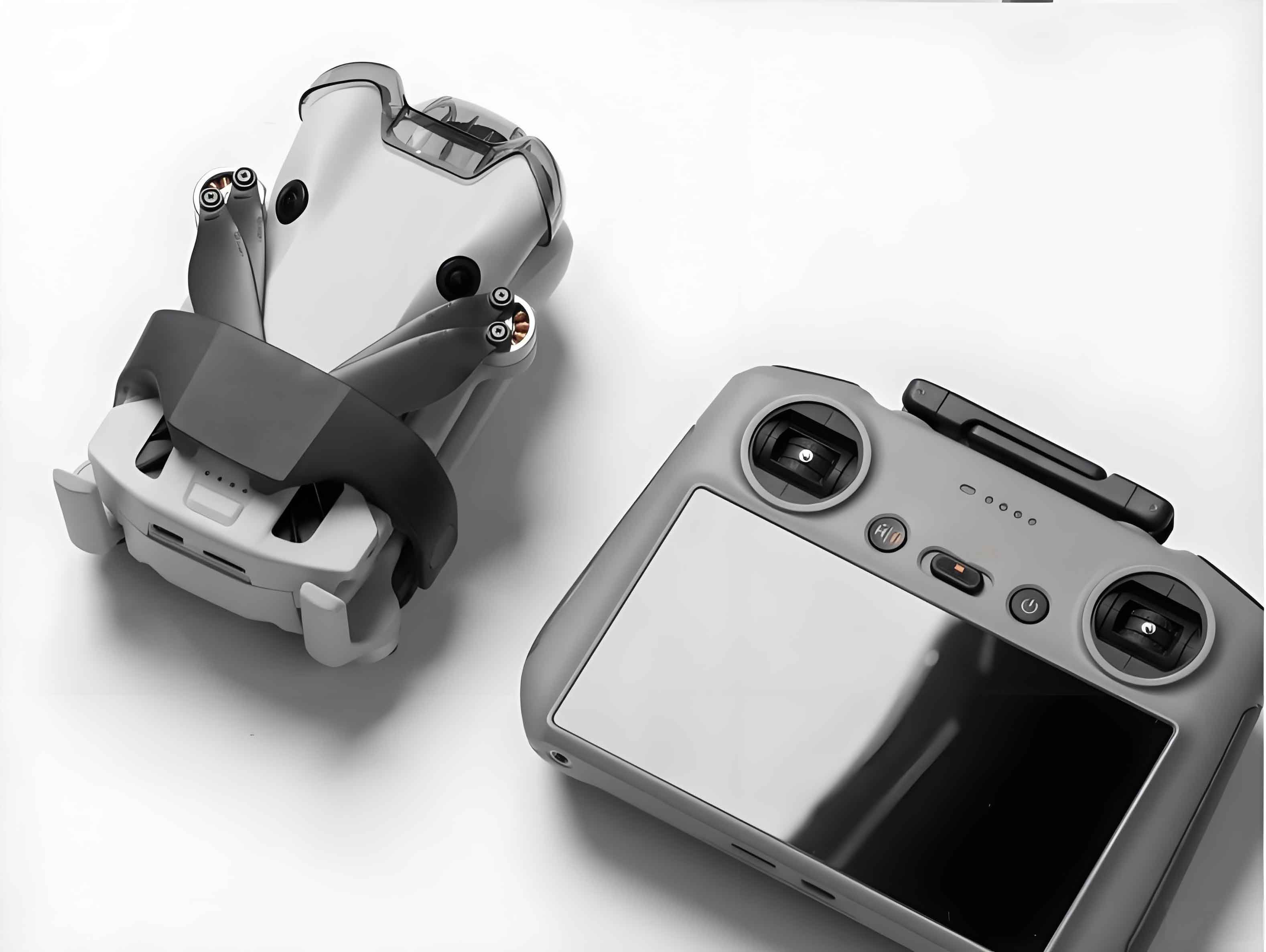
The proliferation of civilian Unmanned Aerial Vehicles (UAVs) has introduced significant challenges for public safety and airspace security. Effective countermeasures hinge on reliable detection and identification. Among various techniques, radio frequency (RF) spectrum sensing remains a primary method due to its potential for longer range and all-weather operation compared to acoustic or optical methods. A critical RF signature of many popular civilian UAVs is their remote control signal, which often employs Frequency-Hopping Spread Spectrum (FHSS) technology. These signals are characterized by a low hop rate (typically 60-80 hops per second) across a limited set of channels (often 10-50). Detecting these low-probability-of-intercept signals in crowded ISM bands, plagued by noise and persistent interferers like Wi-Fi, is a non-trivial task.
Traditional detection methods for FHSS signals predominantly rely on Short-Time Fourier Transform (STFT) analysis. While effective in high Signal-to-Noise Ratio (SNR) conditions, the conventional STFT approach, typically implemented via a sliding-window Fast Fourier Transform (FFT), suffers from inherent limitations when applied to civilian UAV signals. Firstly, the frequency bins are fixed by the sampling rate $F_s$ and the FFT size $N$, which must be a power of two. This fixed grid can lead to misalignment between the detection bins and the actual hopping frequencies of the civilian UAV, causing attenuation in detected power and potential misses. Secondly, to cover a wide band, a large $N$ is required, leading to the computation of many redundant frequency bins where no signal is present, resulting in inefficient use of processing resources. This inefficiency is particularly problematic for real-time, embedded implementations in hardware like Field-Programmable Gate Arrays (FPGA).
To overcome these drawbacks, this article proposes a novel detection method based on a variable detection channel architecture. The core idea is to deploy a bank of highly efficient, single-frequency filters tuned precisely to the channels of interest for the target civilian UAV, rather than computing a full spectrogram. This is achieved through an optimized implementation of the Sliding Discrete Fourier Transform (SDFT). This method offers unparalleled flexibility: the number of monitored channels and their exact center frequencies can be configured arbitrarily, resource utilization scales linearly with the number of channels, and the transform length $N$ is not constrained to powers of two. Furthermore, we integrate a robust decision logic that performs dynamic thresholding and duration-based validation to discriminate genuine civilian UAV hop signals from stationary interferers and noise, even in low-SNR environments.
1. The Variable-Channel Detection Algorithm
The proposed algorithm consists of two main stages: (1) Multi-channel power estimation using an optimized SDFT filter bank, and (2) A binary decision stage incorporating interference rejection and temporal validation.
1.1 Optimized SDFT Filter Bank for Targeted Frequency Detection
The goal is to compute, for every new input sample $x(n)$, the spectral power at $M$ specific frequency bins $\\{f_m\\}$, where $m = 0, 1, …, M-1$ and $M$ is typically much smaller than a full FFT size. The SDFT provides an efficient recursive mechanism for this purpose. For a single target frequency bin index $k_m$ (corresponding to frequency $f_m = k_m \cdot F_s / N$), the SDFT output $X_{m}(n)$ for the current sample can be derived from the previous output and the new input.
The standard DFT for bin $k_m$ over a window of the last $N$ samples ending at sample $n$ is:
$$X_{m}(n) = \sum_{i=0}^{N-1} x(n – N + 1 + i) \cdot e^{-j2\pi k_m i / N}$$
A more computationally efficient, recursive form known as the Sliding DFT is:
$$X_{m}(n) = e^{j2\pi k_m / N} \cdot [X_{m}(n-1) + x(n) – x(n-N)]$$
This equation describes a filter with a complex resonator. A numerically stable and hardware-friendly implementation decomposes this into a real-valued structure comprising a comb filter section shared across all channels and a dedicated resonator for each channel.
The transfer function for the single-bin SDFT can be viewed as an IIR filter:
$$H_m(z) = \frac{1 – z^{-N}}{1 – e^{j2\pi k_m / N}z^{-1}}$$
The term $(1 – z^{-N})$ is the comb filter, creating nulls spaced at frequency intervals of $F_s/N$. The denominator represents the resonator, which peaks precisely at the frequency $f_m = k_m \cdot F_s / N$. To detect $M$ specific civilian UAV hopping channels, we instantiate $M$ such resonators, all driven by the same comb-filtered input stream. This structure is illustrated below and provides several critical advantages over the STFT/FFT approach for civilian UAV signal detection.
| Feature | Traditional STFT/FFT | Proposed SDFT Filter Bank |
|---|---|---|
| Frequency Bin Flexibility | Fixed, uniform grid determined by $F_s$ and $N$ (power of 2). | Arbitrary. Can be placed exactly on known civilian UAV channel centers. |
| Resource Scaling | Computes all $N$ bins, even if only $M$ are needed. $O(N \log_2 N)$ complexity. | Computes only the $M$ bins of interest. Complexity is $O(M)$ per sample. |
| Transform Length $N$ | Must be a power of two for radix-2 FFT. | Can be any integer, allowing finer control over bin width $F_s/N$. |
| Output Latency | Requires a buffer of $N$ samples before a transform. | Recursive; provides an output update with every new input sample. |
| Coefficient Storage | Requires $N$ complex twiddle factors. | Requires only $M$ complex resonator coefficients. |
For a real-valued input signal $x(n)$, the SDFT filter outputs a complex value $X_{m}(n) = I_{m}(n) + jQ_{m}(n)$ for each channel $m$. The instantaneous power in that channel is estimated as:
$$P_{m}(n) = |X_{m}(n)|^2 = I_{m}(n)^2 + Q_{m}(n)^2$$
This power estimate $P_{m}(n)$ forms the primary observation for the subsequent detection logic.
1.2 Interference Rejection and Binary Decision Logic
The ISM band environment is hostile, containing both broadband noise and strong, stationary interferers like Wi-Fi signals. A simple fixed threshold on $P_{m}(n)$ would lead to frequent false alarms. Our decision logic exploits the fundamental difference between a hopping civilian UAV signal and a stationary interferer: the statistical properties of their instantaneous power over a time window comparable to a few hop periods.
Let $T_h$ denote the approximate hop duration of the civilian UAV. We define an analysis window with duration $L_w \approx 2 \cdot T_h$. This window is long enough to contain both periods when the hop is present and absent on a given channel.
Step 1: Dynamic Threshold Calculation. For each detection channel $m$, we compute the average power $\bar{P}_m$ over the last $L_w$ samples:
$$\bar{P}_m(n) = \frac{1}{L_w} \sum_{i=n-L_w+1}^{n} P_{m}(i)$$
For a stationary signal (noise or Wi-Fi), the instantaneous power $P_{m}(n)$ fluctuates around its mean $\bar{P}_m(n)$. For a frequency-hopping civilian UAV signal, when the hop is present on channel $m$, $P_{m}(n)$ will be significantly higher than $\bar{P}_m(n)$. When the hop is absent, it will be at or below the noise floor.
Step 2: Binary Power Thresholding. A simple but effective discriminator is the sign of the difference:
$$D_m(n) = P_{m}(n) – \bar{P}_m(n)$$
We generate a preliminary binary detection signal $B_m(n)$:
$$
B_m(n) =
\begin{cases}
1 & \text{if } D_m(n) > 0 \\
0 & \text{if } D_m(n) \leq 0
\end{cases}
$$
A value of $1$ indicates a potential hop pulse in channel $m$ at time $n$.
Step 3: Temporal Duration Validation. The preliminary signal $B_m(n)$ is susceptible to noise spikes and burst interference. To reject these, we apply a duration filter. A genuine civilian UAV hop will create a contiguous block of $1$s in $B_m(n)$ with a duration close to $T_h$. We define a minimum valid pulse width $T_{min}$, typically set to $2/3 \cdot T_h$. Any contiguous sequence of $1$s in $B_m(n)$ with duration less than $T_{min}$ is discarded (set to $0$). The final, validated binary detection signal is denoted as $\hat{B}_m(n)$.
This two-stage decision process effectively suppresses constant and slowly varying interferers while preserving the signatures of the hopping civilian UAV. The output $\hat{B}_m(n)$ for all $m$ provides a time-frequency binary map that clearly reveals the hopping pattern of the target.
2. Algorithm Simulation and FPGA Implementation
2.1 Performance Simulation
The algorithm was first modeled and simulated in a computational environment to verify its efficacy. The simulation parameters were chosen to reflect a realistic scenario for a common civilian UAV band.
| Parameter | Value |
|---|---|
| ADC Sampling Rate ($F_s$) | 240 MHz |
| SDFT Length ($N$) | 240 (Bin Resolution = 1 MHz) |
| Number of Monitored Channels ($M$) | 6 (for demonstration) |
| Civilian UAV Hop Channels | CH1, CH20, CH30, CH40 (1, 20, 30, 40 MHz offset) |
| Stationary Interferers | CH30 (Colliding with UAV), CH50 (Non-colliding) |
| Input SNR | -10 dB |
| Hop Duration ($T_h$) | ~3.26 ms (80 hops/s) |
The simulation results clearly demonstrate the algorithm’s robustness. The SDFT filter bank successfully extracted power from the specified channels. The dynamic thresholding logic successfully identified the hopping pulses on CH1, CH20, and CH40. Crucially, on CH30, where the civilian UAV hop collides with a stationary Wi-Fi-like interferer, the algorithm correctly identified the transient hop pulses superimposed on the constant high power. On CH50, which contained only the interferer, and CH60, which contained only noise, the output $\hat{B}_m(n)$ remained at zero, indicating no false detections. This confirms the method’s ability to operate in low-SNR conditions and in the presence of in-band interference, which is critical for practical civilian UAV detection systems.
2.2 FPGA Implementation Considerations
For real-time deployment, the algorithm was implemented on an FPGA platform. Key implementation optimizations were necessary to balance performance, accuracy, and resource consumption.
1. Magnitude Approximation: Calculating the exact power $P_m(n) = I^2 + Q^2$ requires two multipliers and an adder. To save FPGA multiplier (DSP) resources, an alpha-max-beta-min approximation was used:
$$|X_m(n)| \approx \alpha \cdot \max(|I|, |Q|) + \beta \cdot \min(|I|, |Q|)$$
With $\alpha = 0.990$ and $\beta = 0.197$, this approximation uses only comparisons, shifts, and adds, achieving a maximum error of 5.33%, which is acceptable for detection purposes.
2. Efficient Moving Average: Computing $\bar{P}_m(n)$ over $L_w$ samples (e.g., 256) for each channel is resource-intensive. A cascaded Integrate-and-Dump (CIC) structure or a simple polyphase decimation followed by a moving average on the decimated power stream is employed. If the hop rate is 80 Hz, the power signal needs to be sampled at a rate much higher than 160 Hz to capture the transition. A decimation factor $R$ is chosen such that the effective power update rate $F_s’ = F_s / R$ is sufficient (e.g., 40 kHz). The average is then computed over a manageable number of decimated samples.
3. Coefficient Quantization and Stability: The resonator coefficient $e^{j2\pi k_m / N}$ lies on the unit circle in the z-plane. In a fixed-point implementation, quantization error can move this pole outside the unit circle, causing instability. To prevent this, the coefficient is deliberately quantized slightly inside the circle. For a Q-format fixed-point representation, we use:
$$\text{coeff}_\text{quant} = \text{floor}\left( \text{Re}(e^{j2\pi k_m / N}) \cdot 2^{(Q-1)} \right) \cdot 2^{-(Q-1)} – \epsilon$$
A small $\epsilon$ ensures stability. The resulting filter has a very long but finite impulse response, which is acceptable.
4. Resource Utilization: The primary resources are logic slices, block RAM, and DSP multipliers. The SDFT requires two multipliers per channel for the resonator (for the real and imaginary feedback paths). The resource usage scales linearly with the number of monitored channels $M$. The following table summarizes the estimated utilization for a mid-range FPGA (Xilinx Kintex-7) implementing $M=240$ channels, which is more than sufficient to cover the entire 2.4 GHz ISM band with 1 MHz resolution.
| FPGA Resource | Utilization (for M=240 channels) | Comments |
|---|---|---|
| Slice LUTs | ~28% | Implements control logic, adders, state machines, and decision logic. |
| DSP48E1 Slices | ~26% | Primarily used for the resonator multipliers (2 per channel). Approximation saves multipliers in the magnitude calculation. |
| Block RAM | ~15% | Used for delay lines (comb filter $z^{-N}$) and buffers for the moving average. |
Functional simulation of the Register-Transfer Level (RTL) code confirmed correct operation. The FPGA implementation successfully generated the binary time-frequency map $\hat{B}_m(n)$, replicating the software simulation results under the same challenging conditions of -10 dB SNR and co-channel interference.
3. Conclusion
This article presented a novel and efficient method for detecting the remote control signals of civilian UAVs. By moving away from the fixed-grid, resource-intensive STFT/FFT approach, the proposed method leverages a configurable SDFT filter bank to monitor only the channels of interest. This variable detection channel architecture offers significant advantages: it eliminates spectral leakage from bin misalignment, dramatically improves resource utilization by computing only necessary outputs, and provides the flexibility to target specific civilian UAV models known to operate on particular frequency sets. The integrated decision logic, employing dynamic averaging and temporal validation, confers robust performance in low-SNR environments and successfully rejects strong stationary interferers common in the ISM bands.
The feasibility of the method was demonstrated through detailed simulation and a practical FPGA implementation. The results show that reliable detection of civilian UAV hop signals is achievable even at SNR levels as low as -10 dB and in the presence of colliding Wi-Fi interference. The efficient, scalable nature of the design makes it highly suitable for integration into portable, low-power, or multi-sensor detection systems aimed at securing airspace against unauthorized or malicious use of civilian UAVs. Future work may explore adaptive channel discovery to autonomously identify the hopping set of an unknown civilian UAV before locking the SDFT filter bank onto its pattern.