
As an observer and analyst of emerging technologies, I have been closely monitoring the rapid evolution of the civilian UAV (Unmanned Aerial Vehicle) sector. This industry, often dubbed the “flying robot” domain, represents a paradigm shift in how we approach traditional tasks, offering unprecedented opportunities for efficiency and innovation. In this comprehensive article, I will delve into the current state, inherent challenges, and future trajectory of the civilian UAV ecosystem. My analysis is grounded in the premise that the intelligent integration of civilian UAVs into conventional sectors is not just an economic imperative but a cornerstone for achieving strategic industrial upgrades and innovation-driven development, as outlined in broader national development frameworks. I will employ tables and mathematical models to crystallize key points and provide a structured evaluation.
The term “civilian UAV” refers to an unmanned aircraft operated via remote control or autonomous programming without a human pilot onboard. Historically, UAV technology was confined to military applications such as target practice and reconnaissance after its inception in the early 20th century. However, the past decade has witnessed a dramatic pivot towards civilian uses. From my perspective, a civilian UAV is essentially a versatile aerial platform capable of performing complex tasks, thereby acting as a force multiplier for various industries. The core value proposition lies in its ability to reduce operational costs, enhance safety, and collect data in ways previously impossible or prohibitively expensive.
The current landscape of the civilian UAV industry is one of vibrant expansion and diversification. The concept of “UAV + Traditional Industry” is gaining tangible momentum, driving intelligent upgrades across sectors. I have cataloged the primary application domains and their impacts in the table below.
| Application Domain | Key Functions | Quantifiable Benefits & Impact |
|---|---|---|
| Agricultural Plant Protection | Remote spraying of pesticides/fertilizers, crop monitoring. | Increases efficiency by 30-50x compared to manual labor; reduces human exposure to chemicals by 100% during spraying operations. |
| Aerial Photography & Filmmaking | Capturing high-resolution video and images from the air. | Reduces costs by over 70% compared to manned aircraft rentals; has democratized aerial cinematography. |
| Disaster Response & Monitoring | Rapid assessment of flood, earthquake, or fire damage; search and rescue. | Enables access to hazardous zones within minutes; improves situational awareness for planning, potentially reducing response time by 40%. |
| Surveying, Mapping & Urban Planning | Creating 3D models, topographic maps, and monitoring construction progress. | Improves data accuracy and reduces survey time by up to 80% compared to traditional ground methods. |
| Infrastructure Inspection | Inspecting power lines, pipelines, wind turbines, and bridges. | Eliminates the need for risky manned inspections; cuts inspection costs by approximately 60%. |
| Security & Surveillance | Perimeter monitoring, crowd management, traffic control. | Provides a mobile, aerial vantage point, increasing monitored area coverage per unit time. |
The economic footprint of the civilian UAV market is substantial and growing. I recall that export data from a major manufacturing hub indicated a year-on-year growth exceeding 400% recently. Projections suggest that by the end of the current five-year plan period, the annual demand for civilian UAVs could surpass $200 billion globally, fostering a vast industrial chain and creating millions of jobs. This growth can be modeled using a simplified compound growth formula:
$$ M_t = M_0 \times (1 + r)^t $$
Where \( M_t \) is the market size at time \( t \), \( M_0 \) is the initial market size, and \( r \) is the annual growth rate. For instance, if \( M_0 = $10 \) billion and \( r = 0.30 \) (30%), the market in 5 years (\( t=5 \)) would be:
$$ M_5 = 10 \times (1 + 0.30)^5 \approx 10 \times 3.7129 \approx $37.1 \text{ billion} $$
This simplistic model underscores the explosive potential, though actual dynamics are more complex.
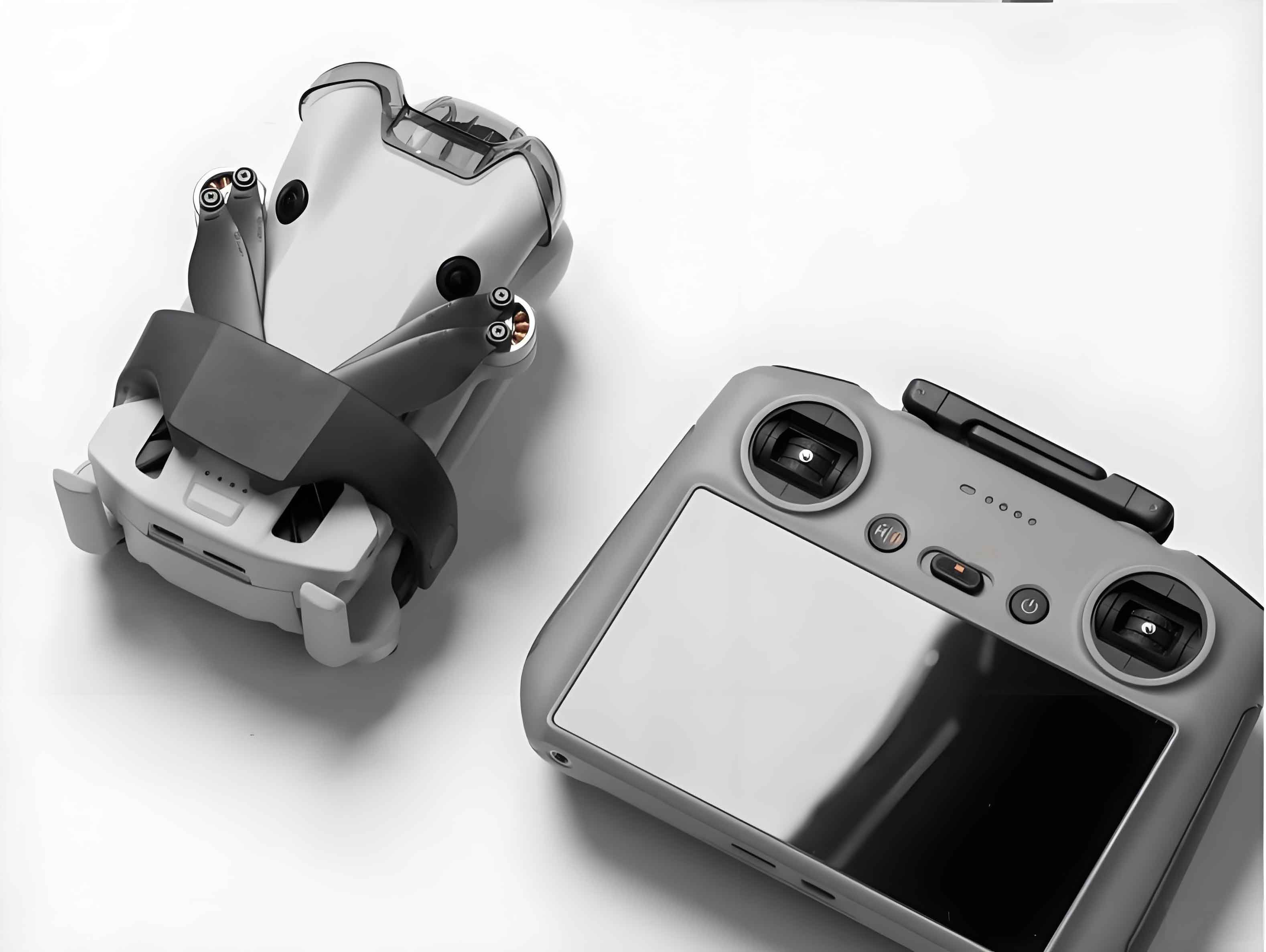
Observing the operational environment, a key visual is the deployment of civilian UAVs in low-altitude scenarios, such as the one depicted above, which highlights their versatility in fields like agriculture or mapping. However, beneath this promising exterior, I have identified several critical impediments hindering the sustainable development of the civilian UAV industry.
First, a significant issue is the lack of technological depth and innovation among many market players. Apart from a handful of leading firms, numerous manufacturers engage in assembling commercially available core components like flight controllers, GPS modules, and gyroscopes. This leads to product homogeneity and vicious price competition, eroding profit margins and stifling R&D investment. The innovation deficit can be expressed as a function:
$$ I_{co} = \frac{R\&D_{expenditure}}{Revenue_{total}} $$
For a healthy, innovative civilian UAV company, this innovation coefficient \( I_{co} \) should be above a certain threshold (e.g., >0.15). Many smaller entities operate with a much lower \( I_{co} \), indicating assembly-focused rather than innovation-driven models.
Second, safety and reliability concerns are pervasive. Civilian UAV performance is highly susceptible to adverse weather conditions like strong winds. Signal loss beyond the control range can lead to fly-aways or crashes. The probability of a safety incident \( P_{incident} \) might be modeled as a function of environmental factors \( E \), hardware reliability \( H \), and operator skill \( S \):
$$ P_{incident} = f(E, H, S) \approx \alpha E + \beta \frac{1}{H} + \gamma \frac{1}{S} $$
where \( \alpha, \beta, \gamma \) are weighting coefficients. Currently, for many consumer-grade civilian UAVs, \( H \) and \( S \) variables are often low, raising \( P_{incident} \).
Third, the regulatory framework is struggling to keep pace with technological advancement. Existing regulations, often designed for manned aviation, impose strict limitations on flight altitude, airspace, and vehicle weight. While necessary for airspace integration and safety, these rules can inadvertently stifle legitimate commercial applications of civilian UAVs, creating a significant barrier to entry and scale.
Fourth, there is insufficient governmental and institutional promotion of the broader “UAV+” service economy. The focus remains heavily on hardware manufacturing, while potential service-based industries—like specialized data analytics from UAV-collected information or providing connectivity in remote areas—are underexplored. The potential service market size \( S_{UAV+} \) is a multiplier of the hardware market \( M_{hardware} \):
$$ S_{UAV+} = k \times M_{hardware} $$
I postulate that \( k \) could be greater than 2, indicating the service sector could be more than twice the size of the hardware market, yet it remains underdeveloped.
Fifth, the industry structure is fragmented. Critical technologies for advanced platforms (like fixed-wing or hybrid VTOL systems) often reside within academic or state-linked research institutions. The technology transfer pipeline to the commercial civilian UAV sector is inefficient. Conversely, private companies frequently lack the capital for fundamental R&D. This disconnect prevents the formation of robust, integrated industrial clusters.
I have summarized these core problems and their characteristics in the following table for clarity.
| Problem Area | Primary Manifestation | Consequence for Civilian UAV Industry |
|---|---|---|
| Technological Innovation | Low R&D investment, assembly-based production, component commoditization. | Low profit margins, lack of differentiation, stagnation in high-end capabilities. |
| Safety & Reliability | Vulnerability to weather, limited range, potential for signal loss. | Public safety risks, regulatory scrutiny, limits insurance and widespread adoption in critical missions. |
| Regulatory Environment | Outdated or restrictive rules on airspace, altitude, and operations. | Constrains commercial deployment, increases compliance costs, slows innovation cycles. |
| Market & Service Development | Underdeveloped “UAV+” service models, lack of public awareness and promotion. | Fails to capture full economic value, limits job creation beyond manufacturing. |
| Industry Structure & Collaboration | Disconnect between research institutes and private firms; fragmented supply chain. | Inefficient knowledge transfer, delays in product development, inability to achieve economies of scale. |
Based on this diagnosis, I propose a multi-faceted set of recommendations to propel the civilian UAV industry forward.
Recommendation 1: Foster Innovation and Quality. Civilian UAV enterprises must prioritize R&D. This involves developing proprietary flight control algorithms, advanced sense-and-avoid systems, and specialized payloads. The goal should be to increase the innovation coefficient \( I_{co} \). Governments can support this through R&D tax credits and grants focused on core technologies for civilian UAV applications.
Recommendation 2: Establish a Robust Regulatory and Standards Platform. Authorities need to develop a clear, risk-based, and performance-oriented regulatory framework specifically for civilian UAVs. This includes creating technical airworthiness standards, pilot certification programs, and automated traffic management systems (UTM). A standardized airspace access protocol is crucial. The benefit of regulation \( B_{reg} \) can be modeled as increasing with clarity \( C \) and safety outcome \( S_o \), while decreasing with restrictiveness \( R \):
$$ B_{reg} = \frac{C \times S_o}{R} $$
The aim is to maximize \( B_{reg} \) by improving \( C \) and \( S_o \) without letting \( R \) become overly burdensome.
Recommendation 3: Implement a Tiered Market Access Mechanism. A clear certification process for different classes of civilian UAVs (based on weight, speed, operational context) should be established. This raises the entry barrier for low-quality products while clarifying the path to market for serious innovators. Liability and insurance frameworks must be clarified to define responsibility in case of incidents.
Recommendation 4: Develop Integrated Airspace Information Management. Investing in UTM systems is essential for managing the growing density of civilian UAV operations. These systems enable dynamic de-confliction, flight planning, and real-time monitoring. The efficiency \( \eta \) of an airspace corridor can be related to the number of UAVs \( N \) and the UTM capability \( U \):
$$ \eta = U \times \log(N) $$
Effective UTM (\( U \) close to 1) allows logarithmic scaling of efficiency with traffic.
Recommendation 5: Accelerate Technology Commercialization. Public-private partnerships should be encouraged to bridge the gap between research institutions and the civilian UAV industry. Technology transfer offices and joint ventures can facilitate the flow of advanced aerodynamics, materials science, and propulsion research into commercial products.
Recommendation 6: Promote Entrepreneurship and New Service Models. Governments should offer incentives for startups focusing on “UAV-as-a-Service” models—whether in precision agriculture analytics, infrastructure inspection reporting, or emergency response logistics. Supporting training and certification programs for civilian UAV operators will also create a skilled workforce.
Looking ahead, the future trajectory of the civilian UAV industry, from my viewpoint, will bifurcate into two major, interconnected streams: Advanced Platform Development and Specialized Service Ecosystems.
The evolution of the civilian UAV platform itself will be characterized by increased intelligence, safety, and endurance. We will see trends toward:
– Autonomous Swarms: Coordinated fleets of civilian UAVs operating collaboratively for large-area tasks. The efficiency of a swarm of \( n \) drones can be super-linear for certain tasks like search:
$$ \text{Coverage Rate}_{swarm} = n^{\delta} \times \text{Rate}_{single} $$
where \( \delta > 1 \) represents the collaboration efficiency factor.
– Advanced Propulsion and Energy: Development of hybrid-electric systems, hydrogen fuel cells, and improved battery chemistries to extend flight time \( T \). A simple range equation is:
$$ \text{Range} = \frac{\text{Energy}_{battery} \times \eta_{propulsion}}{\text{Power}_{required}} $$
Innovations aim to increase the numerator and decrease the denominator.
– Enhanced Sense-and-Avoid (SAA): Integration of AI, radar, and lidar for full autonomy in complex environments, directly reducing the incident probability \( P_{incident} \).
The service ecosystem will diversify dramatically, creating entirely new industries. I foresee the rise of:
– UAV Data Services: Companies specializing in processing and interpreting the massive datasets collected by civilian UAVs (e.g., multispectral agricultural imagery, LiDAR point clouds). The value \( V_{data} \) extracted can be modeled as a function of data volume \( D \) and analytical capability \( A \):
$$ V_{data} = A \times \ln(D) $$
– UAV Logistics and Delivery: While still in testing, last-mile delivery via civilian UAVs promises to revolutionize logistics. The economic model involves optimizing route density \( \rho \) and package weight \( w \):
$$ \text{Cost}_{per\,delivery} \propto \frac{1}{\rho} \times w $$
– Supporting Industries: This includes specialized training and simulation, ultra-light high-resolution sensor manufacturing (like advanced compact cameras), and dedicated insurance products for civilian UAV operations.
The market will segment deeply, as illustrated in the following table projecting the future industrial structure.
| Industry Segment | Core Focus | Key Value Drivers |
|---|---|---|
| Platform R&D & Manufacturing | Airframe design, propulsion systems, flight control AI, battery technology. | Patent portfolios, performance benchmarks (endurance, payload), reliability metrics. |
| Subsystem & Component Supply | Specialized gimbals, communication modules, lightweight materials, SAA sensors. | Miniaturization, power efficiency, cost-performance ratio. |
| Software & Platform Services | Flight planning apps, fleet management software, data processing platforms. | User experience, API openness, data security, scalability. |
| Vertical-Specific Service Providers | Agricultural yield analysis, infrastructure health monitoring, media production. | Domain expertise, accuracy of insights, service level agreements (SLAs). |
| Regulatory & Compliance Services | Airspace authorization consulting, pilot training and certification, risk assessment. | Knowledge of local and international regulations, training effectiveness. |
In conclusion, my analysis affirms that the civilian UAV industry stands at a critical juncture. It holds immense potential to act as a catalyst for the intelligent transformation of traditional sectors, contributing significantly to economic growth and job creation. The path forward, however, is not without obstacles. Success hinges on a concerted effort to address technological shortcomings, establish a supportive and safe regulatory environment, and vigorously cultivate the service-oriented “UAV+” economy. The future belongs to those civilian UAV enterprises that can master core technologies and innovate in service delivery. As we advance further into an era defined by intelligent machines, the civilian UAV, as a versatile aerial tool, is poised to become an indispensable part of our socio-economic fabric, making our production systems more efficient and our daily lives more convenient. The ongoing journey of the civilian UAV industry is a compelling testament to the power of innovation-driven development.