
As a researcher focused on aviation policy and public management, I have observed that airspace is a critical national resource with sovereign attributes, and its scarcity is becoming increasingly pronounced as civilian unmanned aerial vehicle (UAV) technology expands from military applications to diverse civilian markets. The rapid proliferation of civilian UAVs has introduced complex challenges in airspace management, necessitating robust regulatory frameworks to ensure safety, security, and efficiency. In this article, I will explore the current state of civilian UAV airspace management through a comparative analysis of international approaches, identify pressing issues, and propose integrated solutions from technological, managerial, and policy perspectives. My aim is to contribute to the development of a sustainable ecosystem for civilian UAV operations, emphasizing the need for adaptive regulations that balance innovation with public safety.
The integration of civilian UAVs into shared airspace is a global phenomenon driven by advancements in microelectronics, nanotechnology, and aerospace engineering. These devices are now used for applications ranging from geological surveying and disaster monitoring to border surveillance and infrastructure inspection. However, the lack of standardized regulations and management protocols has led to frequent incidents of unauthorized flights, posing risks to manned aviation, public safety, and privacy. From my perspective, effective airspace management for civilian UAVs must address both the operational environment and the broader socio-economic context, ensuring that this transformative technology can thrive without compromising airspace integrity.
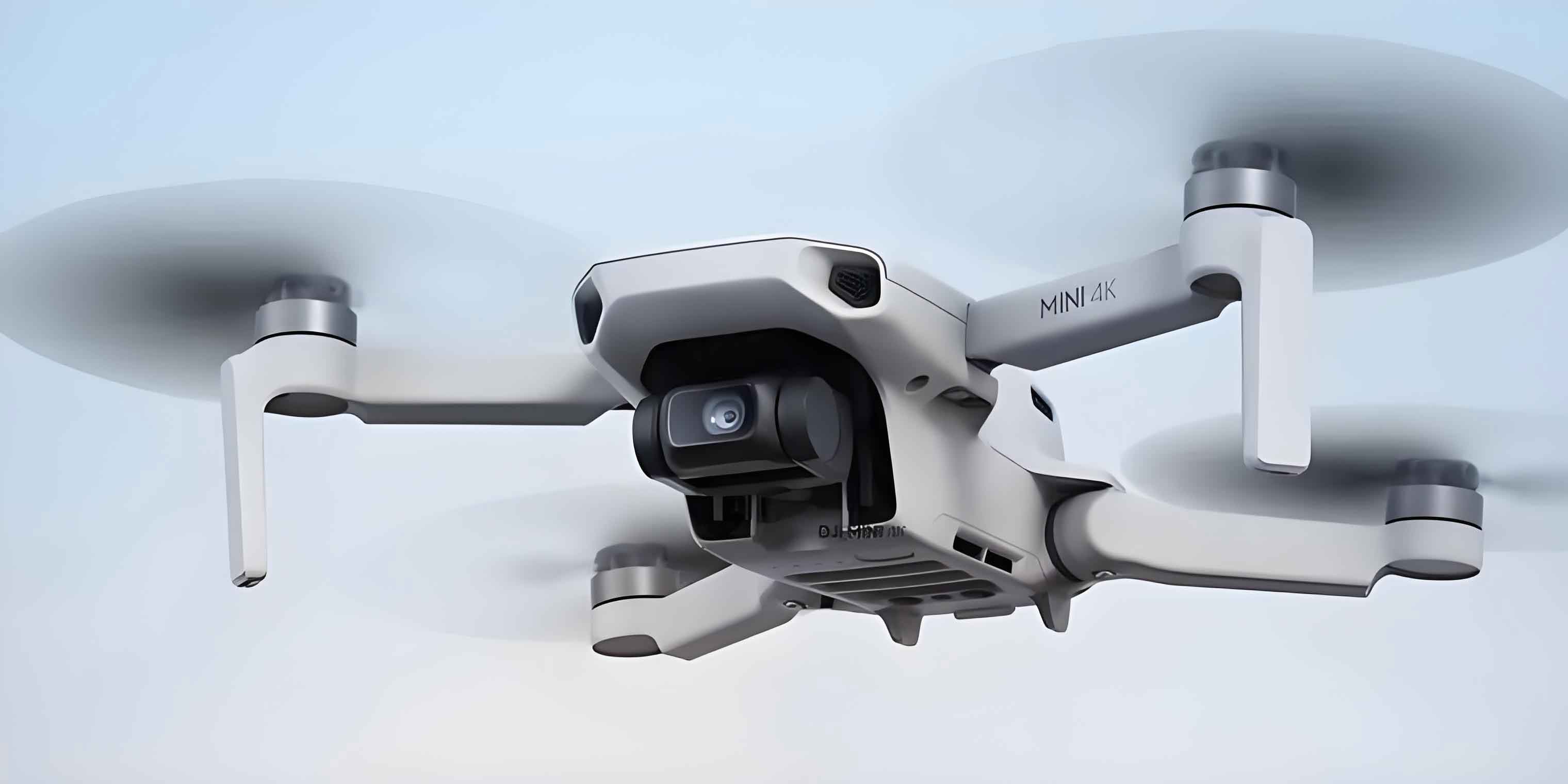
To understand the global landscape, I have examined the regulatory policies and measures for civilian UAV airspace management in several developed countries. Each nation has adopted distinct approaches based on its airspace structure, technological capacity, and security concerns. Below is a comparative table summarizing key aspects of civilian UAV regulations in the United States, Germany, Japan, and China, highlighting variations in weight limits, altitude restrictions, and operational requirements.
| Country | Regulatory Body | Key Regulations | Weight Limit for Registration/License | Maximum Flight Altitude | Key Restrictions and Provisions |
|---|---|---|---|---|---|
| United States | Federal Aviation Administration (FAA) | Part 107 Rule | 25 kg for small UAVs | 120 meters (400 feet) | No flight over sensitive areas or near airports; visual line-of-sight required; commercial use permitted with certification. |
| Germany | German Aviation Authority | Aviation Management Act (updated 2017) | 5 kg for license requirement; 250 g for labeling | Not explicitly specified, but generally limited | Privacy protections; no-fly zones over crowds, industrial facilities, and prisons; mandatory operator certification. |
| Japan | Japanese Government | Drone Control Law (2016) | Not specified, but based on risk assessment | Restricted in populated areas | No-fly zones over government sites, nuclear plants, and dense gatherings; police authorized to intercept or destroy rogue UAVs. |
| China | Civil Aviation Administration of China (CAAC) | Light UAV Operation Regulations (2016) | 7 kg for real-name registration | 120 meters for certain categories | Real-name registration system; no-fly zones near airports and sensitive locations; operational permits required for commercial use. |
From this comparison, I note that developed countries emphasize a risk-based approach, often tying regulations to UAV weight and operational context. For instance, the U.S. focuses on integrating civilian UAVs into the National Airspace System through Part 107, which mandates pilot certification and operational limits. Germany prioritizes privacy and safety with strict no-fly zones and labeling requirements. Japan has enacted laws allowing law enforcement to neutralize threatening civilian UAVs, reflecting security concerns. In contrast, China is in a transitional phase, with emerging regulations like the real-name registration system and trial operational rules, but a comprehensive legal framework is still evolving. This disparity underscores the need for harmonized international standards to facilitate global civilian UAV operations.
In my analysis, several critical issues must be addressed to strengthen civilian UAV airspace management. First, the rapid growth of the civilian UAV industry is outpacing regulatory development, creating a gap between technological innovation and legal oversight. Many existing aviation laws, such as the Civil Aviation Law, were designed for manned aircraft and lack specific provisions for civilian UAVs. This leads to ambiguity in enforcement, as civilian UAV operations often fall under general aviation categories without tailored rules. Second, the current management system in many countries, including China, relies on analogies to manned aircraft, covering areas like flight standards, airworthiness, market operations, and air traffic management. However, air traffic control for civilian UAVs remains underdeveloped, with limited dedicated regulations for real-time monitoring and collision avoidance. Third, security vulnerabilities are escalating due to inadequate air defense and air traffic control laws. Incidents of civilian UAVs intruding into restricted airspace or interfering with commercial flights highlight the urgency for robust countermeasures. These problems are compounded by the diversity of civilian UAV types, from lightweight consumer drones to heavy-duty industrial models, each requiring differentiated management strategies.
To mitigate these challenges, I propose a multi-faceted approach encompassing technological innovation, managerial reforms, and policy enhancements. From a technological standpoint, advancing artificial intelligence and sensing capabilities is crucial for enabling civilian UAVs to operate safely in shared airspace. A key concept is “detect and avoid” (DAA), which allows civilian UAVs to perceive and evade potential hazards autonomously. This can be modeled using a safety distance formula, where the minimum separation distance \( D_{safe} \) depends on factors like velocity, response time, and environmental conditions:
$$ D_{safe} = v \cdot t_{response} + \frac{v^2}{2a} + \epsilon $$
Here, \( v \) represents the velocity of the civilian UAV, \( t_{response} \) is the system’s reaction time to threats, \( a \) is the deceleration capability, and \( \epsilon \) accounts for external uncertainties such as wind or sensor errors. Implementing DAA systems can reduce reliance on human operators and enhance collision avoidance, especially beyond visual line-of-sight (BVLOS) operations. Additionally, “electronic fence” technology should be widely adopted to geofence no-fly zones. By programming civilian UAVs with GPS-based boundaries, unauthorized entry into sensitive areas like airports or government facilities can be prevented through automatic lockdown or return-to-home functions. Cloud-based monitoring systems, similar to those promoted by aviation associations, can further enhance oversight by tracking civilian UAV flight data in real-time. For example, a centralized platform could log parameters such as altitude, speed, and location, storing them for months to aid in incident investigations and regulatory compliance.
Managerial improvements are equally vital. I advocate for a lifecycle management framework that covers the production, sale, and operation of civilian UAVs. Each civilian UAV should be assigned a unique identifier, akin to a license plate, enabling traceability and accountability. Operators must undergo standardized training and certification, with tiered licenses based on UAV categories and operational complexity. This mirrors the driver’s license system for vehicles, ensuring that only qualified individuals pilot civilian UAVs, particularly for commercial applications. Furthermore, airspace classification should be refined to designate zones where civilian UAVs can fly freely, subject to certain conditions, versus restricted areas requiring permits. The following table outlines a proposed zoning scheme for civilian UAV operations, balancing accessibility with safety:
| Airspace Zone | Civilian UAV Access Level | Key Conditions | Example Areas |
|---|---|---|---|
| Green Zone | Unrestricted (for low-risk operations) | Altitude below 60 meters; visual line-of-sight; weight under 2 kg | Rural farmlands, designated parks |
| Yellow Zone | Controlled (requires pre-flight notification) | Altitude 60-120 meters; BVLOS allowed with approval; weight 2-25 kg | Suburban areas, industrial sites |
| Red Zone | Prohibited (except for authorized entities) | No civilian UAV flights without special permit | Airports, military bases, crowded events |
This zoning approach, coupled with digital permitting systems, can streamline approvals while maintaining oversight. Regular audits and penalty mechanisms, such as point deductions for violations, would encourage compliance among civilian UAV users.
On the policy front, I emphasize the need for a coherent legal hierarchy that aligns overarching aviation laws with specific civilian UAV regulations. The Civil Aviation Law should be amended to include dedicated chapters on unmanned aircraft, clarifying rights, responsibilities, and enforcement procedures. Subsidiary regulations, covering flight standards, airworthiness, market access, and air traffic management, must be harmonized to eliminate contradictions. For instance, air traffic control protocols for civilian UAVs could integrate with existing systems using automated coordination algorithms. A potential model for airspace capacity management involves calculating the maximum number of civilian UAVs permissible in a given sector, derived from factors like separation minima and communication latency:
$$ N_{max} = \frac{A_{sector}}{k \cdot D_{safe}^2} $$
Where \( N_{max} \) is the maximum civilian UAV capacity, \( A_{sector} \) is the area of the airspace sector, \( D_{safe} \) is the safety distance from the earlier formula, and \( k \) is a congestion factor accounting for operational density. This formula helps optimize airspace utilization while preventing overcrowding. Policymakers should also foster international collaboration to standardize civilian UAV regulations, facilitating cross-border operations and technology exchange. Lessons from the European Union’s efforts to create a unified drone framework could inform such initiatives.
In conclusion, the future of civilian UAV airspace management hinges on a balanced integration of technology, management, and policy. By leveraging advancements in AI and geofencing, establishing rigorous operator certifications, and enacting clear legal frameworks, we can unlock the full potential of civilian UAVs while safeguarding airspace integrity. As a proponent of sustainable aviation, I believe that proactive measures today will pave the way for a sky where civilian UAVs coexist harmoniously with traditional aircraft, driving economic growth and societal benefits. The journey requires continuous adaptation, but with collaborative efforts, we can navigate the complexities and achieve a safe, efficient, and innovative airspace ecosystem for civilian UAV operations worldwide.