
The rapid proliferation of civilian Unmanned Aerial Vehicles (UAVs) has ushered in an era of unprecedented accessibility and utility in low-altitude airspace. However, this growth is paralleled by a significant increase in incidents involving unauthorized or negligent flight operations, often termed “rogue drones.” These incidents pose substantial risks to public safety, security, and privacy, compelling the development and deployment of robust counter-unmanned aircraft systems (C-UAS). The core challenge lies in the diverse nature of threats and operational environments; no single countermeasure technology is universally optimal. Therefore, a nuanced understanding of various countermeasure principles, their inherent advantages and limitations, and their suitability for specific application scenarios is critical for effective security planning. This article provides a first-person analysis of the civilian UAV countermeasure landscape, reviewing technological developments, dissecting core methodologies, and evaluating their practical application.
The global market for C-UAS solutions reflects this urgent need. Strategic reports indicate a compound annual growth rate exceeding 30%, projecting the market value to reach multi-billion-dollar levels within a few years. This surge is driven by the dual forces of escalating drone threats and advancing countermeasure capabilities. The technological race is not merely about disabling a drone but involves a complex sequence of detection, tracking, identification, and mitigation, often with a secondary requirement for forensic analysis of the captured platform.
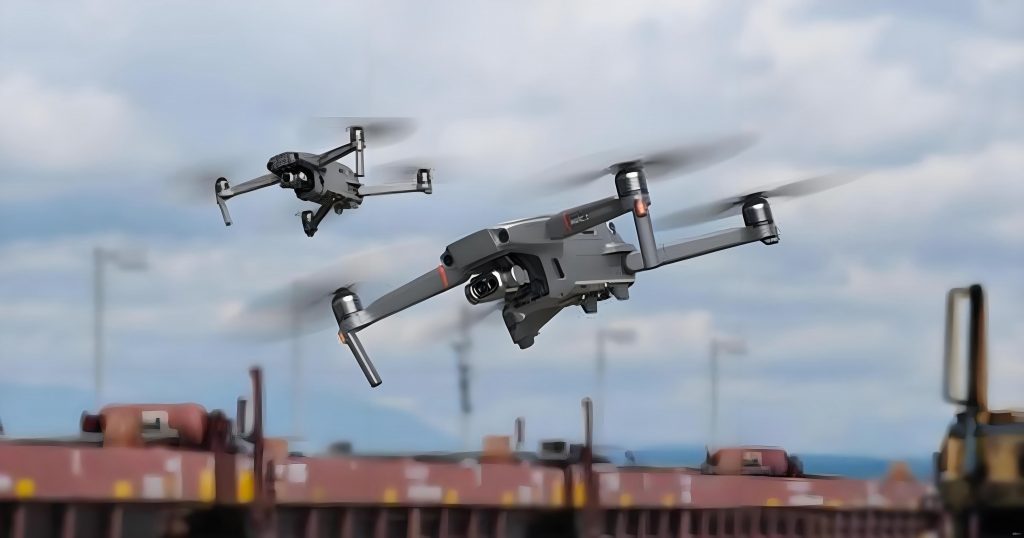
The evolution of civilian UAV capabilities, including improved autonomy, obstacle avoidance, and encrypted communications, necessitates equally sophisticated counter-responses. The field is inherently interdisciplinary, drawing from radar engineering, radio frequency (RF) theory, optics, robotics, and even zoology. A successful countermeasure strategy must integrate different sensor modalities for reliable detection and pair them with an appropriate, legally compliant mitigation tool. This analysis begins by surveying the international development landscape before delving into a technical taxonomy of countermeasure methods.
International Development Status of C-UAS
The development of counter-drone systems has been a priority for defense and security agencies worldwide, with significant investments from both government and private sectors. The approaches vary, often reflecting regional security concerns and industrial strengths.
In the United States, early strategic frameworks were established to address the drone threat. Major defense contractors have pioneered multiple lines of effort. These include high-power microwave (HPM) and high-energy laser (HEL) systems designed to physically destroy targets, as well as interceptor drones like the Coyote UAS. Portable systems, such as rifle-like RF jammers (e.g., DroneDefender), have also been fielded for tactical, short-range use. The UK has seen collaborative efforts resulting in integrated systems like the Anti-UAV Defence System (AUDS), which combines radar, electro-optics, and RF suppression. Other British innovations include net-capture systems launched from compressed air cannons, such as SkyWall. Russian and Israeli developments heavily feature integrated systems employing radar, electro-optic/infrared (EO/IR) sensors, and broadband RF jammers (e.g., DroneDome). Israel has also advanced kinetic solutions with fire-control systems like SMASH that enhance small-arms accuracy against aerial targets. European consortiums and Asian companies have similarly deployed systems utilizing signal jamming, deception, and hard-kill mechanisms.
| Country/Region | Developer/Project | Core Mitigation Technology | Key Characteristics |
|---|---|---|---|
| USA | Raytheon / Coyote UAS | Interceptor Drone | Launchable from ground, uses seeker and kinetic or explosive payload to engage target civilian UAV. |
| USA | Boeing / CLWS | Laser (Directed Energy) | Compact laser weapon system with high-resolution sensors for targeting and track, damages target via thermal ablation. |
| USA | Epirus / Leonidas | High-Power Microwave | Compact, rapidly deployable system that emits high-power RF energy to disable electronic components of the civilian UAV. |
| UK | OpenWorks / SkyWall Auto | Net Capture (Projectile) | Automated system using EO/IR for tracking, fires a net-carrying projectile to entangle and capture the rogue civilian UAV. |
| Israel | IAI / DroneGuard | RF Jamming & Integration | Integrated system using 3D radar, EO/IR, and directional RF jammers to disrupt control and navigation links of the civilian UAV. |
| Canada | AerialX / DroneBullet | Interceptor Drone (Kinetic) | Missile-shaped quadcopter designed to kinetically collide with and destroy the target civilian UAV. |
Domestically, the pace of research and development has accelerated remarkably. Patent filings in the C-UAS domain have shown exponential growth, indicating vibrant activity across academia, research institutes, and private enterprises. Integrated systems showcased at major exhibitions combine radar surveillance, RF detection, and EO/IR tracking with mitigation options like jamming and spoofing. There is a clear trend towards networked systems, such as city-wide grid-based management platforms that use Time Difference of Arrival (TDOA) techniques for precise passive location of RF emitters. The focus is gradually shifting from standalone “defeat” mechanisms to holistic “detect-track-identify-mitigate” architectures tailored for complex civilian environments. The ongoing challenge is to balance effectiveness with safety, minimizing collateral damage to the RF spectrum and physical surroundings.
Taxonomy and Technical Analysis of Civilian UAV Countermeasures
Civilian UAV countermeasure technologies can be classified based on their intended effect on the target platform. The four primary categories are: Capture, Destruction, Signal Interference (Jamming), and Signal Deception (Spoofing). Each embodies different trade-offs between precision, collateral effects, cost, and legal considerations.
1. Capture Technologies
The objective here is to safely detain the civilian UAV without causing irreparable damage, enabling subsequent forensic examination. This is often the preferred method when evidence collection or attribution is required.
- Trained Animals: Specifically, birds of prey like eagles have been used. The animal is trained to perceive the civilian UAV as prey or a territorial intruder, intercept it, and disable it by damaging the rotors. While offering an organic, low-recurring-cost solution, it demands extensive training, raises animal welfare concerns, and offers limited control during engagement.
- Net Projectiles: These are fired from shoulder-mounted, vehicle-based, or UAV-mounted launchers. A projectile carries a folded net that deploys mid-flight, entangling the target’s rotors. A parachute may deploy to slow the descent. The effectiveness is high against multi-rotor civilian UAVs but poor against fixed-wing models. Limitations include short effective range, significant recoil and noise, and single-shot capacity before reload.
- UAV-mounted Nets: A counter-UAV is equipped with a suspended net. The operator flies it above the target civilian UAV, lowering the net to entangle the rotors. This allows for controlled retrieval of the captured drone. It requires skilled pilots and, like net projectiles, is ineffective against fixed-wing platforms.
2. Destruction (Kinetic & Directed Energy) Technologies
These methods aim to physically destroy or critically disable the civilian UAV, typically used in high-threat scenarios where capture is impractical or too risky.
- Interceptor Drones/Kinetic Impact: A dedicated counter-UAV is used to ram the target, often at high speed. These can be customized with explosives for proximity detonation. They offer flexibility but may be complex to recover and could lead to uncontrolled debris.
- Conventional Ballistics: Using firearms, specialized ammunition, or close-in weapon systems (CIWS). When coupled with advanced fire-control systems, accuracy improves. However, this method poses severe risks from falling debris and stray projectiles, making it unsuitable for most civilian settings.
- Laser Weapons (Directed Energy): These systems focus a high-energy laser beam onto the civilian UAV’s critical components (e.g., battery, motor controllers), causing thermal failure. The engagement time is short, and the “cost per shot” is low after the initial investment. The line-of-sight weapon is highly precise but requires excellent tracking accuracy and thermal management. The formula for the irradiance (power per unit area) on target is crucial: $$I = \frac{P \cdot \tau_{atm}}{ \pi \cdot ( \theta \cdot R / 2 )^2 }$$ where \(P\) is laser power, \(\tau_{atm}\) is atmospheric transmittance, \(\theta\) is beam divergence, and \(R\) is range. Debris may still pose a fire hazard.
- High-Power Microwave (HPM) Weapons: These emit powerful, broad-beam microwave radiation. The energy couples into the target civilian UAV’s electronics, inducing high currents that overload and fry sensitive circuits. The advantage is area coverage without needing precise aiming. The power density required at range can be estimated. A significant drawback is the widespread collateral damage to all electronics within the beam, creating an electronic warfare effect.
- Acoustic Weapons: This experimental approach aims to disrupt the micro-electro-mechanical systems (MEMS) gyroscopes inside a civilian UAV by resonating at their natural frequency. If the gyroscope fails, the flight controller cannot stabilize the aircraft. The fundamental challenge is achieving directional propagation of low-frequency sound waves over useful distances without massive equipment. The concept relies on the parametric array effect, where modulated ultrasonic carriers produce a audible difference frequency wave with high directivity.
3. Signal Interference (Jamming) Technologies
This “soft-kill” approach disrupts the radio frequency links essential for the civilian UAV’s operation: the command & control (C2) link and the Global Navigation Satellite System (GNSS) link.
- Control Signal Jamming: Civilian UAVs typically use spread-spectrum protocols in the 2.4 GHz and 5.8 GHz ISM bands. Jammers transmit high-power noise or structured interference across these bands. The goal is to raise the bit error rate (BER) on the link beyond a functional threshold, typically around $$BER_{threshold} \approx 10^{-3} \text{ to } 10^{-2}$$ causing the link to drop. The drone then executes a lost-link procedure (e.g., hover, land, or return-to-home). Jamming types include:
- Barrage Jamming: Covers the entire expected bandwidth.
- Spot/Swept Jamming: Focuses power on specific frequencies.
- Follow-on Jamming: Rapidly detects and jams the exact frequency in use.
The main advantage is non-destructive denial. The disadvantage is the non-discriminatory nature of the interference, which can affect all devices using those frequencies in the area, and the fact that the drone’s final behavior is predetermined by its programming.
- GNSS Jamming: Targets the satellite navigation signals (e.g., GPS, GLONASS, Galileo). Since GNSS signals are extremely weak by the time they reach Earth (\(\approx\)-130 dBm), they are vulnerable to overpowering. Jamming the GNSS receiver causes the civilian UAV to lose its position fix, often forcing it into a less stable Attitude mode and disabling automated functions like hold-position or precise return-to-home. This is frequently combined with C2 jamming for a more reliable take-down. However, GNSS jamming is a significant hazard to all navigation-dependent systems in the vicinity, including aviation, maritime, and ground transportation.
4. Signal Deception (Spoofing) Technologies
A more sophisticated “soft-kill” method that involves sending forged signals to gain control or mislead the civilian UAV.
- Control Signal Spoofing/Hijacking: This involves intercepting, decoding, and reverse-engineering the target civilian UAV’s proprietary communication protocol. Once understood, the spoofer can transmit forged commands that override the legitimate pilot’s signals, effectively seizing control. This allows for a safe, directed landing. The primary obstacle is the encryption and obfuscation used in modern civilian UAV protocols, making this approach time-consuming and often specific to a particular model.
- GNSS Spoofing: This technique broadcasts counterfeit GNSS signals that are stronger than the authentic ones. The civilian UAV’s receiver locks onto the false signals, which provide incorrect position and time data. There are two main applications:
- Geofence Triggering: Broadcasting coordinates corresponding to a known no-fly zone (e.g., near an airport) can trick the drone’s firmware into initiating an automatic landing.
- Navigation Hijacking: Gradually altering the spoofed coordinates can “drag” the drone off its course to a location chosen by the defender. The basic principle involves generating a fake signal with a manipulated time delay \(\Delta \tau\) to create a false pseudorange \(\tilde{\rho}\): $$\tilde{\rho} = c \cdot (t_{sv} + \Delta \tau – t_{rcvr}) = \rho + c \cdot \Delta \tau$$ where \(c\) is the speed of light, \(t_{sv}\) is satellite transmit time, and \(t_{rcvr}\) is receiver time. This method is more precise than jamming but still contaminates the local GNSS environment.
| Category | Technology | Key Advantage | Primary Limitation / Risk |
|---|---|---|---|
| Capture | Trained Animals | Organic, low operational cost | Unpredictable, training intensive, ethical concerns |
| Net Projectiles | Non-destructive; enables forensic analysis | Short range; ineffective vs. fixed-wing; falling hazard | |
| UAV-mounted Nets | Controlled retrieval possible | Requires skilled pilot; ineffective vs. fixed-wing | |
| Destruction | Interceptor Drones | Adaptable, can pursue target | Potential for uncontrolled debris; recovery issues |
| Conventional Ballistics | Immediate, high-confidence kill | Extreme collateral damage risk; falling debris/fire | |
| Laser Weapons | High precision; low cost-per-shot; speed-of-light | Requires precise tracking; line-of-sight; thermal damage can cause fire | |
| HPM Weapons | Wide beam; no precise aiming needed | Catastrophic collateral damage to all electronics | |
| Acoustic Weapons | Potential for non-RF solution | Very limited effective range; unproven at scale | |
| Signal Jamming | Control Signal | Non-destructive; area denial | Disrupts all friendly RF in band; outcome depends on drone’s programming |
| GNSS Signal | Effective against navigation | Severe hazard to all GNSS-dependent systems; often must be combined with C2 jam | |
| Signal Spoofing | Control Hijacking | Precise control seizure; minimal RF pollution | Technically difficult; model-specific; requires protocol break |
| GNSS Spoofing | Can induce specific behaviors (land, divert) | Pollutes GNSS spectrum; effectiveness varies with drone firmware |
Application Scenario Analysis for Civilian UAV Countermeasures
Selecting the appropriate countermeasure is critically dependent on the operational environment, the perceived threat level, legal constraints, and the need for attribution. The following analysis outlines recommendations for common scenarios involving rogue civilian UAVs.
| Application Scenario | Typical Threat & Constraints | Recommended Countermeasure(s) | Rationale & Considerations |
|---|---|---|---|
| Temporary Public Events (Concerts, Sporting Events) | High population density; complex RF environment; low-to-medium threat (curiosity, privacy). Need to minimize public disruption. | Directional C2 Jammers (Drone Guns); GNSS Spoofing (geofence trigger). | Portable, low-collateral systems are key. Directional jammers minimize interference to event infrastructure. Spoofing a geofence can trigger a safe auto-land. Avoid wide-area jamming to protect public communications and event operations. |
| High-Security Temporary Events (Political Summits, Inaugurations) | Very high-security requirement; potential for deliberate attack; high population density. | Layered Defense: Net-based capture (UAV or cannon), Directed Energy (Laser), Directional RF Jamming. Kinetic intercept as last resort. | Requires assured defeat. Capture allows forensic analysis. Lasers offer precise, long-range engagement. Directional RF provides soft-kill option. A perimeter of wide-area jammers may be used briefly for critical threats, accepting temporary comms loss. |
| Critical Infrastructure: RF-Sensitive (Airports, Research Facilities) | Extreme sensitivity to RF interference; safety-critical systems (e.g., ILS, communications). | Non-RF Methods: Laser Defense, Kinetic Nets, Trained Birds (airports). | Absolute priority is to protect the electromagnetic spectrum. Directed energy and physical capture methods are the only viable options without risking catastrophic interference to navigation and comms. |
| Critical Infrastructure: Non-RF Sensitive (Prisons, Power Plants) | Need for persistent protection; lower immediate RF collision risk; often remote locations. | Integrated Radar/RF Detection + Directional RF Jamming. Permanent GNSS Spoofing zones possible. | Can employ RF-based countermeasures with proper coordination. A detection-triggered, directional jamming response minimizes continuous spectrum pollution. Permanent spoofing zones can create a “virtual shield.” |
| Mobile High-Value Convoys | Dynamic, changing environment; threat of close-attack; limited time for complex mitigation. | Vehicle-mounted Omni-directional Jammers (for bubble defense); Portable Net Guns or Jammers for point defense. | Creates a moving “RF bubble” of denial around the protected asset, accepting short-range comms loss. Personnel with portable net guns or jammers act as a final defensive layer against breaching threats. |
| Border & Sensitive Military Areas | Intelligence-gathering or provocative drones; need for attribution and technology recovery; less constrained rules of engagement. | Control Signal Hijacking; GNSS Spoofing (for capture); Non-destructive Capture (Nets). | The high intelligence value of the platform justifies the effort for sophisticated, non-destructive take-down. Hijacking or spoofing allows for controlled capture and full system exploitation. |
The analysis underscores that a one-size-fits-all solution does not exist for civilian UAV threats. The most effective security posture involves a layered, sensor-fused system capable of deploying multiple countermeasures based on a real-time assessment of the threat and environment. Key trends for the future include the increased use of artificial intelligence for target recognition and classification, the development of more compact and efficient directed energy systems, and the advancement of networked, cooperative counter-drone systems that can share data and coordinate responses across a wide area. The legal and regulatory framework will continue to evolve in parallel, defining the boundaries of permissible use for these powerful technologies in civilian airspace. The ultimate goal is to achieve a balance that safeguards people and assets from malicious or negligent use of civilian UAVs while preserving the immense benefits that responsible drone operations bring to society.