
In recent years, the rapid advancement and widespread adoption of unmanned aerial vehicle (UAV) technology have revolutionized various sectors, from agriculture and logistics to surveillance and entertainment. Among these, civilian UAVs, often referred to as drones, have seen exponential growth due to their flexibility, cost-effectiveness, and versatility. However, this proliferation has raised significant safety concerns, particularly regarding the structural integrity of these devices. As a researcher focused on UAV safety, I have conducted an in-depth analysis and experimental verification of civilian UAV airframe structures based on national standards, aiming to identify design flaws and mitigate risks associated with structural failures. This article presents a comprehensive study covering material analysis, standard requirements, testing methodologies, and experimental results, with an emphasis on enhancing the safety of civilian UAVs.
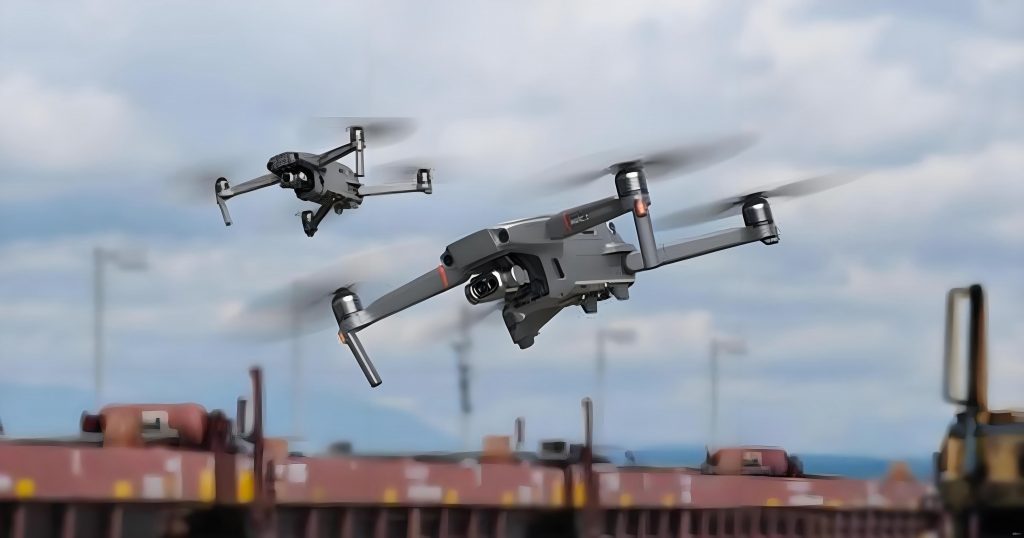
The safety of civilian UAVs is paramount, as incidents involving drone crashes or collisions can lead to severe injuries or property damage. Structural components, such as the airframe and propellers, play a critical role in these safety issues. For instance, sharp edges on the body can exacerbate injuries during impacts, while high-speed propeller blades pose cutting hazards. To address these concerns, national standards have been established to regulate civilian UAV design and manufacturing. In this study, I analyze the airframe structure materials, interpret relevant standards, and perform tests on typical civilian UAV samples to evaluate compliance and identify areas for improvement. The goal is to provide insights that can guide safer design practices and inform future regulatory developments.
Civilian UAV airframe structures are primarily composed of materials that balance lightweight properties with high strength and durability. The choice of materials significantly influences the performance, safety, and cost of civilian UAVs. Common materials include composites (e.g., carbon fiber and glass fiber), aluminum alloys, wood, and plastic/resin blends. Each material has distinct characteristics that make it suitable for specific applications. For example, composites are favored for their high strength-to-weight ratio, which enhances flight efficiency and stability. The selection of materials for civilian UAVs is driven by factors such as weight reduction, environmental resistance, cost-effectiveness, and manufacturability. To summarize these aspects, I have compiled a table detailing the properties and applications of common materials used in civilian UAV airframe structures.
| Material Type | Key Characteristics | Typical Applications | Advantages | Disadvantages |
|---|---|---|---|---|
| Composites (e.g., Carbon Fiber) | High strength-to-weight ratio, corrosion resistance, good vibration damping | High-end civilian UAVs, racing drones | Lightweight, durable, customizable | High cost, susceptibility to impact damage |
| Aluminum Alloys | Good mechanical strength, moderate weight, cost-effective | Mid-range civilian UAVs, industrial drones | Balanced performance, easy to machine | Heavier than composites, prone to fatigue |
| Wood | Lightweight, good aerodynamic properties | Historical or low-cost civilian UAV models | Low cost, natural material | Poor durability, susceptible to moisture |
| Plastic/Resin Blends | Lightweight, easy to mold, low cost | Consumer-grade civilian UAVs, toy drones | Inexpensive, mass-producible | Lower strength, temperature sensitivity |
The evolution of civilian UAV airframe materials has been toward increased use of composites, which now constitute a significant portion of the structural mass in modern drones. This shift is driven by the need for lightweight designs that extend battery life and payload capacity. The specific strength and specific modulus of materials are key metrics in this context. These can be expressed using the following formulas:
Specific strength: $$ S_s = \frac{\sigma}{\rho} $$ where \( \sigma \) is the tensile strength and \( \rho \) is the density.
Specific modulus: $$ S_m = \frac{E}{\rho} $$ where \( E \) is the Young’s modulus.
For civilian UAVs, high values of \( S_s \) and \( S_m \) are desirable to ensure structural integrity without adding excessive weight. Composites often outperform traditional materials in these metrics, making them ideal for civilian UAV applications. However, composites have limitations, such as vulnerability to impact and variability in manufacturing quality. Future trends in civilian UAV materials include the development of hybrid composites and smart materials that can self-heal or adapt to environmental changes, further enhancing the safety and efficiency of civilian UAVs.
National standards play a crucial role in ensuring the safety of civilian UAVs. In many countries, regulatory bodies have established guidelines that cover various aspects of drone design, including airframe structure. For instance, the standard GB 42590—2023, which is a mandatory national standard in some regions, specifies safety requirements for civilian UAVs. This standard addresses issues such as sharp edges and propeller blade design to minimize injury risks. As part of my analysis, I have interpreted the key requirements related to airframe structure, focusing on sharp edge control and propeller blade specifications. The standard mandates that civilian UAVs must not have sharp edges that could harm users during normal operation or maintenance. Additionally, for civilian UAVs without propeller guards, the blades must not be made of metal and must meet specific design criteria to reduce cutting hazards.
The propeller blade requirements in GB 42590—2023 are particularly detailed. They include several design options to mitigate risks, such as asymmetric blades with a tip radius greater than 1 mm, circular tips with a radius over 1 mm, square tips with specific chord dimensions, or blades that fold upon collision. These requirements can be summarized using mathematical expressions to clarify the thresholds. For example:
For asymmetric blades: $$ r > 1 \text{ mm} $$ where \( r \) is the leading-edge radius at the tip.
For square blades: $$ c_t > 2 \text{ mm} \quad \text{or} \quad \frac{c_t}{c_{\text{max}}} > 0.3 $$ where \( c_t \) is the tip chord and \( c_{\text{max}} \) is the maximum chord.
These criteria aim to reduce the kinetic energy transfer during impacts, thereby lowering the risk of severe injuries. The standard also includes provisions for fixed-wing civilian UAVs, requiring that propellers be mounted at the rear to prevent direct contact with persons. To evaluate compliance with these standards, I conducted experimental tests on a selection of civilian UAV samples, as described in the following sections.
In this study, I selected ten typical civilian UAV samples from various manufacturers to assess their airframe structures against national standard requirements. The samples represented a range of types, including multi-rotor and fixed-wing drones, to ensure diversity in the analysis. The testing focused on two main aspects: sharp edge examination and propeller blade evaluation. For sharp edges, a visual inspection was performed to identify any components that could cause harm during use or maintenance. For propeller blades, the material composition was verified using non-destructive testing methods, and dimensional measurements were taken to check compliance with design specifications. The samples were also examined for the presence of propeller guards and foldable blade mechanisms. Below is a summary of the test samples and their key characteristics.
| Sample ID | UAV Type | Weight (g) | Propeller Material | Presence of Propeller Guard | Blade Design Type |
|---|---|---|---|---|---|
| S1 | Multi-rotor | 800 | Carbon Fiber Composite | No | Asymmetric |
| S2 | Multi-rotor | 1200 | Glass Fiber Composite | Yes | Circular |
| S3 | Fixed-wing | 1500 | Plastic Composite | No | Square |
| S4 | Multi-rotor | 600 | Carbon Fiber Composite | Yes | Asymmetric |
| S5 | Multi-rotor | 900 | Aluminum Alloy (non-blade) | No | Asymmetric |
| S6 | Fixed-wing VTOL | 2000 | Composite Blend | No | Rear-mounted |
| S7 | Multi-rotor | 700 | Plastic | Yes | Square |
| S8 | Multi-rotor | 1000 | Carbon Fiber Composite | No | Asymmetric |
| S9 | Multi-rotor | 850 | Glass Fiber Composite | No | Circular |
| S10 | Multi-rotor | 950 | Composite | Yes | Asymmetric |
The testing procedures adhered strictly to the methodologies outlined in national standards. For sharp edge assessment, each civilian UAV was meticulously inspected under controlled lighting conditions, and any potential hazards were documented. Propeller blades were analyzed using material identification techniques, such as spectroscopy, to confirm the absence of metal components. Dimensional measurements were taken with precision tools, including calipers and optical comparators, to verify compliance with tip radius or chord requirements. Additionally, simulated collision tests were conducted on blades claimed to be foldable to evaluate their performance under impact conditions. The results of these tests are compiled in the following table, which provides a detailed breakdown of compliance for each sample.
| Sample ID | Sharp Edge Test Result | Propeller Material (Metal?) | Propeller Guard Present? | Blade Design Compliance | Foldable Blade Test | Overall Compliance |
|---|---|---|---|---|---|---|
| S1 | Pass | No | No | Pass (r = 4.2 mm) | No | Pass |
| S2 | Pass | No | Yes | Pass (r = 3.5 mm) | No | Pass |
| S3 | Pass | No | No | Pass (c_t = 5 mm) | No | Pass |
| S4 | Pass | No | Yes | Pass (r = 5.1 mm) | No | Pass |
| S5 | Pass | No (blade composite) | No | Pass (r = 10.3 mm) | No | Pass |
| S6 | Pass | No | No | Pass (rear-mounted) | N/A | Pass |
| S7 | Pass | No | Yes | Pass (c_t = 5 mm) | No | Pass |
| S8 | Pass | No | No | Pass (r = 4.8 mm) | No | Pass |
| S9 | Pass | No | No | Pass (r = 3.2 mm) | No | Pass |
| S10 | Pass | No | Yes | Pass (r = 4.5 mm) | No | Pass |
The test results indicate that all ten civilian UAV samples fully complied with the national standard requirements for airframe structure. Specifically, no sharp edges were found on any of the drones, and all propeller blades were made of non-metal composites, as required. Among the samples without propeller guards, the blade designs met the specified dimensional criteria, with tip radii or chord measurements exceeding the thresholds. For instance, Sample S5 had an asymmetric blade with a tip radius of 10.3 mm, well above the 1 mm minimum. Sample S6, a vertical takeoff and landing (VTOL) fixed-wing civilian UAV, complied through rear-mounted propellers, which aligns with the standard’s alternative provision. The overall pass rate was 100%, suggesting that current civilian UAV manufacturers are generally adhering to safety regulations. However, this high compliance rate may reflect the selection of samples from reputable sources, and broader market surveys might reveal variations.
To further analyze the safety implications, I considered the kinetic energy involved in propeller impacts, which is a key factor in injury severity. The kinetic energy \( K \) of a rotating propeller blade can be approximated by: $$ K = \frac{1}{2} I \omega^2 $$ where \( I \) is the moment of inertia and \( \omega \) is the angular velocity. For civilian UAVs, typical rotational speeds can exceed 10,000 rpm, translating to high \( \omega \) values. By using blade designs that reduce effective cutting edges, such as those with larger tip radii, the impact force can be dispersed, lowering the risk of laceration. This relationship can be modeled using impact dynamics formulas, but for simplicity, the national standard’s empirical thresholds provide practical guidelines. Additionally, the use of composites in propeller blades contributes to safety by reducing blade mass, which in turn lowers \( I \) and \( K \). This highlights the importance of material selection in enhancing the safety of civilian UAVs.
Looking beyond compliance, there are opportunities to improve civilian UAV airframe structures further. For example, the standard currently does not account for blade tip thickness, which could influence cutting risk. A thicker tip may reduce the pressure exerted on skin during impact, thereby mitigating injury. This can be expressed as: $$ P = \frac{F}{A} $$ where \( P \) is pressure, \( F \) is force, and \( A \) is contact area. Increasing \( A \) through thicker tips could decrease \( P \), making civilian UAVs safer. Future revisions of standards might incorporate such parameters. Moreover, advanced materials like nanocomposites or shape-memory alloys could enable adaptive structures that change upon impact, offering enhanced protection. Research in these areas is essential for the next generation of civilian UAVs.
In conclusion, this study has provided a thorough analysis and experimental verification of civilian UAV airframe structures based on national standards. The findings demonstrate that current civilian UAV designs largely meet regulatory requirements, with composites being the dominant material for propeller blades and airframe components. The testing of ten diverse samples yielded a 100% compliance rate, indicating effective adherence to safety norms. However, the analysis also reveals potential areas for standard enhancement, such as including tip thickness criteria. As civilian UAV technology continues to evolve, ongoing research into materials, design optimization, and regulatory frameworks will be crucial to ensuring public safety. I recommend that future work expand the sample size to cover a wider range of civilian UAV models and incorporate real-world collision simulations to validate safety performance under various scenarios. By prioritizing structural integrity, we can foster the responsible growth of the civilian UAV industry and minimize risks associated with their operation.
The integration of national standards into civilian UAV manufacturing has proven effective in mitigating structural hazards. Through this research, I have highlighted the importance of rigorous testing and continuous improvement in airframe design. As civilian UAVs become more pervasive in daily life, their safety must remain a top priority. This study contributes to that goal by providing evidence-based insights and methodologies that can inform designers, regulators, and users alike. Ultimately, a collaborative approach involving industry stakeholders and research institutions will drive innovations that make civilian UAVs safer and more reliable for all applications.