
In recent years, the rapid proliferation of civilian UAVs (unmanned aerial vehicles) has transformed various industries, from logistics and agriculture to entertainment and surveillance. However, this growth has also led to significant challenges, including illegal flights, privacy invasions, and airspace disruptions. As a first-person observer in the field of UAV security, I have witnessed the escalating need for effective countermeasure technologies. The selection of appropriate countermeasures is critical to ensure both efficacy and safety, given the diverse nature of civilian UAVs and the complex environments in which they operate. This article delves into the intricacies of countermeasure technology selection for civilian UAVs, exploring the difficulties, feasibility, and practical applications, with an emphasis on mathematical models and comparative analyses to guide decision-making.
The civilian UAV market has expanded exponentially, with global revenues surpassing billions of dollars, driven by advancements in materials, artificial intelligence, and data analytics. Yet, this innovation has outpaced regulatory frameworks, resulting in frequent incidents of “black flights”—unauthorized UAV operations that pose risks to public safety, critical infrastructure, and national security. Countermeasure technologies must adapt to these evolving threats, but their deployment is often hampered by a lack of standardized approaches. From my perspective, the key to successful countermeasures lies in understanding the vulnerabilities of civilian UAV systems and tailoring responses to specific scenarios. This requires a comprehensive analysis of UAV types, environmental factors, and the inherent weaknesses of UAV design, all while minimizing collateral damage. In this discussion, I will systematically address these aspects, incorporating formulas and tables to elucidate the technical nuances.
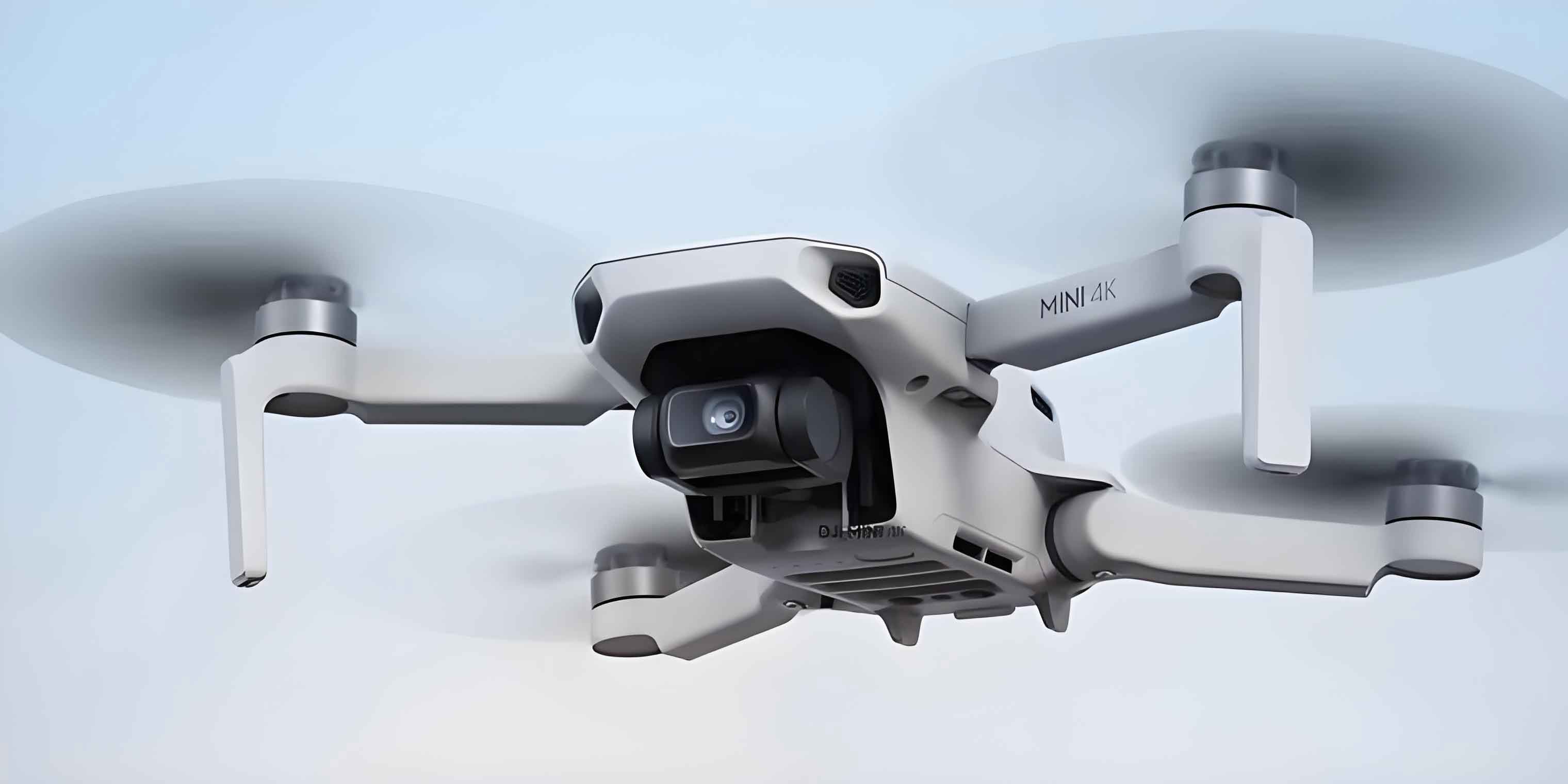
One of the primary difficulties in countering civilian UAVs stems from the vast diversity of models and their structural-performance variations. Civilian UAVs are classified based on weight, speed, altitude, radio frequency, and endurance, leading to a complex taxonomy that complicates countermeasure selection. For instance, small consumer-grade civilian UAVs often rely on simple control links and GPS navigation, while larger industrial civilian UAVs may incorporate advanced encryption and multiple sensors. This heterogeneity means that a one-size-fits-all approach is ineffective; instead, countermeasures must be customized to target specific UAV characteristics. Moreover, the operating environments for civilian UAVs are increasingly complex—urban areas with dense obstructions, rural regions with electromagnetic interference, and adverse weather conditions like rain, fog, or high winds. These factors can degrade the performance of detection and countermeasure systems, necessitating robust designs that account for environmental adaptability. In my experience, a thorough assessment of UAV parameters and contextual variables is essential before deploying any countermeasure technology.
To evaluate the feasibility of countering civilian UAVs, it is crucial to analyze their systemic weaknesses. Most civilian UAVs exhibit vulnerabilities in communication links, navigation systems, power supply, and payload protection. For example, the control signal of a typical civilian UAV is often susceptible to interference due to fixed frequencies or predictable hopping patterns. This can be exploited by jamming techniques that overwhelm the UAV’s receiver with high-power noise. Mathematically, the effectiveness of such jamming can be modeled using the signal-to-interference ratio (SIR). If we denote the desired signal power as \(P_s\) and the interference power as \(P_i\), the SIR is given by:
$$ \text{SIR} = \frac{P_s}{P_i} $$
When the SIR falls below a threshold \(\text{SIR}_{\text{th}}\), the UAV loses control, leading to behaviors like return-to-home or hover. For a civilian UAV operating at a distance \(d\) from the controller, the received signal power can be expressed using the Friis transmission equation:
$$ P_r = P_t G_t G_r \left( \frac{\lambda}{4\pi d} \right)^2 $$
where \(P_t\) is the transmitted power, \(G_t\) and \(G_r\) are the antenna gains, and \(\lambda\) is the wavelength. By emitting interference at a comparable power level and frequency, countermeasure systems can disrupt this link. Additionally, civilian UAVs predominantly depend on satellite navigation services like GPS, which broadcast weak signals prone to spoofing or jamming. The positioning error \(\epsilon\) due to spoofing can be approximated as:
$$ \epsilon = \sqrt{ \sum_{i=1}^{n} ( \delta f_i \cdot t )^2 } $$
where \(\delta f_i\) represents frequency deviations and \(t\) is time. This vulnerability allows for deceptive tactics that mislead the civilian UAV about its location. Furthermore, the limited battery life of civilian UAVs—often less than 30 minutes for consumer models—constrains their operational range, making them susceptible to endurance-based countermeasures. Lastly, the fragile construction of many civilian UAVs, with inadequate sealing against moisture or electromagnetic pulses, opens avenues for physical or directed-energy attacks. These weaknesses collectively underscore the technical feasibility of countering civilian UAVs, provided the right technologies are applied.
The landscape of countermeasure technologies for civilian UAVs can be broadly categorized based on the cooperation level of the UAV. For cooperative civilian UAVs—those compliant with regulations—electronic fencing is a prevalent solution. This technology establishes virtual boundaries using geofencing software, preventing UAVs from entering restricted zones. It operates by integrating with the UAV’s flight controller to enforce no-fly areas, often through pre-programmed coordinates or real-time updates. The effectiveness of electronic fencing can be quantified by the probability of intrusion prevention \(P_{\text{prevent}}\), which depends on the accuracy of GPS coordinates and the UAV’s adherence to protocols. For non-cooperative civilian UAVs—often involved in illicit activities—countermeasures are more aggressive and include interference-deception, kinetic destruction, defensive consumption, and payload damage. Each approach targets specific weaknesses of civilian UAVs, as summarized in the table below.
| Technology Type | Mechanism | Targeted Weakness | Advantages | Disadvantages | Risk Level |
|---|---|---|---|---|---|
| Interference-Deception | Jamming or spoofing control, data, or navigation signals | Communication and navigation vulnerabilities of civilian UAVs | Non-destructive, adaptable to various civilian UAV models | May cause electromagnetic pollution, limited range | Medium |
| Kinetic Destruction | Physical impact via projectiles, nets, or collisions | Structural fragility of civilian UAVs | Immediate neutralization, high certainty | Safety hazards from falling debris, collateral damage | High |
| Defensive Consumption | Hardening protected assets to withstand UAV threats | Limited payload capacity of civilian UAVs | Passive protection, reduces need for active measures | Costly, not suitable for mobile targets | Low |
| Payload Damage | Directed-energy weapons like lasers or microwaves | Electronic components of civilian UAVs | Precision strikes, minimal fallout | High energy requirements, weather-sensitive | Medium-High |
Interference-deception techniques are particularly effective against civilian UAVs due to their reliance on radio frequencies. For instance, GPS spoofing can induce a civilian UAV to deviate from its path by broadcasting counterfeit satellite signals. The success rate \(R_s\) of spoofing can be modeled as a function of signal power ratio and synchronization error:
$$ R_s = 1 – \exp\left( -\frac{P_{\text{spoof}}}{P_{\text{GPS}}} \cdot \frac{1}{\sigma_t^2} \right) $$
where \(P_{\text{spoof}}\) is the spoofing signal power, \(P_{\text{GPS}}\) is the genuine GPS power, and \(\sigma_t^2\) is the time variance. Similarly, jamming attacks on control links can be optimized by analyzing the frequency hopping patterns of civilian UAVs. If a civilian UAV employs a hopping sequence with period \(T\), the jamming bandwidth \(B_j\) required to cover all channels is:
$$ B_j = N \cdot \Delta f $$
with \(N\) as the number of channels and \(\Delta f\) as the channel spacing. Kinetic destruction, while straightforward, poses significant safety risks, especially in populated areas. The kinetic energy \(E_k\) of a falling civilian UAV of mass \(m\) from height \(h\) is:
$$ E_k = m g h + \frac{1}{2} m v^2 $$
where \(g\) is gravity and \(v\) is velocity. This energy can cause injury or property damage, highlighting the need for careful consideration. Defensive consumption strategies, such as installing barriers or electromagnetic shielding, aim to reduce the vulnerability of high-value targets to civilian UAV incursions. The shielding effectiveness \(SE\) in decibels for electromagnetic interference is given by:
$$ SE = 20 \log_{10}\left( \frac{H_{\text{ext}}}{H_{\text{int}}} \right) $$
where \(H_{\text{ext}}\) and \(H_{\text{int}}\) are the external and internal magnetic field strengths, respectively. Lastly, payload damage via directed energy offers a high-tech solution, but its practicality depends on factors like atmospheric attenuation. For laser systems, the power density \(I\) at range \(r\) is:
$$ I = \frac{P_0 e^{-\alpha r}}{\pi r^2 \theta^2} $$
with \(P_0\) as laser power, \(\alpha\) as attenuation coefficient, and \(\theta\) as beam divergence. These formulas underscore the technical underpinnings of countermeasure technologies for civilian UAVs.
The applicability of countermeasure technologies for civilian UAVs hinges on two core principles: effectiveness and safety. Effectiveness is determined by the alignment between the technology and the specific civilian UAV type, as well as environmental conditions. For example, in urban settings with multipath interference, signal-jamming techniques may be less reliable due to reflections and obstructions. The path loss \(L_p\) in such environments can be modeled using the log-distance model:
$$ L_p = L_0 + 10 \gamma \log_{10}\left( \frac{d}{d_0} \right) + X_\sigma $$
where \(L_0\) is the reference loss, \(\gamma\) is the path loss exponent, \(d_0\) is the reference distance, and \(X_\sigma\) represents shadowing effects. This necessitates adaptive countermeasures that adjust power or frequency dynamically. Safety, on the other hand, involves mitigating risks from countermeasure operations themselves. These risks include harm to personnel, electromagnetic pollution, and damage to infrastructure. A risk assessment framework can be employed, where total risk \(R_{\text{total}}\) is the sum of black flight risk \(R_{\text{bf}}\) and countermeasure risk \(R_{\text{cm}}\):
$$ R_{\text{total}} = R_{\text{bf}} + R_{\text{cm}} = (P_{\text{bf}} \cdot C_{\text{bf}}) + (P_{\text{cm}} \cdot C_{\text{cm}}) $$
Here, \(P\) denotes probability and \(C\) denotes consequence. For instance, kinetic destruction of a civilian UAV over a crowded area might yield high \(C_{\text{cm}}\), suggesting alternative methods. The selection process should prioritize technologies that minimize \(R_{\text{total}}\), as illustrated in the decision flowchart below.
| Step | Action | Considerations | Outcome |
|---|---|---|---|
| 1 | Identify UAV type and cooperation status | Is the civilian UAV registered or compliant? If yes, use electronic fencing; if no, proceed to step 2. | Classify as cooperative or non-cooperative civilian UAV |
| 2 | Assess environmental factors | Evaluate weather, obstacles, and electromagnetic noise. Adjust technology parameters accordingly. | Determine operational constraints for countermeasures |
| 3 | Analyze UAV weaknesses | Target communication, navigation, power, or structure. Match to countermeasure category. | Select potential technologies (e.g., jamming for signal weakness) |
| 4 | Evaluate risks and safety | Compute \(R_{\text{total}}\) using probability-consequence models. Avoid high-risk options in sensitive areas. | Rank technologies by safety and efficacy |
| 5 | Implement and monitor | Deploy chosen countermeasure, observe effects, and adapt as needed for the civilian UAV threat. | Neutralize civilian UAV with minimal collateral damage |
In practice, the choice of countermeasure technology for civilian UAVs often involves trade-offs. For instance, interference-based methods may be preferred for their non-lethal nature, but they require precise knowledge of the civilian UAV’s frequency bands. This can be addressed through spectrum sensing algorithms that detect UAV signals in real time. The detection probability \(P_d\) in a noisy environment is given by the Neyman-Pearson criterion:
$$ P_d = Q\left( \frac{\theta – \sigma_n^2}{\sqrt{2\sigma_n^4 / N}} \right) $$
where \(\theta\) is the decision threshold, \(\sigma_n^2\) is noise variance, and \(N\) is sample size. Such algorithms enhance the effectiveness of countermeasures against adaptive civilian UAVs. Furthermore, the integration of multiple technologies—such as combining detection sensors with directed-energy systems—can create layered defense networks. This is particularly relevant for protecting critical infrastructure from hostile civilian UAVs. The overall system reliability \(R_s\) of a layered defense can be approximated using series-parallel models:
$$ R_s = 1 – \prod_{i=1}^{n} (1 – R_i) $$
for parallel components, where \(R_i\) is the reliability of each layer. This approach ensures redundancy and improves success rates against diverse civilian UAV threats.
From a regulatory standpoint, the deployment of countermeasure technologies for civilian UAVs must align with legal frameworks governing airspace and electromagnetic emissions. Many jurisdictions restrict the use of jammers or kinetic methods due to potential misuse. Therefore, policymakers should establish guidelines that balance security needs with public safety, perhaps through licensed countermeasure operators or designated protection zones. Additionally, research into passive countermeasures—like acoustic detection or visual tracking—offers low-risk alternatives. The detection range \(r_d\) for acoustic systems depends on sound pressure level \(SPL\) and ambient noise \(N_a\):
$$ r_d = \sqrt{ \frac{SPL – N_a}{20 \log_{10}(e)} } $$
These technologies can complement active measures, providing a holistic defense against unauthorized civilian UAV flights.
In conclusion, the selection of countermeasure technologies for civilian UAVs is a multifaceted process that demands technical expertise, environmental awareness, and risk management. The effectiveness of any countermeasure hinges on its ability to exploit the inherent weaknesses of civilian UAVs, such as vulnerable communication links or limited endurance. Simultaneously, safety considerations must guide choices to prevent harm to people and property. By employing mathematical models, comparative tables, and structured decision flows, operators can optimize their responses to civilian UAV threats. As the civilian UAV landscape continues to evolve, so too must countermeasure strategies, emphasizing adaptability and integration. Ultimately, the goal is to achieve a balance where civilian UAV operations are secure and compliant, and countermeasures are both potent and prudent, ensuring the skies remain safe for all.
The future of countering civilian UAVs will likely see increased automation, with AI-driven systems that identify and neutralize threats in real time. Such advancements could reduce human error and enhance precision. However, ethical and legal challenges will persist, requiring ongoing dialogue among technologists, regulators, and the public. In my view, a proactive approach—combining robust technology with sensible policies—is key to managing the risks posed by civilian UAVs while harnessing their benefits for society.