
The rapid proliferation of civilian UAV (Unmanned Aerial Vehicle) technology has ushered in an era of unprecedented application across diverse sectors, from aerial photography and precision agriculture to infrastructure inspection and emergency response. However, this exponential growth has been paralleled by significant public safety concerns. Incidents involving unauthorized or negligent operations, commonly referred to as “black flights,” pose risks to aviation safety, critical infrastructure, and personal privacy. A critical bottleneck for law enforcement agencies in addressing these incidents has been the inability to swiftly and accurately identify the owner or operator of a wayward civilian UAV. Traditional investigative methods are often time-consuming and inefficient when faced with an anonymous device.
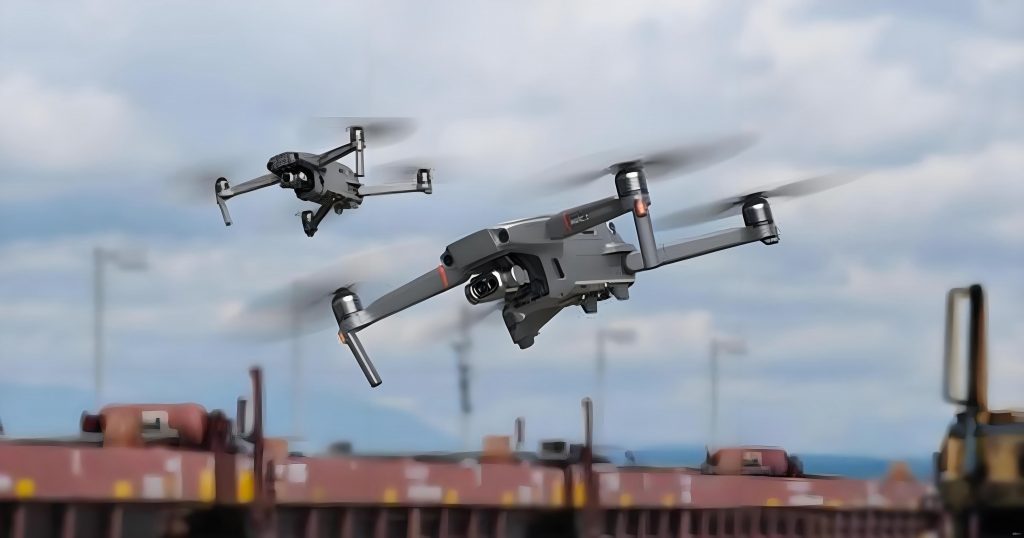
This paper presents the design and implementation of a purpose-built Civilian UAV Real-Name Registration System from a law enforcement perspective. The system’s core philosophy is anchored in the AAᵣP model—Aircraft, Authority, Registration, Person—which ensures a reliable chain of custody and accountability. It is engineered to transcend the limitations of existing public registration platforms by integrating robust identity verification, secure data management, and efficient query mechanisms tailored for police work. By establishing a authoritative and verified database, the system transforms an unidentified civilian UAV from an anonymous threat into a traceable entity, directly linking it to a verified individual or organization.
System Design Philosophy and Architectural Foundation
The overarching design goal is to establish a digital, standardized, and secure management platform for civilian UAV registration information. The system serves as a centralized repository for industry-internal, access-restricted data, including verified identities of users, manufacturers, and detailed civilian UAV attributes. Its primary function is to provide law enforcement with precise, actionable intelligence. Once deployed, authorized police personnel can access the system to instantly query ownership details using a unique registration identifier found on the UAV, dramatically accelerating the investigative process for incidents involving rogue drones. The system’s value proposition is summarized by its alignment with the AAᵣP framework, as illustrated below:
$$ \text{AAᵣP Service: } \text{UAV (Aircraft)} \xrightarrow[\text{Registration}]{\text{Unique ID}} \text{System Database} \xrightarrow{\text{Law Enforcement Query}} \text{Verified Owner (Person/Organization)} $$
The technical architecture is constructed using the robust JavaEE enterprise application framework, specifically the SSM (Spring + SpringMVC + MyBatis) integration. This choice provides a mature, scalable, and maintainable foundation. Spring acts as the core container, managing object lifecycles and dependencies through Inversion of Control (IoC) and facilitating modular programming via Aspect-Oriented Programming (AOP). SpringMVC handles the web presentation layer following the Model-View-Controller (MVC) pattern, cleanly separating user interaction logic. MyBatis serves as the persistence layer framework, simplifying database operations by mapping Java objects to SQL statements, which enhances both development efficiency and system performance. The logical architecture is structured in four distinct layers:
| Layer | Components & Responsibility |
|---|---|
| User Layer | Web interface for Personal Users, Unit Users, Manufacturer Users, and System Administrators. |
| Application Layer | Implements core business logic: User Management, Real-Name Registration, UAV Model Management, etc. |
| Service Support Layer | Provides foundational services: Identity Verification, QR Code Generation, Data Encryption, Logging. |
| Data Layer | MySQL database storing all structured information (user profiles, UAV records, manufacturer data). |
Functional Requirements Analysis and System Design
The system’s functionality is derived from a synthesis of regulatory mandates and practical law enforcement needs. It is designed around five core modules, each serving a specific role in the lifecycle management of a civilian UAV.
| Module | Key Functions | Primary Actors |
|---|---|---|
| System User Management | Registration, identity verification/audit, profile query, password management. | All Users, Admin |
| Real-Name Information Registration | Collection and submission of verified identity documents (ID cards, business licenses). | Personal/Unit/Manufacturer Users |
| UAV Model Management | Addition, modification, and deactivation of standardized UAV model specifications. | Manufacturer Users, Admin |
| UAV Registration Management | Registration of individual UAVs, QR code generation, status update (e.g., lost, sold). | Personal/Unit Users, Admin |
| Policy & News Dissemination | Publication of regulations, no-fly zone notices, and industry updates. | Admin, All Users (view) |
The operational workflow is designed to ensure data integrity from the outset. A user must first register an account. Before being permitted to register any civilian UAV, the user must complete their real-name profile, which is then subjected to a backend administrative audit. Only upon approval can the user proceed to register their UAV assets. This gated process is fundamental to preventing anonymous registrations. The business logic flow can be formalized as a state transition:
$$ \text{User State: } \text{Unregistered} \rightarrow \text{Registered (Pending Audit)} \rightarrow \text{Approved} \rightarrow \text{UAV Registration Enabled} $$
$$ \text{UAV State: } \text{Unregistered} \rightarrow \text{Registered (Active)} \rightarrow \{\text{Deactivated}, \text{Lost}, \text{Transferred}\} $$
System Implementation and Core Functionality
The system was developed using a technology stack comprising the Windows 10 OS, Apache Tomcat 8.0 as the web server, MySQL 5.7 as the relational database, and Eclipse as the integrated development environment. The frontend utilizes standard JSP, HTML, CSS, and JavaScript.
Access control is role-based, defining four distinct user roles with tailored permissions:
- Personal User: Registers and manages personally owned civilian UAV.
- Unit User: Registers and manages organizationally owned civilian UAV.
- Manufacturer User: Registers the company and manages its UAV product models in the system catalog.
- System Administrator: Has full oversight: auditing all users, managing all UAV models and registrations, publishing news.
A critical implementation feature is the dynamic generation of a unique QR code for each successfully registered civilian UAV. This QR code encodes the UAV’s unique registration identifier. The system mandates that this code be physically affixed to the UAV fuselage. For law enforcement, this provides an instant key to query the complete ownership record. The information entropy of the registration identifier is designed to be sufficiently high to avoid collisions:
$$ H(X) = – \sum_{i=1}^{n} P(x_i) \log_2 P(x_i) $$
where $H(X)$ represents the entropy of the identifier generation system, ensuring a vast namespace for unique IDs.
The backend administrator interface is the central hub for law enforcement operations. It provides comprehensive search and filter capabilities across all data dimensions. An officer recovering a civilian UAV can scan its QR code and input the registration identifier into the system’s query function. The system instantly returns the full, verified dossier of the owner, including name, contact information (for authorized use), and the specific details of the UAV in question. This direct linkage is the culmination of the AAᵣP design principle.
Database Schema Design
The database schema is normalized to ensure data consistency, minimize redundancy, and support efficient querying. The design centers on several core tables that maintain the relationships between entities: Users, UAVs, and Manufacturers.
| Table Name | Key Field (Sample) | Description |
|---|---|---|
| sys_user | username, email, role_type | Base account credentials and role for all users. |
| personal_info | real_name, id_number, id_photo_path, license_number (if required) | Verified identity details for individual owners. |
| unit_info | unit_name, legal_rep, business_license_number, license_photo_path | Verified identity details for organizational owners. |
| manufacturer_info | company_name, business_license_number, address | Verified details for UAV manufacturers. |
| uav_model | model_name, type, empty_weight, max_takeoff_weight, manufacturer_id | Catalog of UAV models submitted by manufacturers. |
| uav_registration | registration_uid, fcu_serial_number, model_id, owner_id, purpose, status, qr_code_path | The core table linking a physical UAV to its owner and model. |
The uav_registration table is the most critical from an investigative standpoint. Its structure ensures every registered civilian UAV has a unique, traceable fingerprint within the system. The status field allows for lifecycle management (active, decommissioned, lost, etc.), maintaining a historical record even after a UAV is no longer operational. The relationship between the number of registered UAVs ($N_{uav}$), users ($N_{user}$), and models ($N_{model}$) can be conceptualized as a network, where the system’s utility for law enforcement scales with the comprehensiveness of the data:
$$ \text{Investigative Efficacy } (E) \propto \frac{N_{uav}}{N_{unregistered}} \cdot \text{Data Accuracy} $$
where a lower ratio of unregistered UAVs ($N_{unregistered}$) and higher data accuracy lead to greater efficacy.
Conclusion and Future Implications
The Law Enforcement-Oriented Civilian UAV Real-Name Registration System presented here addresses a fundamental gap in the governance of low-altitude airspace. By mandating verified identity linkage and providing an efficient query platform for authorities, it establishes a powerful deterrent against the irresponsible use of civilian UAV technology. The system’s design, based on the AAᵣP model and implemented with a robust JavaEE/SSM stack, ensures reliability, security, and scalability.
This system lays a critical foundational data layer for broader unmanned traffic management (UTM) ecosystems. Future extensions could integrate Application Programming Interfaces (APIs) to connect with flight planning applications, geofencing services, and real-time monitoring data. For instance, coupling registration data with remote identification (Remote ID) broadcasts would enable real-time correlation between a detected civilian UAV signal and its registered owner. The system represents a necessary step towards a safe, secure, and accountable integration of civilian UAV into the national airspace, where innovation is balanced with rigorous oversight and public safety.