
In recent years, the rapid proliferation of civilian drones has transformed various sectors, from logistics and agriculture to surveillance and entertainment. As these unmanned aerial systems (UAS) become more integrated into our airspace, the need for a robust regulatory framework has never been more critical. From my perspective, drawing on global developments and existing research, I will systematically explore the regulatory体系 that should govern the operation of civilian drones. This analysis is grounded in the context of international standards and national aviation laws, with a focus on ensuring safety, security, and efficiency. The regulatory landscape for civilian drones is evolving, and it is imperative to address gaps through comprehensive policies that cover both operational management and air traffic control aspects.
The international community has made significant strides in addressing UAS regulations. For instance, the International Civil Aviation Organization (ICAO) initiated work on UAS as early as 2005, aiming to provide guidance to member states. By 2007, a dedicated UAS study group was established to develop regulatory materials. Similarly, European bodies like EUROCONTROL, EUROCAE, and EASA have actively contributed to crafting air traffic management rules for UAS. In the United States, the Federal Aviation Administration (FAA) began legislative efforts in 1991 and later formed a UAS program office in 2006 to expedite the process. These initiatives highlight a global recognition of the importance of regulating civilian drones, yet challenges persist, particularly in harmonizing standards across jurisdictions. My analysis will delve into these aspects, emphasizing the need for adaptive frameworks that can keep pace with technological advancements.
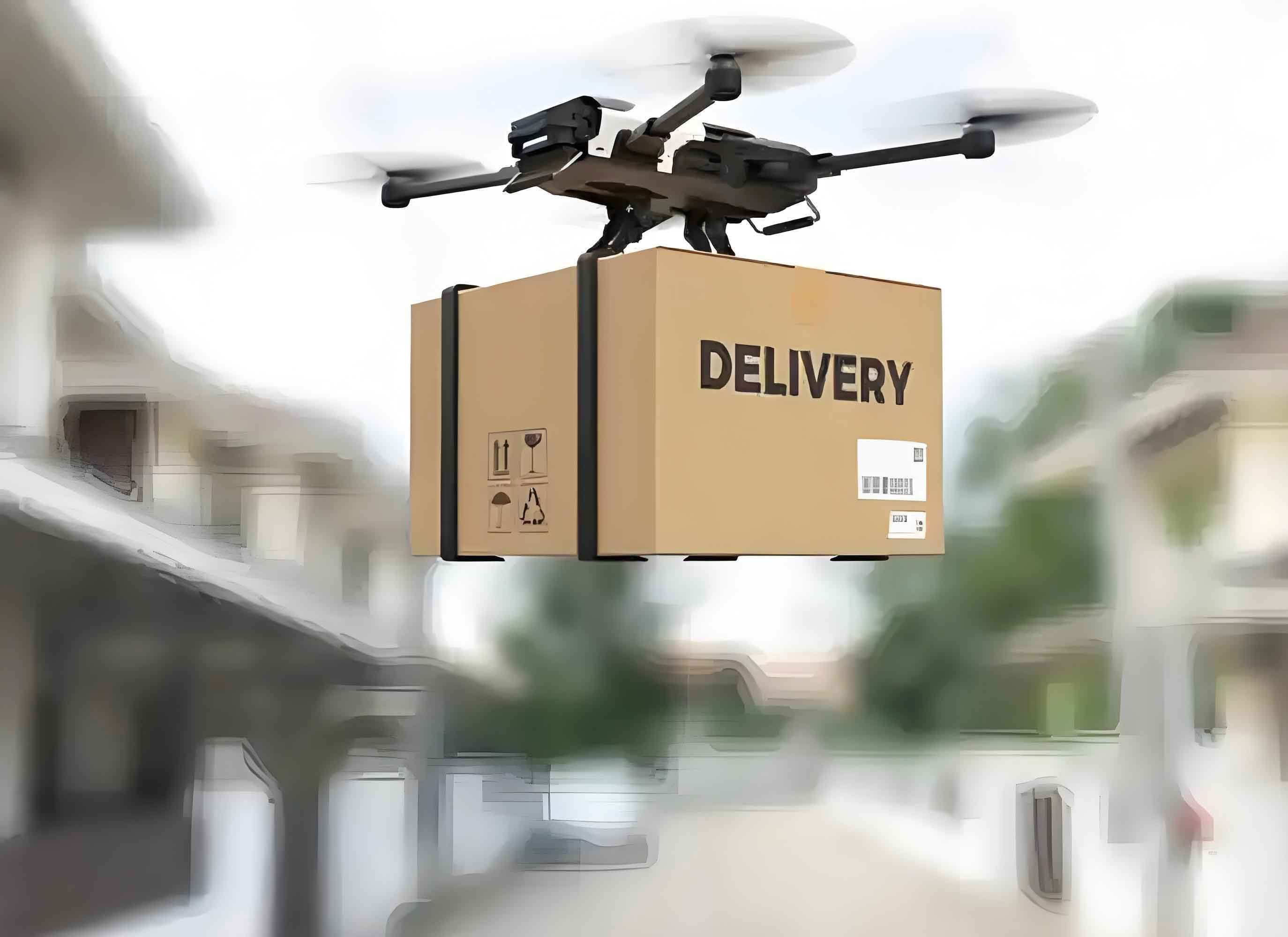
Civilian drones, often referred to as UAS, encompass a wide range of vehicles, from small recreational models to large commercial systems. Their diversity complicates regulation, as one-size-fits-all approaches are inadequate. In this article, I will propose a structured regulatory system based on two core pillars: UAS operational management regulations and UAS air traffic management methods. By incorporating tables and formulas, I aim to provide a clear and detailed summary of key requirements. The repeated emphasis on civilian drones throughout this discussion underscores their growing significance in modern aviation. As I explore these topics, I will consider practical implementations and potential improvements to existing frameworks.
Operational Management Regulations
Operational management forms the backbone of regulating civilian drones, ensuring that they are airworthy and operated by qualified personnel. From my viewpoint, this involves two main components: airworthiness management and crew qualification management. These elements are crucial for mitigating risks associated with civilian drones, especially as their numbers soar in shared airspace.
Airworthiness Management
Airworthiness management for civilian drones must align with established aviation laws, such as those outlined in national civil aviation acts. Fundamentally, civilian drones should fall under the purview of civil aviation authorities, but their variability necessitates tailored approaches. Based on existing research, I propose a classification system for civilian drones to streamline regulatory oversight. This classification can be summarized in the following table, which categorizes drones based on weight, operational environment, and specific requirements.
| Category | Definition | Key Requirements | Regulatory Notes |
|---|---|---|---|
| Light-Small UAS | Drones with a mass ≤ 25 kg, or those ≤ 150 kg operating within visual line-of-sight at low speeds. |
|
These civilian drones are often used for recreational or light commercial purposes, and regulations may be relaxed in non-controlled airspace with adequate safety measures. |
| Non-General UAS | Drones that do not fit standard categories, often requiring special airworthiness certificates. |
|
This category addresses unique civilian drones used in research, industrial applications, or other non-standard operations, emphasizing safety through certification. |
The classification above helps in applying appropriate regulations to different types of civilian drones. For instance, light-small civilian drones might operate under simplified rules in Class G airspace, while non-general UAS require rigorous certification processes. From my analysis, airworthiness can be modeled using a risk-based approach. Let $R$ represent the overall risk associated with a civilian drone operation, which can be expressed as:
$$ R = P \times C $$
where $P$ is the probability of an incident (e.g., system failure or human error), and $C$ is the consequence severity. By setting thresholds for $R$, authorities can determine airworthiness standards. For example, if a civilian drone operates in populated areas, $C$ is high, so $P$ must be minimized through design approvals and maintenance checks. This formula underscores the need for dynamic regulations that account for operational contexts of civilian drones.
Furthermore, the airworthiness management process should include periodic inspections and compliance audits. I suggest that for civilian drones exceeding certain weight limits, mandatory reporting of flight data could enhance safety. The integration of such measures ensures that civilian drones remain reliable throughout their lifecycle. As civilian drones become more autonomous, airworthiness criteria must evolve to address software integrity and cybersecurity, which I will discuss later.
Crew Qualification Management
Crew qualification is equally vital for the safe operation of civilian drones. According to aviation laws, personnel involved in drone operations must undergo specialized training and obtain certifications. From my perspective, the requirements for pilots-in-command (PIC) should vary based on operational complexity. The following table outlines different scenarios for PIC qualifications in civilian drone operations.
| Operational Scenario | PIC Requirement | Justification | Example Applications |
|---|---|---|---|
| Operations in controlled airspace, IFR flights, night operations, or beyond visual line-of-sight. | PIC must hold a valid pilot license (private or higher) or equivalent military certification for the specific drone category/class. | High-risk environments demand certified skills to handle air traffic interactions and emergency situations, ensuring safety for civilian drones and other airspace users. | Commercial delivery civilian drones flying in urban areas or surveillance missions over extended ranges. |
| Operations in Class G airspace (non-controlled) under limited conditions: low speed, low altitude, sparse population, and no hazardous facilities. | PIC may not require a formal pilot license but must demonstrate competency through authorized training programs or assessments. | Lower risk settings allow for flexibility, but competency must be verified to prevent accidents involving civilian drones, such as in agricultural spraying or hobbyist flights. | Recreational civilian drones used in rural fields or small-scale photography projects. |
From my analysis, the competency of PICs can be quantified using a scoring model. Let $S$ represent the skill level of a PIC, which depends on factors like training hours $T$, experience $E$, and test scores $TS$. This can be modeled as:
$$ S = \alpha \cdot \ln(T) + \beta \cdot E + \gamma \cdot TS $$
where $\alpha$, $\beta$, and $\gamma$ are weighting coefficients determined by regulatory bodies. For civilian drones operating in sensitive areas, a minimum $S$ threshold could be enforced. This approach ensures that crew qualifications for civilian drones are data-driven and adaptive. Moreover, recurrent training should be mandated, especially as technology for civilian drones advances. I recommend that aviation authorities establish standardized training modules covering topics like meteorology, navigation, and emergency procedures specific to civilian drones.
In addition to pilots, other crew members, such as observers or maintenance personnel, should also meet certification standards. For instance, a risk assessment formula for crew coordination might involve:
$$ R_{crew} = 1 – \prod_{i=1}^{n} (1 – p_i) $$
where $p_i$ is the error probability of each crew member, and $n$ is the team size. By minimizing $R_{crew}$, the overall safety of civilian drone operations improves. These mathematical models highlight the importance of systematic crew management in the regulatory framework for civilian drones.
Air Traffic Management Methods
Air traffic management for civilian drones focuses on integrating them safely into existing airspace systems. From my viewpoint, this involves two key aspects: operational approval and flight operations. These methods ensure that civilian drones do not disrupt manned aviation and adhere to established protocols. As civilian drones proliferate, dynamic air traffic management solutions become essential.
Operational Approval
Operational approval processes are critical for authorizing civilian drone flights. I suggest that the civil aviation authority should serve as the primary regulatory body, overseeing applications and issuing permits. The approval policy should balance flexibility with safety, allowing for special flight permits under demonstrated safe conditions. For civilian drones, this might involve case-by-case assessments for non-standard operations. The security of data links and fail-safe mechanisms must be prioritized from the outset to prevent unauthorized access or mid-air failures.
A structured approval workflow can be represented using a decision tree. Let $A$ denote approval status, which depends on factors like airspace class $C_a$, drone category $D_c$, and risk level $R_l$. The approval function can be expressed as:
$$ A = f(C_a, D_c, R_l) = \begin{cases}
\text{Approved} & \text{if } R_l < \tau \text{ and } C_a \in \text{Allowed} \\
\text{Denied} & \text{otherwise}
\end{cases} $$
where $\tau$ is a risk threshold. For civilian drones in controlled airspace, $\tau$ might be lower, requiring additional mitigations. This formula emphasizes the need for transparent criteria in approving civilian drone operations. I also propose that approval processes incorporate real-time monitoring, using technologies like remote identification for civilian drones to enhance accountability.
Security measures are paramount. The reliability of command-and-control links for civilian drones can be modeled using a reliability function $R(t)$, where:
$$ R(t) = e^{-\lambda t} $$
with $\lambda$ as the failure rate. Regulatory standards could mandate minimum $R(t)$ values for civilian drones operating near critical infrastructure. By integrating such models, approval processes become more rigorous, fostering trust in civilian drone technologies.
Flight Operations
Flight operations for civilian drones must adhere to principles that ensure coexistence with other airspace users. From my perspective, key principles include continuous monitoring and equipage requirements. Civilian drones should be operated in a manner that mirrors manned aircraft in terms of responsiveness and communication.
First, the airspace integration principle dictates that civilian drone operators must maintain awareness of other traffic. In non-segregated airspace, operators should continuously monitor drone performance and air traffic service (ATS) communications. The response time $T_r$ of a civilian drone to ATS instructions should be comparable to manned aircraft, ideally within a bound. This can be expressed as:
$$ T_r \leq T_{manned} + \delta $$
where $T_{manned}$ is the typical response time for manned aircraft, and $\delta$ is a small tolerance. For civilian drones, this ensures seamless integration. Additionally, equipment mandates are crucial. The table below summarizes equipage requirements for civilian drones based on airspace class.
| Airspace Class | Required Equipment | Rationale for Civilian Drones | Compliance Metrics |
|---|---|---|---|
| Class A, C, D, E (Controlled) | Mode S transponder, airborne collision avoidance system (ACAS), continuous communication link. | To maintain situational awareness and avoid conflicts with manned aircraft, ensuring safety for all airspace users involving civilian drones. | Equipment must be certified and operational throughout flight; failure rates should be below 0.001 per flight hour. |
| Class G (Non-Controlled) | Basic navigation lights, remote identification module, and geo-fencing capability. | To enhance visibility and prevent incursions into restricted areas, particularly for civilian drones used in low-altitude operations. | Identification range ≥ 5 km; geo-fencing accuracy within 10 meters. |
Second, general operational principles for civilian drones include continuous listening watch and performance monitoring. For operations outside danger areas or reserved airspace, operators must listen to ATS communications and track drone status. The probability of successful monitoring $P_m$ can be modeled as:
$$ P_m = 1 – \left( \frac{t_{outage}}{T_{flight}} \right) $$
where $t_{outage}$ is the communication outage time, and $T_{flight}$ is total flight time. Regulatory guidelines could set a minimum $P_m$, such as 0.99, for civilian drones in shared airspace. This emphasizes the importance of reliable control links for civilian drones.
Moreover, contingency plans for civilian drones should be mandated, including automated return-to-home functions in case of link loss. The effectiveness of such plans can be assessed using a safety index $I_s$, defined as:
$$ I_s = \frac{N_{successful\_recoveries}}{N_{total\_incidents}} $$
where higher $I_s$ values indicate better resilience. For civilian drones, a minimum $I_s$ threshold could be enforced during certification. These operational rules collectively ensure that civilian drones operate safely and predictably, minimizing risks to people and property.
Conclusion and Future Directions
In conclusion, the regulatory system for civilian drones must be comprehensive and adaptive, covering operational management and air traffic integration. From my analysis, based on existing documents and aviation laws, I have proposed frameworks that emphasize classification, crew qualifications, approval processes, and flight rules. The repeated focus on civilian drones throughout this discussion highlights their unique challenges and opportunities in modern aviation. Tables and formulas have been used to summarize key points, providing a structured approach to regulation.
However, as civilian drones continue to evolve, regulations must be regularly updated. I recommend that research institutions and aviation authorities establish continuous communication mechanisms. For specific civilian drone models, collaboration should begin at the design phase, ensuring that airworthiness and safety considerations are integrated throughout the lifecycle. This proactive approach can reduce costs and enhance the safety of civilian drones. Furthermore, international harmonization of standards is essential to facilitate global operations of civilian drones.
Looking ahead, emerging technologies like artificial intelligence and blockchain could revolutionize regulatory compliance for civilian drones. For instance, smart contracts might automate approval processes based on real-time data. The risk model for civilian drones could be extended to include dynamic factors such as weather conditions and air traffic density. Let $R_{dynamic}$ represent this enhanced risk:
$$ R_{dynamic} = R \cdot \left(1 + \sum_{i=1}^{k} w_i \cdot f_i(t) \right) $$
where $w_i$ are weights, and $f_i(t)$ are time-varying factors like wind speed or congestion levels. By incorporating such models, regulations for civilian drones can become more responsive and effective.
In summary, the safe integration of civilian drones into our airspace requires a balanced regulatory approach that fosters innovation while ensuring public safety. Through ongoing dialogue and evidence-based policies, we can build a resilient framework that supports the growing role of civilian drones in society. The journey toward comprehensive regulation for civilian drones is ongoing, and this research aims to contribute to that vital effort.