
In recent years, the rapid advancement of civilian drones has revolutionized various sectors, from aerial photography and surveying to power line inspection, emergency response, and environmental monitoring. As an enthusiast and researcher in this field, I have witnessed firsthand how these unmanned systems offer cost-effectiveness, reduced operational risks, reusability, and high mobility. However, the exponential growth of civilian drones has also introduced significant challenges, particularly regarding flight safety, regulatory compliance, and airspace management. Incidents caused by unauthorized flights, often referred to as “black flights,” have increased, highlighting the urgent need for robust operational frameworks. In this article, I will explore the current policy landscape, analyze management practices, and propose comprehensive strategies for civilian drones to operate safely and efficiently in low-altitude airspace, ensuring alignment with global standards while addressing local nuances.
The integration of civilian drones into national airspace systems is a complex endeavor, shaped by evolving regulations worldwide. From my analysis, countries like the United States and European nations have pioneered legislative efforts, setting benchmarks for others. For instance, the Federal Aviation Administration (FAA) in the U.S. has enacted Part 107, which governs small unmanned aircraft systems, while the European Union Aviation Safety Agency (EASA) has developed detailed frameworks for drone operations. These initiatives emphasize the importance of harmonizing rules to facilitate the safe deployment of civilian drones. To summarize key international policies, I present the following table, which outlines representative regulations and their focus areas. This comparison underscores the global trend toward structured oversight, yet reveals variations in approaches that influence how civilian drones are managed across regions.
| Year | Organization/Country | Policy Document | Key Provisions for Civilian Drones |
|---|---|---|---|
| 2005 | EASA | Policy on Airworthiness Certification of Unmanned Aircraft | Establishes initial guidelines for drone airworthiness, focusing on safety standards. |
| 2011 | ICAO | Circular 328-AN/190 | Promotes the integration of drones into non-segregated airspace, emphasizing global coordination. |
| 2012 | United Kingdom | CAP 722 – Regulations for UAS Use in UK Airspace | Details operational requirements, including risk assessments and pilot qualifications for civilian drones. |
| 2013 | ERSG | Roadmap for Integrating Civilian Drones into European Airspace | Outlines phased integration, covering technology, regulation, and public acceptance. |
| 2013 | FAA | Integration of Civil UAS in the National Airspace System Roadmap | Proposes a three-stage vision for drone integration, addressing airspace access and safety protocols. | 2014 | FAA | FAA Modernization and Reform Act of 2012 | Mandates the inclusion of civilian drones in airspace management by 2015, encouraging commercial use. |
| 2016 | Japan | Small Drone Control Law | Imposes restrictions on drone flights near critical infrastructure, enhancing security for civilian drones. |
| 2016 | FAA | Small Unmanned Aircraft Regulations (Part 107) | Defines rules for small civilian drones, including pilot certification, operational limits, and equipment standards. |
Turning to the domestic context, I have observed that the regulatory framework for civilian drones in many countries, including China, is structured hierarchically, comprising laws, administrative regulations, industry rules, and technical standards. This multi-layered approach aims to provide comprehensive governance, but it often faces implementation gaps. For example, the Civil Aviation Law serves as the foundational statute, with provisions that indirectly apply to civilian drones through general aviation definitions. Subsequently, administrative regulations like the Flight Basic Rules and the General Aviation Flight Control Ordinance offer more specific guidance, while industry rules issued by aviation authorities address operational details. To illustrate this hierarchy, I have developed a formula that represents the regulatory effectiveness $E_r$ based on coherence and enforcement:
$$E_r = \alpha \cdot L + \beta \cdot R + \gamma \cdot S$$
where $L$ denotes legal clarity, $R$ represents regulatory detail, $S$ signifies standard compliance, and $\alpha, \beta, \gamma$ are weighting factors reflecting regional priorities. This equation highlights how each layer contributes to the overall management of civilian drones. Furthermore, the policy system can be summarized in the table below, which categorizes documents by level and example, emphasizing the role of standards in supporting safe operations for civilian drones.
| Level | Type | Example Documents | Relevance to Civilian Drones |
|---|---|---|---|
| 1 | National Law | Civil Aviation Law | Provides overarching legal basis; defines civilian drones under general aviation. |
| 2 | Administrative Regulations | Flight Basic Rules, General Aviation Flight Control Ordinance | Specifies flight procedures and airspace use for civilian drones. |
| 3 | Industry Rules | Measures for Air Traffic Management of Civil UAS, Light Small UAS Operation Regulations | Details operational requirements, pilot management, and safety protocols for civilian drones. |
| 4 | Standards and Specifications | National Standards (e.g., UAS Terminology), Industry Standards (e.g., Technical Requirements for UAS Aerial Surveying) | Ensures technical compliance and interoperability of civilian drones. |
In my assessment, the current management landscape for civilian drones involves several critical domains: low-altitude airspace control, pilot certification, airworthiness management, and operational oversight. Each area presents unique challenges that hinder the seamless integration of civilian drones. For low-altitude airspace, the primary issue is the centralized control by military authorities, which limits accessible zones for civilian drones. I estimate that only a small fraction of airspace is allocated for civil use, leading to difficulties in obtaining flight approvals and fostering unauthorized activities. To quantify this, consider the airspace utilization ratio $U_a$:
$$U_a = \frac{A_c}{A_t} \times 100\%$$
where $A_c$ is the airspace available for civilian drones and $A_t$ is the total national airspace. In many regions, $U_a$ remains low, often below 10%, necessitating reforms to expand access for civilian drones. The following table summarizes the management status across key domains, based on my observations and data analysis.
| Management Domain | Current Status | Key Challenges for Civilian Drones |
|---|---|---|
| Low-Altitude Airspace Management | Military-controlled; limited civil zones; flight approvals required in segregated airspace. | High barriers to entry; “black flight” incidents; inefficient allocation for civilian drones. |
| Pilot Management | Three-tier system: self-management, association management (e.g., AOPA), and authority management. | Inconsistent certification standards; shortage of qualified pilots for civilian drones. |
| Airworthiness Management | Transitional policies; airworthiness checks without full certification; issuance of special flight permits. | Lack of specific certification standards; delays in approving new models of civilian drones. |
| Operational Management | Governed by flight standards; includes equipment rules, flight rules, and UTM integration. | Weak enforcement mechanisms; rapid technological advancement outpacing regulations for civilian drones. |
Regarding pilot management for civilian drones, I have noted that certification processes vary widely. In some systems, pilots of civilian drones must undergo training and testing by authorized associations, such as AOPA, to obtain licenses. This ensures competency but can create bottlenecks. To model pilot qualification impact on safety, we can use a risk reduction formula $R_p$:
$$R_p = 1 – \frac{N_q}{N_t}$$
where $N_q$ is the number of qualified pilots for civilian drones and $N_t$ is the total number of active pilots. As $N_q$ increases, $R_p$ decreases, indicating enhanced safety for civilian drones. Similarly, airworthiness management for civilian drones often relies on interim measures, such as special flight certificates, rather than full type certifications. This approach allows flexibility but may compromise long-term safety. I propose an airworthiness index $A_w$ to evaluate drone readiness:
$$A_w = \sum_{i=1}^{n} w_i \cdot C_i$$
where $C_i$ represents compliance with criteria like design integrity and maintenance logs, and $w_i$ are weights assigned based on risk factors for civilian drones.
Operational management of civilian drones encompasses aspects like equipment requirements, flight rules, and surveillance. From my perspective, the adoption of unmanned traffic management (UTM) systems is crucial for monitoring civilian drones in low-altitude airspace. These systems leverage cloud-based platforms to enable real-time tracking and communication. For instance, in some regions, approved UTM services like U-Cloud and U-Care facilitate compliance by connecting drone operators with regulators. To optimize operational efficiency $O_e$ for civilian drones, we can derive a formula that considers flight frequency $F$, airspace capacity $C_a$, and compliance rate $C_r$:
$$O_e = \frac{F \cdot C_r}{C_a}$$
Higher $O_e$ values indicate more effective use of airspace by civilian drones, driven by adherence to rules. Additionally, the use of electronic fences and frequency compliance, as mandated by regulations, helps mitigate interference and enhance safety for civilian drones.
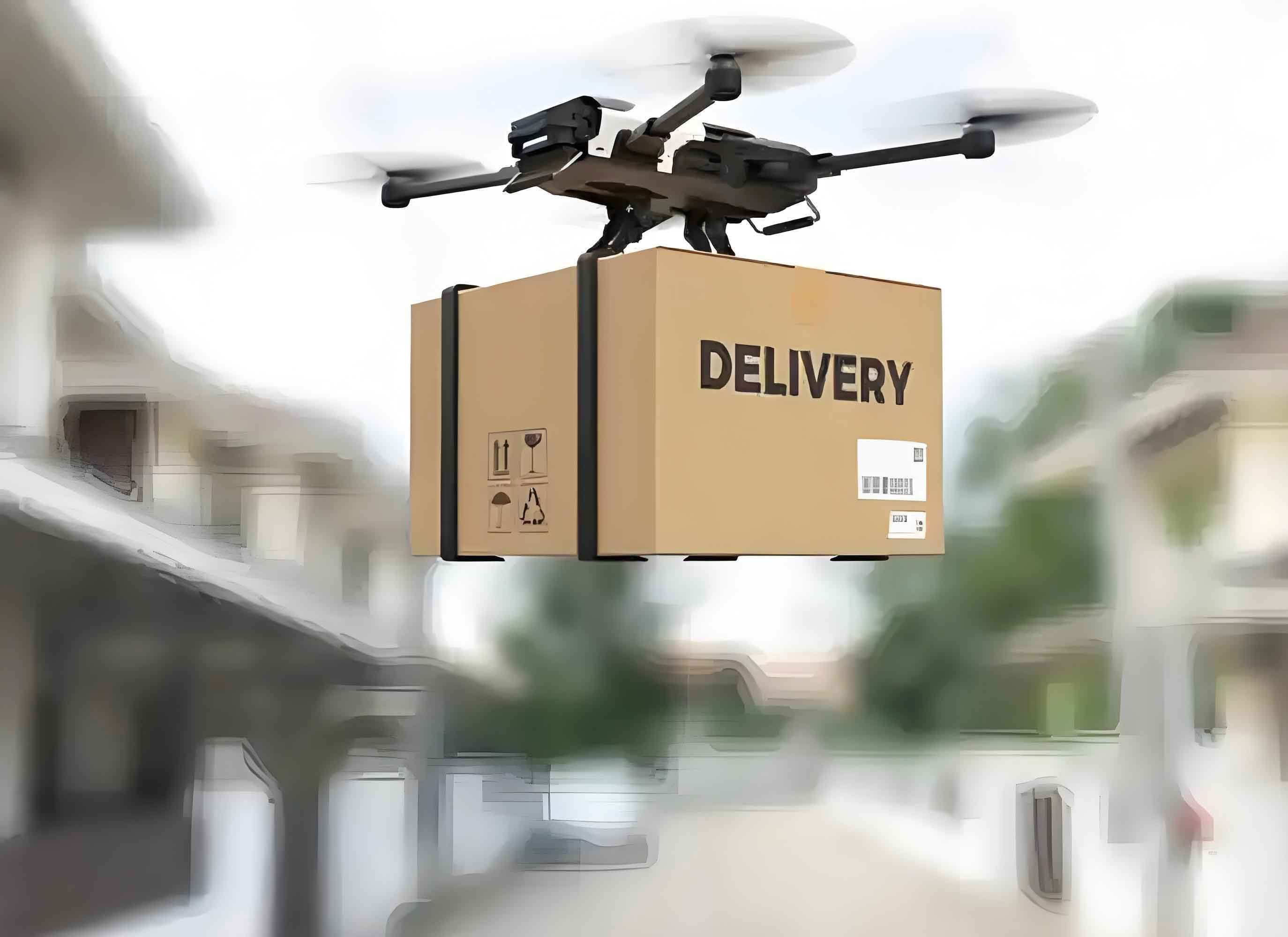
Building on this analysis, I propose a set of operational strategies for civilian drones to meet low-altitude airspace requirements. These strategies are designed to address the identified gaps and foster a safer, more regulated environment for civilian drones. First, legal operation through airworthiness acquisition is essential. Civilian drones should undergo airworthiness checks and obtain temporary registration certificates and special flight permits, as per transitional policies. This process, though not full certification, establishes a baseline for safety and legitimizes operations of civilian drones. Second, licensed flying via pilot certification ensures that operators of civilian drones possess the necessary skills. Pilots should complete training programs and pass examinations administered by recognized bodies, reducing human error risks in civilian drone flights.
Third, eliminating “black flights” by complying with airspace management protocols is critical. I recommend a structured airspace application process for civilian drones, as outlined in the table below. This involves pre-flight planning, coordination with military and civil aviation authorities, and adherence to temporary flight restrictions. By formalizing these steps, civilian drones can operate legally, minimizing unauthorized incursions. The process can be modeled using a timeline function $T_a$ for approval:
$$T_a = t_0 + \Delta t_1 + \Delta t_2 + \Delta t_3$$
where $t_0$ is the task initiation time, and $\Delta t_1, \Delta t_2, \Delta t_3$ represent delays for military, civil aviation, and air traffic control approvals, respectively. Streamlining this function is key to efficient operations for civilian drones.
| Step | Action for Civilian Drones | Timeline | Responsible Authority |
|---|---|---|---|
| 1 | Obtain flight task and authorization document | Initial phase | Operator/Client |
| 2 | Apply for temporary flight airspace with military | 7 working days in advance | Military Air Force |
| 3 | Submit documents to civil aviation regulator | Concurrent with Step 2 | Civil Aviation Administration |
| 4 | Coordinate with air traffic control for flight plan | 1 day before flight (by 15:00) | Air Traffic Management Bureau |
| 5 | Execute flight with real-time monitoring | During operation | Operator with UTM support |
Fourth, regulatory compliance through operational adherence is vital for civilian drones. This includes integrating with UTM clouds, installing electronic fences, and following hardware and frequency standards. For example, civilian drones should operate within designated radio frequency bands, such as 840.5–845 MHz, to prevent interference. I also emphasize the importance of third-party liability insurance for civilian drones, which mitigates financial risks from accidents. To assess overall strategy effectiveness $S_e$ for civilian drones, we can use a composite metric:
$$S_e = \lambda_1 \cdot A_w + \lambda_2 \cdot R_p + \lambda_3 \cdot O_e + \lambda_4 \cdot C_a$$
where $\lambda_i$ are coefficients reflecting the relative importance of airworthiness, pilot qualification, operational efficiency, and airspace capacity for civilian drones. By maximizing $S_e$, stakeholders can ensure that civilian drones contribute positively to socioeconomic development while maintaining safety.
In conclusion, the future of civilian drones in low-altitude airspace hinges on a balanced approach that combines regulatory foresight, technological innovation, and stakeholder collaboration. From my viewpoint, the strategies outlined—legal operation, pilot certification, airspace compliance, and operational oversight—provide a roadmap for harmonizing the growth of civilian drones with public safety concerns. As policies evolve globally, continuous adaptation will be necessary to address emerging challenges, such as autonomy and urban air mobility. By prioritizing these measures, we can unlock the full potential of civilian drones, enabling them to thrive in a structured and secure airspace environment, ultimately benefiting industries and communities worldwide.