
The rapid proliferation and integration of civilian drones into the national airspace present unprecedented challenges to public safety, aviation security, and traditional regulatory paradigms. The need to establish a robust, adaptive, and safe operational management framework has prompted international organizations and nations worldwide to embark on complex legislative journeys. The core dilemma remains: how to craft laws and regulations that effectively mitigate risks without stifling technological innovation, market growth, and the societal benefits offered by these systems. This paper, from the perspective of regulatory analysis, examines the evolving global landscape of civilian drones operation management. It synthesizes frameworks from key international bodies, compares legislative approaches across major jurisdictions, and analyzes the factors influencing regulatory design. The objective is to distill actionable recommendations for developing a future-proof legal ecosystem that ensures safety, fosters innovation, and facilitates the sustainable integration of civilian drones.
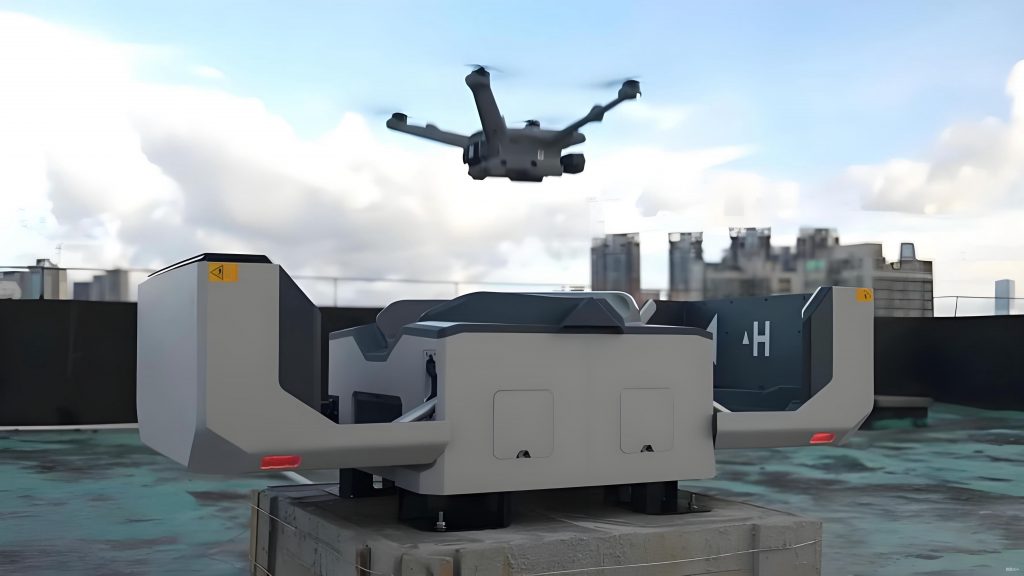
The legislative history for civilian drones can be traced indirectly to the post-World War II era with the Chicago Convention. However, the modern regulatory impetus began in earnest in the early 21st century as drones transitioned from recreational models to commercially viable platforms. Nations like the United Kingdom and Australia were early adopters in the 2000s, with a significant wave of rulemaking activity occurring globally after 2012. This was a direct response to the dual pressures of booming market opportunities and escalating safety incidents, such as unauthorized flights near airports. International organizations have played a crucial role in providing guidance. The International Civil Aviation Organization (ICAO) initially focused on larger Remotely Piloted Aircraft Systems (RPAS) but has since expanded its scope to include lower-risk operations and concepts like the UAS Traffic Management (UTM). The Joint Authorities for Rulemaking of Unmanned Systems (JARUS) has been instrumental in developing risk-based regulatory models, notably the three-category classification (Open, Specific, Certified) and the Specific Operations Risk Assessment (SORA) methodology. The European Union Aviation Safety Agency (EASA) has advanced a comprehensive, legally binding framework for its member states, epitomizing a regional, harmonized approach. Despite these efforts, a common refrain across the industry is that “legislation and policy lag behind technology,” highlighting the persistent challenge for authorities.
International Organizational Frameworks: Setting the Global Tone
The foundational work of international bodies provides the conceptual bedrock upon which many national regulations are built. Their approaches are increasingly converging on a risk-based, performance-oriented philosophy.
ICAO’s Gradual Integration Path: ICAO’s role is to establish Standards and Recommended Practices (SARPs) for global interoperability and safety. Its early work, encapsulated in Circular 328, focused on integrating larger RPAS into the existing aviation system by aligning them with Annexes to the Chicago Convention. The key principle has been that RPAS, when operating in non-segregated airspace, should achieve a level of safety equivalent to manned aviation. More recently, recognizing the volume and unique characteristics of light civilian drones, ICAO has shifted towards an operation-centric, risk-based approach for lower-risk operations. Its work on UTM provides a conceptual framework for managing high-density, very low-level operations through automated services rather than traditional air traffic control, a vital direction for urban and regional drone logistics.
JARUS and the Risk-Based Paradigm: JARUS has been a thought leader in moving away from prescriptive, weight-based rules. Its core contribution is the tri-category classification system:
$$ C = f(R_{op}) $$
where $C$ represents the regulatory category (Open, Specific, Certified) and is a function of the operational risk $R_{op}$. The Open category is for low-risk operations, subject to basic, pre-defined limitations. The Specific category is for medium-risk operations, requiring an operational authorization based on a risk assessment. The Certified category is for high-risk operations, akin to manned aviation requirements. The SORA methodology provides a structured, granular way to assess $R_{op}$ for Specific category applications. It evaluates both ground risk (e.g., population density, kinetic energy) and air risk (e.g., airspace complexity), leading to an Overall Assurance Level (AL). The required robustness of mitigation measures is then determined by this AL. The formula can be conceptually represented as:
$$ AL_{required} = g(GRC, ARC, V_{adj}) $$
where $GRC$ is the Ground Risk Class, $ARC$ is the Air Risk Class, and $V_{adj}$ represents various adjacency and strategic mitigations. This model has been widely adopted and adapted by states including those in Europe, Canada, and China.
EASA’s Comprehensive Regulatory Architecture: EASA has translated the risk-based philosophy into a legally enforceable EU-wide system. The foundational Regulation (EU) 2018/1139 extended EASA’s remit to cover all UAS. This was operationalized through two key pieces of legislation in 2019: the Delegated Regulation (EU) 2019/945 on product standards and remote identification, and the Implementing Regulation (EU) 2019/947 on operational rules. The ‘Open’ category is further sub-divided into three subcategories (A1, A2, A3) based on the drone’s class marking (C0 to C4), which certifies its technical capabilities (e.g., speed, noise). This creates a direct link between product design and permitted operation. For the ‘Specific’ category, EASA endorses SORA and is developing ‘Standard Scenarios’ (STS) – pre-defined, commonly occurring operations (like VLOS over a controlled ground area) that can be authorized through a simplified declaration process. This layered approach—from simple product compliance for low risk, to standardized declarations for medium risk, to full case-by-case assessment for complex operations—exemplifies a sophisticated regulatory structure for civilian drones.
Comparative Analysis of National Regulatory Approaches
While influenced by international guidance, national regulations reflect local legal traditions, airspace structures, and risk tolerances. The analysis below focuses on four core pillars of operation management: Scope of Application, Pilot Competency, Operational Limitations, and Administrative Processes.
1. Scope of Application and Classification: A primary step is defining what operations are regulated. Most jurisdictions use a combination of Maximum Take-Off Mass (MTOM) and purpose (recreational vs. commercial), though some are moving towards purely risk-based criteria.
| Country/Region | Drone vs. Model Aircraft Distinction | Primary Classification Criteria | Key Mass Thresholds (kg) |
|---|---|---|---|
| United States (FAA) | Yes (based on purpose under 44809) | MTOM, Purpose (Recreational/Commercial/Public) | 0.25, 25, 55 |
| European Union (EASA) | No (all are UAS, rules based on risk) | Operational Risk (Open/Specific/Certified) | Used for sub-categorization within ‘Open’ (e.g., C0: <0.25) |
| United Kingdom (CAA) | Legacy distinction, moving to risk-based | MTOM (simplified), then Operational Risk (Low/Medium/High) | 20 |
| Australia (CASA) | Yes (based on purpose & weight) | MTOM, Purpose, Compliance with Standard Operating Conditions (SOC) | 0.1, 2, 25, 150 |
| Japan (MLIT) | No | Uniform rules for all, with exemptions for <200g | 0.2 |
The table reveals a clear evolution. Older frameworks (US, Australia) heavily rely on mass and purpose. Newer frameworks (EASA) and evolving ones (UK) are transitioning to risk as the primary classifier, where mass is just one input into the risk equation $R_{op}$.
2. Remote Pilot Competency and Certification: Managing human factors is critical. Requirements generally escalate with operational risk.
| Category / Risk Level | Typical Competency Requirement | Administrative Process | Example Jurisdictions |
|---|---|---|---|
| Low Risk / ‘Open’ (Basic) | Online theoretical test, age minimum, registration. | Self-declaration, automated testing portal. | EU (A1/A3), USA (Part 107 The Recreational UAS Safety Test), UK (Flyer ID). |
| Low Risk / ‘Open’ (Enhanced) | Additional theoretical knowledge exam, practical self-training. | Certificate from online test/declaration. | EU (A2 subcategory). |
| Medium Risk / ‘Specific’ | Competency recognized by the NAA, often via training organization certificate or in-house assessment aligned with SORA. | Operational Authorization from NAA, referencing pilot competency evidence. | EU, UK (via Operational Authorisation), USA (Part 107 Waiver process). |
| High Risk / ‘Certified’ | Licensed Remote Pilot (theoretical, practical, medical). | Formal license issued by NAA. | EASA framework, proposed for complex operations globally. |
The trend is towards scalable, modular training. For instance, a pilot qualified for a Specific category operation involving BVLOS over a sparsely populated area might need to complete additional modules for operations in controlled airspace, rather than an entirely new license. This is represented as:
$$ C_{pilot} = B + \sum_{i=1}^{n} M_i $$
where $C_{pilot}$ is the pilot’s total competency, $B$ is the base competency, and $M_i$ are modular endorsements for specific risk factors (e.g., $M_{BVLOS}$, $M_{ControlledAirspace}$).
3. Operational Limitations: These are the core “rules of the air” for civilian drones. Common limitations include vertical boundaries, horizontal separation from people, and visual line-of-sight (VLOS) requirements.
| Limitation Type | Typical Default Rule | Method for Exemption/Authorization |
|---|---|---|
| Maximum Altitude | 120 m (400 ft) Above Ground Level (AGL). | Specific Operational Authorisation (Risk Assessment). |
| Distance from Uninvolved Persons | Horizontal distance of 30-50 m (or “not overfly”). | Technical & operational mitigations in SORA/OSC; product standards (e.g., EU Class C1). |
| Visual Line-of-Sight (VLOS) | Mandatory for basic operations. | Extended VLOS (EVLOS) or BVLOS approval via robust risk assessment (detect-and-avoid systems, procedures). |
| Airspace Access | Prohibited in controlled airspace around airports. | Approval from Air Navigation Service Provider (ANSP), often facilitated via UTM/digital approval systems (e.g., FAA LAANC). |
| Night Operations | Prohibited. | Authorization requiring anti-collision lighting, pilot training, and often enhanced procedures. |
The evolution here is from blanket prohibitions to performance-based approvals. The question is shifting from “Is the operation at night?” to “Can the pilot and the drone system maintain an equivalent level of safety at night?” This is assessed through mitigation strategies that reduce the risk $R_{op}^{night}$ to an acceptable level $R_{acceptable}$:
$$ R_{op}^{night} \cdot \prod_{j=1}^{m} \eta_{mitigation, j} \leq R_{acceptable} $$
where $\eta_{mitigation, j}$ (ranging from 0 to 1) represents the risk reduction factor of each applied mitigation (e.g., $\eta_{lighting}$, $\eta_{training}$, $\eta_{procedures}$).
4. Administrative Processes: Authorizations and Oversight: How regulators interact with operators is a key differentiator. Processes range from automated to highly prescriptive.
- Declarative & Automated Systems: For low-risk operations. Operators register, pass an online test, and declare compliance with standard rules. Airspace access in controlled zones is increasingly managed via automated UTM services (e.g., FAA’s LAANC, EU’s U-space services) that provide near-real-time digital authorization.
- Standardized Scenarios/Authorizations: For recurring medium-risk operations. Regulators publish pre-accepted risk assessments for common use cases (e.g., infrastructure inspection, agricultural surveying). Operators meeting all stipulated conditions receive authorization through a streamlined process. This significantly reduces regulatory burden.
- Full Case-by-Case Assessment: For novel or high-risk operations. Operators submit a comprehensive safety case (e.g., using SORA) for NAA evaluation. This is resource-intensive for both operator and regulator but essential for pioneering applications like urban air mobility or long-range BVLOS logistics.
The regulatory efficiency $E_{reg}$ can be conceptualized as maximizing safety outcomes $S$ while minimizing administrative burden $B$ for both the regulator and the operator:
$$ E_{reg} = \frac{S}{B_{regulator} + B_{operator}} $$
Effective frameworks achieve high $S$ with low $B$ by leveraging technology (digital platforms), industry standards (STS), and granular, risk-proportionate rules.
Key Factors Influencing Legislative Design and Recommendations
Drafting effective legislation for civilian drones is a multi-variable optimization problem influenced by technological volatility, market forces, societal acceptance, and stakeholder interests. The regulatory state $R_{state}$ at any time can be modeled as a function:
$$ R_{state}(t) = f(T(t), M(t), P(t), S_i(t)) $$
where $T$ is technological maturity, $M$ is market demand, $P$ is public perception/acceptance, and $S_i$ represents the interests of various stakeholders (government, industry, operators, public). The legislative challenge is to make $R_{state}(t)$ adaptive to changes in these inputs.
1. Technological Advancement ($T(t)$): The pace of innovation in sense-and-avoid, command-and-control link security, battery density, and automation constantly redefines what is possible—and what is risky. Legislation must be technology-neutral and performance-based. Rather than mandating a specific technology (e.g., “must have a parachute”), rules should specify the required performance outcome (e.g., “must achieve a kinetic energy at impact of less than X Joules in a catastrophic failure”). This ensures rules remain relevant as new solutions emerge.
2. Market Dynamics and Economic Potential ($M(t)$): The demand for drone services in logistics, inspection, agriculture, and entertainment creates immense pressure for regulatory access. Overly restrictive rules can stifle economic growth and push operations into illegality (“gray markets”). Effective legislation must create predictable, scalable pathways to market. The use of Sandboxes or Test Sites allows for real-world testing of novel operations under regulatory supervision, generating the safety data needed to create future standardized rules. This bridges the gap between innovation and regulation.
3. Societal Acceptance and Safety Culture ($P(t)$): Public concerns over privacy, noise, and safety are significant constraints. Legislation must address these explicitly. Privacy protections often fall outside aviation law, requiring cross-governmental coordination. Noise standards, as seen in the EU’s drone class system (C0-C6), are becoming integral. Furthermore, building a strong safety culture among all users is as important as the rules themselves. This involves clear public education campaigns, easy-to-access rules, and promoting the use of community-based organizations for recreational flyers.
4. Multi-Stakeholder Alignment ($S_i(t)$): The ecosystem includes regulators, ANSPs, manufacturers, insurance companies, professional operators, recreational users, and the general public. Their objectives often conflict (e.g., innovation speed vs. safety assurance, operational freedom vs. privacy). Successful legislation is often characterized by co-regulatory approaches. Industry develops technical standards (e.g., for remote ID, geofencing), which regulators then reference in law. Insurance markets, by pricing risk, can become a powerful private-sector enforcement mechanism, encouraging safe behavior beyond minimum legal requirements.
Synthesis and Recommendations for Future Legislation
Based on the comparative analysis and factor modeling, the following recommendations are proposed for jurisdictions developing or refining their legislative framework for civilian drones:
1. Adopt and Refine the Risk-Based, Three-Category Framework. This is now the global best practice. Legislation should define clear thresholds and processes for Open, Specific, and Certified operations. The core regulatory logic should be:
$$ \text{Regulatory Scrutiny} \propto R_{op} = f(\text{Kinetic Energy}, \text{Operational Environment}, \text{Complexity}) $$
National legislation must define the parameters of $R_{op}$ and the proportional requirements.
2. Implement a Layered, Digital-First Administrative System.
- Layer 1 (Open): Fully automated digital registration, testing, and rule acknowledgment. Integrate with national UTM for automated airspace authorization where applicable.
- Layer 2 (Specific – Standard): Implement a library of pre-approved Standard Scenarios. Authorization via online declaration against a published checklist.
- Layer 3 (Specific – Complex): A digital portal for submitting SORA-based safety cases, with clear guidance and streamlined review processes for assessors.
- Layer 4 (Certified): Traditional, rigorous certification processes for airworthiness, organization, and personnel, aligned with manned aviation principles but adapted for drone-specific technology.
3. Champion International Harmonization. Fragmented national rules are a barrier to cross-border operations and global industry growth. Legislators should actively adopt and contribute to the standards and frameworks developed by ICAO, JARUS, and regional bodies like EASA. Harmonization priorities include:
- Remote Pilot License/Competency recognition.
- Technical standards for Direct Remote Identification (DRI) and network-based identification.
- Common data exchange protocols for UTM/U-space.
4. Clarify and Distribute Liability Across the System. As automation increases, the chain of liability among pilot-in-command, operator, manufacturer, and UTM service provider needs legal clarity. Legislation should define responsibilities, especially for highly automated operations where the “pilot” is a supervisor. This is crucial for the insurance industry to develop viable products. A model for system failure liability $L_{total}$ could be conceptualized as a weighted sum:
$$ L_{total} = w_{op} \cdot L_{op} + w_{mfr} \cdot L_{mfr} + w_{utm} \cdot L_{utm} $$
where $L_{op}$, $L_{mfr}$, $L_{utm}$ are liabilities linked to operational error, manufacturing defect, and service failure, respectively, and $w$ are weighting factors defined by regulation and evidence from flight data recording.
5. Foster Regulatory Agility through Performance-Based Rules and Sunset Clauses. Legislation should avoid being overly prescriptive on technical solutions. Instead, it should mandate safety performance objectives. Furthermore, incorporating periodic review clauses (e.g., every 3-5 years) forces a systematic reassessment of rules in light of new technology and accident data, preventing regulatory obsolescence.
Conclusion
The global legislative landscape for civilian drones is maturing, converging on a risk-based, operation-centric philosophy championed by international organizations. While national implementations vary in their stage of evolution and specific thresholds, common pillars have emerged: scalable classification, competency-based pilot management, performance-oriented operational limits, and digital administrative processes. The ultimate effectiveness of legislation hinges on its ability to dynamically balance the equation between enabling innovation and ensuring safety. Future laws must be agile, technology-neutral, and harmonized internationally. They must clearly articulate the roles and liabilities of all actors in an increasingly automated ecosystem. By adopting a structured, risk-proportional approach and leveraging digital tools for oversight, regulators can create an environment where the immense potential of civilian drones is realized safely and sustainably, transforming industries and societies while maintaining the highest standards of public safety and airspace integrity.