
In the digital era, the rapid proliferation of civilian drones has introduced novel societal risks, necessitating a reevaluation of legal frameworks to balance technological advancement with public safety. As a legal practitioner, I have observed an increasing number of cases where civilian drones are involved in criminal activities, posing significant challenges to traditional jurisprudence. This article explores the risk prevention and judicial rules for crimes involving civilian drones, drawing from a recent case that underscores the intersection of technology and law. Through a first-person perspective, I will analyze the categories of such crimes, identify inherent legal risks, discuss practical dilemmas in adjudication, and propose pathways for governance, emphasizing the role of criminal law in this emerging domain.
The case in question involves defendants who, from 2019 onward, operated online stores on platforms such as Xianyu and Taobao, offering services to remove no-fly zone and altitude restrictions on civilian drones. They utilized downloaded or purchased software to remotely hack into the drones’ control systems, bypassing factory-set limitations for profit. Investigations revealed that over 100 civilian drones were compromised, leading to incidents like crashes and collisions during flight, which threatened public safety, network security, and personal property. The court convicted the defendants of providing programs for intrusion into computer information systems, sentencing them to imprisonment and fines, with confiscation of illegal gains. This judgment highlights how civilian drones, when tampered with, can transcend mere regulatory violations and enter the realm of criminal liability, particularly under computer crime statutes.
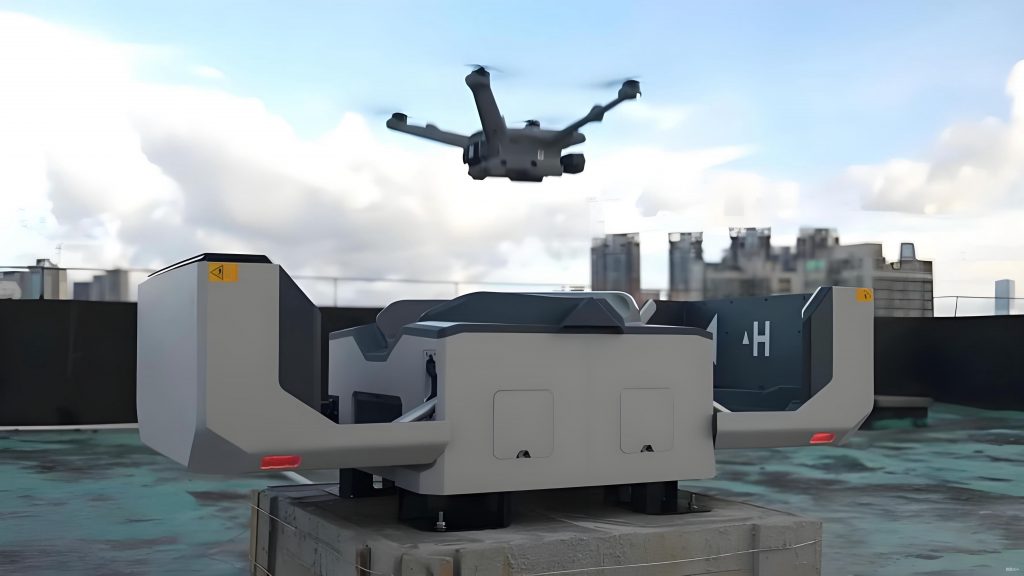
To understand the broader landscape, I conducted a sample analysis of judicial cases involving civilian drones. Using legal databases with keywords like “civilian drones,” “criminal,” and “first-instance,” I retrieved 213 relevant judgments from 2013 to 2024, with 202 cases in the past six years alone. This surge reflects the evolving nature of crimes linked to civilian drones, which now extend beyond traditional offenses to more complex, hybrid forms that leverage online and offline elements. Based on this analysis, I categorize civilian drone-related crimes into four distinct types, as summarized in Table 1 below. This classification helps in systematically addressing the multifaceted threats posed by civilian drones in modern society.
| Category | Description | Examples of Offenses |
|---|---|---|
| Direct Manipulation | Crimes committed by directly operating civilian drones, often involving negligence or intent. | Endangering public safety through dangerous methods, intentional injury, illegal hunting. |
| System Intrusion | Crimes targeting civilian drone programs or data as objects, such as hacking or unauthorized access. | Providing intrusion programs, destroying computer information systems, illegal data acquisition. |
| Industry-Related | Crimes occurring during production, sale, or approval processes within the civilian drone industry. | Forging official seals, producing substandard products, fraudulent approvals. |
| Other Purposes | Crimes where civilian drones are used as tools to facilitate other unlawful activities. | Fraud schemes, arson, or other offenses leveraging drone capabilities. |
The risks associated with civilian drones are profound and multifaceted, extending beyond individual incidents to systemic threats. I identify five key legal risk factors that underscore the urgency of robust governance. First, cybersecurity risks present new challenges; civilian drones often rely on wireless communication systems that are vulnerable to hacking. For instance, in the aforementioned case, perpetrators used software like dronehacks and superpatcher to bypass restrictions, illustrating how civilian drones can become vectors for network attacks. The risk can be modeled as: $$R_{cyber} = P_{intrusion} \times I_{data\_breach}$$ where $P_{intrusion}$ is the probability of unauthorized access and $I_{data\_breach}$ is the impact of data compromise. This formula highlights the need for enhanced security protocols in civilian drone operations.
Second, risks to personal rights and property arise from malfunctions like collisions or crashes. When civilian drones are modified to ignore safety limits, the likelihood of accidents increases, directly endangering individuals and assets. Statistically, among the compromised civilian drones in the case, multiple incidents of “炸机” (crash) and “坠机” (fall) were reported, emphasizing the tangible harm. Third, public safety risks emerge when civilian drones disrupt normal order; for example, unauthorized flights near airports can cause flight delays or evacuations, posing economic and security threats. The cumulative impact of such events can be expressed as: $$T_{public} = \sum_{i=1}^{n} (D_i \times S_i)$$ where $D_i$ represents the duration of disruption and $S_i$ the scale of affected services for each incident involving civilian drones.
Fourth, national security risks are heightened when civilian drones intrude into sensitive areas, such as government or military zones, for reconnaissance or data collection. Cases have documented drones being detected by radar and necessitating military response, underscoring the strategic dangers. Fifth, privacy risks loom large, as civilian drones equipped with cameras and sensors can facilitate unauthorized surveillance or data leakage, infringing on individual liberties. These risks are interconnected, amplifying the overall threat landscape. To quantify the aggregate risk, I propose a composite formula: $$R_{total} = \alpha R_{cyber} + \beta R_{personal} + \gamma R_{public} + \delta R_{national} + \epsilon R_{privacy}$$ where coefficients $\alpha, \beta, \gamma, \delta, \epsilon$ weight each risk based on contextual factors, and all terms are influenced by the proliferation of civilian drones.
In adjudicating cases involving civilian drones, I encounter several practical dilemmas that complicate legal proceedings. One major issue is the identification of criminal subjects. Despite regulations mandating real-name registration for civilian drones, loopholes allow false information to be submitted, making it difficult to trace operators or owners when crimes occur. This ambiguity is exacerbated by the casual trade and use of civilian drones, often in “black flight” or “乱飞” (chaotic flight) states. Another challenge lies in the consistent application of charges. For system intrusion crimes, similar acts may be prosecuted under different provisions of criminal law, such as Article 285 of the Chinese Criminal Law, which covers intrusion, illegal control, and provision of tools. This inconsistency stems from the novelty of civilian drone technology and varying judicial interpretations. A third dilemma is regulatory gaps and prevention weaknesses. While metropolitan areas like Beijing or Shanghai have enacted local rules for civilian drones, smaller cities lack comprehensive measures, creating havens for illicit activities. The lack of coordinated oversight among authorities further enables crimes involving civilian drones to flourish.
To address these challenges, I advocate for a multi-layered governance approach that prioritizes administrative measures while cautiously integrating criminal law. First, administrative regulation should take precedence to respect the market vitality of civilian drones. This includes developing integrated platforms for monitoring civilian drones, enhancing technical countermeasures like anti-drone systems, and formulating emergency protocols. For instance, a unified监管 platform could leverage real-time data sharing to track civilian drone flights, reducing “black flight” incidents. The effectiveness of such platforms can be evaluated using: $$E_{platform} = \frac{F_{prevented}}{F_{total}} \times 100\%$$ where $F_{prevented}$ is the number of prevented illegal flights and $F_{total}$ is the total flight attempts by civilian drones.
Second, criminal law should participate moderately, serving as a safeguard rather than a first resort. Introducing risk society theory into legal frameworks allows for前瞻性 (forward-looking) regulation that anticipates emerging threats from civilian drones. In the digital age, legal research must expand beyond traditional paradigms to address the amplification of crimes through technology. Guided by principles of legal谦抑性 (restraint),刑法 should only intervene when administrative remedies fail and the act meets criminal构成要件 (elements). This ensures that civilian drone innovation is not stifled while protecting public interests. To illustrate the balance, consider a decision matrix for prosecution: $$P_{prosecute} = \begin{cases} 1 & \text{if } S_{severity} > T \text{ and } A_{alternatives} = 0 \\ 0 & \text{otherwise} \end{cases}$$ where $S_{severity}$ is the severity of harm caused by civilian drones and $T$ is a threshold based on societal risk tolerance.
Third, constructing judicial rules for civilian drone-related crimes is essential for consistency. A key aspect is recognizing civilian drone systems as computer information systems under criminal law. The core flight control system of civilian drones processes data autonomously, fitting the definition in judicial interpretations. Thus, hacking into such systems constitutes “intrusion” or “illegal control,” as it involves unauthorized access or manipulation. The act of “providing” services to remove restrictions, whether for profit or not, aligns with the offense of supplying intrusion programs. Moreover, software used for破解 (cracking) civilian drones, like dronehacks, qualifies as “specialized programs” due to its illicit purpose, distinct from “neutral programs.” These distinctions are crucial for accurate legal categorization. Table 2 summarizes the judicial rules for common scenarios involving civilian drones, based on my analysis of cases and legal principles.
| Scenario | Legal Evaluation | Applicable Charge | Key Considerations |
|---|---|---|---|
| Hacking civilian drone systems to remove flight restrictions | Intrusion into computer information systems; provision of specialized programs | Providing programs for intrusion into computer information systems | Assess unauthorized access, impact on public safety, and profit motive |
| Using civilian drones for unauthorized surveillance | Violation of privacy rights; potential data theft | Illegal acquisition of computer data or infringement of personal rights | Evaluate data sensitivity, intent, and harm caused by civilian drones |
| Operating civilian drones in restricted zones causing disruption | Endangering public safety through dangerous methods | Crime of endangering public safety by dangerous means | Consider negligence, actual harm, and proximity to critical infrastructure |
| Producing or selling non-compliant civilian drones | Violation of product standards; fraudulent practices | Crimes related to product quality or forgery | Focus on regulatory breaches and consumer risks from civilian drones |
In practice, the application of these rules requires careful calibration. For example, in system intrusion cases, the number of compromised civilian drones can influence sentencing. A quantitative approach might use: $$S_{sentence} = k \cdot \ln(N + 1) + C$$ where $S_{sentence}$ is the sentence severity, $N$ is the number of civilian drones hacked, $k$ is a constant reflecting societal harm, and $C$ accounts for aggravating factors like profit. This logarithmic model captures the diminishing marginal impact while emphasizing scale. Additionally, the integration of technical evidence is vital; forensic analysis of civilian drone software can determine whether tools are “specialized” or “neutral,” guiding charge selection. As civilian drones become more embedded in daily life, courts must adapt by embracing interdisciplinary knowledge, including cybersecurity and aviation law.
Looking ahead, the governance of civilian drone-related crimes demands continuous collaboration among legislators, regulators, and judiciary. Administrative agencies should strengthen real-name registration for civilian drones, implement geofencing technologies, and promote public awareness campaigns. Criminal law, meanwhile, should evolve through interpretive guidelines that clarify ambiguous terms like “intrusion” in the context of civilian drones. By fostering a holistic ecosystem, we can mitigate risks while harnessing the benefits of civilian drones for economic and social development. In my view, the future of legal responses to civilian drone crimes lies in proactive risk assessment and adaptive frameworks that balance innovation with security.
In conclusion, civilian drones represent a double-edged sword in the digital age, offering immense utility but also posing significant criminal risks. Through this analysis, I have outlined a structured approach to classification, risk management, and judicial rule-building. The case study underscores the importance of treating civilian drone systems as computer information systems under criminal law, with破解 activities warranting serious penalties. As legal practitioners, we must navigate the complexities of technology and law, ensuring that civilian drones are governed by principles of justice and public safety. By embracing tables, formulas, and systematic categorization, we can enhance the consistency and effectiveness of legal responses, ultimately fostering a safer environment for the use of civilian drones worldwide. The journey toward robust governance is ongoing, but with collaborative efforts, we can turn challenges into opportunities for legal innovation.