
In recent years, the proliferation of civilian drones has transformed various sectors, from agriculture and logistics to public safety and entertainment. As an observer and analyst of technological trends, I have witnessed the rapid growth of civilian drones, with market projections indicating significant expansion. According to national strategies, the scale of the drone industry is expected to reach substantial figures, underscoring its economic importance. During global events such as the COVID-19 pandemic, civilian drones played a pivotal role in tasks like patrols, delivery services, and monitoring, highlighting their utility. However, alongside these benefits, civilian drones pose significant challenges, particularly in legal regulation. In this article, I delve into the concept of civilian drones, examine the current legal frameworks domestically and internationally, and explore the multifaceted困境 and potential pathways for effective oversight. My aim is to provide a detailed, evidence-based analysis that emphasizes the need for balanced regulation to harness the potential of civilian drones while mitigating risks.
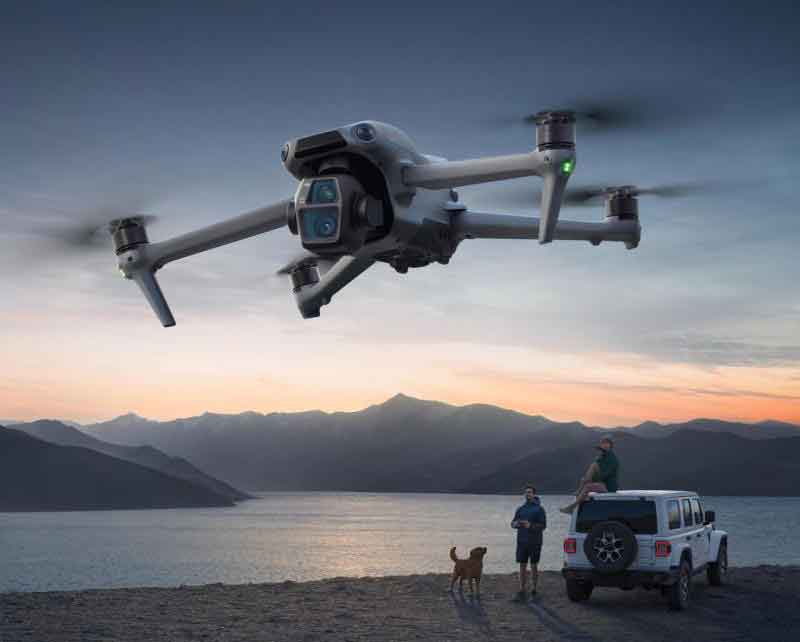
To begin, it is essential to define what constitutes a civilian drone. Civilian drones, also known as unmanned aerial vehicles (UAVs), are aircraft operated without a human pilot onboard. They are typically controlled remotely or autonomously via pre-programmed plans or dynamic automation systems. In my analysis, I focus on civilian drones used for personal and commercial purposes, such as agricultural monitoring, logistics配送, traffic management, and警务 operations. The versatility of civilian drones stems from their ability to access hard-to-reach areas and perform tasks efficiently, but this also introduces complexities in regulation. The dual nature of civilian drones—as tools for innovation and potential sources of harm—necessitates a nuanced understanding of their operational dynamics. For instance, the lightweight design and accessibility of civilian drones make them prone to misuse, ranging from privacy invasions to security threats. Thus, a clear conceptual framework is crucial for developing effective legal measures.
The legal regulatory landscape for civilian drones varies significantly across countries, reflecting diverse approaches to balancing innovation with safety. From my perspective, examining these international models offers valuable insights for refining domestic policies. In the United States, the Federal Aviation Administration (FAA) has integrated civilian drones into the national airspace system through legislation like the Modernization and Reform Act. Key regulations include altitude limits (e.g., below 122 meters) and visual line-of-sight requirements for recreational civilian drones, while commercial operations mandate审批 processes. Similarly, the United Kingdom’s Civil Aviation Authority (UKCAA) enforces rules restricting civilian drones to altitudes of 122 meters and distances within 500 meters, with criminal penalties for interfering with aircraft near airports. Japan has adopted technical countermeasures, such as net-capturing devices, to address rogue civilian drones in sensitive areas. These examples illustrate how nations are grappling with the rapid adoption of civilian drones, often through a mix of legislative and technological solutions.
In contrast, China’s regulatory framework for civilian drones is evolving, with multiple layers of laws and policies. Based on my research, the current system encompasses national laws, administrative regulations, departmental rules, and local decrees, but it remains fragmented. To summarize this complexity, I present the following table that outlines the key components of China’s legal approach to civilian drones:
| Legal Level | Examples | Relevance to Civilian Drones |
|---|---|---|
| National Laws | Criminal Law (Articles 114, 115); Civil Aviation Law (Articles 58, 74) | Provides general provisions on endangering public safety and aviation rules, but lacks specificity for civilian drones. |
| Administrative Regulations | Flight Basic Rules; Regulations on General Aviation Flight Management; Civil Airport Management Regulations | Establishes flight permits and airspace controls, though operational details for civilian drones are often unclear. |
| Departmental Rules | Interim Provisions on the Flight Management of Unmanned Aircraft; Light and Small Civilian Drone Flight Dynamic Data Management Provisions | Addresses registration and data reporting for civilian drones, but enforcement challenges persist. |
| Local Government Rules | Sichuan Provincial Regulations on Civilian Drone Safety Management; Notices on Strengthening the Management of “Low, Slow, and Small” Aircraft | Tailors regulations to regional needs, yet coordination with national standards is limited. |
| Other Normative Documents | Interim Provisions on the Management of Civilian Drone Pilots; Opinions on Promoting and Regulating the Development of the Civilian Drone Manufacturing Industry | Guidelines for pilot training and industry growth, but缺乏 binding force for comprehensive oversight of civilian drones. |
This table highlights the layered yet inconsistent regulatory environment for civilian drones in China. From my viewpoint, the absence of a unified law dedicated to civilian drones creates gaps in accountability and enforcement. For example, while registration requirements exist for civilian drones weighing over 250 grams, practical implementation is hindered by technical and logistical barriers. Moreover, the involvement of multiple agencies, such as the Civil Aviation Administration and local air traffic control, leads to overlapping jurisdictions and reduced efficacy. To quantify these regulatory shortcomings, I propose a simple formula that models the effectiveness of legal oversight for civilian drones:
$$ E = \sum_{i=1}^{n} (L_i \cdot C_i) $$
Where \( E \) represents regulatory effectiveness, \( L_i \) denotes the legal strength of each regulatory layer (e.g., from national laws to local rules), and \( C_i \) signifies the compliance rate for civilian drones within that layer. A low \( E \) value indicates systemic困境, as seen in China’s current framework where \( L_i \) and \( C_i \) are often suboptimal due to fragmentation. This mathematical approach underscores the need for cohesive policies to enhance the regulation of civilian drones.
Moving to the challenges in legal regulation, I identify two primary dimensions: legal and technical. From a legal perspective, the困境 stem from ambiguities in existing laws. Firstly, the Criminal Law does not explicitly criminalize offenses involving civilian drones, relying instead on broad charges like “endangering public safety by dangerous means.” This lack of specificity, in my analysis, reduces deterrence and complicates prosecution for misuse of civilian drones. Secondly, administrative regulations, such as flight permit systems, suffer from operational deficiencies. For instance, requirements for civilian drones exceeding 7 kilograms in weight or flying above 120 meters are difficult to enforce in practice, leading to widespread “black flights” (unauthorized operations) of civilian drones. Thirdly, at the international level, the absence of clear nationality rules for civilian drones hampers cross-border coordination. While registration systems mimic nationality标识, they fail to meet traditional aviation standards, such as喷涂 markings, creating legal voids for civilian drones in global airspace.
On the technical front, the challenges are equally pressing. As I see it, the rapid growth of civilian drones has outpaced the development of standardized technical norms. The lack of uniform national and industry standards for civilian drones results in varying quality and safety levels, increasing监管难度. Additionally, training and certification for operators of civilian drones are not mandatory in many cases, relying on voluntary programs like those by the Aircraft Owners and Pilots Association (AOPA). This leads to insufficient pilot competency, exacerbating risks associated with civilian drones. Furthermore, the maintenance and recycling of civilian drones are often left to manufacturers, without independent oversight, allowing modifications that compromise safety. To encapsulate these technical困境, I present the following table:
| Technical Aspect | Specific Issues | Impact on Civilian Drones |
|---|---|---|
| Production Standards | Absence of unified parameters for design and manufacturing | Inconsistent quality among civilian drones, raising safety concerns and监管 hurdles. |
| Operator Training | Non-compulsory certification and skill assessment | Increased likelihood of accidents due to inexperienced users of civilian drones. |
| Maintenance and Modification | Lack of regulated repair protocols and改装 controls | Potential for unauthorized enhancements in civilian drones, elevating flight hazards. |
| Identification Technologies | Inadequate electronic coding and tracking systems | Difficulty in monitoring and sanctioning rogue civilian drones, especially in dense airspace. |
This table illustrates how technical deficiencies amplify the regulatory困境 for civilian drones. From my perspective, addressing these issues requires innovative approaches. For example, we can model the risk posed by civilian drones using a probability-severity formula:
$$ R = P \times S $$
Where \( R \) is the overall risk, \( P \) is the probability of an incident involving civilian drones (e.g., due to poor training or lack of standards), and \( S \) is the severity of consequences (e.g., privacy breaches or physical damage). High \( R \) values for civilian drones indicate urgent need for intervention, underscoring the importance of both legal and technical reforms.
To overcome these challenges, I propose pathways for enhancing the legal regulation of civilian drones, focusing on legal and technical measures. From a legal standpoint, strengthening criminal legislation is paramount. Specifically, amending the Criminal Law to include explicit offenses related to civilian drones, such as espionage or endangerment, would increase accountability and deter misuse of civilian drones. This aligns with global trends where nations are codifying drone-specific crimes to address evolving threats. Secondly, improving administrative监管 through dedicated laws is essential. Drawing from traffic法规 models, we can develop a comprehensive legal framework for civilian drones that clarifies flight zones, registration mandates, and enforcement mechanisms. For instance, setting “no-fly zones” for civilian drones in sensitive areas and mandating real-time tracking could reduce illegal operations. Thirdly, protecting公民 privacy in the age of civilian drones necessitates legal safeguards. By integrating principles from data protection laws, we can establish责任 across the lifecycle of civilian drones—from production to usage—ensuring that privacy invasions are penalized. In my view, a holistic legal approach would involve公式化 penalties based on infringement severity:
$$ F = k \cdot I $$
Where \( F \) is the fine or penalty for misuse of civilian drones, \( k \) is a constant factor reflecting legal strictness, and \( I \) is the infringement index (e.g., based on privacy violation scale). This incentivizes compliance among users of civilian drones.
On the technical side, advancing监管 technologies is crucial for effective oversight of civilian drones. Firstly, establishing unified industry standards for civilian drones is imperative. These standards should define minimum safety parameters, such as maximum altitude and fail-safe mechanisms, to ensure consistency across manufacturers. We can express this as a set of technical criteria:
$$ T_{std} = \{ A_{max} \leq 122 \text{ m}, W_{min} \geq 250 \text{ g}, C_{enc} = \text{required} \} $$
Where \( T_{std} \) represents the standard for civilian drones, including altitude limits \( A_{max} \), weight thresholds \( W_{min} \), and electronic coding requirements \( C_{enc} \). Secondly, implementing electronic identification systems, such as unique digital codes embedded in civilian drones, can replace physical markings and enable seamless monitoring. This technology, combined with dual registration for both drones and operators, would enhance traceability for civilian drones. Thirdly, making operator training mandatory through立法 can elevate skill levels. Similar to driver’s license systems, certification programs for civilian drone pilots should include rigorous exams and periodic renewals. To summarize these technical solutions, I offer the following table:
| Solution Area | Specific Measures | Expected Impact on Civilian Drones |
|---|---|---|
| Standardization | Develop national and industry-wide standards for design and production | Improve safety and interoperability of civilian drones, reducing监管 complexity. |
| Identification and Tracking | Deploy electronic coding and real-time monitoring systems | Enhance accountability for civilian drones, minimizing “black flights” and unauthorized use. |
| Operator Certification | Enact mandatory training and licensing requirements | Boost pilot competency for civilian drones, lowering accident rates and legal risks. |
| Maintenance Oversight | Establish regulated repair and recycling protocols | Ensure long-term safety and environmental sustainability of civilian drones. |
This table outlines a roadmap for technical enhancements that complement legal reforms. From my perspective, integrating these measures can create a robust regulatory ecosystem for civilian drones. For example, we can model the overall regulatory improvement as a function of legal and technical inputs:
$$ \Delta R = \alpha \Delta L + \beta \Delta T $$
Where \( \Delta R \) is the change in regulatory effectiveness for civilian drones, \( \Delta L \) represents improvements in legal frameworks, \( \Delta T \) denotes advancements in technical standards, and \( \alpha \) and \( \beta \) are weighting factors reflecting their relative importance. By maximizing \( \Delta R \), we can achieve balanced oversight for civilian drones.
In conclusion, the regulation of civilian drones is a multifaceted issue demanding urgent attention. Through my analysis, I have highlighted the dual nature of civilian drones as both enablers of progress and sources of risk. The current legal and technical困境, including fragmented laws, lack of standards, and inadequate training, pose significant challenges to the safe integration of civilian drones into society. However, by adopting comprehensive pathways—such as criminal law amendments, administrative制度建设, privacy protections, standardization, and technological innovations—we can pave the way for effective监管. The future of civilian drones hinges on our ability to balance innovation with responsibility, ensuring that these devices serve humanity without compromising safety or rights. As I reflect on this topic, it is clear that collaborative efforts among governments, industries, and citizens are essential to harness the potential of civilian drones while mitigating their pitfalls. Ultimately, a proactive approach to regulating civilian drones will foster sustainable growth and enhance public trust in this transformative technology.