
In recent years, I have observed an explosive growth in the development and application of unmanned aerial vehicles globally. Civilian drones, in particular, have become increasingly prevalent due to their low cost, multifunctionality, and ease of operation. These devices offer substantial benefits across various sectors such as agriculture, power grid maintenance, security, aerial photography, and surveying, effectively liberating human labor from dirty, difficult, and dangerous tasks. However, as the use of civilian drones becomes more widespread, the associated safety and security risks have grown more pronounced, highlighting an urgent need for robust regulatory frameworks. International bodies like the International Civil Aviation Organization and numerous countries are actively developing measures to regulate civilian drones, providing valuable models for reference. China, as a world-leading manufacturer of civilian drones, holds a prominent position in production technology, industrial scale, and application diversity, making its regulatory approach a focal point of global attention. In this article, I aim to analyze the current state of China’s regulatory system for civilian drones, draw insights from advanced elements in international and regional frameworks like those of ICAO, the EU, and the U.S., and explore pathways and methods for constructing a comprehensive regulatory system tailored to China’s context.
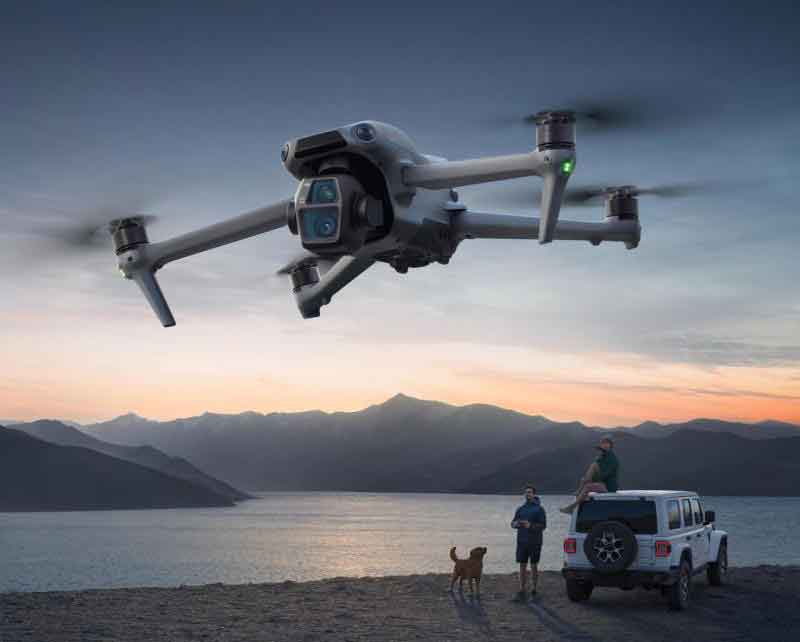
To begin, I will provide an overview of civilian drones, covering their definition, attributes, classification, and industry status. The term “civilian drones” lacks a universally accepted definition internationally; instead, countries define it based on domestic contexts. According to China’s 2018 “Regulations on the Management of Civilian Unmanned Aerial Vehicle Pilots,” a civilian drone is an aircraft managed from a control station, including remote operation or autonomous flight. The drone system encompasses the unmanned aerial vehicle itself along with related components like remote control stations, payloads, and control links, distinguishing it from unmanned airships and remotely piloted aircraft systems. Under Article 8 of the Chicago Convention, civilian drones are subject to international aviation law, requiring state permission for flights over sovereign airspace to avoid endangering civil aviation. This inclusion underscores the need for regulatory alignment with global standards.
Classification of civilian drones varies based on criteria such as control mode, purpose, power source, and weight. For regulatory purposes, weight-based categorization is common internationally, typically dividing civilian drones into small (under 25 kg), medium (25-150 kg), and large (over 150 kg). China’s draft “Interim Regulations on the Flight Management of Unmanned Aerial Vehicles” further refines this into micro, light, small, medium, large, and agricultural protection types. The EU adopts a risk-based approach, classifying civilian drones into “open” and “specific” categories. I summarize these classifications in the table below to clarify distinctions.
| Criteria | Categories | Description |
|---|---|---|
| Control Mode | Remotely Piloted Aircraft Systems | Operated via remote control by a human pilot. |
| Autonomous Aircraft Systems | Capable of self-guided flight without direct human intervention. | |
| Purpose | Consumer-Grade Drones | Used for recreational or personal purposes, e.g., photography. |
| Commercial-Use Drones | Employed for business activities like delivery or inspection. | |
| Public-Use Drones | Utilized by government agencies for security, disaster response, etc. | |
| Power Source | Fixed-Wing Drones | Use wings for lift, suitable for long-range missions. |
| Multi-Rotor Drones | Employ multiple rotors for vertical take-off and landing, ideal for hovering. | |
| Weight (International) | Small (< 25 kg) | Often subject to simplified regulations due to lower risk. |
| Medium (25-150 kg) | Require more stringent oversight for moderate risk. | |
| Large (> 150 kg) | Treated similarly to manned aircraft in many jurisdictions. | |
| Risk-Based (EU) | Open Category | Low-risk operations with minimal regulatory requirements. |
| Specific Category | Higher-risk operations requiring authorization and specific conditions. |
The industry landscape for civilian drones in China is particularly noteworthy. Although China started relatively late in drone manufacturing, it has rapidly advanced to a leading global position in production levels, market scale, and application breadth. By the end of 2018, China’s drone real-name registration system recorded approximately 285,000 registered civilian drones, with over 3,720 different models. The country boasts 1,228 registered manufacturers and agents, more than 170,000 certified drone pilots, and internationally renowned companies like DJI, EHang, and ZeroTech. In 2018, China accounted for about 70% of global civilian drone sales, and projections suggest the market value will reach 60 billion yuan by 2020. This growth underscores the critical importance of effective regulation to harness benefits while mitigating risks.
Moving to the regulatory framework, I must emphasize the necessity of oversight for civilian drones. While civilian drones provide immense convenience, they also pose significant challenges, including mid-air collisions with aircraft, ground damage from crashes, privacy infringements, and disruptions to aviation秩序. In civil aviation, unauthorized flights, or “black flights,” of civilian drones have become a major concern. Data from the Civil Aviation Administration of China shows a sharp increase in incidents: 5 in 2015, 23 in 2016, and 60 in 2017. For instance, in April 2017, nine incidents at Chengdu Shuangliu Airport caused 100 flight diversions and stranded tens of thousands of passengers, highlighting the urgent need for robust监管.
China has progressively developed a regulatory system for civilian drones, comprising laws, administrative regulations, departmental rules, normative documents, and technical standards. At the legal level, the revised “Civil Aviation Law of China” in 2018 added a provision authorizing the State Council and Central Military Commission to enact specific rules for civilian drones. In terms of administrative regulations, the draft “Interim Regulations on the Flight Management of Unmanned Aerial Vehicles” issued in 2018 covers aspects like drone systems, pilots, airspace, flight operations, and liabilities. Departmental rules include the 2017 “Rules of Civil Aviation Air Traffic Management” and the 2014 “Trial Regulations on the Use of Low-Altitude Airspace,” which address air traffic management and airspace utilization for civilian drones. Normative documents from CAAC, such as the “Measures for Air Traffic Management of Civil Unmanned Aerial Vehicle Systems,” “Regulations on Real-Name Registration of Civil Unmanned Aerial Vehicles,” “Interim Measures for Civil Unmanned Aerial Vehicles Engaging in Commercial Flight Activities,” “Operating Regulations for Light and Small Unmanned Aerial Vehicles,” and “Regulations on the Management of Civil Unmanned Aerial Vehicle Pilots,” provide detailed guidelines on registration, operations, and pilot management. I summarize key regulatory instruments in the table below to illustrate the current framework.
| Instrument Type | Name/Example | Key Focus Areas | Year Issued |
|---|---|---|---|
| Law | Civil Aviation Law of China (Amendment) | Authorization for special provisions on civilian drones. | 2018 |
| Administrative Regulation | Interim Regulations on Flight Management (Draft) | Comprehensive rules on systems, pilots, airspace, operations. | 2018 |
| Departmental Rule | Rules of Civil Aviation Air Traffic Management | Air traffic control integration for civilian drones. | 2017 |
| Normative Document | Real-Name Registration Regulations | Mandatory registration of civilian drone owners. | 2017 |
| Normative Document | Operating Regulations for Light and Small Drones | Technical standards for safe operation of civilian drones. | 2015 |
| Normative Document | Pilot Management Regulations | Certification and training requirements for civilian drone pilots. | 2018 |
Despite these advancements, I identify several shortcomings and deficiencies in China’s regulatory system for civilian drones. A key issue is the lack of unified top-level design, leading to fragmented rules with limited operability and stability. Specifically, in operational aspects, problems persist. First, the real-name registration system, introduced in 2017, mandates that owners of civilian drones register their devices, with penalties for non-compliance. However, vague registration requirements and enforcement measures have resulted in low compliance rates among some manufacturers and users. Additionally, the registration database lacks integration with public security systems, hindering verification accuracy. Second,运行监管 requires most civilian drones to install cloud systems and electronic fences for data reporting and geofencing, as per the 2015 regulations. Yet, since cloud service providers are non-governmental, many manufacturers resist data sharing, and modified drones can bypass electronic fences, creating监管漏洞. Third, the airworthiness system for civilian drones relies on a 2009 provisional规定, requiring special flight certificates for each operation, which is cumbersome and not tailored to the unique characteristics of civilian drones. Fourth, airspace management involves complex application processes under existing通航 regulations, making it difficult for widespread civilian drone users to comply, especially in urgent or diverse scenarios. Fifth, pilot management has evolved with new regulations, but inconsistencies in certification转换 and oversight remain.
To address these gaps, I propose a设想 for building an enhanced regulatory system for civilian drones in China. The core lies in top-level design based on operational risk, aligning with CAAC’s guidance on classified management for general aviation. Risk, defined as the combination of the likelihood and consequences of a hazardous event, is central to this approach. For civilian drones, operational risks primarily involve collision risks from loss of control, including impacts on ground第三方 or other aircraft, as well as property damage and environmental nuisances like noise. I express this risk assessment mathematically to clarify the framework. The overall risk \( R \) for a civilian drone operation can be modeled as:
$$ R = \sum_{i=1}^{n} P_i \times C_i $$
where \( P_i \) represents the probability of a specific risk event (e.g., mid-air collision), and \( C_i \) denotes the consequence severity (e.g., injury or damage cost). Factors influencing \( P_i \) and \( C_i \) include the weight of the civilian drone (including payload), flight altitude, mission purpose, flight distance and duration, proximity to densely populated areas, and distance from airports or航路. By quantifying these elements, authorities can categorize civilian drones into risk-based classes, enabling targeted监管. This method optimizes resource allocation by focusing on high-risk civilian drones, in line with the “loosening control while strengthening oversight” principle for general aviation.
Building on this, I outline a监管模型构建 with four key steps. Step 1 involves establishing the risk-based classification principle as the top-level methodology. Step 2 requires developing a classification system for civilian drones based on operational risk factors, potentially借鉴 the EU model by dividing them into “open” and “specific” categories. The “open” category would encompass low-risk civilian drones, such as those under 25 kg flying away from crowds, subject to minimal rules like basic registration and pilot training. The “specific” category would cover higher-risk civilian drones, like those used for commercial deliveries or near airports, requiring detailed authorization, advanced pilot licenses, and technical compliance. I summarize this classification in the table below to illustrate the approach.
| Category | Risk Level | Key Characteristics | Example Operations | Proposed Regulatory Intensity |
|---|---|---|---|---|
| Open | Low | Weight < 25 kg, flight in permitted zones, away from crowds. | Recreational aerial photography with civilian drones. | Light: Registration, online training for pilots. |
| Specific | Medium to High | Weight > 25 kg, flight near sensitive areas, commercial use. | Power line inspection or package delivery using civilian drones. | Strict: Operational approval, advanced licensing, real-time monitoring. |
Step 3 entails formulating and完善 regulatory制度 tailored to each category for civilian drones. For the open category, rules could simplify real-name registration with automated checks, mandate basic pilot certifications via online courses, and define accessible airspace zones without complex applications. For the specific category, regulations should strengthen airworthiness standards with type certifications for civilian drones, require detailed flight plans and approvals, enforce robust data reporting to integrated cloud platforms, and implement stringent pilot training with periodic assessments. Additionally, cross-departmental coordination with public security and industry agencies is crucial to enhance enforcement. Step 4 focuses on establishing technical standards and监管 platforms, such as unified云 systems for data collection on civilian drones, standardized electronic fence protocols, and interoperability with air traffic management networks. These technological underpinnings will ensure practical implementation of the regulatory goals.
In conclusion, the rapid expansion of the civilian drone industry in China brings tremendous societal benefits but also significant safety and security challenges that demand effective regulation. From my analysis, China has made strides in developing a regulatory system for civilian drones, encompassing laws, rules, and standards across registration, airworthiness, pilot management, airspace, and operations. However, issues like fragmented design and operational gaps hinder its efficacy. By adopting a risk-based classification framework as the顶层设计, China can create a more coherent and efficient regulatory environment for civilian drones. This involves categorizing civilian drones based on operational risk assessments, tailoring rules to each category, and leveraging technology for enforcement. Such an approach not only addresses current deficiencies but also aligns with international best practices, ensuring that civilian drones continue to thrive safely and contribute to economic and social progress. As I reflect on this journey, the evolution of监管 for civilian drones remains a dynamic process, requiring ongoing adaptation to technological advancements and emerging risks in the ever-growing realm of civilian drones.
To further elaborate on the risk assessment model, I can delve into specific formulas for evaluating civilian drone operations. For instance, the probability of collision \( P_c \) for a civilian drone can be estimated based on factors like flight density and system reliability. Let \( \rho \) represent the airspace density of other aircraft or objects, \( v \) be the velocity of the civilian drone, \( A \) denote the effective collision cross-sectional area, and \( \lambda \) symbolize the failure rate of the drone’s control system. Then, \( P_c \) might be approximated as:
$$ P_c = 1 – e^{-\rho \cdot v \cdot A \cdot \lambda \cdot t} $$
where \( t \) is the flight time. This formula highlights how increasing flight duration or airspace congestion raises risks for civilian drones. Similarly, the consequence severity \( C \) can be quantified using metrics like potential damage cost or injury scales, often derived from historical incident data involving civilian drones. By integrating such quantitative methods, regulators can objectively classify civilian drones and set appropriate thresholds for监管.
Moreover, the integration of technological solutions is paramount. For example, implementing a unified监管 platform for civilian drones could involve real-time tracking via ADS-B-like systems, automated geofencing updates based on airspace changes, and AI-driven anomaly detection to prevent unauthorized flights. These measures would enhance the operability of regulations, particularly for high-risk civilian drones in the specific category. I also emphasize the importance of international harmonization; as civilian drones often cross borders in applications like logistics, aligning China’s standards with ICAO’s evolving frameworks will facilitate global interoperability and safety.
In terms of pilot management for civilian drones, a tiered licensing system could be developed, mirroring the risk categories. For low-risk open category civilian drones, a simple online test might suffice, while specific category operations require hands-on training and recurrent assessments. This aligns with the observed trend in global regulations, where the focus is shifting from blanket rules to performance-based outcomes for civilian drones. Additionally, public awareness campaigns are essential to educate users on responsible flying practices, reducing incidents stemming from negligence.
Finally, I consider the economic implications of regulatory构建 for civilian drones. Overly stringent rules might stifle innovation in the civilian drone sector, while lax oversight could lead to safety lapses. Therefore, a balanced approach, as proposed in the risk-based model, ensures that civilian drones can flourish in a controlled environment. By continuously monitoring industry feedback and incident data, authorities can refine regulations, fostering a sustainable ecosystem for civilian drones. In essence, the future of civilian drones in China hinges on a adaptive, risk-informed regulatory framework that prioritizes safety without compromising the transformative potential of these versatile aircraft.