
The rapid advancement of civil aviation has brought once-mysterious unmanned aerial vehicles into the public eye. Today, civilian drones play an increasingly vital role in daily production and life, finding applications across numerous fields such as aerial photography, surveying, power line inspection, and scientific research. As the utility, quantity, and variety of civilian drones continue to grow and their operational footprint expands, new and significant demands are placed on civil Air Traffic Management (ATM).
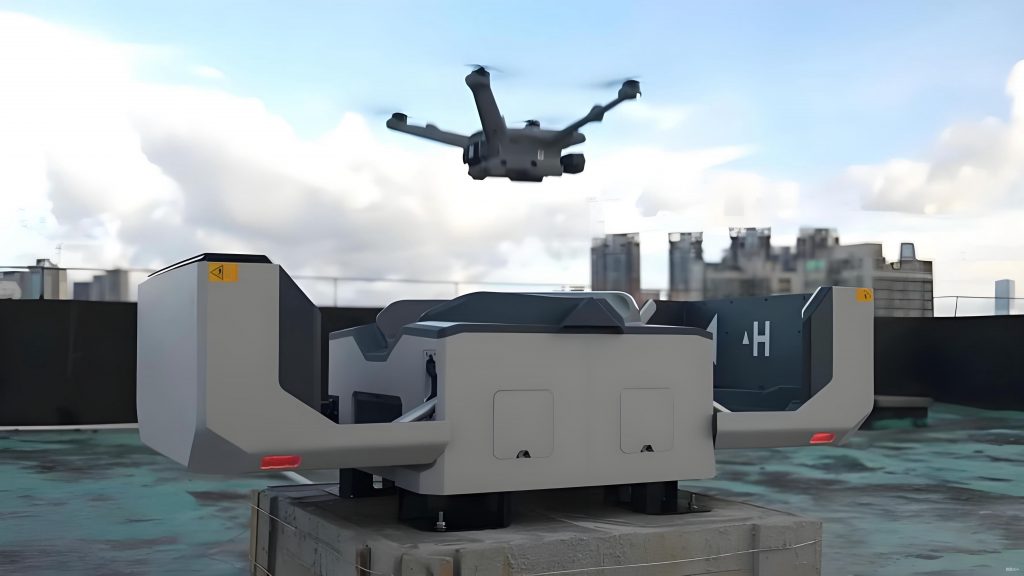
The Civil Aviation Administration of China (CAAC) defines an Unmanned Aircraft (UA) in its Regulations on the Management of Civilian Drone Operators as “an aircraft which is managed (including remotely piloted or autonomously flown) by a control station, also known as a Remotely Piloted Aircraft (RPA).” However, definitions for these systems vary internationally, highlighting the diverse perspectives on what constitutes a civilian drone.
| Authority | Key Definitional Aspect | Notes |
|---|---|---|
| CAAC (China) | Aircraft managed by a control station (remote or autonomous). | Emphasizes the control method. |
| UK CAA | Must be a reusable aircraft. | Excludes disposable systems. |
| US DoD | May be designed for one-time use. | Includes expendable systems. |
Civilian drone systems are diverse, and classification methods are equally varied. Common methods include classification by range and by mass. The range-based classification provides a clear operational scope for different categories of civilian drones.
| Category | Typical Range (km) | Common Applications |
|---|---|---|
| Close-Range | 5 – 50 | Local inspections, short-duration photography |
| Short-Range | 150 – 300 | Regional surveying, agricultural monitoring |
| Long-Range | 700 – 1000 | Long-distance cargo transport, wide-area surveillance |
The swift development of various civilian drone systems, even amidst a mature manned aviation sector, is intrinsically linked to their unique characteristics. First, their unmanned nature makes them suitable for hazardous missions, such as battlefield reconnaissance or sampling after dangerous tests. Second, civilian drones offer greater flexibility and lower environmental requirements than manned aircraft, ideal for post-disaster remote sensing. Third, their production and operational costs are generally lower, making tasks like power line patrol economically viable. Organizations like NASA have identified broad civilian drone applications in areas including land resource management, homeland security, commercial transport, and scientific research.
International and National Regulatory Frameworks for Civilian Drones
Recognizing the global rise of civilian drones, the International Civil Aviation Organization (ICAO) established the Unmanned Aircraft Systems Study Group (UASSG) in 2008. Its mandate is to enhance international coordination on UAS management and operations, develop concepts and regulations, support the creation of Standards and Recommended Practices (SARPs), and assist in formulating guidance. Key member states include Russia, France, Sweden, the United States, South Africa, Singapore, Australia, and Canada.
In 2011, ICAO issued Circular 328-AN/190, outlining fundamental differences between unmanned and manned aircraft and encouraging member states to assist in developing norms. National regulations have since evolved distinctly. Australia restricts most civilian drones to flights below 120 meters and prohibits recreational drones within 5.5 km of controlled airports or populous areas. Japan enacted a dedicated Drone Regulation Law in 2016, designating no-fly zones over sensitive locations like the Prime Minister’s office and empowering police to destroy drones if necessary. The United States imposes heavy fines and criminal charges for违规飞行 and has implemented a registration system for small civilian drones.
Development and Current Management of Civilian Drones in China
The widespread use of civilian drones domestically and internationally presents a significant development opportunity. Technologically, China has a solid research foundation dating back to the early years of the nation. Many enterprises and institutions now possess independent R&D capabilities for civilian drones. Industrially, as a global manufacturing leader with a top position in model aircraft production, China has a strong base for civilian drone manufacturing. Market-wise, high demand, relatively low technical and capital barriers, and an open market foster rapid entry and competition. Consequently, the manufacturing and use of civilian drones in China are poised for accelerated growth, demanding more sophisticated airspace utilization and ATM.
China has recently promulgated relevant regulations. The CAAC’s Regulations on the Management of Civilian Drone Operators, Air Traffic Management Measures for Civil Unmanned Aircraft Systems, and Interim Regulations for Light and Small Unmanned Aircraft Operations provide systematic guidance on definitions, categories, navigation, and personnel qualifications for civilian drones. However, practical limitations exist. Primarily, these documents are issued as “regulations” or “measures” by subordinate departments, lacking strong legal enforceability. Secondly, as guidance, they contain numerous prohibitive terms like “shall not” or “prohibited,” but offer few detailed operational clauses.
Core Challenges in Air Traffic Management for Civilian Drones
The integration of civilian drones as a new air traffic service object presents unique challenges. Their characteristics during ATM interactions differ markedly from manned aviation, as summarized below.
| Challenge Dimension | Manned Aircraft | Civilian Drones |
|---|---|---|
| Performance Range | Relatively standardized within categories. | Extremely wide: altitude from 100m to 10,000m; range from tens to thousands of km; speed from slow to supersonic. |
| Pilot-Controller Communication | Direct, timely voice communication (“face-to-face”). | Often indirect, delayed, or non-existent; no “面对面”指挥. |
| Surveillance Capability | Generally good via transponder (Mode S) and primary radar. | Poor: small size, varied materials, typically no transponder, hard to detect on radar. |
| Collision Avoidance Principle | “See and Avoid” using pilot’s vision. | Cannot “see”; requires technological “Detect and Avoid” (DAA) systems. |
| System Reliability | Highly regulated and generally high. | Relatively lower, prone to fly-away, wrong course, or loss of link, creating uncertainty. |
The inability of civilian drones to adhere to the foundational “see and avoid” principle is a paramount technical hurdle. The required sensing and decision-making distance for a Detect and Avoid system can be conceptualized. Assuming a combined reaction time for the system and a closing speed with another aircraft, the minimum required detection range $R_{min}$ can be modeled as:
$$ R_{min} = v_{closure} \cdot t_{reaction} + d_{safety} $$
where $v_{closure}$ is the closing speed, $t_{reaction}$ is the total system/operator reaction time, and $d_{safety}$ is an additional safety buffer distance. This underscores the performance needed for civilian drones to safely share airspace.
Incidents involving失控 civilian drones, such as property damage from a坠落事件, serve as stark warnings for aviation safety. Regulatory gaps are compounded by immature technological means for surveillance and countermeasures against civilian drones, unclear administrative responsibilities hindering inter-departmental coordination, and persistent difficulties in emergency response and post-incident accountability for “black flights.”
Strategic Considerations for the Future Management of Civilian Drones
As civilian drone systems represent a significant future direction for aviation, adapting ATM to support their expanded application while ensuring safety requires addressing several key areas.
1. Enhance Inter-Agency Collaboration. The very features that make civilian drones valuable—suitability for dangerous tasks, flexibility, low cost—also create management complexity spanning technical specs, purpose of use, aviation safety, and national security. Strengthening coordination and information exchange among civil aviation, military aviation, public security, industry, commerce, and sports authorities is crucial. This enables a comprehensive understanding of the civilian drone ecosystem, facilitating targeted policies for systematic management across R&D, manufacturing, sales, operation, and emergency response, thereby fostering a regulated yet conducive environment for civilian drones.
2. Develop Robust Technical Standards. The cornerstone for integrating civilian drones into non-segregated airspace is ensuring they possess capabilities equivalent to manned aircraft. This includes both basic performance and, critically, the ability to comply with the same rules of the air. Replacing “see and avoid” with “detect and avoid” necessitates detailed technical standards for civilian drone DAA systems. These standards must define sensor performance, data fusion algorithms, and automated decision-making logic to ensure reliable conflict detection and resolution for civilian drones.
3. Regulate Owners and Flight Activities. Civilian drone owners differ significantly from professional airlines or charter operators. They are diverse entities or individuals, often with few aircraft, limited professional resources, and weaker awareness/ability to comply with regulations. Intensified outreach and training for civilian drone owners is essential. Manufacturers and sellers could be leveraged to assist owners in understanding rules and completing necessary approvals and registrations for their civilian drones.
4. Strengthen Pilot/Operator Training. In segregated airspace, requirements for civilian drone operators’ knowledge of air rules are lower. However, as civilian drones gain performance and operate in broader airspace, their remote pilots will increasingly resemble manned aircraft pilots, bearing ultimate responsibility for safety. They must be thoroughly familiar with applicable air traffic rules. While some aviation-developed nations require a private pilot license, China’s lower aviation普及 may necessitate a graded approach. Management can be refined according to civilian drone categories, with a focus on stringent standards for operators of high-performance civilian drones.
5. Fortify Airport Protection and Mitigation Measures. The publication of obstacle limitation surfaces for 155 airports is a positive step. For civilian drones intruding into these critical areas, a multi-pronged response is needed. Technically, exploiting frequency bands allocated for civilian drone control (e.g., 840.5-845MHz), mobile jamming equipment can be used to disrupt control links and force a landing or return-to-home. The jamming effectiveness can be influenced by factors like power and distance, loosely described by a simplified attenuation model:
$$ P_{rec} \propto \frac{P_{transmit}}{d^{\alpha}} $$
where $P_{rec}$ is the received jamming power at the civilian drone, $P_{transmit}$ is the jammer’s power, $d$ is the distance, and $\alpha$ is the path-loss exponent. Legally, penalties should be stringent and linked to existing low-altitude airspace management regulations. Operationally, a multi-source information network should be established, combining pre-flight ground monitoring, en-route radar surveillance (civil/military), mobile network monitoring, and public reporting channels to effectively curb unauthorized flights of civilian drones.
As technology for civilian drones evolves, their applications will permeate every aspect of society, with immense prospects in logistics, entertainment, tourism, and cinematography, spurring growth in related service industries. The effective air traffic management of civilian drones will play a pivotal role in this developmental journey. Only by rigorously addressing the prerequisite of safety can we unlock the full, vast potential of civilian drones.