
In my observation of the aviation industry’s evolution, I see that civilian drones represent a transformative convergence of multiple advanced technologies. They integrate aviation, information technology, control systems, measurement and control, sensing technologies, as well as new materials and energy sources. This multidisciplinary fusion positions civilian drones not merely as tools but as platforms capable of fundamentally altering traditional operational methodologies across numerous sectors. The concept of “UAV+” has emerged as a powerful driver, signifying the integration of unmanned aerial systems into diverse industries. It is a critical domain for public participation in advancing general aviation and serves as an innovative vector for the transformation and upgrading of traditional sectors. The research, development, and application of civilian drones are intrinsically linked to national interests, public safety, and the rights of citizens. Therefore, under this “UAV+” development paradigm, the education and training of professionals for the civilian drone industry form the foundational project for its sustainable and innovative growth.
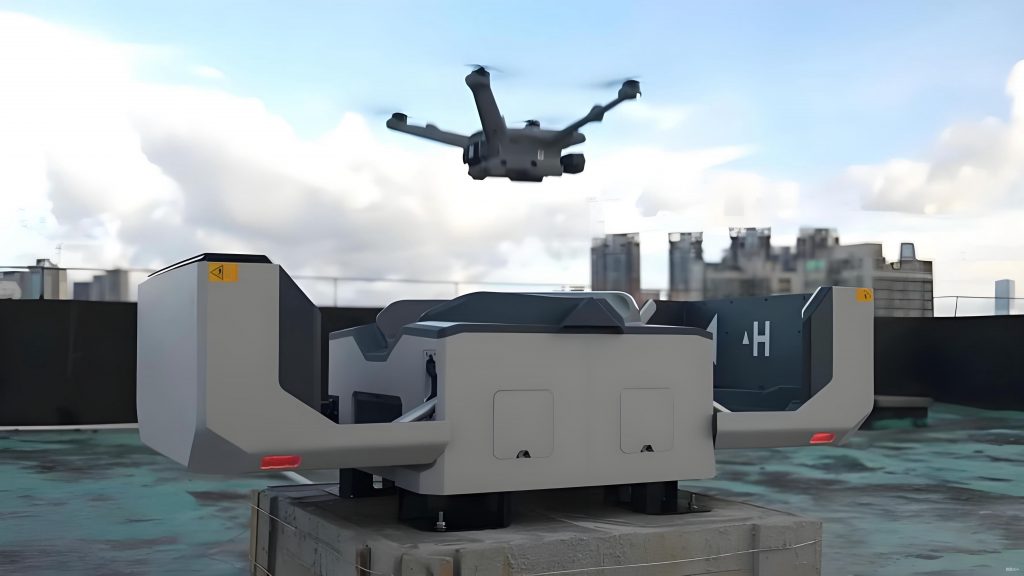
The proliferation of civilian drones, particularly low-altitude, slow-speed, micro, light, and small models, has been nothing short of explosive. This rapid growth has attracted many hobbyists from the realms of model aircraft and photography. However, I must emphasize that operating a civilian drone safely and legally transcends simply following a user manual. A drone pilot, akin to any other category of civil aviation pilot, requires a firm grasp of relevant laws and regulations, professional aeronautical knowledge, and practical skill training. As intelligent aircraft, civilian drones implicate more than just “safety overhead”; reckless flight operations can jeopardize public security and even national confidentiality. Managing the safety of civilian drones involves coordinated oversight from a complex array of state security, public security, air force, civil aviation, sports, urban management, and industrial and commercial authorities. In this framework, I believe the professional准入, education, training, and qualification of practitioners should be led and implemented by the civil aviation authority.
The regulatory landscape for civilian drones has been evolving to keep pace with this dynamic sector. A pivotal step was the categorization of these systems, which forms the basis for stratified management. The classification is primarily based on maximum take-off weight (MTOW) and/or aircraft mass, creating distinct categories with corresponding operational rules.
| Category | Aircraft Mass, M (kg) | Maximum Take-Off Weight, MTOW (kg) |
|---|---|---|
| I | 0 < M ≤ 1.5 | – |
| II | 1.5 < M ≤ 4 | 1.5 < MTOW ≤ 7 |
| III | 4 < M ≤ 15 | 7 < MTOW ≤ 25 |
| IV | 15 < M ≤ 116 | 25 < MTOW ≤ 150 |
| V | Plant Protection UAVs | |
| VI | Unmanned Airships | |
| VII | Category I, II UAVs operating Beyond Visual Line of Sight (BVLOS) | |
| XI | 116 < M ≤ 5700 | 150 < MTOW ≤ 5700 |
| XII | M > 5700 | MTOW > 5700 |
Based on this classification, the management requirements for civilian drone pilots are clearly delineated, moving from self-regulation for very small models to full oversight by the aviation authority for the largest systems.
| Serial | Management Type | Applicable Scenario |
|---|---|---|
| 1 | Pilot responsibility, no certificate required | A. Indoor operations. B. Category I, II civilian drones (optional registration in UTM). C. Experimental flights in non-congested, sparsely populated areas. |
| 2 | Managed by industry associations, supervised by authority | A. All categories except I, II in segregated airspace. B. Category III, IV, V, VI, VII in non-segregated airspace. |
| 3 | Managed directly by the aviation authority | Category XI, XII civilian drones in non-segregated airspace. |
The regulatory evolution underscores a critical point: as the industry matures, the education and training of civilian drone pilots must align with the latest provisions. However, I observe a significant lag in cultivating talent for the broader civilian drone ecosystem. The industry faces a severe human resource shortage, with a dearth of technical professionals in application service fields becoming a major bottleneck. The sustainable growth of the civilian drone industry requires not just robust regulations and technological innovation but, fundamentally, a reinforced focus on professional education and training.
Currently, the most immediate demand is for qualified civilian drone pilots. The market has responded with several training and certification pathways, which I can summarize as follows:
| Certificate | Issuing Body / Framework | Primary Focus & Notes |
|---|---|---|
| Civil Unmanned Aircraft System Pilot Certificate | Association authorized by the aviation authority | Comprehensive pilot training and management for small UAS. Often viewed as analogous to a Commercial Pilot License (CPL) in manned aviation. |
| Remote Control Model Aircraft Pilot License | National Aero Sports Association | Focus on model aircraft/sports, typically for smaller, visually operated craft. Analogous to a Private Pilot License (PPL). | Unmanned Aircraft System Operator Certificate | Training system backed by industry associations, promoted by a major manufacturer | Application-specific skill training (e.g., photography, inspection, surveying). Focused on operational proficiency for particular platforms and tasks, somewhat similar to a type rating. |
In parallel, the formal education sector is stepping up. Numerous universities and vocational colleges have established relevant disciplines or majors in unmanned aircraft systems technology and applications. These programs aim to cultivate high-level technical talent and skilled technicians, respectively, through systematic curricula that blend theory with practical training.
Despite these developments, the reality of the civilian drone training market presents complex challenges. The demand for skilled operators is immense. International associations estimate the global drone technology sector could create 100,000 jobs and generate substantial economic value. Domestically, estimates suggest a need for hundreds of thousands of operational and maintenance personnel, with total industry chain demand reaching into the millions. However, the rapid consumerization of civilian drones has led to a situation where a vast number of owners and operators are enthusiasts without formal training. High training costs, uneven quality among training providers, and a lack of awareness contribute to a significant prevalence of unlicensed and often unsafe operations, or “black flights.” Incidents of reckless flying disrupting airports have drawn serious national concern, highlighting the urgent need to strengthen the competency framework for all civilian drone aviation personnel.
A fundamental issue I must address is the distinction between a true civilian drone and a model aircraft, a line blurred by modern products. A civilian drone is an unmanned aircraft controlled remotely or autonomously via pre-programmed plans, capable of executing Beyond Visual Line of Sight (BVLOS) missions. Its “intelligence” is onboard. In contrast, a model aircraft is typically controlled within visual line of sight (VLOS) by a pilot using a handheld transmitter—its “brain” remains on the ground. It is primarily used for sport, recreation, and education. This distinction is crucial for appropriate regulation and training.
The current training market, while growing, faces headwinds from increased airspace restrictions around sensitive areas, leading some schools to pause operations. Looking beyond pilots, I see a need to develop credentialing pathways for other critical roles in the civilian drone ecosystem, such as R&D engineers, maintenance technicians, and application engineers. Training should adopt a “theory + practice” model, offering courses tailored to specific industries like energy, security, and agriculture, to create a more comprehensive and professional workforce.
To systematically address these challenges and build a sustainable talent pipeline for the “UAV+” era, I propose a multi-faceted approach to constructing a robust education and training system for civilian drone professionals.
1. Standardizing Training Benchmarks Based on Qualification Requirements. In response to frequent safety incidents, it is imperative to develop unified, standardized training curricula. A national authority or an authorized industry association should lead the drafting of civilian drone occupational training systems and aviation safety education programs. This involves creating standard teaching materials, syllabi, and training outlines that integrate national security and aviation regulations, airspace management, technical knowledge, and safety protocols. The framework should be work-process oriented and integrate theory with practice. Separate, detailed training modules must be established for different professions within the civilian drone industry—pilots, developers, maintenance staff, and operational managers—with content differentiated to balance professional depth and practical utility for each specific field. Corresponding准入 standards for training organizations should also be clearly defined.
The relationship between market demand (D), training output (T), and the qualification gap (G) can be conceptually framed. If we define the required competency level for a role as a set of skills $S = \{s_1, s_2, …, s_n\}$, each with a required proficiency threshold $\tau_i$, then an individual’s qualification $Q$ can be modeled as a function of their skill proficiencies $p_i$:
$$ Q = f(p_1, p_2, …, p_n) \quad \text{where} \quad Q \geq Q_{\text{min}} \text{ if } p_i \geq \tau_i \forall i $$
Standardized training aims to reliably produce individuals where $Q \geq Q_{\text{min}}$ for their intended role.
2. Strengthening Academic Programs Through Industry-Academia Integration. To move beyond the current reliance on hobbyist backgrounds, formal education must be strengthened. Universities and vocational colleges should align their programs with regional and national civilian drone industry needs. Based on national education directories, institutions should offer related disciplines and majors at different levels (vocational, undergraduate), implementing a “dual-certificate” system that integrates academic credits with professional qualifications. The talent cultivation model should be “project-led and jointly nurtured by schools and enterprises,” fostering cooperation and order-based training. The curriculum must be application-centric, structured around technical platforms, specialized technologies, and comprehensive application modules, emphasizing hands-on practice. A task-driven, project-oriented pedagogical approach should replace traditional subject-based teaching, creating learning scenarios that mirror real-world work tasks. This allows students to acquire professional knowledge and skills through action, achieving the integration of theory and practice, thereby enhancing operational, maintenance, and innovative application capabilities.
3. Conducting Social and Vocational Training via Collaborative Innovation. Academic institutions alone cannot meet the massive social demand. Professional social training organizations must play a vital role. Their programs should be tightly focused on industry applications, offering practical, non-degree training and qualification certification. Beyond basic flight control, courses should delve into specific application technologies like data processing, mission planning, and system maintenance. Customized courses for corporate clients, as well as tiered programs for beginners and advanced practitioners, are essential. Training should be precisely targeted to cultivate senior skilled personnel for specific fields such as precision agriculture, power line inspection, and remote sensing, exploring the establishment of a continuing education system that meets social needs and industry characteristics.
The economic impact of effective training can be significant. If we let $E$ represent the economic output per trained professional, $N$ the number of professionals, and $C$ the cost of incidents averted, the net benefit $B$ of a comprehensive training system can be expressed as:
$$ B = \sum_{i=1}^{N} E_i + C_{\text{incidents\_avoided}} – C_{\text{training}} $$
A well-trained workforce maximizes $E$ and $C_{\text{incidents\_avoided}}$ while minimizing losses.
4. Establishing Public Science Platforms Based on “Internet+”. For the vast number of consumer-grade civilian drone users who may not seek formal certification, basic education is crucial to foster a culture of safety and legality. Given that many enthusiasts gather information from fragmented online sources, there is a pressing need for systematic, accessible public education. Relevant entities in the civilian drone ecosystem should leverage “Internet+” thinking to develop online science platforms. These platforms should provide the general public, hobbyists, investors, and entrepreneurs with comprehensive, clear, and engaging knowledge about aviation theory, drone technology, and regulatory policies related to civilian drones. This initiative is vital for promoting the lawful development of the civilian drone industry, enriching general aviation culture, and expanding the talent base from which future professionals may emerge.
In conclusion, the journey of civilian drones from niche gadgets to mainstream industrial tools hinges on our ability to build a competent and responsible workforce. The path forward requires a concerted effort to standardize, innovate in educational delivery, and democratize essential knowledge. By implementing a holistic strategy that combines regulatory clarity, academic rigor, industry-specific vocational training, and broad public engagement, we can lay a solid foundation for the safe, sustainable, and innovative growth of the civilian drone industry. The future of “UAV+” will be written by those who are educated, trained, and certified to unlock its full potential responsibly.