
In recent years, the rapid advancement of civilian drones has revolutionized various sectors, from aerial photography to logistics, environmental monitoring, and disaster response. As these unmanned aerial vehicles become increasingly integrated into critical infrastructure and daily operations, their network security has emerged as a paramount concern. I have delved into the application of commercial cryptography technology to enhance the security of civilian drones, focusing on practical implementation and rigorous testing. This article presents a comprehensive study on how cryptographic techniques can safeguard civilian drones against threats like hijacking, data theft, and unauthorized access, while ensuring minimal impact on performance. Through a detailed testing framework, I evaluated the efficacy of national cryptographic algorithms, such as SM2 and SM4, in real-world scenarios, comparing them with international standards like AES. The findings underscore that commercial cryptography not only bolsters security but also maintains real-time communication capabilities, making it a viable solution for the growing fleet of civilian drones.
The proliferation of civilian drones has ushered in a new era of low-altitude economy, but it also exposes vulnerabilities in their communication and data systems. Civilian drones typically rely on wireless links, such as Wi-Fi, 4G/5G, or proprietary protocols like MAVLink, to transmit control commands, telemetry data, and payload information. These open channels are susceptible to eavesdropping, tampering, and hijacking, posing risks to both operational integrity and privacy. For instance, an attacker could intercept unencrypted signals to manipulate a civilian drone’s flight path or steal sensitive geospatial data. To address these challenges, I explored the role of commercial cryptography in providing end-to-end protection for civilian drones. Cryptography offers mechanisms for identity authentication, data confidentiality, integrity, and non-repudiation, which are essential for securing the entire lifecycle of drone operations. In this study, I designed and implemented a testing platform to validate cryptographic applications in key areas: identity authentication between drones and ground stations, encrypted data transmission, and secure data storage. The goal was to assess both functional correctness and performance overhead, ensuring that security enhancements do not compromise the agility and responsiveness required by civilian drones.
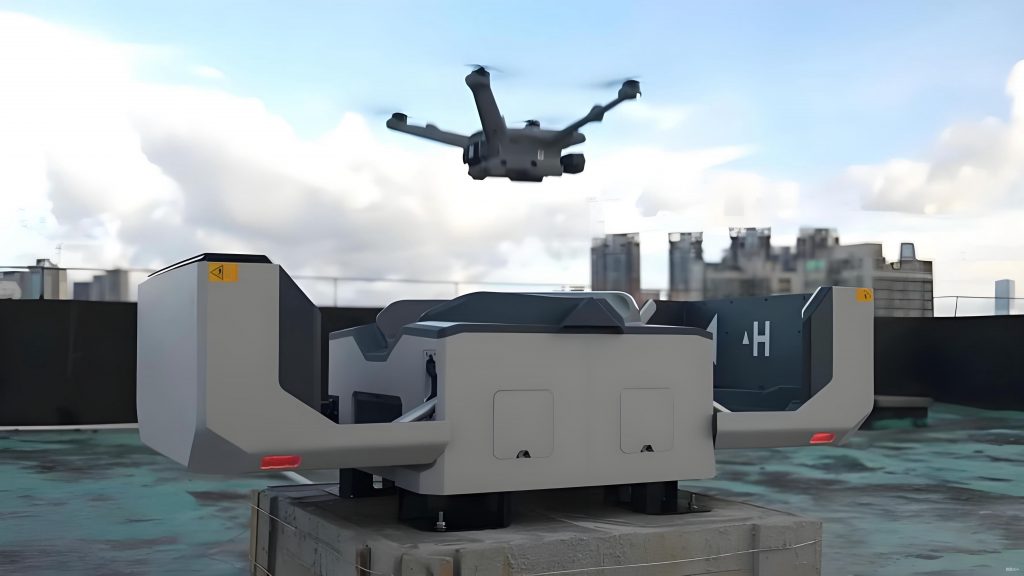
Commercial cryptography technology forms the backbone of modern cybersecurity, and its application to civilian drones involves multiple layers. For identity authentication, I employed public-key cryptography, specifically the SM2 elliptic curve digital signature algorithm. This ensures that only authorized entities—such as legitimate ground stations or operators—can establish connections with civilian drones. The process involves certificate validation and signature verification, which I tested extensively. In data transmission, symmetric encryption algorithms like SM4 or AES are used to encrypt control commands and sensor data in real-time. This prevents interception during wireless communication. For data storage, encryption protects sensitive information, such as flight logs or imagery, when archived on ground control servers. The mathematical foundations of these algorithms are crucial; for example, SM4 operates as a block cipher with a 128-bit key, and its encryption process can be represented as:
$$ C = E(K, P) $$
where \( C \) is the ciphertext, \( E \) is the encryption function, \( K \) is the secret key, and \( P \) is the plaintext. Similarly, SM2 relies on elliptic curve cryptography, where a signature generation involves computing a point on the curve based on a private key and message hash. The security of these algorithms stems from their resistance to cryptographic attacks, ensuring that civilian drones remain protected even against sophisticated threats. To quantify their impact, I developed a testing scheme that simulates operational environments for civilian drones, measuring parameters like latency and throughput. This approach allowed me to compare national and international algorithms objectively, providing insights for industry adoption.
The testing verification platform I constructed comprises two main components: a drone cryptography application system and a drone cryptography testing system. The application system integrates commercial cryptography modules into actual civilian drones and ground stations, enabling functions like digital signatures and encryption. The testing system, equipped with data collection tools, monitors cryptographic operations during simulated missions. This dual setup ensures that evaluations are based on realistic scenarios, such as drone hijacking attempts or high-data-rate video transmission. For instance, in hijacking scenarios, I compared plaintext and ciphertext modes to demonstrate how cryptography thwarts unauthorized control. The platform’s configuration is summarized in the table below, highlighting the hardware and cryptographic capabilities used for testing civilian drones.
| Component | Specifications |
|---|---|
| Civilian Drone | Wingspan >1.6m, integrated cryptographic hardware with SM4 encryption rate of 140 Mbps, supports dual-station communication. |
| Authorized Ground Station | CPU i5-12500, 16 GB RAM, cryptographic hardware with SM4 encryption rate of 140 Mbps. |
| Unauthorized Ground Station | CPU i5-12500, 16 GB RAM, no cryptographic integration. |
| Ground Control Center | Server with cryptographic modules: SM4 encryption rate of 850 Mbps, SM2 signature rate of 18,000 per second. |
In the identity authentication phase, I focused on verifying the mutual authentication between civilian drones and ground stations. This process uses SM2 digital signatures to ensure that both parties are legitimate. The functional tests involved checking certificate validity, revocation status, and signature correctness. For performance, I measured the latency introduced by signing and verification operations. Over 100 test runs, the average additional delay was minimal, as shown in the table below. This confirms that cryptography does not hinder the real-time connectivity required for civilian drones, which often operate in dynamic environments where quick responses are critical.
| Test Item | Number of Tests | Average Latency (ms) |
|---|---|---|
| Drone-Ground Station Mutual Authentication | 100 | 2 |
| Operator Login to Ground Station | 100 | 2 |
| Operator Login to Ground Control Center | 100 | 2 |
The mathematical representation of SM2 signature verification can be expressed as:
$$ \text{Verify}(PK, M, \sigma) = \text{True/False} $$
where \( PK \) is the public key, \( M \) is the message, and \( \sigma \) is the signature. This process ensures that only authenticated entities can interact with civilian drones, reducing the risk of spoofing attacks. In data transmission, I evaluated both SM4 and AES algorithms for encrypting flight status data and video streams. The encryption modes included OFB for telemetry and CBC for video, with performance metrics captured over multiple trials. The results indicate that encryption adds negligible latency, maintaining the operational efficiency of civilian drones. For example, the latency for transmitting flight status data with SM4 was approximately 1.002 ms, comparable to AES at 1.03 ms. This equivalence highlights that national algorithms are competitive, and for civilian drones, they offer a secure alternative without sacrificing performance.
To further analyze the performance, I derived a formula for total transmission delay in civilian drones:
$$ T_{\text{total}} = T_{\text{base}} + T_{\text{enc}} + T_{\text{dec}} $$
where \( T_{\text{base}} \) is the baseline transmission time without encryption, and \( T_{\text{enc}} \) and \( T_{\text{dec}} \) are the encryption and decryption times, respectively. In my tests, \( T_{\text{enc}} + T_{\text{dec}} \) was consistently below 2 ms for most data types, affirming that cryptography is feasible for real-time applications in civilian drones. The table below summarizes the data transmission performance, emphasizing the minimal impact of encryption on civilian drone operations.
| Scenario | Data Type | Algorithm | Number of Tests | Average Latency (ms) |
|---|---|---|---|---|
| Drone to Ground Station | Flight Status Data | SM4 | 100 | 1.002 |
| Drone to Ground Station | Video Data (1080p) | SM4 | 100 | 1.3 |
| Drone to Ground Station | Flight Status Data | AES | 100 | 1.03 |
| Drone to Ground Station | Video Data (1080p) | AES | 100 | 1.54 |
| Ground Station to Drone | Flight Control Data | SM4 | 100 | 1.003 |
| Ground Station to Drone | Flight Control Data | AES | 100 | 1.002 |
For data storage security, I tested encryption of flight logs and video files at the ground control center. Using SM4 and AES in CBC mode, I measured the time required to encrypt data before storage. The results, detailed in the table below, show that encryption overhead is low, with SM4 performing comparably to AES. This is vital for civilian drones that generate large volumes of data, as it ensures confidentiality without burdening storage systems. The encryption process for storage can be modeled as:
$$ C_i = E(K, P_i \oplus C_{i-1}) $$
for CBC mode, where \( C_i \) is the current ciphertext block, \( P_i \) is the plaintext block, and \( \oplus \) denotes XOR operation. This provides integrity benefits alongside confidentiality, further securing data from tampering.
| Scenario | Data Type | Algorithm | Number of Tests | Average Latency (ms) |
|---|---|---|---|---|
| Ground Station to Control Center | Flight Data | SM4 | 100 | 1.003 |
| Ground Station to Control Center | Video Data | SM4 | 100 | 4.81 |
| Ground Station to Control Center | Flight Data | AES | 100 | 1.022 |
| Ground Station to Control Center | Video Data | AES | 100 | 2.52 |
One of the critical threats to civilian drones is hijacking, where an unauthorized entity takes control. I conducted comparative tests to evaluate how cryptography mitigates this risk. In plaintext mode, an unauthorized ground station could easily connect and send commands, successfully hijacking the civilian drone. However, with ciphertext mode enabled—using SM4 for encryption—the same unauthorized station failed to establish a valid connection or issue commands. This demonstrates that cryptographic encryption acts as a robust barrier, protecting civilian drones from remote takeover. The security enhancement can be quantified by the probability of successful hijacking:
$$ P_{\text{hijack}} = \begin{cases}
1 & \text{if plaintext transmission} \\
\epsilon & \text{if ciphertext transmission}
\end{cases} $$
where \( \epsilon \) is negligibly small due to the cryptographic strength. For civilian drones operating in sensitive areas, such as near infrastructure or in regulated airspace, this reduction in risk is invaluable. Moreover, the power consumption of cryptographic hardware was assessed; in my tests, the additional power draw was only about 1.5% of the drone’s total power budget, indicating that security features do not significantly impact the endurance of civilian drones.
Throughout this study, I emphasized the importance of using national cryptographic algorithms for civilian drones, as they align with domestic security standards and reduce dependency on foreign technology. The performance parity between SM4 and AES, as evidenced by the test data, makes SM4 a compelling choice for securing civilian drones. Additionally, the SM2 algorithm proved efficient for authentication, with latencies that are imperceptible in practice. These findings provide a technical foundation for wider adoption of commercial cryptography in the civilian drone industry. As the number of civilian drones continues to grow, integrating such security measures will be essential for safeguarding airspace and data. Future work could explore advanced cryptographic protocols, such as lightweight key agreement schemes tailored for swarm operations of civilian drones, further enhancing their resilience against evolving threats.
In conclusion, my research confirms that commercial cryptography technology significantly enhances the security of civilian drones without compromising performance. Through systematic testing, I validated that cryptographic applications in identity authentication, data transmission, and data storage are both effective and efficient. The comparative analysis shows that national algorithms like SM2 and SM4 perform on par with international counterparts, offering a secure and sustainable solution for protecting civilian drones. As low-altitude economies expand, these insights will help stakeholders implement robust security frameworks, ensuring that civilian drones can operate safely and reliably in diverse environments. The integration of cryptography is not just a technical upgrade but a necessary step toward building trust in the burgeoning ecosystem of civilian drones.