
From my perspective, the rapid advancement of drone technology has fundamentally transformed various sectors, with civilian drones becoming an integral part of modern society. As I analyze the global landscape, I observe that the integration of unmanned aerial vehicles (UAVs) into civilian applications is driven by technological maturity, supportive policies, and increasing consumer demand for aerial intelligence. In this article, I delve into the development status of the civilian drones market, employing quantitative models to forecast future trends, and I identify key constraints that hinder sustainable growth. My focus is on providing a comprehensive overview, leveraging tables and formulas to summarize critical data, while emphasizing the term “civilian drones” throughout to underscore its significance.
The evolution of civilian drones can be traced back to the 1980s, when military technology began transitioning to civilian use, particularly in surveying and mapping. Today, I see a booming industry with over 300 enterprises in China alone, encompassing research, manufacturing, and service sectors. The market is broadly divided into consumer-grade and industrial-grade civilian drones, each serving distinct purposes. Consumer-grade drones are primarily used for aerial photography and entertainment, while industrial-grade civilian drones find applications in agriculture, power inspection, disaster relief, and more. The proliferation of these devices is fueled by their cost-effectiveness, precision, and ease of operation, which offer substantial benefits to traditional industries and daily life. However, as I examine the market dynamics, I recognize that the矛盾 between rapid growth and regulatory, technical, and market constraints is becoming increasingly apparent.
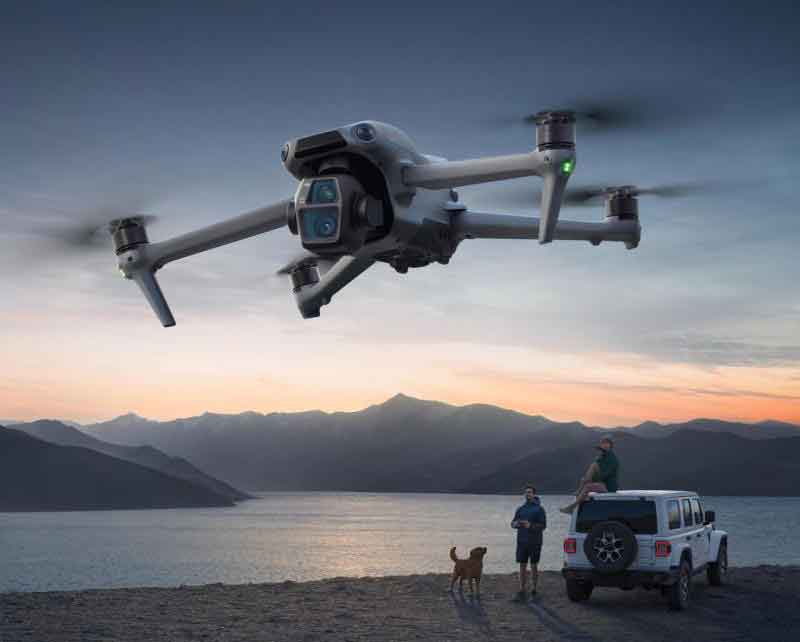
To understand the market structure, I have compiled a table summarizing key enterprises in the civilian drones sector, based on publicly available data. This highlights the diverse involvement across research, manufacturing, and data services, reflecting the industry’s vibrancy.
| Domain in Civilian Drones Sector | Representative Enterprises |
|---|---|
| Drone Research and Manufacturing | DJI Innovation, EHang, ZeroTech, Yuneec, Autel Robotics, PowerVision (consumer-grade focus), Cobalt,北方天途, 万户航空, 智航无人机, 致导科技, 3D Robotics, CyPhy Works, Lily (aerial photography), AirDog, Vires Aeronautics, Ewatt (power inspection focus), XAG (agricultural focus), TY Brother (agricultural drone manufacturing), Matternet (logistics drone services) |
| Drone and Operating System R&D | 纵横无人机, Airware, DroneDeploy |
| Integrated Drone System Design and Services | 西安韦德沃德 |
| Operating System Development and Manufacturing | 基石信息 |
| Intelligent Drone R&D and Services | 中翔腾航 |
| Aerial Photography Drone R&D | 星图无人机 |
| Drone System Development and Data Integration | 臻迪科技 |
| Drone Vision R&D | 凌宇智控, Skydio |
| Data Acquisition and Analysis via Civilian Drones | SkySpecs, SkyCatch, Precision Hawk, Redbird, DroneBase |
In terms of applications, civilian drones are categorized into consumer and industrial grades, with each serving multiple fields. I present a table to illustrate this classification, which helps in assessing market penetration and future potential.
| Classification of Civilian Drones | Application Areas | Specific Examples |
|---|---|---|
| Consumer-Grade Drones | Aerial Photography and Entertainment | Personal photography, film production, sports events |
| Industrial-Grade Civilian Drones | Agriculture and Forestry | Crop spraying, forest monitoring, planting |
| Power Inspection | Transmission line检查, grid maintenance | |
| Public Security | Disaster response, surveillance, anti-terrorism | |
| Municipal Construction | Urban planning, traffic patrol, pipeline inspection | |
| Other Applications | Resource exploration, water conservation, mapping | Geological surveys, environmental monitoring |
From my analysis, I note that the global distribution of civilian drones applications differs from China’s market. Globally, consumer-grade drones dominate, but in China, industrial applications like agriculture and power inspection are gaining traction. This discrepancy suggests untapped potential for industrial-grade civilian drones in China. To quantify future demand, I have developed predictive models based on historical data from 2011 to 2017. I focus on three key segments: consumer-grade drones, agricultural drones, and power inspection drones, as they represent the core of the civilian drones market. The data sources include statistical yearbooks, industry reports, and official publications, ensuring reliability.
First, I construct a model for consumer-grade civilian drones demand, which is influenced by per capita disposable income, policy support, and technological innovation. The model is expressed as:
$$Y_i = \alpha_0 + \alpha_1 x_{i1} + \alpha_2 x_{i2} + \alpha_3 x_{i3} \quad (i = 1, 2, \ldots, 6)$$
Here, $Y_i$ denotes the demand for consumer-grade civilian drones, $x_{i1}$ represents per capita disposable income, $x_{i2}$ is the number of policies enacted in the year, and $x_{i3}$ indicates the number of new patents filed. The coefficients $\alpha_1$, $\alpha_2$, and $\alpha_3$ capture the impact of each variable.
For agricultural civilian drones, demand is driven by market needs, policies, and technological advancements. The model is:
$$Z_n = \beta_0 + \beta_1 x_{n1} + \beta_2 x_{n2} + \beta_3 x_{n3} \quad (n = 1, 2, \ldots, 6)$$
where $Z_n$ is the demand for agricultural civilian drones, $x_{n1}$ stands for the annual demand in agriculture, $x_{n2}$ for policy count, and $x_{n3}$ for patent numbers, with coefficients $\beta_1$, $\beta_2$, and $\beta_3$.
Regarding power inspection civilian drones, I use market scale as a proxy for demand, given data availability. The model is:
$$P_m = \delta_0 + \delta_1 x_{m1} + \delta_2 x_{m2} + \delta_3 x_{m3} \quad (m = 1, 2, \ldots, 6)$$
In this equation, $P_m$ represents the demand for power inspection civilian drones, $x_{m1}$ is the annual market scale, $x_{m2}$ is policy count, and $x_{m3}$ is patent numbers, with coefficients $\delta_1$, $\delta_2$, and $\delta_3$.
The total demand for civilian drones is then the sum of these segments:
$$D = Y + Z + P$$
I have compiled the historical data into a table to facilitate analysis. The data spans from 2011 to 2017, covering policy numbers, patent counts, per capita income, agricultural demand, power inspection market scale, and the respective drone quantities.
| Year | Policy Count | New Patent Technologies (units) | Per Capita Disposable Income (USD) | Agricultural Drones Annual Demand (units) | Power Inspection Market Scale (billion USD) | Consumer-Grade Drones Quantity (units) | Agricultural Drones Quantity (units) | Power Inspection Drones Quantity (units) |
|---|---|---|---|---|---|---|---|---|
| 2011 | 10 | 430 | 14,400 | 2,000 | 360 | 8,700 | 1,932 | 1,015 |
| 2012 | 14 | 630 | 16,500 | 2,310 | 430 | 10,726 | 2,324 | 1,251 |
| 2013 | 17 | 1,000 | 18,300 | 2,800 | 526 | 13,068 | 2,831 | 1,525 |
| 2014 | 17 | 1,620 | 20,200 | 3,430 | 730 | 20,000 | 3,722 | 2,333 |
| 2015 | 19 | 1,020 | 22,000 | 5,720 | 787 | 28,700 | 5,218 | 2,623 |
| 2016 | 21 | 960 | 23,800 | 7,680 | 934 | 34,674 | 6,751 | 3,231 |
| 2017 | 23 | 970 | 25,500 | 10,000 | 934 | 39,791 | 8,085 | 4,000 |
Using statistical software, I performed regression analysis on these models. The Breusch-Pagan tests indicated no heteroskedasticity, and the OLS regression results are summarized below. The残差 normality tests confirmed the models’ validity, allowing for reliable predictions on civilian drones demand.
| Model | Variable | Coefficient | Standard Error | Significance |
|---|---|---|---|---|
| Model 1 (Consumer-Grade) | Per Capita Income | 5.3535*** | 0.1180 | P < 0.01 |
| Policy Count | -2000*** | 107.1101 | P < 0.01 | |
| Patent Count | -4.8869*** | 0.3181 | P < 0.01 | |
| Constant | -47000*** | 736.6039 | P < 0.01 | |
| R-squared: 0.9996 | ||||
| Model 2 (Agricultural) | Agricultural Demand | 0.8068*** | 0.0181 | P < 0.01 |
| Policy Count | -6.6447 | 12.5265 | Not significant | |
| Patent Count | 0.5523** | 0.0646 | P < 0.05 | |
| Constant | 164.7583 | 107.5789 | Not significant | |
| R-squared: 0.8718 | ||||
| Model 3 (Power Inspection) | Market Scale | 4.2976*** | 0.1041 | P < 0.01 |
| Policy Count | -16.9010 | 5.9303 | Not significant | |
| Patent Count | -0.1407** | 0.0276 | P < 0.05 | |
| Constant | -290** | 45.3128 | P < 0.05 | |
| R-squared: 0.8593 | ||||
Based on these models and assuming optimistic growth rates for policies, patents, and income, I forecast the future demand for civilian drones. The projected total demand shows an upward trend, but with a gradually stabilizing growth rate. This aligns with my observation that the civilian drones market is maturing, yet opportunities abound in industrial applications. I present a table summarizing the forecasted sales scale for civilian drones from 2018 to 2023, based on extrapolated data.
| Year | Projected Consumer-Grade Civilian Drones Demand (units) | Projected Agricultural Civilian Drones Demand (units) | Projected Power Inspection Civilian Drones Demand (units) | Total Civilian Drones Demand (units) | Growth Rate (%) |
|---|---|---|---|---|---|
| 2018 | 45,000 | 9,500 | 4,500 | 59,000 | 8.5 |
| 2019 | 50,000 | 11,000 | 5,200 | 66,200 | 12.2 |
| 2020 | 55,000 | 12,800 | 6,000 | 73,800 | 11.5 |
| 2021 | 60,000 | 14,500 | 6,900 | 81,400 | 10.3 |
| 2022 | 65,000 | 16,300 | 7,800 | 89,100 | 9.4 |
| 2023 | 70,000 | 18,000 | 8,700 | 96,700 | 8.5 |
From my analysis, I conclude that the demand for civilian drones will generally increase, but the growth rate will gradually stabilize. This trend underscores the need to address underlying constraints to sustain market development. As I reflect on the factors influencing the civilian drones market, I identify several critical issues that require attention.
First, the supply-side reform in the civilian drones market needs deepening. Industrial-grade civilian drones offer high efficiency and safety, aligning with green development理念, but many enterprises are clustered in consumer-grade segments. The通用性 of consumer drones limits their effectiveness in specialized industrial applications. Moreover, key technologies for civilian drones are often held by military or academic institutions, which may lack market sensitivity, while private firms face funding and technical barriers to innovation. This hinders the diffusion of advanced technologies and restrains the growth of high-value civilian drones applications.
Second, safety hazards伴随 the rapid proliferation of civilian drones. The accessibility and ease of use of civilian drones pose risks, from poor-quality assemblies leading to accidents to malicious uses like terrorism or privacy invasion. Incidents of civilian drones interfering with aviation safety or encroaching on restricted areas are frequent, highlighting urgent safety concerns that must be mitigated for the sustainable development of civilian drones.
Third, independent innovation in core technologies is paramount for civilian drones. Technologies such as flight control, navigation stability, aerodynamics, and communication are essential for advanced civilian drones. However, I observe that few companies master these核心技术, with many relying on imported components for assembly. This dependence stifles innovation and limits the competitiveness of civilian drones in global markets.
Delving deeper into the problems, I note that the civilian drones market faces specific challenges that impede progress. One major issue is the shortage of high-end talent and significant technical gaps among enterprises, which fails to meet专业化需求. The demand for civilian drones spans diverse fields like energy, agriculture, and disaster response, but the lack of specialized technical人才 leads to phenomena like talent poaching, design plagiarism, and恶性竞争. This results in structural overcapacity and necessitates industry consolidation. In my view, the future of civilian drones will hinge on technology, capital, and resources, requiring firms to strategize and invest in talent cultivation.
Another critical problem is the absence of comprehensive laws and regulations for civilian drones, coupled with weak legal awareness among participants. Existing regulations, such as the “Civil UAV Air Traffic Management Measures,” are broad and lack detailed provisions for production, sales, and usage of civilian drones. There are no clear legal条文 for low-altitude flight activities, and penalties are insufficient to deter violations. From my perspective, consumers often ignore rules, purchasing civilian drones without understanding airspace protections, and drone sellers prioritize product features over compliance. Additionally, pilot certification for civilian drones is not legally mandated, reducing accountability and encouraging违规飞行. This legal vacuum exacerbates management difficulties for authorities.
Furthermore, the监管体系 for civilian drones is imperfect, with missing industry standards. The management of civilian drones involves multiple departments, leading to inefficiencies. I identify gaps in several areas: lack of technical standards and airworthiness approvals for civilian drones出厂, allowing low-quality products into the market; inadequate oversight in sales channels, where online platforms enable anonymous purchases without safety disclosures; and challenges in penalizing违规飞行 due to fragmented enforcement by公安 and aviation agencies. This regulatory fragmentation increases risks for civilian drones operations.
Lastly, flight control capabilities亟需加强, and communication networks severely制约 the development of civilian drones. In practical scenarios, electromagnetic interference from power lines or structures can disrupt drone operations, necessitating robust电磁兼容性. Current civilian drones have limited control ranges, and beyond these, they become uncontrollable. The expansion of drone applications requires enhanced communication networks, but existing mobile基站 and 4G signals are insufficient for long-range civilian drones operations. This technical constraint limits the potential of civilian drones in fields like logistics and remote inspections.
To address these challenges, I propose several recommendations for the development of the civilian drones market. First, focus on cultivating high-end technical人才 and promoting the专业化 of civilian drones functions to achieve cluster-style development. Enterprises must invest in talent development, and governments should support industrial-grade civilian drones through policies that encourage functional specialization. Learning from successful clusters like Shenzhen, I suggest: 1)完善产业链条 to form集聚效应, fostering hierarchical enterprise structures; 2) establishing civilian drones industry associations to推动健康发展; and 3) government initiatives to build civilian drones industrial bases, enhancing collaboration across the sector.
Second, governments should strengthen重视,健全法规 to ensure有法可依 for civilian drones. Integrating scattered regulations into a systematic legal framework is crucial. This includes laws covering manufacturer资质审批, safety standards, quality control, seller behavior, and实名注册 for civilian drones. By establishing clear legal foundations, the civilian drones market can operate with accountability and transparency.
Third, define clear industry standards for civilian drones and构建 a comprehensive joint监管体系. Developing widely accepted standards for manufacturing, sales, and usage is essential for long-term growth. The监管 system should involve多职能部门协作, with responsibilities delineated based on violation types. Key measures include: 1) strict control at the manufacturing source to ensure civilian drones meet quality standards; 2) implementing实名制 in sales channels; 3) enhancing pilot training for civilian drones to raise safety awareness; and 4) creating information platforms for online flight applications and real-time monitoring of civilian drones activities.
Fourth, increase innovation investment to突破技术制约 for civilian drones. Addressing flight control and communication limitations requires technological breakthroughs. I recommend establishing national testing grounds for civilian drones systems to evaluate crash safety and electromagnetic resilience. Additionally, advancing mobile infrastructure and promoting 5G networks, alongside leveraging “internet+” models for remote control of civilian drones, can significantly expand application scopes. Innovation in core technologies will drive the competitiveness of civilian drones globally.
In conclusion, from my perspective, civilian drones represent a transformative technology with immense market value and前景. The quantitative models I have employed indicate sustained growth in demand for civilian drones, yet the stabilizing growth rate signals a maturing market. However, the constraints—ranging from regulatory gaps and talent shortages to technical hurdles—pose significant challenges. The healthy development of the civilian drones market necessitates concerted efforts from governments, industry players, and consumers. By fostering a collaborative environment with robust regulations, standards, and innovation, the civilian drones sector can thrive, contributing to economic and social progress. As I reflect on this analysis, I am optimistic that with targeted interventions, civilian drones will continue to evolve, unlocking new potentials across diverse applications.