
In my extensive research on emerging technologies, I have focused on the rapid proliferation of civilian drones and their implications for privacy rights. Civilian drones, once primarily confined to military domains, have become ubiquitous in various sectors due to advancements in information technology. These devices, characterized by low cost, high efficiency, minimal noise, strong concealment, and unrestricted spatial mobility, are now integral to applications such as aerial photography, agriculture, plant protection, micro-selfies,快递运输, disaster rescue, wildlife observation, infectious disease monitoring, surveying, news reporting, power inspection, relief efforts, and film production. The “civilian drones + industry application” paradigm has rendered them近乎 essential, significantly expanding their utility. However, the convenience offered by civilian drones is juxtaposed with growing concerns over privacy infringement. From my perspective, the stealth and anonymity associated with civilian drones exacerbate these risks, necessitating robust legal frameworks to ensure healthy industry development while safeguarding individual privacy.
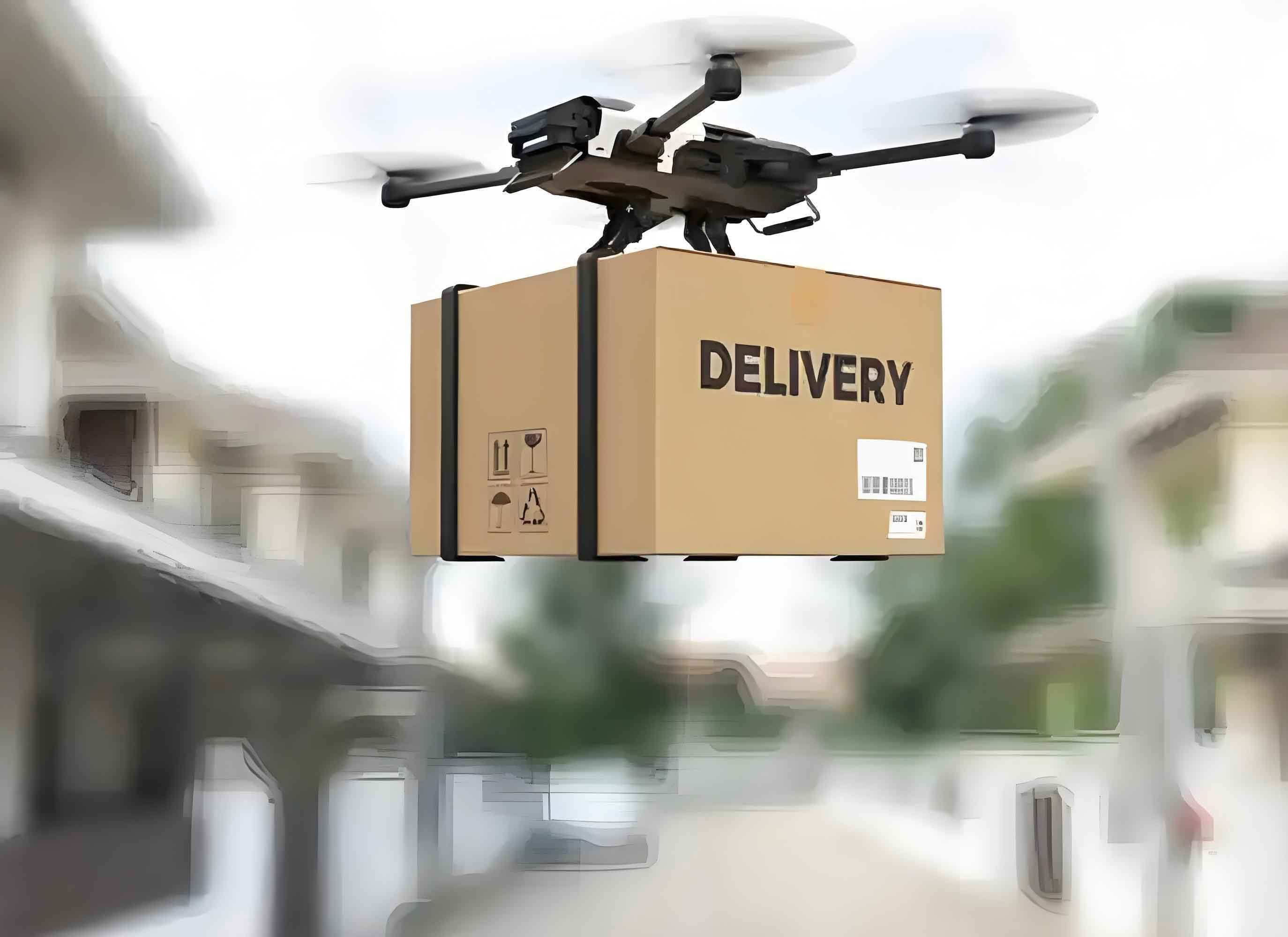
I have observed that the privacy risks posed by civilian drones are multifaceted. First, the methods of privacy infringement are highly隐蔽. Civilian drones are remotely operated unmanned aerial vehicles equipped with positioning, sensing, listening, and imaging devices, enabling them to capture minute details from considerable distances. Their aerial hovering capability, combined with wireless data transmission, allows for prolonged, non-physical intrusion into private spaces without detection. This represents a departure from traditional privacy violations that often involve physical接触. Moreover, the data collected by civilian drones faces二次泄露 risks; operators may disseminate private information widely for profit or curiosity, complicating victims’ recourse. Second, the liability subjects in such infringements are匿名. Infringements involve dual entities: the civilian drones themselves as tools executing the act, and the remote operators controlling them. Neither directly interacts with victims, making identification difficult and维权 challenging. This anonymity can be modeled using a probability formula: $$ P(identification) = 1 – e^{-\lambda t} $$ where $P(identification)$ is the probability of identifying the operator, $\lambda$ is the rate of线索 discovery, and $t$ is time, highlighting how elapsed time reduces accountability chances.
To quantify these risks, I propose a risk assessment framework for privacy infringement by civilian drones. Let $R$ denote the overall risk, calculated as: $$ R = S \times A \times D \times F $$ where $S$ is the stealth factor (ranging from 0 to 1, with 1 being highly隐蔽), $A$ is the anonymity factor (0 to 1, with 1 indicating complete anonymity), $D$ is the data sensitivity factor (0 to 1, based on the nature of information collected), and $F$ is the frequency of drone operations (scaled 0 to 10). For instance, a civilian drone used for surveillance in residential areas might have $S=0.9$, $A=0.8$, $D=0.7$, and $F=5$, yielding $R = 0.9 \times 0.8 \times 0.7 \times 5 = 2.52$. Higher values indicate greater urgency for legal intervention. This model underscores the need for tailored regulations.
| Risk Dimension | Description | Impact Factor | Mitigation Strategy |
|---|---|---|---|
| Stealth (S) | Ability to operate undetected due to remote control and small size | High (0.8-1.0) | Geofencing and noise regulation |
| Anonymity (A) | Difficulty in tracing operators, dual主体 nature | High (0.7-0.9) | Mandatory实名登记 and unique IDs |
| Data Sensitivity (D) | Type of information collected (e.g., video, audio, location) | Variable (0.3-1.0) | Data encryption and access controls |
| Operation Frequency (F) | Number of flights per time unit in sensitive areas | Medium to High (3-8) | Flight zone restrictions and permits |
In examining legislative landscapes, I find that current laws are often inadequate. In China, privacy protection primarily stems from the Civil Code, which defines privacy as encompassing “peace of private life,” “private spaces,” “private activities,” and “private information.” However, these provisions are rooted in traditional物权-based concepts, struggling to address the remote, technological intrusions of civilian drones. For civilian drones specifically, regulations like the “Interim Regulations on Flight Management of Unmanned Aircraft (Draft)” focus on aviation safety, neglecting privacy. The absence of上位法 and targeted statutes leads to regulatory gaps, causing inconsistent judicial outcomes. This滞后 highlights a global challenge: as civilian drones proliferate, legal systems worldwide race to catch up.
From my analysis, I have compiled a table comparing legislative approaches to civilian drones across jurisdictions, emphasizing privacy aspects:
| Jurisdiction | Key Laws/Regulations | Privacy Provisions | Gaps and Challenges |
|---|---|---|---|
| China | Civil Code,民用航空法, CAC regulations | General privacy rights; no specific drone rules | Lack of专门法, low legal hierarchy, safety-focused |
| United States | Civil UAV Privacy Guidelines, state laws (e.g., California) | Height restrictions, landowner rights, data confidentiality | Fragmented state laws, undefined “normal” flight heights |
| European Union | Drone General Code Plan, GDPR-inspired rules | Risk-based classification,合法性, confidentiality principles | Complex compliance for cross-border operations |
| Other Regions | Varying national policies (e.g., Japan, Australia) | Incidental mentions in aviation laws | Minimal privacy integration, enforcement issues |
Delving into域外 practices, I note that the United States addresses civilian drone privacy through guidelines and state-level initiatives. The “Civil UAV Privacy Guidelines” outline operational precautions, data保密制度, and operator obligations. States like Texas have enacted laws granting landowners exclusive airspace rights at low altitudes, though uniformity is lacking. The privacy risk can be expressed as: $$ Risk_{US} = \int_{0}^{H} f(h) \, dh $$ where $H$ is the flight height threshold and $f(h)$ represents privacy intrusion probability as a function of height, emphasizing how lower flights increase risks. The EU, conversely, employs a stringent, principle-based approach. Its “Drone General Code Plan” categorizes civilian drones into “open,” “specific,” and “certified” based on risk, mandating privacy respect under GDPR principles. The监管 intensity $I$ for EU drones is: $$ I = \alpha \cdot R_{risk} + \beta \cdot P_{privacy} $$ where $\alpha$ and $\beta$ are weights for risk level and privacy sensitivity, respectively, and $R_{risk}$ is the assigned risk score. This formula illustrates the EU’s balanced oversight.
Based on my findings, I propose a tripartite strategy for完善无人机隐私保护法律规制. First,事前规制 involves enacting专门法 for civilian drones. This law should balance privacy protection with industry growth, incorporating principles like legality, purpose rationality, and caution. It must define飞行空域 limits, such as maximum heights $H_{max}$ and restricted zones $Z_{restricted}$, mathematically expressed as: $$ \text{Permitted Flight Area} = \text{Total Airspace} – \sum Z_{restricted} $$ A dedicated chapter should clarify隐私空间 in the context of civilian drones, perhaps defining it as a spherical radius around individuals: $$ Privacy Space = \{ (x,y,z) : \sqrt{(x-x_0)^2 + (y-y_0)^2 + (z-z_0)^2} \leq r \} $$ where $(x_0, y_0, z_0)$ is the person’s location and $r$ is a legislated privacy radius (e.g., 50 meters). The law should also delineate responsibilities among five主体: developers, producers, manufacturers, sellers, and operators, as summarized below:
| Stakeholder | Primary Responsibilities | Legal Obligations | Penalties for Non-compliance |
|---|---|---|---|
| Developers | Design privacy-by-default features, secure software | Ensure algorithms respect privacy boundaries | Fines, product recalls |
| Producers | Manufacture drones with实名登记 hardware | Embed unique IDs, quality control | Licensing revocation |
| Manufacturers | Assemble compliant components, provide manuals | Include risk warnings, track supply chain | Civil liability |
| Sellers | Verify buyer identities, legal sales channels | Distribute manuals, confirm实名登记 | Suspension of operations |
| Operators | Use drones legally, protect collected data | Adhere to flight rules, maintain confidentiality | Compensation, criminal charges |
Second,全程监管 necessitates a comprehensive system for civilian drones. I advocate for a大数据-based监管体系 integrating algorithm and cloud monitoring. For instance,监管 algorithms can be modeled as: $$ \text{Compliance Score} = \sum_{i=1}^{n} w_i \cdot C_i $$ where $w_i$ are weights for criteria like flight height, data encryption, and operator认证, and $C_i$ are compliance metrics. Cloud systems should analyze uploaded data for privacy breaches using pattern recognition. Across production, sales, and use stages, measures include mandatory unique IDs, identity verification, and manual distribution. The effectiveness $E$ of such监管 can be estimated as: $$ E = \frac{N_{compliant}}{N_{total}} \times 100\% $$ where $N_{compliant}$ is the number of civilian drones adhering to rules, and $N_{total}$ is the total in circulation. Regular audits can boost $E$ over time.
Third,事后追责 requires improving维权路径 for victims. Given their弱势地位, I suggest establishing a civilian drone user information database. Upon实名认证 activation, drone and operator data are linked and stored. Victims can query this database via申请 to identify operators, easing litigation. Additionally,举证责任 should follow过错推定原则: victims prove infringement and damage, while drone operators must demonstrate无过错. Mathematically, the burden of proof $B$ shifts as: $$ B_{operator} = \begin{cases} 0 & \text{if victim fails to show infringement} \\ 1 & \text{if infringement shown, then operator must prove innocence} \end{cases} $$ This reduces victims’举证困难. The compensation amount $C$ for privacy breaches could be calculated using: $$ C = \alpha \cdot D_{damage} + \beta \cdot P_{pain} + \gamma \cdot L_{loss} $$ where $D_{damage}$ is actual harm, $P_{pain}$ is emotional distress, $L_{loss}$ is financial loss, and $\alpha, \beta, \gamma$ are legal coefficients.
In my view, the future of civilian drones hinges on proactive legal adaptation. As these devices become more embedded in society, their privacy implications will intensify. I have explored models where regulatory stringency $S_{reg}$ and innovation rate $I_{innov}$ in the civilian drone industry are inversely related but can be optimized: $$ U = \log(S_{reg}) + \log(I_{innov}) $$ where $U$ represents societal utility, maximized when both privacy protection and technological progress coexist. Continuous monitoring and international cooperation are vital, as civilian drones operate transnationally. For example, standardizing privacy radii $r$ globally could mitigate conflicts, with a proposed formula: $$ r_{global} = \frac{\sum_{i=1}^{n} r_i \cdot GDP_i}{\sum_{i=1}^{n} GDP_i} $$ weighting national radii by economic factors for practicality.
To summarize, civilian drones present profound privacy challenges that demand urgent legal attention. Through专门法, robust监管, and fair追责, we can harness the benefits of civilian drones while safeguarding fundamental rights. My analysis underscores that civilian drones are not merely tools but socio-technical entities requiring holistic governance. As I continue to study this field, I believe that interdisciplinary approaches—combining law, technology, and ethics—will be key to sustainable development. The integration of civilian drones into daily life is inevitable, but with careful regulation, privacy infringements can be minimized, fostering trust and innovation in this dynamic sector.