
The evolution of unmanned aerial vehicles, particularly in the civilian sector, represents a paradigm shift in how we approach tasks ranging from logistics to entertainment. My analysis begins with the recognition of their immense potential, but is fundamentally driven by the urgent need to address the significant safety and security gaps that have emerged alongside their proliferation. The term civilian drones encompasses a vast array of remotely piloted or autonomously operating aircraft, distinguished from their military counterparts primarily by their scale, cost, and application. The historical trajectory saw technology migrate from specialized defense applications to widespread commercial and personal use, leading to an explosive growth in market availability. This accessibility, characterized by low cost, operational simplicity, and minimal takeoff requirements, has democratized aerial capabilities but has also ushered in an era of largely unregulated operation. The widespread phenomenon of “black flights”—operations conducted without authorization, registration, or adherence to any flight rules—poses a clear and present danger. The existing regulatory framework, while acknowledging these risks, remains largely conceptual, offering principles without the robust technical systems, standardized procedures, and clear enforcement mechanisms required for effective governance. Therefore, my perspective advocates for a holistic, integrated management strategy that spans the entire lifecycle of a civilian drone, from its manufacture to its final decommissioning. This approach must synergize policy mandates with advanced technological solutions to ensure safety, protect privacy, and foster the sustainable growth of the industry.
The applications for civilian drones are vast and transformative. In precision agriculture, they enable targeted pesticide application and crop health monitoring. In infrastructure, they facilitate the inspection of power lines, wind turbines, and bridges. They play crucial roles in search and rescue operations, environmental monitoring, cinematography, and last-mile delivery logistics. This utility is undeniable. However, the very features that make civilian drones so versatile—their small size, agility, and ability to carry payloads—also make them potent vectors for risk when operated irresponsibly or maliciously. The hazards are multifaceted: the potential for mid-air collisions with manned aviation, posing catastrophic risks to passenger aircraft; the threat of physical injury from falls or uncontrolled flight in populated areas; blatant violations of personal privacy; the gathering of sensitive intelligence over restricted sites; and their potential weaponization for smuggling or attacks. The current state of oversight is insufficient to mitigate these risks at scale, creating a pressing imperative for a systematic and enforceable management regime.
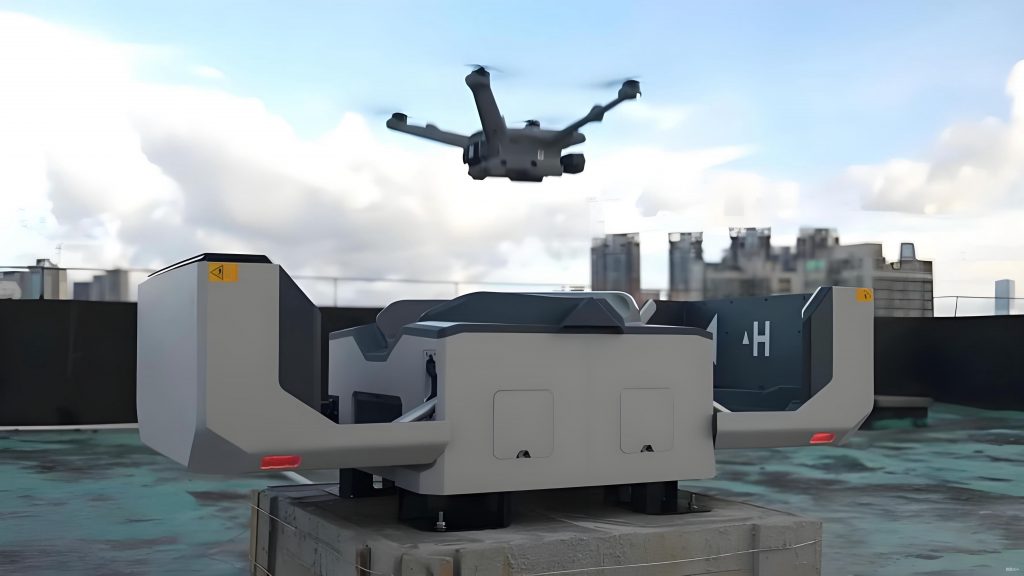
The Current Regulatory Landscape and Its Gaps
An examination of the existing regulatory environment reveals a framework under construction. Several national-level documents have laid a preliminary foundation for managing civilian drones. These guidelines typically introduce concepts like categorization based on weight or risk, rudimentary pilot certification, and the need for flight plan submission. For instance, regulations often propose the implementation of “electronic fences” (geo-fencing) for no-fly zones and the use of “UAV cloud” platforms for flight monitoring. While these are steps in the right direction, they largely exist as policy aspirations rather than operational realities. The table below summarizes the typical scope and limitations of such regulatory documents.
| Regulatory Document/Concept | Primary Focus | Inherent Limitations |
|---|---|---|
| General Air Traffic Management Rules for UAVs | Applies existing manned aircraft rules by analogy. | Often impractical for small, agile civilian drones operating in very low-level airspace. |
| Pilot Qualification Temporary Provisions | Establishes a requirement for remote pilot certificates. | Training standards vary widely; certification levels may not match actual aircraft risk. |
| Lightweight & Small UAV System Operational Temporary Provisions | Introduces classification and concepts like geo-fencing and cloud management. | Lacks detailed technical standards for implementation; no mandated compliance mechanism. |
| No-Fly Zone Designations | Identifies sensitive areas like airports and military bases. | Relies on voluntary compliance or post-violation enforcement; no real-time prevention. |
The core challenges stemming from this nascent framework are threefold. First, the lack of operational specificity and enforceable technical standards means regulations have weak “teeth.” The consequences for violations are often unclear, and the path for legal, compliant flight can be opaque, inadvertently encouraging “black flight” practices. Second, regulatory resources are vastly outstripped by the scale of the market. The number, variety, and rapid iteration of civilian drone models make traditional, hands-on oversight impossible. Third, the ecosystem supporting safe operation—particularly pilot training and certification—is fragmented and inconsistent, leading to a wide disparity in operator competency.
An Integrated Lifecycle Management Framework
To address these systemic issues, management must extend beyond the moment of flight and encompass the entire existence of the civilian drone. This lifecycle approach imposes responsibilities and integrates technologies at three critical junctures: production, sale, and operation.
1. Production Phase: Embedding Safety by Design
Safety and compliance must be engineered into civilian drones from the outset. Regulatory bodies must establish and enforce minimum production standards, focusing on flight control system reliability, communication link security, and mandatory safety features. Key technical interventions at this stage include:
- Hard-Coded Geo-Fencing: The drone’s flight control system should have immutable geographical boundaries for prohibited areas (e.g., airports, government buildings) programmed at the firmware level.
- Universal Identification Beacon: Every civilian drone should be equipped with a standardized, tamper-resistant electronic identity module. This could be a broadcast module using technologies like Remote ID (akin to a digital license plate) or a simple RFID tag.
- Performance Limiting: For consumer-grade drones, hardware or firmware limits on maximum altitude (e.g., 150 meters AGL), speed, and range can mitigate high-risk scenarios.
- Standardized Communication Protocols: Allocation of specific, protected frequency bands for drone command-and-control can reduce interference and increase spectral awareness.
The governance model here involves certifying manufacturers and regularly auditing production lines to ensure compliance with these technical standards, effectively treating certain classes of civilian drones as regulated electronic products.
2. Sale and Transfer Phase: Establishing Ownership and Competency
The point of sale is a critical control node. A mandatory, centralized national registration system is foundational. Upon purchase, the drone’s unique serial number (tied to its electronic ID) must be linked to the owner’s verified identity in a government database. This creates a clear chain of ownership for accountability. Furthermore, this phase should gate access based on competency:
- Pilot Certification Tied to Drone Category: Operating a civilian drone above a certain risk threshold should require a pilot certificate. The certification should be tiered (e.g., basic for hobbyist models, advanced for commercial, heavy-lift, or Beyond Visual Line of Sight operations).
- Standardized Training Curriculum: A national framework for training institutions should cover flight skills, aviation regulations, meteorology, airspace awareness, and ethical/legal responsibilities.
- Insurance Linkage: For commercial operations or larger drones, proof of liability insurance could be a prerequisite for registration, sharing the financial risk model of manned aviation.
3. Operational Phase: Dynamic Monitoring and Response
This is where integrated technological systems actively ensure safety. The cornerstone is a mandated, real-time Unmanned Traffic Management (UTM) ecosystem or “Drone Cloud.”
- Pre-Flight Digital Authorization: Pilots file a digital flight plan via a UTM application. The system automatically checks the plan against airspace restrictions, temporary flight restrictions (TFRs), and other filed plans, granting or denying near-instantaneous authorization.
- In-Flight Monitoring & Tracking: The drone’s identity and telemetry (position, altitude, speed, heading) are continuously broadcast and ingested by the UTM network. This allows authorities to see all cooperative drones in near-real-time.
- Automated Alerting and Deconfliction: The UTM system can alert pilots if they drift near restricted airspace or another approved flight path. For compliant drones, the system could even send automated corrective commands.
- Enforcement Layer: For non-cooperative or malicious drones that do not broadcast an ID or violate boundaries, a separate layer of detection and mitigation systems (discussed in the next section) is activated. The UTM system provides the situational awareness to direct these countermeasures.
This lifecycle framework creates a closed loop of responsibility: manufacturers build compliant drones, owners register them and certify their skills, and operators fly within a digitally monitored and managed airspace.
Core Supporting Technologies for Effective Management
The proposed management framework is entirely dependent on a suite of advanced technologies. These can be categorized into three pillars: Surveillance, Avoidance, and Mitigation.
Pillar I: Multi-Source Surveillance and Networked Monitoring
Tracking the diverse population of civilian drones requires a fusion of surveillance methods, as no single technology is universally perfect. A networked approach is essential.
| Surveillance Technology | Principle | Best For | Limitations |
|---|---|---|---|
| Remote ID / ADS-B Like | Drone actively broadcasts ID and telemetry on a standard frequency. | All cooperative drones; primary method for UTM. | Requires drone to be equipped and powered on; signal can be spoofed or jammed. |
| Cellular Network Tracking | Uses modem in drone to report its location via cell towers. | Urban/suburban areas with good coverage; low-cost addition. | Limited in rural/remote areas; dependent on drone’s modem. |
| Primary Radar (RF/ Acousto-Optic) | Actively illuminates airspace and detects reflections from objects. | Detecting non-cooperative drones; perimeter defense. | Can struggle with small, low-RCS targets; clutter from birds; high cost for wide coverage. |
| Electro-Optical/Infrared (EO/IR) | Passive detection using visual or thermal cameras and computer vision. | Short-range verification, tracking, and classification of intruders. | Performance degrades with weather, range, and lighting. |
The effectiveness of this networked surveillance can be modeled as a probability of detection, $P_d$, which is a function of the individual technologies’ coverage and the drone’s characteristics. For a network of `N` heterogeneous sensors:
$$P_d = 1 – \prod_{i=1}^{N} (1 – p_i(r, \sigma, E))$$
where $p_i$ is the detection probability of the i-th sensor, dependent on range `r`, the drone’s radar cross-section $\sigma$, and environmental conditions `E`. A UTM platform acts as the fusion center, correlating data from all these sources to maintain a Common Operational Picture (COP) of all air activity.
Pillar II: Sense-and-Avoid (SAA) Technology
To prevent collisions, drones must be capable of autonomously detecting and maneuvering around obstacles and other air traffic. SAA systems are categorized as cooperative or non-cooperative.
Cooperative SAA relies on other aircraft broadcasting their position (e.g., via ADS-B). The drone carries a receiver (ADS-B In) to see these targets. Non-cooperative SAA is more challenging and critical for avoiding birds, buildings, or drones not broadcasting a signal. It uses onboard sensors like:
– Micro Radar: Small, low-power radar modules are becoming viable for drones.
– Stereo Vision: Using two or more cameras to estimate distance to objects.
– LiDAR: Laser-based ranging, excellent for high-resolution mapping but historically expensive and power-hungry (though shrinking).
The drone’s flight controller uses data from these sensors to compute collision avoidance maneuvers. A simplified kinematic model for determining the time to collision (TTC) with an obstacle on a constant bearing is:
$$TTC = \frac{\Delta R}{\dot{R}}$$
where $\Delta R$ is the current range and $\dot{R}$ is the range rate (closing speed). If TTC falls below a threshold, and the bearing change is near zero, an avoidance maneuver is triggered. The relationship between required sensor performance, drone agility, and airspace density defines the safety envelope for civilian drone operations.
Pillar III: Counter-Unmanned Aerial System (C-UAS) Technology
For drones that are non-cooperative, malicious, or in clear violation of protected airspace, a graduated set of countermeasures is necessary. These systems form the enforcement layer.
| C-UAS Category | Mechanism | Effect | Considerations |
|---|---|---|---|
| Radio Frequency (RF) Jamming | Overwhelms the drone’s command & control (C2) and/or GPS signals with noise. | Forces drone to execute its fail-safe (typically hover, land, or return-home). | Can cause collateral interference; affects only RF-controlled drones. |
| GNSS Spoofing | Broadcasts false but stronger GPS/GNSS signals to the drone. | Tricks drone into navigating to a false location, allowing controlled capture. | Highly technical; requires precise knowledge of target and location. |
| Directed Energy (Laser/Microwave) | Focuses high-energy beams to thermally damage or fry electronics. | Physical destruction of the drone. | Line-of-sight required; atmospheric attenuation; significant power draw. |
| Kinetic/Physical Intercept | Uses nets (shot from cannon or deployed by interceptor drone), projectiles, or eagles. | Physical capture or destruction. | Risk of falling debris; best for point defense over controlled areas. |
| Cyber Takeover | Exploits security vulnerabilities to hijack the drone’s communication link. | Grants positive control to the defender. | Requires advanced, tailored exploits; not a general solution. |
The selection and deployment of C-UAS measures must be proportional, legally authorized, and mindful of collateral effects. Their integration with the surveillance network (Pillar I) is crucial for positive identification before engagement.
Synthesis and Path Forward
The safe integration of civilian drones into our national airspace and society is not a choice but a necessity. The current, fragmented approach is untenable. The solution lies in a mandatory, integrated lifecycle management system that combines unambiguous regulation with enabling technology. This system must be built on four pillars: (1) Regulatory Clarity establishing legally binding technical and operational standards; (2) Design Compliance ensuring safety and identification are built into drones at manufacture; (3) Digital Infrastructure deploying a scalable UTM/cloud system for seamless flight authorization, monitoring, and deconfliction; and (4) Layered Enforcement maintaining a spectrum of detection and mitigation tools for non-compliant actors.
The technical challenges are significant but surmountable. Advances in miniaturized sensors, secure communication, artificial intelligence for tracking and avoidance, and energy systems will continually improve the feasibility and lower the cost of this ecosystem. The greater challenge may be institutional: fostering collaboration between aviation authorities, law enforcement, security agencies, standards bodies, and the aviation industry to design and implement this system coherently.
The ultimate goal is to maximize the immense socioeconomic benefits of civilian drones while minimizing their risks. By adopting a comprehensive lifecycle perspective—governing not just the flight, but the machine’s entire existence—we can transform the skies from a domain of uncertainty into a safe, efficient, and innovative commons for this transformative technology. The foundational equation for this system’s success is the seamless integration of policy ($\Pi$), technology ($\Theta$), and enforcement ($\Epsilon$), resulting in a total system safety factor ($S$):
$$S = f(\Pi, \Theta, \Epsilon) \quad \text{where} \quad \frac{\partial S}{\partial \Pi} > 0, \frac{\partial S}{\partial \Theta} > 0, \frac{\partial S}{\partial \Epsilon} > 0$$
Only when all three variables are strengthened in concert will the promise of civilian drones be fully and safely realized.