
In recent years, I have witnessed the rapid proliferation of civilian drones in China, transforming from niche professional tools to ubiquitous consumer products and promising commercial platforms. This explosive growth necessitates a robust and clear regulatory environment to ensure safety, security, and orderly development. My analysis aims to dissect the current state of China’s regulatory framework for civilian drones, examining its foundational pillars, identifying significant gaps, and proposing pathways for evolution. The journey from fragmented guidelines to a cohesive system is ongoing, and understanding its trajectory is crucial for stakeholders worldwide.
The term “civilian drones” or Unmanned Aerial Vehicles (UAVs), refers specifically to aircraft operating without a human pilot on board, managed remotely or autonomously, and used for non-military, non-police purposes. It is essential to distinguish the aircraft itself from the broader Unmanned Aircraft System (UAS), which encompasses the drone, the control station, communication links, and other supporting components. For regulatory purposes, classification is paramount. China primarily categorizes civilian drones by weight, creating distinct regulatory tiers.
| Category | Definition | Typical Regulatory Approach |
|---|---|---|
| Micro | ≤ 7 kg | Minimal regulation; often exempt from pilot licensing and specific airspace approvals under certain conditions. |
| Light | >7 kg and ≤ 116 kg, with speed and altitude limits. | Focused on operational rules, pilot certification (often via industry association), and basic registration. |
| Small | >116 kg and ≤ 5,700 kg | Stricter oversight, involving direct CAAC management for operations in non-segregated airspace. |
| Large | > 5,700 kg | Treated closer to manned aircraft; subject to rigorous airworthiness and operational controls. |
This classification forms the bedrock upon which differentiated regulatory measures are applied. The regulatory architecture itself is a multi-layered construct, drawing from national laws, administrative regulations, and a plethora of departmental rules and normative documents issued by the Civil Aviation Administration of China (CAAC).
| Regulatory Layer | Examples | Applicability to Civilian Drones |
|---|---|---|
| National Law | Civil Aviation Law of the PRC | Provides general principles for aircraft nationality, rights, and liability; applicable by analogy but lacks specific drone provisions. |
| State Council Regulations | Regulations on General Aviation Flight Control, Basic Flight Rules | Establish fundamental rules for all flight activities, including those of drones, especially concerning airspace use. |
| CAAC Regulations (CCAR) | CCAR-91 (General Operating and Flight Rules), CCAR-45 (Aircraft Nationality Registration) | Core operational and technical rules; applied or adapted for drones through lower-level documents. |
| CAAC Normative Documents (AC, AP, MD) | AC-91-FS-2015-31 (Light UAV Operation Regulation), AP-45-AA-2017-03 (UAS Real-Name Registration), MD-TM-2016-004 (UAS Air Traffic Management) | The most specific and actionable rules for drones, covering operation, registration, air traffic management, and pilot certification. |
| Other Ministry Rules | MIIT Notice on UAS Frequency Use | Governs the radio spectrum allocated for command, control, and data links of civilian drones. |
My examination reveals that the current regulatory regime for civilian drones is not a single, unified code but a patchwork built around several key management pillars: airworthiness, operation, air traffic, pilot qualification, and manufacturing/sales. Each pillar has seen development, but at an uneven pace.
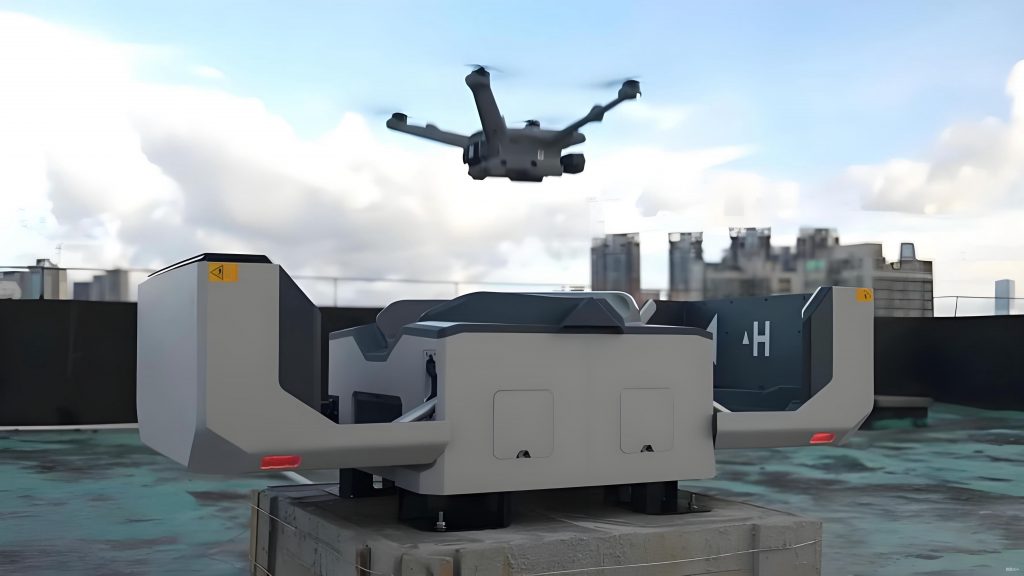
The visual prevalence of civilian drones in various sectors underscores the urgency for a mature regulatory framework. On the manufacturing front, the explosive growth of China’s drone industry, led by companies like DJI, has outpaced the establishment of formal national product standards. While military standards exist, comprehensive civil technical standards are still under development, a gap highlighted by the recent release of the “UAS Standard System Construction Guide (2017-2018)” by multiple ministries. Export controls are one clear area of regulation, where drones meeting specific performance thresholds (e.g., endurance ≥1 hour, operation beyond visual line of sight) are subject to licensing to prevent misuse, governed by joint announcements from the Ministry of Commerce and the General Administration of Customs.
For airworthiness management—ensuring the drone is in a condition for safe flight—the approach has been pragmatic yet incomplete. Early documents like the 2009 “Provisional Regulation on Civil UAV Management” (ALD2009022) established a temporary system. Instead of full type certification, authorities conducted single-aircraft inspections and issued a “Class I Special Flight Permit” based on defined operational limitations. This was a stopgap measure. The core challenge remains: the lack of a systematic, publicly released airworthiness regulation tailored to different categories of civilian drones. Drafts for a “Special Airworthiness Certificate” management procedure exist but have not been finalized, leaving a formal approval pathway ambiguous for larger or more complex drones.
A significant step in accountability was the 2017 “Real-Name Registration Regulation” (AP-45-AA-2017-03). It mandates that manufacturers and owners of civilian drones with a maximum take-off weight of 250 grams or more must register on a national online platform, obtaining a unique registration code to be marked on the drone. This system, while not a formal nationality registration under CCAR-45, serves a similar identification purpose and is a cornerstone for traceability. The registration requirement can be expressed as a condition for lawful operation:
$$ \text{Lawful Operation} \implies (MTOW \geq 250g \implies \text{Registered}(UAS)) $$
where $MTOW$ is the Maximum Take-Off Weight and $\text{Registered}(UAS)$ is a Boolean function indicating successful entry in the national database.
Operational rules are detailed in the “Light UAV Operation Regulation (Trial)” (AC-91-FS-2015-31). It specifies responsibilities for the remote pilot-in-command, safety requirements, and technical standards for flights. A pivotal concept it introduces is the “UAS Cloud,” a dynamic data system where operators are encouraged or required to upload real-time flight data (position, altitude, speed). Another is “electronic fencing,” a geofencing software/hardware system designed to prevent drones from intruding into restricted zones. The regulation effectively creates a layered operational regime based on risk.
The most complex pillar is arguably air traffic management, governed by the “Civil UAS Air Traffic Management Measure” (MD-TM-2016-004). Its fundamental principle is that civilian drones are to operate primarily in “segregated airspace,” physically or temporally separated from manned aviation. Operations in “non-segregated” or mixed airspace face high barriers. The measure outlines a process for applying for segregated airspace, requiring a safety assessment. However, it also provides a notable exemption: flights within visual line of sight (VLOS), under 120m altitude, under 120 km/h, during daytime, and under 7 kg MTOW, and outside airport protection zones, are exempt from airspace approval. This exemption is crucial for enabling widespread recreational and light commercial use.
The exemption criteria form a logical conjunction:
$$ \text{Exemption Granted} \iff (MTOW \leq 7\text{kg}) \land (\text{VLOS}) \land (h \leq 120\text{m}) \land (v \leq 120\text{km/h}) \land (\text{Daytime}) \land (\text{Outside Protected Zones}) $$
The safety assessment for non-exempt flights can be conceptually modeled as a function of multiple risk factors:
$$ \text{Risk Score} = f(\text{UAS Performance}, \text{Operator Competence}, \text{Environment Complexity}, \text{Populated Density}) $$
A proposed flight is approved only if $\text{Risk Score} \leq \text{Acceptable Threshold}$.
Pilot qualification management is clearly stratified. The CAAC’s “Civil UAS Driver Management Regulation” (AC-61-FS-2016-20R1) delegates much of the training and certification for pilots of lighter drones operating in segregated airspace to an industry association, the Aircraft Owners and Pilots Association of China (AOPA-China). This body issues licenses and accredits training organizations. Pilots for larger drones intended to operate in non-segregated airspace fall under direct CAAC management. The self-management zone for micro drones (sub-7kg) under very specific conditions completes this three-tiered structure.
| Regulatory Pillar | Current Status/Key Mechanism | Primary Governing Document(s) |
|---|---|---|
| Manufacturing & Export | Lack of national civil product standards; export controls on high-performance drones. | UAS Standard System Guide; MOFCOM & GACC Announcements. |
| Airworthiness | Interim single-inspection & special permit system; no finalized type certification process. | ALD2009022 (Provisional), internal drafts. |
| Registration | Real-name registration for drones ≥250g MTOW. | AP-45-AA-2017-03 (Real-Name Registration). |
| Operations | Rule-based for light UAVs; emphasis on electronic fencing and UAS Cloud data reporting. | AC-91-FS-2015-31 (Light UAV Operation). |
| Air Traffic Management | Presumption for segregated airspace; exemption for simple VLOS flights of micro drones. | MD-TM-2016-004 (UAS ATM). |
| Pilot Qualification | Three-tiered: CAAC direct, Association-managed (AOPA-China), and self-managed. | AC-61-FS-2016-20R1 (Pilot Management). |
| Frequency | Specific frequency bands allocated for command, control, and data links. | MIIT Notice on UAS Frequency. |
Despite this progress, my critical analysis identifies several profound shortcomings in the framework governing civilian drones. First, the legal status of nationality registration remains ambiguous. While real-name registration provides an identifier, it does not equate to the formal nationality and registration mark mandated by the Civil Aviation Law for “civil aircraft.” The legal force and international recognition of this system are unclear.
Second, the airworthiness management system is underdeveloped. The absence of a publicly available, categorical airworthiness regulation (e.g., distinguishing between standard, special, and restricted categories as done in other jurisdictions) creates uncertainty for manufacturers of drones beyond the simple micro and light categories. It stifles innovation in larger, more capable civilian drones for applications like cargo delivery or passenger transport.
Third, technical standards are nascent. The industry has flourished on de facto market standards, but the lack of unified national standards for design, production, quality, and testing poses long-term risks to safety, reliability, and global competitiveness. The 2017-2018 Standard System Guide is a welcome first step but needs rapid, concrete implementation.
Fourth, airspace access remains a critical bottleneck. The current model heavily favors segregation. Gaining access to non-segregated airspace for commercial operations like drone delivery is an arduous, case-by-case process. This significantly hampers the scalability of many promising commercial applications for civilian drones. The low-altitude airspace reform, often discussed, needs to explicitly and systematically integrate drones.
Fifth, specific regulations to enable commercial operations are stalled. The draft “Interim Measures for the Management of General Aviation Business Activities Using UAS” has been in consultation since 2016 but is not yet enacted. This leaves businesses in a legal gray zone, unsure of the precise requirements to offer commercial drone services legally.
Finally, and fundamentally, inter-ministerial coordination is lacking. The governance of civilian drones spans the CAAC (airworthiness, operations, pilots), the Ministry of Industry and Information Technology (MIIT, manufacturing, radio spectrum), the air force and state air traffic committee (airspace), local police (public security), and others. The absence of a high-level, coordinated mechanism leads to fragmented policies, potential conflicts, and regulatory gaps or overlaps. Local governments imposing flight restrictions sometimes compound this confusion.
To address these gaps and foster a healthy ecosystem for civilian drones, I propose a multi-faceted evolution of the regulatory framework. The recommendations are structured to tackle the identified shortcomings systematically.
1. Clarify Legal Identity and Registration: Integrate the real-name registration system into a formal, lightweight nationality registration process under the Civil Aviation Law. For micro and light civilian drones, a simplified electronic registration with a unique alphanumeric code (as currently done) could be legally recognized as the equivalent of a nationality mark. This provides a clear legal basis.
2. Develop a Risk-Based Airworthiness Framework: Move beyond the interim single-inspection model. Establish a public, three-tiered airworthiness pathway:
* Declaration of Compliance for micro/mini drones: Manufacturers declare compliance with published safety standards.
* Special Airworthiness Certificate (Restricted Category) for light/small drones used in specific operations (e.g., agriculture, surveying): Based on verified operational limitations and safety cases.
* Type Certificate + Standard Airworthiness Certificate for large drones and small drones designed for high-risk or passenger operations: Full, traditional certification.
This can be modeled as a decision tree based on intended use and performance parameters.
3. Accelerate Standardization: Prioritize and fast-track the development of key national standards out of the 2017-2018 Guide, focusing on product safety, quality control, communication protocols, and testing methods. Harmonization with international standards (e.g., from ICAO, ASTM, ISO) should be considered to facilitate global market access for Chinese civilian drones.
4. Liberalize Airspace with Technology-Enabled Management: Shift from a presumption of segregation to a rules-based integration model for lower-risk operations. Establish automated, digital “UAS Traffic Management” (UTM) corridors or zones, especially for commercial delivery routes. Leverage the UAS Cloud and electronic identification to enable dynamic deconfliction. The exemption criteria could be expanded cautiously, and a streamlined online process for accessing certain low-risk non-segregated airspaces should be developed. The access condition could be enhanced:
$$ \text{Automated Access} \iff \text{Exemption Criteria} \lor (\text{UTM Corridor} \land \text{Live Tracking} \land \text{Contingency Plan}) $$
5. Enact and Refine Commercial Operation Rules: Finalize and implement the stalled General Aviation Business Activities measures. These rules should be aligned with the proposed risk-based airworthiness and airspace access models, creating a clear, predictable licensing pathway for companies using civilian drones for services.
6. Establish a High-Level Coordination Mechanism: Create a permanent inter-ministerial committee on unmanned systems (or integrate it into the State Air Traffic Committee) with representatives from CAAC, MIIT, the military, public security, and other relevant bodies. This committee should be tasked with policy harmonization, resolving jurisdictional conflicts, and developing a unified national strategy for civilian drones.
| Current Shortcoming | Proposed Solution | Expected Outcome |
|---|---|---|
| Ambiguous Nationality Status | Legally recognize simplified electronic registration as formal nationality mark for small drones. | Clear legal identity, enhanced traceability and enforcement. |
| Underdeveloped Airworthiness | Implement a public, three-tiered (Declaration/Special/Type Certificate) risk-based system. | Stimulates innovation in larger drones; ensures safety proportionate to risk. |
| Lack of Technical Standards | Fast-track key national standards from the 2017-2018 Guide, promote international alignment. | Improved product safety/reliability, stronger global market position. |
| Restrictive Airspace Access | Develop rules-based integration, UTM corridors, and streamlined digital approval processes. | Unlocks scalable commercial applications (e.g., logistics, inspection). |
| Absence of Commercial Operation Rules | Finalize and enact the “General Aviation Business Activities Using UAS” measures. | Legal certainty for commercial drone service providers. |
| Fragmented Inter-Ministerial Governance | Establish a permanent high-level inter-ministerial coordination committee. | Coherent policy, reduced conflicts, strategic direction. |
In conclusion, China has made significant strides in building a functional regulatory framework for civilian drones, particularly for consumer and light commercial models. The establishment of real-name registration, basic operational rules, a pilot certification system, and initial airspace management principles provides a necessary foundation. However, my analysis shows that the framework remains incomplete and fragmented. Critical gaps in legal identity, systematic airworthiness, technical standards, accessible airspace, clear commercial rules, and inter-agency coordination pose challenges to the next phase of growth for the industry. The path forward lies in embracing a more sophisticated, risk-proportionate, and integrated regulatory model. By implementing the proposed evolutions—focusing on clarifying laws, building graduated certification pathways, enabling airspace integration through technology, and fostering ministerial cooperation—China can transform its regulatory patchwork into a coherent, safety-focused, and innovation-friendly ecosystem. This will not only ensure the safe and secure integration of millions of civilian drones into the national airspace but also solidify China’s position as a global leader in the development and application of this transformative technology. The regulatory journey for civilian drones is a continuous one, requiring adaptability and foresight to keep pace with relentless technological advancement.