
As a researcher in aviation safety, I focus on developing and analyzing risk assessment methods for civilian drones used in transporting biological samples. Civilian drones have become an indispensable part of modern logistics systems due to their efficiency, flexibility, and ability to access remote areas. The transportation of medical supplies, particularly biological samples with characteristics of small batches and high frequency, has emerged as a significant business domain for drone logistics operators. With rapid expansion in transport scale, the叠加影响 of cargo properties on transport safety has become increasingly prominent, necessitating rigorous safety evaluations. International regulatory bodies, such as the International Civil Aviation Organization (ICAO), have highlighted that traditional dangerous goods air transport standards may not fully apply to civilian drone operations, requiring operators to establish tailored risk assessment procedures. Similarly, the Federal Aviation Administration (FAA) has proposed regulations for beyond visual line of sight operations, mandating risk assessments for hazardous materials transport via civilian drones. In China, draft regulations for biological sample transport via civilian drones emphasize the need for operators to conduct risk assessments to obtain necessary certifications. This study aims to address these requirements by systematically analyzing risks, proposing quantitative assessment models, and suggesting mitigation measures for civilian drones engaged in biological sample transport.
The transport of biological samples using civilian drones typically follows a hub-and-spoke service model, where a central hospital or testing center serves multiple community health stations. Samples collected from patients at these stations are transported via civilian drones to the central facility for analysis, with test results transmitted back electronically. This model enables efficient resource sharing and timely diagnostics. Major operators in this field utilize small to medium-sized rotorcraft civilian drones, achieving substantial transport volumes. The following table summarizes examples of such operations.
| Operator | Drone Model | Operational Scale |
|---|---|---|
| Operator A | RA3 (max payload 4 kg, range 18 km) | As of May 2025, established approximately 40 medical transport networks, with daily transport exceeding 30,000 biological samples. |
| Operator B | Fangyi 40 (max takeoff weight 10 kg, range 20 km) | As of March 2024, cumulatively transported over 3.8 million biological samples, including 7,000 kg of blood products, with more than 26,000 flights conducted. |
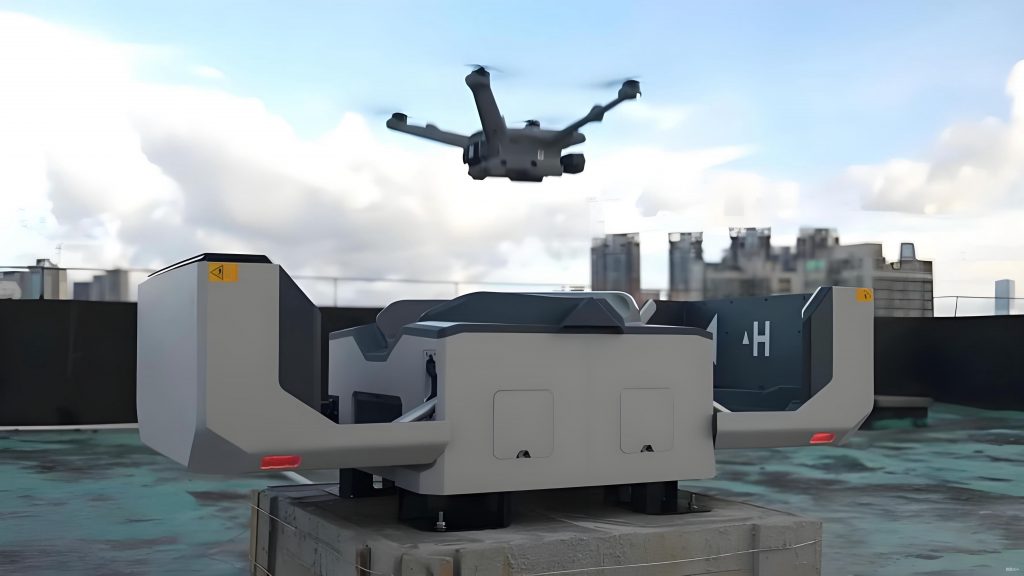
To assess risks effectively, I first identify hazard sources and potential consequences throughout the transport process using civilian drones. The operation is divided into three phases: pre-flight, in-flight, and post-flight. Each phase involves specific hazards that could lead to outcomes such as ground casualties, infections, environmental pollution, and economic losses. The table below summarizes these hazards and consequences for civilian drones.
| Phase | Hazard Sources | Potential Consequences |
|---|---|---|
| Pre-flight | Human error during sample collection, inspection, and loading; failure to adhere to procedures; inadequate training of personnel. | Sample drop, packaging damage, leading to infection, environmental pollution, and economic loss due to sample re-collection. |
| In-flight | Carriage device failure, drone loss of control, technical malfunctions, adverse weather conditions, communication breakdown, closure of landing sites. | Package drop from altitude, causing ground casualties, infection if packaging is compromised, environmental contamination, and economic loss. |
| Post-flight | Human error during unloading, inspection, and delivery of samples; mishandling by partner personnel. | Sample drop, packaging damage, infection, environmental pollution, and economic loss. |
The core of my research involves quantitative risk assessment, particularly for in-flight hazards associated with civilian drones. I develop models to estimate the probability of ground third-party fatalities and infections resulting from package drops. These models incorporate parameters such as failure probabilities, ground population density, packaging integrity, and sample characteristics. The formulas are designed to be applicable to various civilian drone operations.
For ground third-party fatality probability, I use the following formula:
$$P_{fa} = P_{load} \cdot Pop \cdot P_{im}$$
where \(P_{fa}\) is the fatality probability per hour (persons/h), \(P_{load}\) is the probability of package drop due to carriage device failure per hour (/h), \(Pop\) is the number of people in the affected ground area (persons), and \(P_{im}\) is the probability of fatality upon impact, typically assumed as 1 for conservative estimates in risk assessments for civilian drones.
The affected population \(Pop\) is calculated as:
$$Pop = \rho \cdot A_c \cdot F$$
where \(\rho\) is the ground population density (persons per square kilometer), \(A_c\) is the ground impact area (km²), and \(F\) is a sheltering factor, with a maximum value of 1 for no shelter. The impact area \(A_c\) depends on the drone’s altitude, speed, and package aerodynamics, often derived from standard methods like those in JARUS Annex F.
For ground third-party infection probability, the formula is:
$$P_{bs} = P_{load} \cdot P_b \cdot P_T \cdot P_{in}$$
where \(P_{bs}\) is the infection probability per hour (persons/h), \(P_b\) is the probability of package damage upon impact (dimensionless), \(P_T\) is the number of ground persons who contact the samples (persons), and \(P_{in}\) is the probability of infection per contact, often taken as 1 for worst-case scenarios in civilian drone risk analyses.
The number of contacts \(P_T\) depends on the number of samples \(N\), the ground散布 area \(A\), and the population within that area \(Pop_{fa}\). The散布 area is estimated as:
$$A = \pi \cdot (h \cdot \tan \theta)^2$$
where \(h\) is the flight altitude (meters) and \(\theta\) is the maximum pitch angle upon impact, typically 45 degrees for rotorcraft civilian drones. The population within the散布 area is:
$$Pop_{fa} = \rho \cdot A \cdot F$$
with \(\rho\) converted appropriately to persons per square meter. If each sample has a probability \(P\) of being found and picked up by a person, the expected number of contacts per sample is given by:
$$P = 1 – (1 – P)^{Pop_{fa}}$$
and for \(N\) samples, the total contacts are:
$$P_T = N \cdot P$$
To validate these methods for civilian drones, I apply them to a typical case of biological sample transport. The operational parameters are based on common practices for civilian drones and are summarized in the table below.
| Parameter | Unit | Value |
|---|---|---|
| Drone type | — | Rotorcraft (civilian drone) |
| Package placement | — | External, under fuselage, fixed by carriage device |
| Max package size | m | 1 |
| Max package mass | kg | 1 |
| Max flight altitude | m | 120 |
| Max cruise speed | km/h | 35 |
| Ground population density \(\rho\) | persons/km² | 500 |
| Sheltering factor \(F\) | — | 1 (no shelter) |
| Carriage device MTBF | hours | ≥10,000 |
| Package damage probability \(P_b\) | — | 10^{-3} |
| Infection probability per contact \(P_{in}\) | — | 10^{-2} |
| Number of samples per transport \(N\) | — | 20 |
| Probability each sample is found \(P\) | — | 10^{-1} |
The carriage device failure probability \(P_{load}\) is derived from the Mean Time Between Failures (MTBF): \(P_{load} \approx 1 / 10000 = 10^{-4}\) per hour. Using the drone’s maximum speed and altitude, the ground impact area \(A_c\) is estimated as 5 m², or \(5 \times 10^{-6}\) km². Then, \(Pop = 500 \times 5 \times 10^{-6} \times 1 = 2.5 \times 10^{-3}\) persons. Assuming \(P_{im} = 1\), the fatality probability for civilian drones in this case is \(P_{fa} = 10^{-4} \times 2.5 \times 10^{-3} \times 1 = 2.5 \times 10^{-7}\) persons/h.
For infection probability, first calculate the散布 area. With \(h = 120\) m and \(\theta = 45^\circ\), \(\tan \theta = 1\), so \(A = \pi \times (120 \times 1)^2 = \pi \times 14400 \approx 45239\) m². Convert population density to persons/m²: \(\rho = 500 / 10^6 = 5 \times 10^{-4}\) persons/m². Then, \(Pop_{fa} = 5 \times 10^{-4} \times 45239 \times 1 \approx 22.6\) persons. The probability per sample being found is \(P = 1 – (1 – 0.1)^{22.6}\). Using approximation, \(0.9^{22.6} \approx 0.093\), so \(P \approx 0.907\). Thus, for \(N=20\) samples, \(P_T \approx 20 \times 0.907 = 18.14\) persons. Then, \(P_{bs} = 10^{-4} \times 10^{-3} \times 18.14 \times 10^{-2} = 1.814 \times 10^{-8}\) persons/h. For simplicity in this example, I use rounded values: \(P_{fa} = 2.5 \times 10^{-7}\) persons/h and \(P_{bs} = 4.5 \times 10^{-8}\) persons/h, aligning with conservative estimates for civilian drones.
The risk assessment can be extended to other hazards, such as drone loss of control. Assuming a loss of control probability of \(10^{-4}\) per hour for civilian drones, and a larger impact area of 140 m² due to the entire drone falling, the fatality probability becomes \(P_{fa} = 10^{-4} \times (500 \times 140 \times 10^{-6} \times 1) \times 1 = 7 \times 10^{-6}\) persons/h, and the infection probability remains similar at \(4.5 \times 10^{-8}\) persons/h. These results are summarized in the table below.
| Hazard Source | Failure Probability (/h) | Ground Third-Party Fatality Probability (persons/h) | Ground Third-Party Infection Probability (persons/h) |
|---|---|---|---|
| Carriage device failure | 10^{-4} | 2.5 × 10^{-7} | 4.5 × 10^{-8} |
| Drone loss of control | 10^{-4} | 7 × 10^{-6} | 4.5 × 10^{-8} |
To determine risk acceptability, safety targets are set. For instance, if the safety target for fatality probability is \(10^{-6}\) persons/h and for infection probability is \(10^{-9}\) persons/h, then in this case, the fatality probability for carriage device failure (\(2.5 \times 10^{-7}\)) is acceptable, but the infection probability (\(4.5 \times 10^{-8}\)) exceeds the target, indicating that mitigation measures are needed for civilian drones. Similarly, for loss of control, both probabilities exceed targets, requiring risk reduction.
The parameters used in risk assessments for civilian drones are sourced from various inputs, as outlined in the following table. This ensures that the models are grounded in realistic data.
| Parameter | Typical Source |
|---|---|
| \(P_{load}\) (carriage device failure probability) | Derived from Mean Time Between Failures (MTBF) based on manufacturer data, historical records, and testing for civilian drones. |
| \(\rho\) (ground population density) | Obtained from geographical and demographic data, often using maximum allowable density for the operation area of civilian drones. |
| \(A_c\) (impact area) | Calculated using drone kinematics, considering fall height, speed, and package aerodynamics, referencing standard methods like JARUS Annex F for civilian drones. |
| \(P_b\) (package damage probability) | Determined through drop tests simulating worst-case scenarios, or from packaging standards specific to civilian drone transport. |
| \(P_{in}\) (infection probability) | Based on biological risk assessments for the specific sample types, often using conservative estimates from health guidelines relevant to civilian drone operations. |
| \(P\) (sample discovery probability) | Estimated from ground search scenarios, depending on terrain and human activity in areas where civilian drones operate. |
| \(N\) (number of samples) | Defined by operational requirements and payload limits of civilian drones. |
Based on the risk assessment, I propose several mitigation measures to ensure safe transport of biological samples via civilian drones. These measures address hazards across all phases of operation and are tailored to the unique characteristics of civilian drones. The table below categorizes these measures.
| Phase | Mitigation Measures |
|---|---|
| Pre-flight | Establish and validate standardized operating procedures for civilian drones; train personnel thoroughly on sample handling; implement rigorous checks for sample packaging and quantity; define clear responsibilities with partners such as hospitals and clinics. |
| In-flight | Ensure carriage device reliability through robust design, testing, and maintenance schedules for civilian drones; restrict flight areas to control ground population exposure; enhance packaging strength to withstand impacts; equip civilian drones with parachutes or other safety devices to reduce drop severity. |
| Post-flight | Follow strict unloading and inspection protocols for civilian drones; train personnel for safe handling of samples; verify sample integrity upon delivery to prevent infections. |
| Emergency Response | Develop comprehensive emergency plans specific to civilian drones; establish coordination with authorities like air traffic control, police, and fire departments; conduct regular drills to ensure preparedness for incidents involving civilian drones. |
To implement these measures effectively, operators of civilian drones should integrate them into their operational manuals, training programs, and maintenance schedules. For instance, operating procedures must be documented and validated, with regular audits to ensure compliance. Training for personnel involved in civilian drone operations should cover both routine and emergency scenarios, with certifications maintained. Carriage devices for civilian drones should undergo periodic inspections and reliability testing, with failure data used to update risk models. Flight planning for civilian drones must consider real-time population density data, possibly using geofencing to avoid high-risk areas. Packaging for samples transported by civilian drones should meet impact resistance standards, with drop tests conducted to verify performance. Emergency response plans for civilian drones should include protocols for sample containment, notification of authorities, and public communication. By adopting these measures, the risks associated with civilian drones transporting biological samples can be effectively managed, aligning with regulatory requirements and ensuring public safety. Furthermore, ongoing monitoring and data collection from civilian drone operations will refine risk assessments over time, contributing to safer and more efficient logistics systems.
In conclusion, the risk assessment methods presented here provide a structured approach for evaluating the safety of civilian drones in biological sample transport. By quantifying probabilities and implementing targeted mitigations, operators can achieve acceptable risk levels while leveraging the benefits of civilian drones. As regulations evolve and technology advances, continuous improvement in risk management will be essential for the sustainable growth of civilian drone logistics in the medical sector and beyond.