
As an expert deeply involved in the aviation regulatory field, I have witnessed the remarkable expansion of civilian drones from personal recreational use to critical sectors such as agriculture, power line inspection, law enforcement, logistics, surveying, firefighting, public safety, and healthcare. The emergence of electric vertical take-off and landing unmanned aircraft (eVTOL) for urban air mobility has further catapulted civilian drones into the spotlight of international aviation technology, with over 200 companies globally investing in product development. Airworthiness certification through rigorous审定 processes is an internationally recognized practice for civil aircraft, and substantial work has been undertaken in Europe, the United States, and China to certify civilian drones. In recent years, significant progress has been made in China regarding the construction of airworthiness management systems and type certification practices for civilian drones, fostering a healthy, orderly, and open regulatory environment for industrial growth.
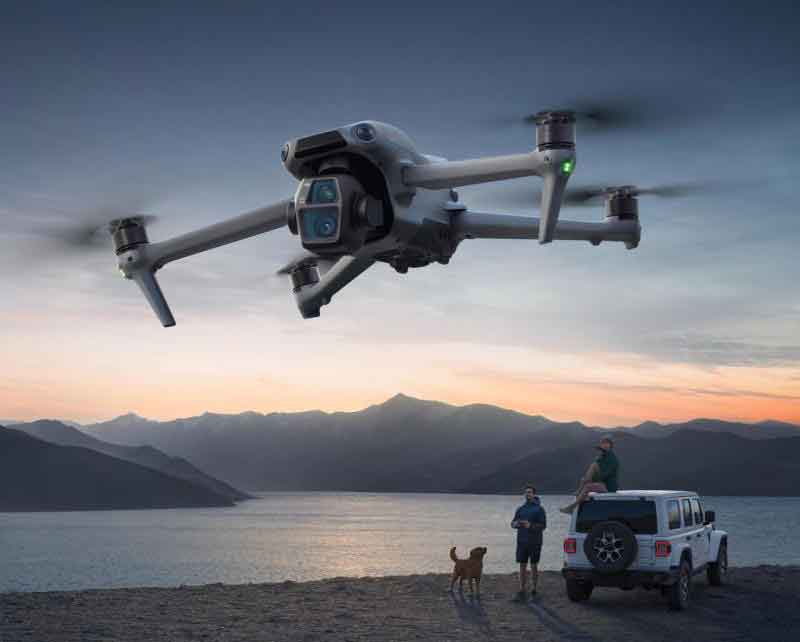
The airworthiness certification requirements for civilian drones are evolving to address their unique characteristics. In April 2023, China’s State Council executive meeting reviewed and passed the “Interim Regulations on the Flight Management of Unmanned Aircraft (Draft),” which serves as the top-level administrative regulation for managing and standardizing civilian drones. It explicitly requires that medium and large civilian drones with a maximum take-off weight exceeding 25 kilograms must obtain relevant airworthiness approvals. This underscores the growing regulatory focus on ensuring the safety of civilian drones.
In recent years, China has made important strides in establishing airworthiness management systems and developing airworthiness standards for civilian drones. On December 19, 2022, the Aircraft Airworthiness Certification Department of the Civil Aviation Administration of China (CAAC) issued the “Management Procedures for the Airworthiness Certification of Civil Unmanned Aircraft Systems” (AP-21-AA-2022-71). This document clarifies the requirements for design approval, production approval, and airworthiness approval for civilian drones, categorizing certification types into Normal, Restricted, and Transport classes, and specifying the applicable management methods and procedures for each. These procedures establish a risk-based design approval principle, where the CAAC determines the审查方式, safety objectives, and airworthiness standards commensurate with the risk, considering factors such as product characteristics, operational scenarios, novelty, and complexity. The core of airworthiness certification for civilian drones focuses on product审查 for type certification and system审查 for the design and production units. Product审查 involves defining the type certification basis (i.e., applicable certification standards), where applicants demonstrate compliance through analysis, calculation, testing, and flight tests, and the CAAC verifies conformity through engineering data review, witness testing, certification flight tests, and manufacturing inspections. System审查 ensures that applicants establish and maintain an effective design assurance system with the necessary organizational structure, responsibilities, procedures, and resources to effectively control and supervise the design and design changes of civilian drones.
To quantify the risk assessment underlying these principles, we can employ a foundational formula for risk evaluation in civilian drones certification:
$$ R = P \times S $$
where \( R \) represents the total risk associated with a civilian drone operation, \( P \) denotes the probability of a hazardous event occurring, and \( S \) signifies the severity of that event’s consequences. This risk matrix approach guides the分级分类管理 for civilian drones, as discussed later.
Regarding specific airworthiness standards, the CAAC has issued technical standards such as the “Airworthiness Standards for High-Risk Cargo Fixed-Wing Unmanned Aircraft Systems (Trial)” (CAAC Airworthiness Issuance [2020] No. 1) and the “Airworthiness Standards for Medium- and High-Risk Unmanned Helicopter Systems (Trial)” (CAAC Airworthiness Issuance [2020] No. 7). These standards are explicitly stated as acceptable airworthiness certification criteria for civilian drones. However, due to the wide spectrum and diverse configurations of civilian drones, formulating unified technical standards as a certification basis is challenging. Currently, the approach often follows a “case-by-case” principle, issuing专用条件 to establish the type certification basis. For instance, the CAAC issued the “Special Conditions for the EH216-S Unmanned Aircraft System.”
The airworthiness certification practices for civilian drones have progressed alongside policy exploration. The CAAC has already completed type certification for models like the Hongyan (HY100) large unmanned aircraft system and the TP16/20/30/10 series medium multi-rotor plant protection无人机 systems, granting them Type Certificates (TC). Moreover, the CAAC has accepted type certification applications for over ten civilian drone models,部分 of which are summarized in the table below. This demonstrates the active engagement in certifying civilian drones across various applications.
| Model Name | Type | Applicant |
|---|---|---|
| EH216-S | Manned Unmanned Aircraft | Intelligent Equipment (Guangzhou) Co., Ltd. |
| TP500 | Large Fixed-Wing Unmanned Transport | Aircraft Design Institute of AVIC |
| FH-98 | Large Fixed-Wing Unmanned Transport | Aerospace Times Feipeng Co., Ltd. |
| V2000CG | Large Vertical Take-Off and Landing Fixed-Wing Drone | Shanghai Fengfei Aviation Technology Co., Ltd. |
| WL-2L | Large Fixed-Wing Drone | AVIC (Chengdu) Unmanned Aircraft Systems Co., Ltd. |
The future trends in airworthiness certification for civilian drones are shaped by the need to balance safety with innovation. Over the next few years, emphasis will be placed on Restricted-class civilian drones and manned unmanned aircraft systems, guided by administrative normative documents, to steadily and coordinately advance certification projects and scientifically construct the airworthiness standard system framework for civilian drones, creating more open conditions for technological and industrial development.
First, risk-based分级分类管理 is a fundamental principle in certifying civilian drones. The CAAC will determine differentiated classification and grading airworthiness certification policies based on the category and operational risk level of civilian drones. For example, for agricultural medium-sized, low-operational-risk civilian drones, product审查 requirements will be significantly relaxed. In contrast, for manned civilian drones, strict airworthiness certification will be conducted基本上 following manned aircraft procedures with safety requirements不低于 those for同等载人飞机. This can be expressed through a classification function:
$$ C = f(R, O, A) $$
where \( C \) represents the certification rigor level for civilian drones, \( R \) is the risk score derived from \( R = P \times S \), \( O \) denotes the operational complexity, and \( A \) accounts for the novelty of technology. Higher values of \( C \) necessitate more stringent审查 for civilian drones.
Second, there is a shift from product management to system management. Airworthiness management is transitioning from focusing on products to emphasizing systems, encouraging industry to develop airworthiness capabilities through self-system construction, moving from “required to be airworthy” to “wanting to be airworthy.” For civilian drones, this means “highlighting systems, strengthening responsibility,” using system requirements as a lever to enhance the airworthiness certification capabilities of design and manufacturing units and reinforcing the primary responsibility for airworthiness. In practical type certification for civilian drones,审查 groups will贯彻 this shift, moving from the “盯人、盯产品” approach in manned aircraft to “盯组织、盯体系,” stressing the autonomous certification capabilities of drone enterprises. System capability will become a key element for civilian drones to obtain Type Certificates in the future. We can model this system effectiveness \( E_s \) as:
$$ E_s = \sum_{i=1}^{n} w_i \cdot C_i $$
where \( E_s \) is the overall system effectiveness score for a civilian drone manufacturer, \( w_i \) are weights assigned to various system components (e.g., design assurance, quality control, safety management), and \( C_i \) are compliance scores for each component. A threshold \( E_s \geq T \) may be required for certification eligibility of civilian drones.
Third, encouraging the transformation of企业技术创新 into standard requirements. Civilian drones serve as important carriers for aviation new technologies and methods, playing a crucial role in technological innovation. To adapt to new业态, airworthiness management is shifting from traditional regulation-setting primarily by the authority to joint research by industry and the authority to propose new technical requirements. In current certification projects for civilian drones, applicants actively collaborate with the CAAC to develop project-specific专用条件 as airworthiness certification standards. By solidifying technical经验 through project实践 into airworthiness standards, industry deeply participates in standard-setting, providing more flexible conditions for technological innovation and safeguarding the development of advanced technologies in the field of civilian drones. This iterative process can be represented as:
$$ S_{new} = S_{base} + \Delta T_{innovation} $$
where \( S_{new} \) is the new airworthiness standard for civilian drones, \( S_{base} \) is the existing regulatory baseline, and \( \Delta T_{innovation} \) represents the incremental technical requirements derived from innovations in civilian drones, validated through certification projects.
In conclusion, the airworthiness certification landscape for civilian drones is rapidly evolving to accommodate their diverse applications and technological advancements. The integration of risk-based approaches, system-oriented management, and collaborative standard development will be pivotal in ensuring the safety and reliability of civilian drones while fostering innovation. As civilian drones continue to permeate various sectors, robust certification frameworks will be essential to maintain public trust and enable sustainable growth. The ongoing efforts in China and globally reflect a commitment to harmonizing safety with the dynamic potential of civilian drones, paving the way for their expanded integration into national airspace systems. Future work will likely involve refining定量 models for risk assessment, enhancing international cooperation on standards for civilian drones, and addressing emerging challenges such as cybersecurity and autonomous operations for civilian drones.
To further illustrate the certification requirements, consider the following table summarizing key aspects of airworthiness certification for civilian drones based on the discussed principles:
| Aspect | Description | Relevant Formula/Indicator |
|---|---|---|
| Risk Assessment | Evaluation of probability and severity of failures for civilian drones. | \( R = P \times S \) |
| Certification Classification | Categorization into Normal, Restricted, Transport classes for civilian drones. | Based on weight, operation, and risk thresholds. |
| Product Compliance | Demonstration of adherence to standards via tests and analysis for civilian drones. | \( Compliance Index = \frac{Evidentiary Items Satisfied}{Total Items} \) |
| System Effectiveness | Measure of design assurance system capability for civilian drone manufacturers. | \( E_s = \sum w_i C_i \) |
| Innovation Integration | Incorporation of new technologies into standards for civilian drones. | \( S_{new} = S_{base} + \Delta T_{innovation} \) |
The proliferation of civilian drones necessitates continuous adaptation of regulatory practices. By embracing these trends, stakeholders can ensure that civilian drones operate safely and efficiently, contributing to economic and social development. The journey of certifying civilian drones is a testament to the collaborative spirit between regulators and industry, aimed at unlocking the full potential of these transformative technologies while prioritizing public safety. As we move forward, the lessons learned from certifying civilian drones will inform broader aviation safety paradigms, making skies safer for all.