
My analysis of contemporary military drone propulsion systems reveals a landscape defined by adaptation and pragmatism. As an observer of aerospace engineering and sustainment logistics, I note that the engines powering these unmanned platforms are seldom cutting-edge marvels designed from scratch. Instead, they are predominantly mature, repurposed powerplants selected for their proven reliability, availability, and cost-effectiveness. This choice fundamentally shapes their maintenance and support characteristics, setting them apart from the engines of crewed, high-performance combat aircraft. The operational demands placed on military drone systems—ranging from persistent Intelligence, Surveillance, and Reconnaissance (ISR) to tactical strikes—create a unique set of logistical requirements and future vectors for their propulsion support.
Examination of Representative Military Drone Propulsion Systems
The diversity of military drone missions is mirrored in the variety of their engines. To understand maintenance trends, one must first understand the engines themselves. Below is a detailed comparison of several key propulsion systems currently in widespread service.
| Engine Model | Type | Primary Drone Application | Rated Power / Thrust | Key Design Feature (e.g., Compression Ratio) | Overhaul Interval (Hours) | Dry Mass (kg) | Support Philosophy |
|---|---|---|---|---|---|---|---|
| Rotax 914F | Turbocharged Piston | MQ-1B Predator, Heron | 73.5 kW | Compression Ratio: 9.0 | 1,200 | 64.0 | High consumption, line-replaceable unit (LRU). |
| TPE331-10GD | Turboprop | MQ-9 Reaper | 671.1 kW | Overall Pressure Ratio: 10.8 | 7,000 | 175 | Modular maintenance, extended on-wing life. |
| AR741 / UEL AR-741 | Rotary Piston (Wankel) | RQ-7B Shadow | 28.3 kW | Simple air-cooled design. | 250 | 10.7 | Ultra-lightweight, treated as a consumable. |
| AE3007H / F137-AD-100 | Turbofan | RQ-4 Global Hawk | ~31 kN / ~36 kN | Overall Pressure Ratio: ~21 / ~23 | On-Condition* | ~746 / ~719 | On-condition monitoring, sophisticated HM. |
| Rolls-Royce Model 250-C20W | Turboshaft | MQ-8B Fire Scout | 313 kW | Pressure Ratio: 7.1 | 3,000 | 73.9 | Common helicopter engine, established support chain. |
*Note: Modern turbofans like the AE3007 series typically employ “on-condition” maintenance rather than fixed overhaul intervals, driven by Health Monitoring (HM) data.
These engines share several defining characteristics that directly inform their support footprint. First, they are all derivatives of highly successful commercial or general aviation engines. The Rotax 914 is ubiquitous in light sport aircraft; the Honeywell TPE331 series powers regional turboprops; the AE3007 is the heart of the Embraer ERJ family; and the Model 250 is arguably the most successful turboshaft in history. This heritage provides a massive advantage: an existing, global support infrastructure, extensive technical documentation, and a deep pool of qualified maintenance personnel. For a military drone program, leveraging this ecosystem drastically reduces non-recurring engineering costs and logistical tail risks.
Second, their architectures are relatively simple compared to modern fighter engines. They forego complex afterburners, feature fewer compressor and turbine stages, and often utilize older-generation control systems (mechanical-hydraulic or early-generation FADEC). For instance, a basic performance calculation for thrust ($F$) in a non-afterburning turbofan like the AE3007H can be simplified compared to a combat engine:
$$ F = \dot{m}_a \left[ (1 + f) V_{je} – V_0 \right] + \dot{m}_c (V_{jc} – V_0) $$
Where $\dot{m}_a$ is core air mass flow, $\dot{m}_c$ is bypass air mass flow, $f$ is the fuel-air ratio, $V_{je}$ and $V_{jc}$ are jet exhaust velocities, and $V_0$ is flight velocity. The absence of an afterburner term simplifies diagnostics and repair. Furthermore, the application of advanced materials (e.g., ceramic matrix composites, single-crystal blades) is minimal, prioritizing cost and durability over peak thermodynamic efficiency. This simplicity translates directly into maintainability.
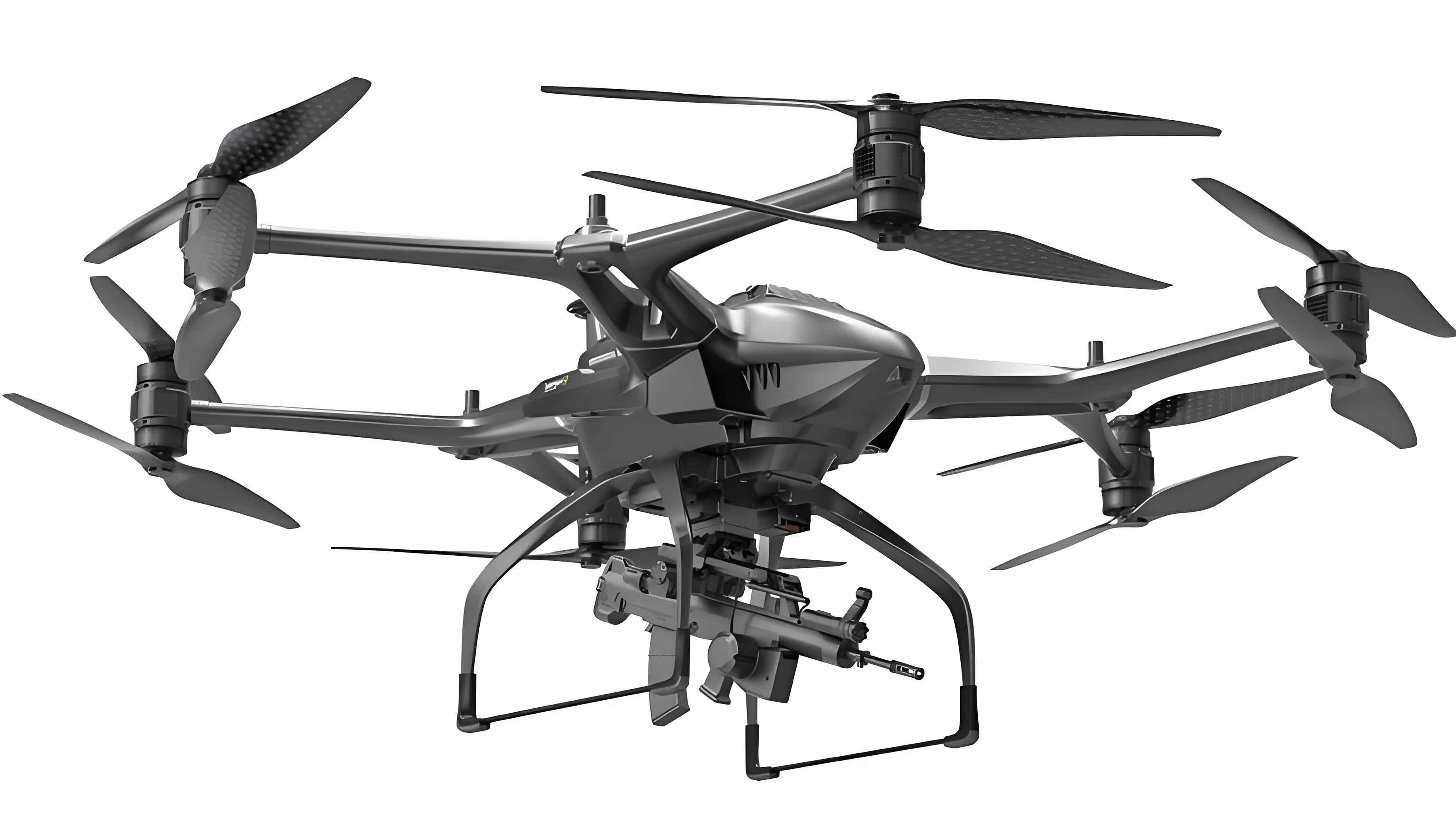
Characteristics of Military Drone Engine Maintenance and Support
The support model for military drone engines is evolving, yet it remains anchored in principles distinct from manned combat aviation. A primary feature is the prevalent use of a two-level maintenance construct: Organizational/Field Level and Depot/Base Level. At the field level, maintainers—often a mix of uniformed personnel and contractor field service representatives (FSRs)—perform inspections, basic troubleshooting, and engine changes. The goal is to treat the engine as a Line-Replaceable Unit (LRU) to maximize drone availability. For example, swapping a complete Rotax 914F on an MQ-1B is a relatively straightforward operation compared to a deep repair.
The depot level handles major overhauls, complex repairs, and component refurbishment. Due to the commercial ancestry of these engines, this work is frequently performed by the Original Equipment Manufacturer (OEM) or their licensed network, even for military customers. This outsourcing leverages existing expertise and tooling. A critical trend, however, is the military’s drive to increase organic capacity at the field level. By deploying advanced diagnostic tools—portable engine health monitoring systems, borescopes with AI-assisted crack detection, and integrated test equipment—services aim to perform more repairs forward, reducing turnaround time and dependency on contractors. The target for some US Army units is to shift the workload balance from 80/20 (military/contractor) to 90/10.
Another defining characteristic is that combat damage repair (CDR) is not a primary focus. The vulnerability of most military drone platforms is high. If a drone is engaged by modern air defense or fighter aircraft, the likelihood of catastrophic loss is significant, rendering the engine non-recoverable. Furthermore, the relatively low unit cost of many drone engines (compared to an F135 for an F-35) makes extensive battlefield repair economically and logistically less attractive than simple replacement. The support philosophy is therefore optimized for peacetime operational readiness and surge sustainment, not for recovering from hostile fire in a contested environment. This influences spares stocking policies, which prioritize complete engines and major modules over intricate sub-component parts.
The cost dynamics of sustaining these engines can be modeled. The total support cost $C_{total}$ over a drone’s service life is a function of acquisition, maintenance, and operational costs:
$$ C_{total} = N \cdot (C_{acq} + \sum_{i=1}^{M} C_{OH_i} + \sum_{j=1}^{L} C_{LRU_j}) + T_{op} \cdot C_{f/h} $$
Where $N$ is the fleet size, $C_{acq}$ is engine acquisition cost, $C_{OH_i}$ is the cost of the $i$-th overhaul, $M$ is the number of overhauls, $C_{LRU_j}$ is the cost of the $j$-th LRU replacement, $L$ is the number of LRU replacements, $T_{op}$ is total fleet flight hours, and $C_{f/h}$ is cost per flight hour (fuel, oil, etc.). For a military drone fleet, minimizing $\sum C_{OH}$ and $\sum C_{LRU}$ through reliable, simple engines and maximizing $T_{op}$ through high availability is the key to affordable sustainment.
| Engine Type | Typical Maintenance Triggers | Primary Cost Drivers | Availability Risk Factors |
|---|---|---|---|
| Piston (Rotax 914F) | Fixed calendar/hours, component failures (plugs, turbo). | High consumption rate, frequent LRU swaps, fuel type (Avgas/MOGAS). | Short overhaul interval, supply chain for consumables. |
| Turboprop (TPE331) | Hot section inspections (HSI), performance trending. | Module overhaul costs, propeller gearbox maintenance. | Depot induction turnaround time. |
| Turbofan (AE3007H) | On-condition via EHM, oil debris monitoring. | High-value module repair (e.g., Blisk refurbishment), sophisticated test equipment. | Reliance on OEM data for on-condition decisions. |
| Turboshaft (M250) | Combined fixed interval & condition monitoring. | Dynamic component life (gears, shafts), maintenance labor intensity. | Shared platform support chain (competing with other helicopter demands). |
Future Trends in Military Drone Engine Support
Looking ahead, several clear trends will define the next generation of military drone engine support. The most significant is the ascendancy of the turbofan as the sustainment focus for high-end drones. Next-generation Medium-Altitude Long-Endurance (MALE) and High-Altitude Long-Endurance (HALE) drones demand higher speed, greater payload, better fuel efficiency, and lower acoustic/thermal signatures. The answer is invariably a small, non-afterburning turbofan. Examples include the PW545B for the proposed MQ-9C, the Adour MK951 for the “Neuron,” and derivatives of the Safran Ardiden for various European projects. Supporting these engines requires a shift in mindset: from interval-based maintenance to prognostics and health management (PHM). Data analytics from thousands of parameters will dictate maintenance actions, requiring new skills in data science and predictive analytics within maintenance teams. The support equation evolves to include a data trustworthiness factor $\delta$ (0 to 1):
$$ R_{predicted}(t) = \delta \cdot \int_{t}^{\infty} f_{PHM}(\tau) d\tau $$
Where $R_{predicted}$ is the predicted reliability function based on PHM data $f_{PHM}$, and $\delta$ accounts for model accuracy and data quality. High $\delta$ enables confident on-condition maintenance, maximizing engine utilization.
Secondly, the field will mature from “many types, low quantity” to “fewer types, larger fleets.” As doctrines crystallize, militaries are consolidating their drone portfolios into scalable families. The US Army’s concept of a layered fleet (Small, Tactical, and Strategic) is a prime example. This consolidation means sustainment resources can be concentrated. Larger fleets of a single engine type justify investments in specialized training, dedicated repair lines, and optimized spares inventories, driving down the cost per engine hour $C_{f/h}$ in the earlier equation through economies of scale.
Finally, increased hybridization and electrification will introduce entirely new support paradigms for smaller tactical and reconnaissance drones. Hybrid-electric systems, using a small turbine or piston engine as a generator to power electric fans or propellers, simplify drive trains but add complexity in power management and battery cooling. Fully electric drones eliminate liquid fuels and oil systems but introduce high-voltage systems and complex battery health management. Support transforms from mechanical repair to system diagnostics, battery cycle management, and power electronics maintenance. The logistics footprint changes dramatically, trading fuel trucks for charging stations and battery conditioning units.
In conclusion, the propulsion heart of the modern military drone is a study in practical engineering. Its support is characterized by leveraging commercial best practices, a focus on availability over repairability under fire, and a maintenance hierarchy that is increasingly data-driven. As the capabilities of the military drone expand, so too will the sophistication of its engine support, moving inexorably towards predictive, condition-based logistics centered on efficient, high-bypass turbofans and, on the lower tier, towards managing the unique demands of hybrid and electric propulsion systems. The successful integration and sustainment of these future powerplants will be as critical to mission success as their design.