
In modern naval warfare, radar reconnaissance serves as a critical component of surface ships’ electronic warfare systems, providing early warning and threat detection capabilities. However, the effectiveness of shipborne radar reconnaissance equipment can be limited by factors such as low probability intercept (LPI) radar technologies, geographical obstructions, Earth’s curvature, and complex electromagnetic environments. To address these challenges, the integration of military drones, or unmanned aerial vehicles (UAVs), has emerged as a transformative solution. By leveraging the mobility, altitude, and payload flexibility of military drones, surface ships can enhance their radar reconnaissance capabilities, achieving superior situational awareness and operational superiority. This article explores the collaborative use of military drones with surface ships for radar reconnaissance, analyzing operational strategies, key technologies, and simulation-based validations. The focus is on how military drones can compensate for the shortcomings of single-platform systems, enabling more effective detection and identification of radar emissions in diverse combat scenarios.
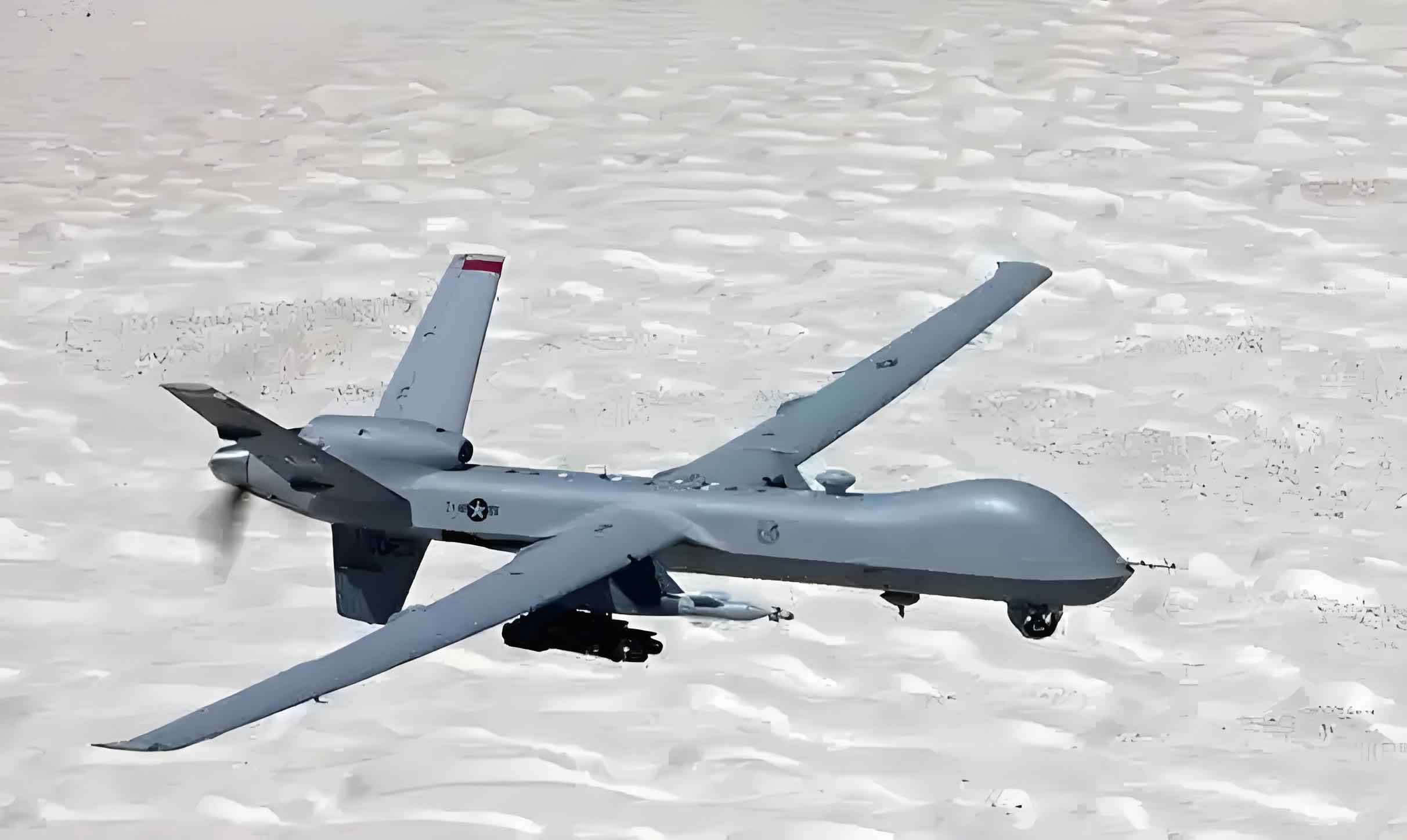
The synergy between surface ships and military drones hinges on the drones’ ability to act as forward-deployed sensors, extending the ship’s reconnaissance range and overcoming line-of-sight limitations. Military drones equipped with radar reconnaissance payloads can operate at varying altitudes and distances, providing complementary data that, when fused with ship-based systems, yields a more comprehensive battlespace picture. This collaborative approach not only improves detection probabilities but also enhances resilience against electronic countermeasures and stealth technologies. As military drone technologies advance, their role in naval operations is expanding, making it imperative to develop robust frameworks for integration. In this context, I will delve into the operational capabilities of shipborne radar reconnaissance, propose specific strategies for employing military drones, discuss enabling technologies, and present simulation results that underscore the efficacy of such collaborations.
Analysis of Surface Ship Radar Reconnaissance Operational Capabilities
The performance of shipborne radar reconnaissance systems is influenced by multiple factors that can degrade their effectiveness in real-world scenarios. Understanding these limitations is essential for identifying how military drones can provide synergistic support.
Actual Sensitivity: The maximum detection range of a radar reconnaissance system is contingent upon its receiver sensitivity, which is often idealized in specifications but varies in practice due to component tolerances, calibration errors, and environmental conditions. The actual sensitivity, denoted as \( S_{actual} \), determines the minimum signal strength required for detection. If the received signal power \( P_r \) falls below \( S_{actual} \), the system fails to detect the emitter. This can be expressed as:
$$ P_r = \frac{P_t G_t G_r \lambda^2}{(4\pi R)^2 L} $$
where \( P_t \) is the transmitter power, \( G_t \) and \( G_r \) are the antenna gains of the transmitter and receiver, respectively, \( \lambda \) is the wavelength, \( R \) is the range, and \( L \) represents system losses. When \( P_r < S_{actual} \), detection is compromised, leading to “blind spots” in certain frequency bands or azimuths. Military drones can mitigate this by deploying closer to emitters, effectively increasing \( P_r \) through reduced \( R \).
Low Probability Intercept (LPI) Radars: LPI radars employ techniques such as high duty cycles, power management, waveform coding, and enhanced receiver sensitivity to minimize their detectability. The intercept probability factor \( \alpha \) is a key metric defined as:
$$ \alpha = \frac{R_I}{R_r} $$
where \( R_I \) is the maximum range at which the radar reconnaissance system can detect the radar signal, and \( R_r \) is the maximum range at which the radar can detect the reconnaissance platform. For LPI radars, \( \alpha < 1 \), meaning the radar can detect the ship before the ship’s reconnaissance system detects the radar. For instance, some advanced LPI radars like the “Pilot” radar can detect targets at 20 km, while typical radar reconnaissance systems may only detect its signals at 2.5 km. Military drones, by flying ahead of the ship, can reduce \( R_r \) for the drone platform, thereby increasing \( \alpha \) and improving early warning.
Environmental Impacts: Natural phenomena such as Earth’s curvature, terrain masking, multipath effects, and clutter interference attenuate electromagnetic waves, reducing signal strength at the receiver. The radar horizon range \( R_h \) for a surface ship at height \( h_s \) detecting a target at height \( h_t \) is given by:
$$ R_h \approx \sqrt{2k_e a} \left( \sqrt{h_s} + \sqrt{h_t} \right) $$
where \( k_e \) is the effective Earth’s radius factor (typically 4/3), and \( a \) is the Earth’s radius. For a ship with \( h_s = 20 \, \text{m} \) and a target at \( h_t = 10 \, \text{m} \), \( R_h \approx 25 \, \text{km} \). Beyond this, signals are obstructed. Military drones operating at higher altitudes (e.g., 500 m) can extend this horizon, with \( R_h \) exceeding 80 km, thus overcoming geographical limitations.
Complex Electromagnetic Environments: Dense radar emissions and intentional jamming can saturate receiver channels, causing false alarms, missed detections, and degraded performance. The signal-to-interference-plus-noise ratio (SINR) is critical:
$$ \text{SINR} = \frac{P_r}{N_0 + \sum J_i} $$
where \( N_0 \) is the noise power and \( J_i \) represents interference power. When SINR drops below a threshold, detection probability plummets. Military drones can be deployed to quieter areas or equipped with specialized filters to isolate threats, thereby improving SINR.
Table 1 summarizes these factors and how military drones address them:
| Limiting Factor | Impact on Radar Reconnaissance | Mitigation via Military Drone |
|---|---|---|
| Actual Sensitivity Variability | Inconsistent detection ranges; blind spots in frequency/azimuth | Deploy drones closer to emitters to boost received signal power |
| LPI Radars | Late detection; intercept probability factor α < 1 | Use drones as forward sensors to increase α by reducing R_r |
| Environmental Obstructions | Signal attenuation due to curvature, terrain, multipath | Operate drones at high altitudes to extend radar horizon and bypass obstacles |
| Complex Electromagnetic Conditions | Receiver saturation; reduced SINR; false alarms/misses | Position drones in less congested areas; employ adaptive filtering on drone payloads |
Operational Strategies for Military Drone Employment
To effectively leverage military drones in collaborative radar reconnaissance, three primary strategies are proposed, each tailored to specific operational needs. These strategies involve different drone types, payload configurations, and flight patterns to optimize performance.
Regional Supplementary Reconnaissance: This strategy is employed during early warning phases when broader area coverage is needed. It utilizes long-endurance military drones equipped with wideband radar reconnaissance payloads. Two or more drones are deployed to fly at high cruising altitudes (e.g., 500 m) in tangential paths relative to the mother ship, extending the surveillance perimeter. The drones conduct systematic sweeps, complementing the ship’s fixed sensors. Key parameters include endurance (>10 hours), wide frequency coverage (0.5–18 GHz), and moderate sensitivity (e.g., –38 dBm). The collaborative detection range \( R_{cd} \) can be estimated as:
$$ R_{cd} = \max(R_s, R_d) + \Delta R $$
where \( R_s \) is the ship’s detection range, \( R_d \) is the drone’s detection range, and \( \Delta R \) accounts for geometric gains from multiple vantage points. This approach is ideal for open-ocean scenarios where threat density is low but area coverage is critical.
Fixed-Point Increased-Range Reconnaissance: In environments with significant terrain masking or when dealing with LPI radars, this strategy focuses on overcoming localized blind spots. A high-speed military drone with a wideband payload is dispatched to rapidly maneuver around or over obstacles, providing fleeting but critical coverage. The drone may use “pop-up” or “dash” tactics to minimize exposure while gathering intelligence. The effective range extension \( \Delta R_{ext} \) is given by:
$$ \Delta R_{ext} = \sqrt{(h_d^2 + d^2)} – \sqrt{(h_s^2 + d^2)} $$
where \( h_d \) is the drone altitude, \( h_s \) is the ship antenna height, and \( d \) is the horizontal distance to the obstacle. For \( h_d = 500 \, \text{m} \), \( h_s = 20 \, \text{m} \), and \( d = 10 \, \text{km} \), \( \Delta R_{ext} \approx 4.8 \, \text{km} \), significantly enhancing line-of-sight.
High-Threat Intensification Reconnaissance: Under dense electromagnetic conditions or when facing prioritized threats, this strategy employs clusters of lightweight military drones carrying narrowband reconnaissance payloads. These drones are rapidly deployed to defensive positions, maintaining persistent surveillance on high-value targets. They operate at low altitudes (e.g., 30 m) to avoid detection while providing high-fidelity data on specific emitter types. The coordination among drones ensures redundancy and resilience. The detection probability \( P_d \) for a cluster of \( n \) drones can be modeled as:
$$ P_d = 1 – \prod_{i=1}^{n} (1 – p_i) $$
where \( p_i \) is the detection probability of the i-th military drone. With \( n = 4 \) and \( p_i = 0.7 \), \( P_d \approx 0.992 \), demonstrating superior coverage compared to a single platform.
Table 2 outlines the characteristics of these strategies:
| Strategy | Drone Type | Payload Configuration | Typical Altitude | Primary Use Case |
|---|---|---|---|---|
| Regional Supplementary | Long-endurance fixed-wing | Wideband (0.5–18 GHz), sensitivity –38 dBm | 500 m | Broad area surveillance; early warning |
| Fixed-Point Increased-Range | High-speed fixed-wing | Wideband, high dynamic range | 500 m | Overcoming terrain/LPI radar blind spots |
| High-Threat Intensification | Lightweight rotary-wing cluster | Narrowband (tailored to threat), sensitivity –46 dBm | 30 m | Dense EM environments; focused threat monitoring |
Key Enabling Technologies
The successful integration of military drones into surface ship radar reconnaissance operations relies on several advanced technologies. These encompass planning, data fusion, task allocation, and recovery systems.
Reconnaissance Path Planning: Efficient route planning for military drones over maritime domains is crucial for timely and safe mission execution. Algorithms such as Dijkstra’s, artificial potential fields, and Rapidly-exploring Random Trees (RRT) are adapted for aerial navigation. For coordinated movements in high-threat intensification, a first-order consensus-based distributed control strategy is used. The motion of each military drone is described by:
$$ \dot{x}_i(t) = v_i(t) $$
$$ \dot{v}_i(t) = a_i(t) $$
where \( x_i(t) \), \( v_i(t) \), and \( a_i(t) \) are the position, velocity, and acceleration of drone i, respectively. The control protocol ensures simultaneous arrival at designated points:
$$ u_i(t) = -\sum_{j=1}^{n} a_{ij} (\sigma_i(t) – \sigma_j(t)) $$
$$ \dot{\sigma}_i(t) = -\gamma_i(t) (v_i(t) – v_i^c(t)) $$
Here, \( u_i(t) \) is the control input, \( a_{ij} \) is the communication weight, \( \sigma_i(t) \) is a coordination variable, \( \gamma_i(t) \) is the remaining time, and \( v_i^c(t) \) is the commanded velocity. This enables synchronized deployments of military drone clusters.
Multi-Source Target Fusion and Processing: Data from military drones, shipborne radar reconnaissance, and other sensors (e.g., radar, ESM) must be fused to generate a unified situational picture. Techniques like Kalman filtering, Dempster-Shafer theory, and machine learning-based correlation are employed. The fusion process minimizes uncertainties and improves track accuracy. For instance, the fused estimate \( \hat{x}_f \) from N sources is:
$$ \hat{x}_f = \left( \sum_{i=1}^{N} W_i \right)^{-1} \sum_{i=1}^{N} W_i \hat{x}_i $$
where \( \hat{x}_i \) and \( W_i \) are the estimate and weight from source i. Military drones provide complementary data, especially in obscured regions, enhancing overall fusion quality.
Ship-Drone Collaborative Task Allocation: Dynamic assignment of reconnaissance tasks to military drones and the ship optimizes resource utilization. This is modeled as a multi-Dubins traveling salesman problem, solved via genetic algorithms with dual-chromosome encoding and mutation operators. The objective function minimizes total mission time and risk:
$$ \min \sum_{i=1}^{M} \sum_{j=1}^{N} c_{ij} x_{ij} $$
subject to constraints like drone endurance and threat exposure. Here, \( c_{ij} \) is the cost for drone i to perform task j, and \( x_{ij} \) is a binary decision variable. The ship is treated as a slow but capable platform in this allocation framework.
Landing Guidance and Control: Recovery of military drones onto moving ships in high-sea states requires precise guidance systems. Integrated technologies using radar, electro-optical sensors, and satellite positioning provide real-time data on deck motion, wind, and drone attitude. The guidance law computes approach trajectories to ensure safe landing. A proportional-navigation-based controller can be expressed as:
$$ a_c = N \lambda \dot{\lambda} $$
where \( a_c \) is the acceleration command, \( N \) is the navigation constant, and \( \lambda \) is the line-of-sight angle. This enables all-weather recovery, critical for sustained operations.
Simulation Validation and Results
To quantify the benefits of collaborative radar reconnaissance with military drones, a digital simulation system with engagement-level models was used. The scenario involved a surface ship operating in a contested environment with multiple radar emitters, including LPI radars and clutter sources. Military drones were deployed according to the three strategies, with parameters as in Table 3:
| Strategy | Number of Military Drones | Drone Altitude | Payload Sensitivity | Threat Types Simulated |
|---|---|---|---|---|
| Regional Supplementary | 2 fixed-wing | 500 m | –38 dBm | 6 emitters in open ocean |
| Fixed-Point Increased-Range | 1 fixed-wing | 500 m | –38 dBm | 3 LPI radars behind terrain |
| High-Threat Intensification | 4 rotary-wing | 30 m | –46 dBm | 10 emitters in dense EW environment |
Performance metrics included detection time, detection range, and number of threats identified. The results, compared to ship-only reconnaissance, are summarized in Table 4:
| Strategy | Threats Detected (Ship Only) | Average Detection Range (Ship Only) | Threats Detected (With Military Drone) | Average Detection Range (With Military Drone) | Improvement in Detection Rate |
|---|---|---|---|---|---|
| Regional Supplementary | 4 out of 6 | 31.2 km | 6 out of 6 | 43.8 km | 50% |
| Fixed-Point Increased-Range | 0 out of 3 | N/A | 3 out of 3 | 38.4 km | 100% (from zero) |
| High-Threat Intensification | 6 out of 10 | 10.3 km | 9 out of 10 | 15.6 km | 50% (relative reduction in misses) |
The simulations clearly demonstrate that military drones significantly enhance radar reconnaissance capabilities. In regional supplementary mode, the military drones extended coverage and eliminated missed detections. For fixed-point scenarios, military drones provided access to previously undetectable emitters. In high-threat environments, the drone cluster improved detection rates and ranges despite electromagnetic congestion. These outcomes validate the strategic value of integrating military drones into naval reconnaissance operations.
Conclusion and Future Outlook
The collaborative use of military drones with surface ships for radar reconnaissance represents a paradigm shift in naval warfare, offering a cost-effective means to overcome traditional limitations. By adopting strategies such as regional supplementary, fixed-point increased-range, and high-threat intensification reconnaissance, naval forces can achieve earlier detection, better accuracy, and increased resilience. Key technologies in path planning, data fusion, task allocation, and landing control are essential to realizing this synergy. Simulation results corroborate the tangible benefits, showing marked improvements in detection performance across diverse scenarios.
Looking ahead, advancements in military drone autonomy, stealth, and payload diversity will further amplify these advantages. Future research should focus on real-time adaptive strategies, swarm intelligence for large-scale military drone deployments, and integration with other naval assets like submarines and aircraft. Moreover, addressing cybersecurity risks and interoperability standards will be crucial for widespread adoption. As military drones continue to evolve, their role in collaborative radar reconnaissance will undoubtedly expand, paving the way for more agile and dominant naval operations in an increasingly complex battlespace.