
The evolution of military drones, or Unmanned Aerial Systems (UAS), represents a paradigm shift in modern warfare. Their cost-effectiveness, reduced risk to human personnel, and proven utility in recent conflicts have solidified their role as indispensable assets. However, quantitatively assessing their operational effectiveness is a complex, multi-dimensional challenge critical to the entire lifecycle—from conceptual design and procurement to deployment and sustainment. This article proposes a structured, systematic model for evaluating the operational effectiveness of military drones within a ground information system-supported architecture, leveraging Systems Engineering principles and multi-criteria decision analysis.
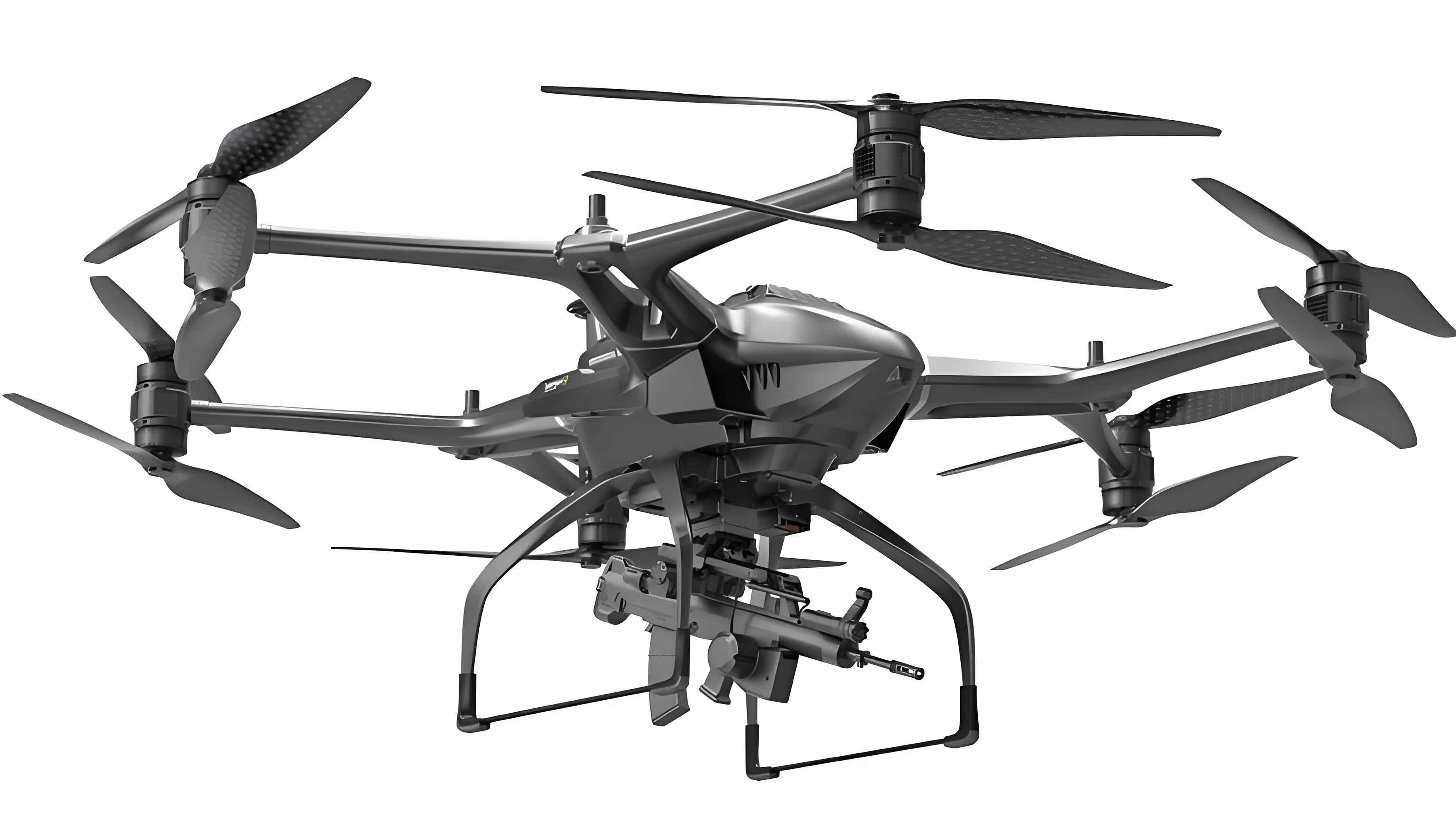
The core premise is that the overall effectiveness of a military drone system is not a singular attribute but a synthesis of four fundamental, interdependent pillars: Operational Capability (C), Availability (A), Supportability (S), and Survivability (V). These pillars form a hierarchical structure, as conceptualized in the model, where each is decomposed into measurable sub-factors. The overall Effectiveness Index (E) can be expressed as a weighted sum:
$$ E = w_C \cdot C + w_A \cdot A + w_S \cdot S + w_V \cdot V $$
where \( w_C, w_A, w_S, w_V \) are weighting coefficients determined by operational requirements and expert judgment, subject to \( w_C + w_A + w_S + w_V = 1 \).
1. Deconstructing Operational Capability (C)
The capability of a military drone defines its inherent “ability” to execute designated missions. For a versatile platform, this is mission-dependent. We primarily consider two core mission sets: Strike (against air/ground targets) and Intelligence, Surveillance, and Reconnaissance (ISR). Therefore, the overall capability is a composite:
$$ C = \alpha \cdot C_{strike} + (1-\alpha) \cdot C_{ISR} $$
where \( \alpha \) (0 ≤ α ≤ 1) is a mission profile weighting factor.
1.1 Strike Capability (C_strike)
This measures the drone’s potency in engaging targets. Key parameters include:
- Maneuverability Index (M): A composite metric reflecting agility, speed, and altitude envelope, crucial for weapon delivery and threat evasion.
- Firepower Parameter (F): Quantifies payload capacity, weapon variety, and precision (e.g., based on Circular Error Probable – CEP).
- Detection & Targeting Capability (D): Assesses the performance of onboard sensors (EO/IR, radar) and target acquisition/designation systems.
These core parameters are moderated by critical performance coefficients:
- Electronic Countermeasure (ECM) Coefficient (X_ecm): (0≤X_ecm≤1) Represents the degradation factor imposed on enemy air defenses.
- Range Coefficient (X_range): Normalized ratio of the drone’s operational range/loiter time to mission requirements.
- Fuel Efficiency Coefficient (X_fuel): Impacts sortie rate and operational endurance.
The strike capability model is thus:
$$ C_{strike} = k_1 \cdot (M \cdot F \cdot D) \cdot X_{ecm} \cdot X_{range} \cdot X_{fuel} $$
where \( k_1 \) is a normalization constant.
1.2 ISR Capability (C_ISR)
For ISR missions, the focus shifts to sensor suite performance and data link integrity. Key parameters include:
- Electro-Optical/Infrared (EO/IR) Performance (P_eo): Resolution, stabilization, field of regard.
- Radar Performance (P_radar): For Synthetic Aperture Radar (SAR) and Ground Moving Target Indicator (GMTI) modes.
- Signals Intelligence (SIGINT) Performance (P_sigint): Electronic support measures and communication intelligence capability.
The ISR capability, moderated by range and efficiency, is modeled as:
$$ C_{ISR} = k_2 \cdot (P_{eo} \cdot P_{radar} \cdot P_{sigint}) \cdot X_{range} \cdot X_{fuel} $$
where \( k_2 \) is a normalization constant.
2. Quantifying Availability (A)
Availability is the probability that the military drone system is in a operable state when needed. It is a direct function of reliability, maintainability, and the logistics support structure. The intrinsic availability (Ai) is a common measure:
$$ A_i = \frac{MTBF}{MTBF + MTTR + MLDT} $$
where:
- MTBF (Mean Time Between Failures): Reflects system reliability.
- MTTR (Mean Time To Repair): Reflects system maintainability.
- MLDT (Mean Logistics Delay Time): Reflects support system efficiency (waiting for parts, personnel, etc.).
For operational planning, achieved availability (Aa) or operational availability (Ao) which include preventive maintenance and administrative delays may be more appropriate, but Ai serves as a strong foundational metric for comparative analysis.
3. Assessing Supportability (S)
Supportability defines the ease and cost of sustaining the military drone system throughout its life cycle. A system with high capability but prohibitive support demands has low practical effectiveness. We evaluate it via a weighted index of several factors:
$$ S = \sum_{i=1}^{4} \beta_i \cdot S_i $$
with \( \sum \beta_i = 1 \). The factors \( S_i \) are normalized against a baseline system and include:
| Factor (S_i) | Description | Impact on Effectiveness |
|---|---|---|
| Equipment-to-Personnel Ratio | Number of drones/vehicles a single crew can operate/maintain. | Higher ratio indicates better force multiplication and lower manpower costs. |
| Support Equipment Index | Complexity and quantity of unique ground support equipment (GSE). | Lower index reduces logistical footprint and deployment time. |
| Life Cycle Cost per Flight Hour | Total ownership cost (acquisition, ops, maintenance) divided by total flight hours. | Lower cost enables higher sortie rates and more sustainable operations. |
| Operational Readiness / Spare Parts Fill Rate | Probability that required spare parts are available when needed. | Directly impacts MTTR and MLDT, thus influencing Availability (A). |
4. Modeling Survivability (V)
Survivability is the capability of a military drone to avoid or withstand a man-made hostile environment. It is quantified as the probability of survival (Ps) in a defined threat scenario. The classic “kill chain” model breaks this down into a sequence of conditional probabilities:
$$ P_s = 1 – P_K = [1 – P_D \cdot P_T \cdot P_{L\vert T} \cdot P_{K\vert H}] $$
Where:
- P_D: Probability the drone is Detected by enemy sensors.
- P_T: Probability it is successfully Tracked/Locked after detection.
- P_{L|T}: Probability a threat missile/projectile is Launched and Guided to hit the drone, given tracking.
- P_{K|H}: Probability the drone is Killed, given a hit.
The first three probabilities \( (P_D, P_T, P_{L\vert T}) \) are primarily influenced by the drone’s Susceptibility—its characteristics that make it vulnerable to detection, tracking, and engagement. Key susceptibility reducers include:
- Low Observables (Stealth): Reduced Radar Cross-Section (RCS), Infrared (IR) signature, acoustic signature.
- Electronic Warfare (EW): Active jamming, decoys.
- Maneuverability and Tactical Employment.
The final probability \( (P_{K\vert H}) \) is determined by the drone’s Vulnerability—its inability to withstand the damaging effects of a hit. Vulnerability reduction features include:
- Redundant critical systems (flight controls, data links).
- Separation and shielding of key components.
- Use of non-flammable materials and self-sealing fuel systems.
Therefore, survivability engineering for a military drone involves a meticulous trade-off between reducing susceptibility (often through stealth and EW) and reducing vulnerability through robust design.
5. The Integrated Evaluation Model and Normalization
Combining all pillars, the comprehensive Effectiveness Index for a subject military drone system, normalized against a chosen baseline drone system, is given by:
$$ E_{subject} = w_C \left( \frac{C_{subject}}{C_{baseline}} \right) + w_A \left( \frac{A_{subject}}{A_{baseline}} \right) + w_S \left( \frac{S_{subject}}{S_{baseline}} \right) + w_V \left( \frac{P_{s, subject}}{P_{s, baseline}} \right) $$
An index >1 indicates superior overall effectiveness compared to the baseline. The weighting coefficients \( w_i \) are determined via expert judgment, often employing methods like the Analytic Hierarchy Process (AHP) to ensure consistency. For a group of \( n \) experts, the aggregated weight for criterion \( i \) is:
$$ w_i = \frac{1}{n} \sum_{j=1}^{n} w_{ij} \quad \text{(after consistency check and re-normalization)} $$
6. Illustrative Comparative Analysis
Consider a simplified comparison between two hypothetical military drone systems, “System Alpha” and “System Beta,” against a common baseline. Assume expert-derived weights: \( w_C=0.40, w_A=0.25, w_S=0.20, w_V=0.15 \).
Step 1: Calculate Normalized Ratios. Through engineering analysis and simulation (using the sub-models for C, A, S, V), we obtain the following performance ratios relative to the baseline:
| System | C_ratio | A_ratio | S_ratio | V_ratio (P_s ratio) |
|---|---|---|---|---|
| System Alpha | 1.45 | 0.95 | 0.85 | 1.10 |
| System Beta | 1.10 | 1.25 | 1.30 | 0.90 |
Step 2: Compute Composite Effectiveness Index.
For System Alpha:
$$ E_{Alpha} = (0.40 \times 1.45) + (0.25 \times 0.95) + (0.20 \times 0.85) + (0.15 \times 1.10) = 0.580 + 0.238 + 0.170 + 0.165 = 1.153 $$
For System Beta:
$$ E_{Beta} = (0.40 \times 1.10) + (0.25 \times 1.25) + (0.20 \times 1.30) + (0.15 \times 0.90) = 0.440 + 0.313 + 0.260 + 0.135 = 1.148 $$
Step 3: Interpretation. Both systems show similar overall effectiveness (~1.15), but their profiles differ drastically. System Alpha excels in capability and survivability, likely due to advanced sensors, weapons, and low-observable features, but suffers in availability and supportability (perhaps due to complex stealth maintenance). System Beta is more reliable, easier to support, and has higher availability, but is less capable and more susceptible to threats. The “better” system depends entirely on the operational context: a high-threat, precision-strike scenario favors Alpha; a permissive, long-endurance surveillance scenario favors Beta.
7. Sensitivity and Trade-Off Analysis
The model enables crucial sensitivity analysis. The partial derivative of the effectiveness index with respect to a parameter reveals its influence. For example, the sensitivity of E to the drone’s Range Coefficient (within Capability C) is:
$$ \frac{\partial E}{\partial X_{range}} = w_C \cdot \frac{1}{C_{baseline}} \cdot \frac{\partial C}{\partial X_{range}} $$
If this sensitivity is high, investing in improved fuel efficiency or aerodynamics for greater range yields significant effectiveness returns. Similarly, trade-off studies are formalized. For instance, adding a heavy but powerful sensor improves C but may degrade A (due to higher strain on systems) and S (due to increased maintenance needs). The net effect on E can be calculated to inform the design decision. The integration of a military drone into a networked ground information system further multiplies effectiveness by enhancing situational awareness, enabling collaborative targeting, and facilitating rapid data exploitation, factors which can be incorporated as multiplicative or additive modifiers in the Capability (C) and Survivability (V) terms.
8. Conclusion
Evaluating the operational effectiveness of a military drone is a multifaceted challenge that transcends simple performance metrics. The proposed hierarchical model, integrating Capability, Availability, Supportability, and Survivability into a weighted, normalized index, provides a rigorous and flexible analytical framework. It translates qualitative operational needs into quantifiable engineering parameters, allowing for objective comparison between diverse systems, informed design trade-offs, and lifecycle decision support. As military drone technology continues to advance and their operational roles expand, such comprehensive evaluation methodologies become indispensable for ensuring that these systems deliver maximum tactical and strategic value in an efficient and sustainable manner. The model underscores that the ultimate worth of a military drone is determined not just by what it can do in a single mission, but by how reliably, affordably, and resiliently it can do so over its entire service life within a contested battlespace.