
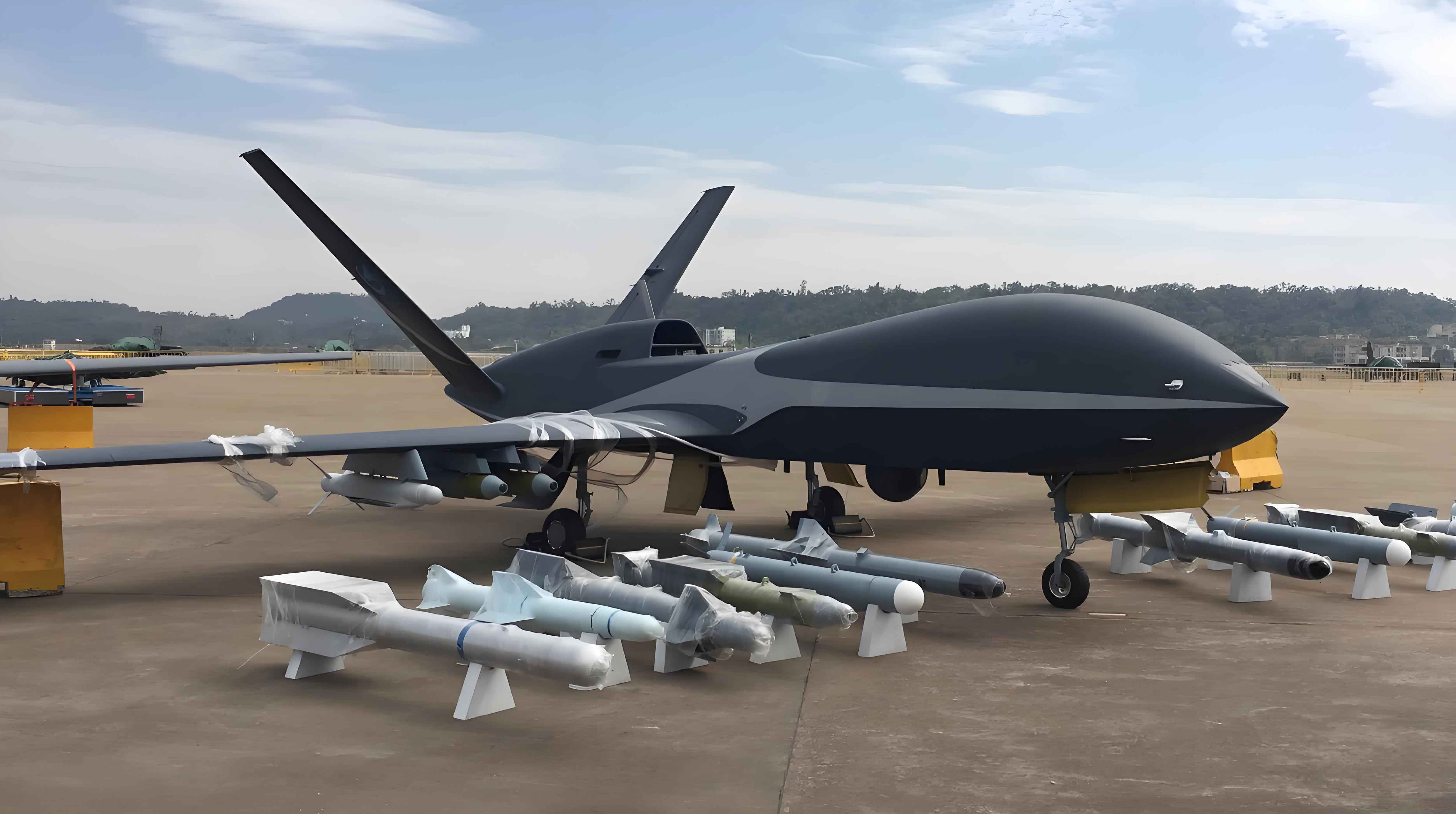
The modern battlefield is a symphony of data, and the conductor is increasingly the unmanned aerial system. From my perspective as a student of modern warfare, the rise of the military drone, particularly for reconnaissance, represents one of the most significant tactical and strategic shifts in recent decades. A military drone system is fundamentally composed of three integrated pillars: the air vehicle (the drone itself), the suite of onboard sensors and detectors, and the command, control, and navigation system. This triad transforms a simple flying machine into a pervasive, persistent, and potent intelligence-gathering asset.
In operational taxonomy, military drone systems are traditionally categorized by their control paradigm, a distinction critical to understanding their evolution and application:
| Control Type | Designation | Control Method | Primary Characteristics |
|---|---|---|---|
| Pre-programmed | Unmanned Aerial Vehicle (UAV) | Autonomous flight based on a pre-loaded mission profile. | Limited in-flight flexibility; lower data link dependency. |
| Real-time Remote | Remotely Piloted Vehicle (RPV) | Direct, real-time control by a ground-based pilot via a data link transmitting video and telemetry. | High flexibility and operator-in-the-loop decision-making; vulnerable to link disruption. |
| Hybrid/Modern | Unmanned Aircraft System (UAS) | Combination of autonomous navigation and waypoint following with operator override for sensor control and dynamic re-tasking. | Most common today; balances autonomy with human judgment. |
This progression from purely autonomous to hybrid systems mirrors the broader historical development of the military drone. The genesis of the modern reconnaissance military drone can be traced to the 1960s, driven by operational necessities in conflict zones. Early systems were predominantly pre-programmed, launched, and recovered with minimal in-flight intervention. While they provided valuable imagery—reportedly accounting for a vast majority of aerial reconnaissance photos in one major conflict—their rigidity and high attrition rates highlighted critical limitations. The operator was merely a spectator once the military drone was launched.
The 1970s and 1980s marked the renaissance. Advances in microelectronics, miniaturized electro-optical/infrared (EO/IR) sensors, and secure, high-bandwidth data links made real-time control feasible. The conceptual shift was profound: the military drone transformed from a disposable camera platform into a true remotely piloted aircraft, an extension of the commander’s senses. A pivotal moment in modern military history demonstrated this capability starkly, showcasing how a fleet of relatively simple military drone units could be used for surveillance, electronic warfare, and battle damage assessment to enable the decisive defeat of integrated air defense systems. This event catalyzed global investment, leading to the diverse ecosystem of military drone platforms we see today, ranging from hand-launched miniatures to high-altitude, long-endurance (HALE) systems.
The operational employment of a reconnaissance military drone is a delicate calculus of maximizing intelligence yield while ensuring platform survivability. From my analysis, four imperatives are paramount: thorough preparation, dispersal, surprise, and automation.
1. Meticulous Preparation and Prioritization: The technical complexity of a military drone system demands rigorous pre-mission planning. This extends beyond flight paths to encompass electromagnetic spectrum management, coordination with friendly air defense and aviation units, and the establishment of contingency protocols. Given their cost and logistical footprint, military drone assets must be considered a high-value, limited resource. Their employment should follow the principle of concentrated, priority-based allocation. A useful conceptual model for prioritization can be expressed by a mission value function:
$$
V_{mission} = \frac{\alpha \cdot I_{strategic} + \beta \cdot I_{tactical}}{\gamma \cdot R_{risk} + \delta \cdot C_{resource}}
$$
Where \(I_{strategic/tactical}\) represents the intelligence value of the target, \(R_{risk}\) is the composite threat risk (air defense, electronic warfare, weather), and \(C_{resource}\) is the cost in terms of platform wear, operator fatigue, and logistics. The coefficients \(\alpha, \beta, \gamma, \delta\) are weighting factors determined by the operational context (e.g., \(\alpha\) is high during strategic shaping phases). Missions with the highest \(V_{mission}\) score justify the commitment of scarce military drone resources.
2. Dispersed and Mobile Basing: The ground control station (GCS) and launch/recovery elements are critical vulnerabilities. Concentrating them is an invitation for targeting. Modern doctrine for military drone operations emphasizes network-centric, dispersed operations. Multiple launch sites, rapid assembly and tear-down capabilities, and the physical separation of the pilot’s GCS from the launch/recovery team and the satellite communication relay node complicate enemy targeting. This creates a resilient, non-linear operational pattern.
| Operational Element | Vulnerability | Dispersal/Mitigation Tactic |
|---|---|---|
| Launch/Recovery Team | Visual/IR/SIGINT detection at fixed point. | Use of multiple pre-surveyed, camouflaged sites; rapid displacement. |
| Ground Control Station (GCS) | Direction Finding (DF) on uplink/downlink signals. | Separation from launch site; use of remote video terminals; emission control. |
| Data Relay/ SATCOM Node | DF on high-power satellite signals. | Physical separation from GCS; use of mobile, low-probability-of-intercept waveforms. |
3. Exploiting Surprise and Asymmetric Timing: A military drone‘s small radar cross-section (RCS) and low acoustic signature are inherent advantages, but they must be leveraged. Operations should exploit periods of enemy distraction or vulnerability—during or immediately after kinetic strikes, in poor weather conditions that degrade enemy sensor performance, or in coordination with electronic attack that blinds surveillance radars. The flight profile itself is a tool for surprise; utilizing terrain masking, pop-up maneuvers, and varying ingress/egress routes prevents the establishment of predictable patterns.
4. Maximizing Automation for Stealth and Resilience: While real-time control is powerful, the constant radio frequency (RF) uplink for flight commands is a primary source of detection risk. Modern military drone systems mitigate this by maximizing autonomous flight. The operator tasks the military drone with a flexible mission plan; the aircraft then flies autonomously via its onboard navigation system (GPS/INS), only requiring the low-probability-intercept downlink to send sensor data. The uplink remains silent unless the operator needs to dynamically re-task the platform. This significantly reduces the system’s electronic footprint. The balance between autonomy and control can be modeled by a link dependency ratio \(L_{dr}\):
$$
L_{dr} = \frac{T_{uplink\_active}}{T_{total\_mission}}
$$
Minimizing \(L_{dr}\) is a key objective for survivable military drone operations in contested electromagnetic environments. A lower ratio indicates a “quieter,” more autonomous, and thus more survivable mission profile.
The sensor payload is the raison d’être of the reconnaissance military drone. The evolution here is towards multi-spectral, fused sensing packages that provide all-weather, day-night capability.
| Sensor Type | Primary Function | Advantages | Limitations/Considerations |
|---|---|---|---|
| Electro-Optical (EO) Camera | High-resolution daytime imagery and video. | Excellent resolution for identification; intuitive for operators. | Requires daylight and good visibility; ineffective through smoke/fog. |
| Infrared (IR) Thermal Imager | Detects heat signatures for night ops and seeing through obscurants. | 24/7 capability; can detect hidden objects (vehicles, people). | Lower resolution than EO; affected by weather (rain, humidity). |
| Synthetic Aperture Radar (SAR) | Creates high-resolution radar imagery; measures ground movement. | All-weather, day-night; sees through clouds, rain, dust. | Complex data processing; generally larger/heavier payload. |
| Signals Intelligence (SIGINT) | Intercepts and locates radio/radar emissions. | Passive (non-emitting); provides electronic order of battle. | Requires specialized analysis; threat emitters may be silent. |
The future trajectory of the military drone is shaped by several convergent trends, pushing beyond traditional reconnaissance into a core combat role.
Increased Autonomy and Swarming: The next leap is from remotely piloted to collaborative autonomous systems. Artificial Intelligence (AI) and Machine Learning (ML) will enable military drone swarms where dozens or hundreds of low-cost drones operate with a high degree of autonomy, self-organizing to perform complex ISR (Intelligence, Surveillance, and Reconnaissance) or strike missions. The operational value of a swarm scales non-linearly, potentially overwhelming traditional defenses. The effectiveness \(E_{swarm}\) could be heuristically described as:
$$
E_{swarm} \propto N^{\kappa} \cdot C_{coordination}
$$
Where \(N\) is the number of drones, \(\kappa > 1\) represents the non-linear scaling factor due to emergent cooperative behaviors, and \(C_{coordination}\) is the coefficient of coordination efficacy (a function of communication latency, AI algorithms, and shared situational awareness).
Enhanced Survivability and Stealth: For high-end conflict, survivability is paramount. This drives development towards reduced acoustic, visual, infrared, and radar signatures. Advanced composite materials, aerodynamic shaping, and engine cooling technologies are being applied to the military drone domain. Furthermore, counter-drone systems (jamming, kinetic, laser) are proliferating, creating an arms race that necessitates ever-more resilient military drone designs with anti-jam GPS, alternative navigation (vision-based, inertial), and hardened data links.
Sensor Fusion and Real-Time Analytics: The challenge is no longer collecting data, but processing it into actionable intelligence. Onboard edge computing allows a military drone to pre-process imagery, automatically detect and classify targets using AI, and transmit only relevant alerts or trimmed video clips. This reduces bandwidth demands and shortens the “sensor-to-shooter” timeline dramatically. The time from detection to actionable intelligence \(T_{detect-to-decide}\) is a critical metric:
$$
T_{detect-to-decide} = T_{collection} + T_{process} + T_{disseminate}
$$
Modern military drone systems aim to minimize \(T_{process}\) through onboard AI and \(T_{disseminate}\) through tactical data links, driving \(T_{detect-to-decide}\) from minutes or hours down to seconds.
Proliferation and Modularity: The technology is becoming more accessible, leading to widespread proliferation at state and non-state levels. Concurrently, modular payload bays are becoming standard, allowing a single military drone airframe to rapidly switch between ISR, electronic warfare, communications relay, or lethal effector roles, maximizing flexibility and cost-effectiveness.
A survey of the global landscape reveals the maturity and diversity of military drone technology. The following table summarizes key representative systems that have defined operational concepts:
| System (Country) | Category | Key Features & Roles | Operational Note |
|---|---|---|---|
| MQ-9 Reaper (USA) | MALE (Medium Altitude Long Endurance) | Multirole armed ISR; >24h endurance; heavy payload (EO/IR, SAR, weapons). | Workhorse for counter-terrorism operations; exemplifies the hunter-killer military drone. |
| RQ-4 Global Hawk (USA) | HALE (High Altitude Long Endurance) | Strategic ISR; >30h endurance at 60,000ft; wide-area SAR and SIGINT. | Provides persistent, theater-wide surveillance, filling a role similar to manned reconnaissance aircraft. |
| Bayraktar TB2 (Turkey) | Tactical UAS | Medium-altitude, long-endurance tactical platform; EO/IR, laser designator, light munitions. | Gained prominence for its effective use in regional conflicts, demonstrating the impact of cost-effective, capable military drone systems. |
| ScanEagle (USA/Int’l) | Small Tactical | Ship- and land-launched; >24h endurance; EO/IR; catapult launch, skyhook recovery. | Widely adopted for tactical, persistent stare capability at the battalion/company level. |
| CL-289 / SPERWER (Int’l) | Battlefield UAV | Pre-programmed or navigated artillery-style reconnaissance; film-based or digital imagery. | Representative of an earlier generation of European battlefield military drone systems, now largely superseded. |
The ascent of the military drone from a niche reconnaissance tool to a central pillar of modern military strategy is undeniable. It has democratized aerial surveillance, compressed decision cycles, and redefined risk calculus in warfare by removing the pilot from the immediate physical threat. The trajectory points towards greater autonomy, integration, and ubiquity. Future conflicts will likely see military drone swarms conducting coordinated ISR and suppression missions, loyal wingman drones accompanying manned fighter jets, and micro-drones providing squad-level situational awareness. The core imperative for militaries is no longer merely adopting the military drone, but developing the doctrines, training, and resilient networks to fully integrate these pervasive, intelligent systems into a cohesive joint force. The era of the military drone as a standalone asset is over; we have entered the era of the military drone as a fundamental node in the networked battlespace.