
As I reflect on the evolution of modern warfare, it becomes evident that the landscape has been profoundly transformed by technological advancements. Among these, the military drone stands out as a pivotal innovation, reshaping strategies and tactics in the 21st century. From their early deployments in conflicts like the Vietnam War to their current dominance in信息化作战, military drones have become indispensable assets. In this article, I will explore the critical roles these unmanned systems play and delve into their future发展趋势, emphasizing how they are set to redefine aerial combat and surveillance.
The concept of unmanned aerial vehicles (UAVs) is not new, but their integration into military operations has accelerated dramatically. I recall that during the Vietnam War, the United States首次使用了 drones like the “Ryan 147” and “QH-50” to mitigate losses in manned aircraft. This marked the beginning of a new era, where military drones could perform reconnaissance and电子情报 tasks without risking human lives. Today, nations such as the United States and Israel lead in electronic warfare technologies, with their drones serving as benchmarks for实战经验. The military drone has evolved from a simple surveillance tool to a multi-role platform capable of电子对抗, communication relay, and even direct攻击.
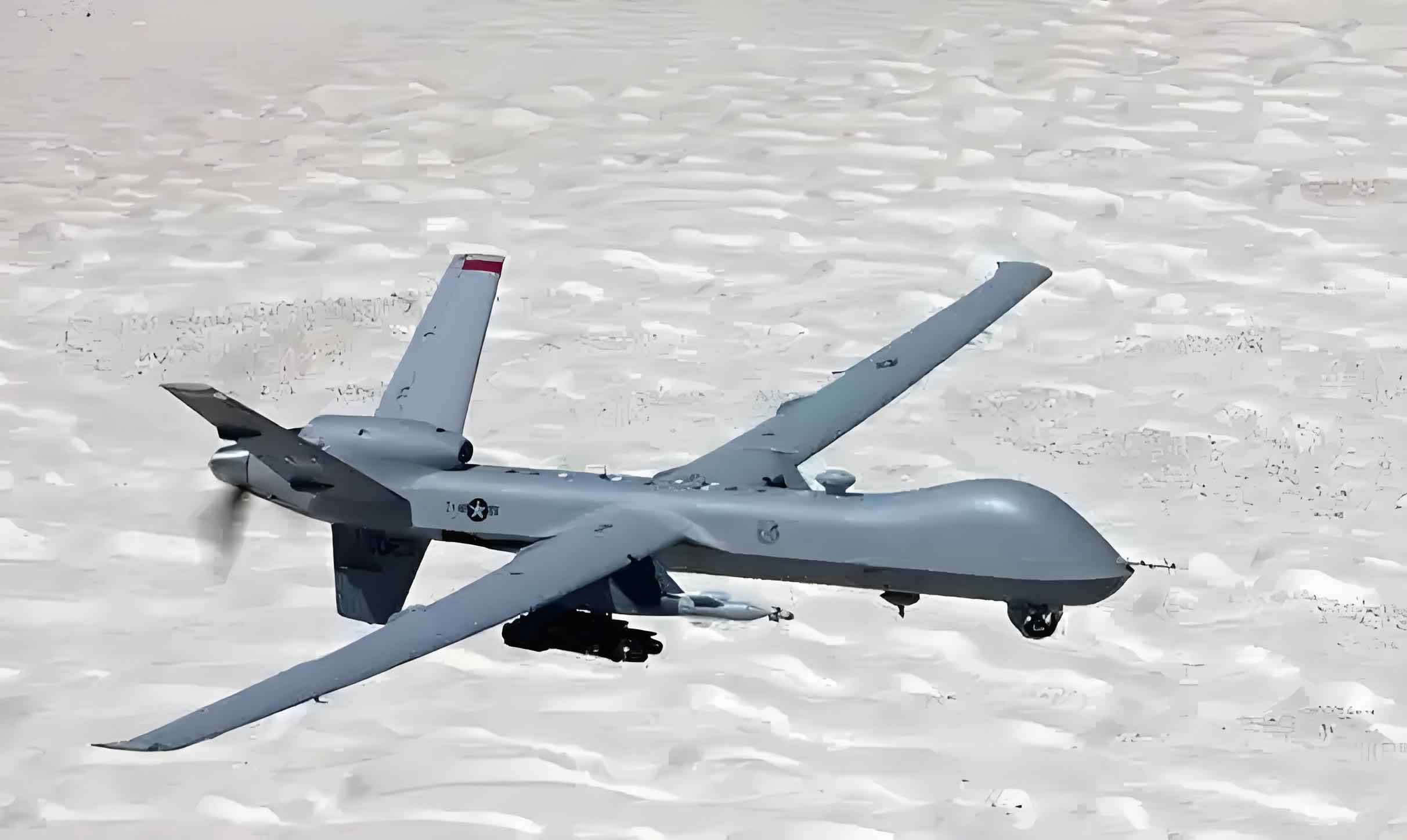
In my analysis, the military drone’s地位与作用 can be summarized through its contributions to信息化作战 and空中打击. For instance, during the Iraq War, drones provided one-third of the作战信息 for coalition forces, highlighting their superiority in战术运用信息获取. To better illustrate this, I have compiled a table comparing the capabilities of military drones with traditional assets like satellites and manned aircraft.
| Capability | Military Drone | Satellite | Manned Aircraft |
|---|---|---|---|
| Persistence | High (long endurance) | Low (limited passes) | Medium (fuel constraints) |
| Risk to Personnel | None | None | High |
| Real-time Data | Excellent | Poor (latency issues) | Good |
| Electronic Warfare | Effective (close proximity) | Limited | Moderate |
This table underscores why the military drone is becoming a cornerstone of信息化作战. Specifically, I believe that military drones enhance战场侦察与预警能力 by allowing continuous monitoring. For example, their滞空性能 enables them to loiter over areas of interest for extended periods, providing实时情报. Mathematically, this can be expressed in terms of endurance and coverage. The endurance \( E \) of a military drone can be modeled as:
$$ E = \frac{F}{C} $$
where \( F \) is the fuel capacity and \( C \) is the consumption rate. For solar-powered drones, \( E \) can extend to months, as seen in emerging designs. Moreover, the coverage area \( A \) for surveillance is given by:
$$ A = \pi r^2 $$
with \( r \) being the sensor range. Military drones often have \( r \) values that exceed those of ground-based systems, making them ideal for wide-area monitoring.
Another critical aspect is电子对抗能力. I have observed that military drones can抵近干扰 enemy signals with minimal power, thanks to their ability to operate in hazardous空域. This is particularly effective against雷达 systems, where反辐射无人机 serve as硬杀伤 weapons. The干扰效果 \( J \) can be quantified as:
$$ J = \frac{P_t G_t}{4\pi d^2} $$
where \( P_t \) is the transmission power, \( G_t \) is the antenna gain, and \( d \) is the distance to the target. By reducing \( d \), a military drone achieves superior \( J \) with lower \( P_t \), highlighting its efficiency. Additionally, military drones boost战区和战术通信能力 by acting as airborne communication nodes (ACNs). Studies, such as one conducted by the U.S. military in 1997, show that drones can extend通信至卫星业务达不到的地方, improving抗干扰性能 and response速度.
Moving to空中打击, the military drone is increasingly承担防空压制和空中打击任务. I argue that this shift is driven by the growing risks to manned aircraft from advanced防空 systems. Military drones offer enhanced攻击能力 through multi-directional突防, complicating防空作战. For instance, a swarm of military drones can simulate a larger force, increasing雷达反辐射面积 and overwhelming defenses. The probability of successful penetration \( P_s \) can be expressed as:
$$ P_s = 1 – (1 – p)^n $$
where \( p \) is the survival probability of a single military drone and \( n \) is the number of drones in the swarm. As \( n \) increases, \( P_s \) approaches 1, demonstrating the effectiveness of饱和攻击. This not only提升攻击能力 but also增大防御方心理压力, as commanders face the dilemma of allocating resources against elusive targets.
Looking ahead, the future发展趋势 of military drones are shaped by technological innovations. I foresee several key areas of development. First,机动性能及载荷能力不断提升 is crucial. The trend toward high-altitude, long-endurance (HALE) drones is evident, with new designs aiming for续航时间 of months. The续航时间 \( T \) for solar-powered military drones can be estimated using:
$$ T = \frac{S \cdot \eta}{P_d} $$
where \( S \) is the solar energy harvested, \( \eta \) is the efficiency, and \( P_d \) is the power demand. This extended \( T \) allows for larger作战半径 and higher工作高度. Moreover, advancements in propulsion, such as小型或微型化的大推力发动机, enhance payload capacity. The thrust-to-weight ratio \( \frac{T}{W} \) is a critical metric:
$$ \frac{T}{W} = \frac{F}{m \cdot g} $$
where \( F \) is thrust, \( m \) is mass, and \( g \) is gravity. Improving this ratio enables military drones to carry heavier载荷, like合成孔径雷达 or干扰系统.
Second,智能化及环境适应能力增强 is transforming military drone operations. I envision a future where military drones transition from remote control to fully autonomous工作编程. This involves智能适应环境, allowing drones to navigate complex terrains. For example, the U.S. Navy has developed underwater-launched drones, hinting at三栖工作 capabilities. The decision-making process can be modeled with algorithms that adjust飞行路线 based on real-time态势信息. A simple control law might be:
$$ u(t) = K \cdot e(t) $$
where \( u(t) \) is the control input, \( K \) is a gain matrix, and \( e(t) \) is the error from desired trajectory. Such智能化 systems reduce human intervention and increase mission success rates.
Third,具备自卫和攻击破坏能力 is essential for survival. As对抗无人机的手段 proliferate, military drones must integrate雷达告警装置 and光电告警装置. The survival probability \( P_{surv} \) can be enhanced by improving反探测能力, which depends on stealth features. For instance, the雷达 cross-section (RCS) \( \sigma \) should be minimized:
$$ \sigma = \frac{4\pi A^2}{\lambda^2} $$
where \( A \) is the target area and \( \lambda \) is the radar wavelength. Lower \( \sigma \) makes the military drone harder to detect. Additionally, some military drones may act as “特洛伊木马,” infiltrating enemy systems to破坏电子系统. The damage potential \( D \) can be expressed as:
$$ D = \int_0^T I(t) \, dt $$
where \( I(t) \) is the impact intensity over time \( T \).
Fourth,载荷高度集成 is streamlining military drone designs. With advancements in软件无线电 and综合射频器件, radar, communication, and electronic战载荷 are merging into single platforms. This集成 allows a military drone to perform侦察,干扰, and通信 simultaneously. The functionality \( F \) of an integrated system can be represented as:
$$ F = \sum_{i=1}^n w_i \cdot c_i $$
where \( w_i \) are weights and \( c_i \) are individual capability scores. Furthermore, there is a trend toward飞航导弹发展, where the drone body serves as a弹药载体. For example, attaching电子战载荷 enables both surveillance and攻击 in one package.
Fifth,利用仿生学原理实现微型隐身化 is pushing the boundaries of stealth.微型无人机, inspired by生物 like bats or insects, offer enhanced隐蔽性. Their small size reduces detectability, making them ideal for低空侦察. The隐身性能 can be quantified by the detection range \( R_d \):
$$ R_d = \sqrt[4]{\frac{P_t G_t \sigma}{(4\pi)^2 S_{min}}} $$
where \( S_{min} \) is the minimum detectable signal. By minimizing \( \sigma \) and using仿生 shapes, \( R_d \) decreases significantly. Programs like the U.S.微型无人机计划 aim to produce palm-sized drones for情报任务, with weights under one kilogram. These微型无人机 can operate in confined spaces, such as建筑物内, collecting视听信息 without being noticed.
To summarize these发展趋势, I have created a table outlining the key advancements and their implications for military drone capabilities.
| Trend | Description | Impact on Military Drone | Key Metrics |
|---|---|---|---|
| Improved Mobility and Payload | Development of HALE drones and advanced engines | Longer endurance, higher payload capacity | Endurance \( E \), Thrust-to-weight ratio \( \frac{T}{W} \) |
| Enhanced Intelligence and Adaptation | Autonomous operations and multi-environment functionality | Reduced human control, increased versatility | Control error \( e(t) \), Adaptation rate |
| Self-defense and Attack Capabilities | Integration of warning systems and offensive payloads | Higher survivability, direct strike potential | Survival probability \( P_{surv} \), Damage potential \( D \) |
| Payload Integration | Combination of radar, comms, and EW into unified systems | Multi-role efficiency, cost savings | Functionality score \( F \), Integration level |
| Miniaturization and Stealth via Biomimetics | Design inspired by nature for small, stealthy drones | Improved covert operations, access to tight spaces | Detection range \( R_d \), Size and weight |
In my view, the global market for military drones is expanding rapidly, with an年增长率 exceeding 20% due to strategic needs. As warfare becomes more reliant on信息优势, the军事无人机 will continue to play a central role. I anticipate that future conflicts will see even greater reliance on these unmanned systems, from侦察 to电子战 to精确打击. The military drone is not just a tool but a transformative force, reshaping how we think about空中优势 and战场空间感知.
Reflecting on the technological trajectory, I believe that innovations in人工智能, materials science, and propulsion will further elevate the军事无人机’s capabilities. For instance, the use of machine learning for real-time决策 could lead to fully autonomous swarms that coordinate attacks without human input. The effectiveness of such swarms can be modeled using game theory, where each military drone acts as an agent maximizing a collective utility function \( U \):
$$ U = \sum_{i=1}^N \left( R_i – C_i \right) $$
where \( R_i \) is the reward for agent \( i \) and \( C_i \) is the cost. By optimizing \( U \), military drone swarms can achieve superior战术灵活性.
Moreover, the integration of量子技术 may enhance the通信 security of military drones, making them resistant to interception. The信道容量 \( C \) for a quantum-secure link can be given by:
$$ C = \log_2(1 + \text{SNR}) $$
where SNR is the signal-to-noise ratio. This could revolutionize how军事无人机 transmit data in contested environments.
In conclusion, as I delve deeper into the subject, it is clear that the military drone is poised to dominate future battlefields. From its humble beginnings in越南战争 to its current status as a信息化作战平台, the evolution has been remarkable. The发展趋势 point toward more intelligent, stealthy, and versatile systems that will redefine空中打击 and surveillance. As we move forward, the军事无人机 will undoubtedly become even more integral to military strategies, offering unparalleled advantages in the complex landscape of 21st-century warfare. The journey of the military drone is far from over, and its future applications—whether in深海探索 or太空监视—hold immense promise. For now, though, the focus remains on perfecting its role in combat, ensuring that the军事无人机 continues to be a cornerstone of modern defense.