
My analysis of contemporary warfare leads me to the unequivocal conclusion that the trajectory of military technology is decisively oriented towards unmanned systems. Since the 1980s, the synergistic advancement of microelectronics, optoelectronics, nanotechnology, MEMS, computing, information processing, communications, stealth materials, and propulsion technologies has provided an unprecedented technical foundation. This convergence has made the development and deployment of unmanned systems a defining characteristic of modern military arsenals. These platforms, particularly military drones, have transitioned from auxiliary support roles to central pillars of information warfare, decision-making, and kinetic engagement systems. This article, from my perspective, will detail the technological composition of intelligent unmanned systems and their consequential evolution in modern conflict.
I. The Architectural Foundations of Military Unmanned and Intelligent Technology
The informatization of the battlefield has irrevocably shifted the paradigm towards unmanned platforms. The momentum behind robots, unmanned aerial vehicles (UAVs), and unmanned underwater vehicles (UUVs) is not merely persistent; it is accelerating. The demonstrated efficacy of military drones in recent conflicts, especially in securing information dominance, has catalyzed the rapid evolution of this entire sector. At its core, this evolution is driven by several pivotal technological disciplines.
1.1 Core Conceptual Frameworks
Military Intelligent Technology is the embodiment of artificial intelligence (AI) within the martial domain. While originating from computer science, AI has matured into a distinct, interdisciplinary field synthesizing mathematics, cognitive science, bionics, genetic engineering, linguistics, and logic. Its military applications are vast, encompassing robotics, expert systems, intelligent interfaces, machine vision, speech recognition, automatic target recognition (ATR), and unmanned vehicles. Neural network technology, crucial for control and decision-making, is perhaps the most significant among these.
Military Unmanned Technology is purpose-driven: it leverages AI and related engineering fields to create intelligent weapon systems. This field responds directly to the operational demand for reducing human exposure in high-risk environments. The miniaturization enabled by nano- and integrated technologies is creating new classes of micro-platforms for reconnaissance and sensing. The strategic imperative is clear: shifting from numerical superiority in personnel to technological superiority in unmanned systems offers a path to dominant battlefield capability with potentially reduced political and human cost, paving the way for increasingly “unmanned” theaters of war.
1.2 Constituent Technologies
The sophistication of modern military drones and autonomous systems is underpinned by breakthroughs in several key areas:
1. High-Performance Computing (HPC): HPC is the strategic high ground for scientific and military innovation. The progression from vector processors to shared-memory systems and Massively Parallel Processing (MPP) has been relentless. Initiatives like the Accelerated Strategic Computing Initiative (ASCI) pushed the boundaries of computational power, which is fundamental for real-time sensor data fusion, complex simulation, cryptography, and autonomous system reasoning. The computational power required for a fully autonomous military drone swarm is staggering, often measured in petaflops. The relationship between required processing power ($P_{req}$), number of agents in a swarm ($N$), and the complexity of individual agent decision-making ($C$) can be modeled as a non-linear function:
$$P_{req} = k \cdot N^{\alpha} \cdot C^{\beta}$$
where $k$, $\alpha$, and $\beta$ are scaling constants greater than 1, indicating the exponential growth in computational demand.
2. Neural Network & AI/ML Technologies: Neural networks, as a mechanism for machine learning, provide a computational architecture inspired by biological systems, capable of highly parallel processing. Their application in military systems is transformative for tasks like pattern recognition, sensor data automation, real-time image processing, and adaptive control. The development of dedicated neuromorphic or bio-neural chips could lead to processing units with brain-like efficiency for specific tasks, significantly enhancing the autonomy of a military drone. Expert systems, a branch of AI, are increasingly deployed for logistical planning, maintenance diagnostics, and as decision-support aids for commanders.
3. Robotics & Autonomous Systems Technology: This field transcends simple automation, focusing on machines that can replicate human cognitive functions like perception, learning, and problem-solving in unstructured environments. The integration of robotics with advanced sensors, knowledge databases, and expert systems is leading to the fifth generation of “intelligent” machines. The future points toward increasingly autonomous unmanned ground vehicles (UGVs) and unmanned combat aerial vehicles (UCAVs) that can collaborate in integrated human-machine teams.
4. Human-Machine Interface (HMI) & Virtual Reality (VR): Advanced HMIs are critical for effective human supervision of unmanned systems. Progress in visual display technology, haptic feedback, and optimized data representation allows a single operator to manage multiple military drones effectively. VR or “immersive” technology, using head-mounted displays and data gloves, creates synthetic environments for training, mission rehearsal, and remote operation, providing operators with situational awareness that approaches being physically present.
5. Distributed Network Computing: The modern battlespace is a network-centric environment. Technologies enabling seamless, secure, and resilient communication between distributed nodes—satellites, aircraft, military drones, ground stations, and individual soldiers—are paramount. The goal is a “transparent” global information grid that provides the right information to the right entity at the right time. Groupware and collaborative tools allow for coordinated command and control of dispersed unmanned assets.
6. Emerging Computing Paradigms (Bio/DNA Computing): Looking forward, paradigms like DNA computing present revolutionary possibilities. Using DNA molecules to store data and perform biochemical reactions as computational operations offers a path to immense parallelism and data density. While in its infancy, the potential for fusion with traditional silicon-based computing for specific, complex problems relevant to cryptography or massive pattern matching is a long-term prospect for intelligence processing supporting unmanned missions.
7. Smart Materials and Structures: The integration of sensors, actuators, and processing networks directly into the physical structure of platforms like a military drone leads to “smart” or adaptive structures. These can self-monitor for damage, change aerodynamic shape, or alter their radar signature dynamically, significantly enhancing survivability and performance.
| Technology Domain | Key Function | Impact on Military Drone Capability |
|---|---|---|
| High-Performance Computing | Real-time data fusion, autonomous path planning, swarm intelligence algorithms. | Enables complex autonomy, reduces operator burden, allows for coordinated swarm tactics. |
| Neural Networks / Machine Learning | Automatic Target Recognition (ATR), predictive maintenance, adaptive electronic warfare. | Increases sortie effectiveness, allows for identification of threats without constant human input. |
| Advanced Sensor Suites (EO/IR, SAR, SIGINT) | Situational awareness, target acquisition, battle damage assessment. | Provides the “eyes and ears” for intelligence, surveillance, and reconnaissance (ISR) and precision strike. |
| Secure Data Links & Networking | Communication between drone, control station, and other assets. | Ensures command and control integrity, enables real-time data sharing for network-centric warfare. |
| Stealth & Low-Observable Technology | Radar cross-section (RCS) and infrared signature reduction. | Enhances survivability in contested airspace, allowing penetration for deep strike or ISR. |
II. The Proving Ground: Military Drones in Modern Warfare
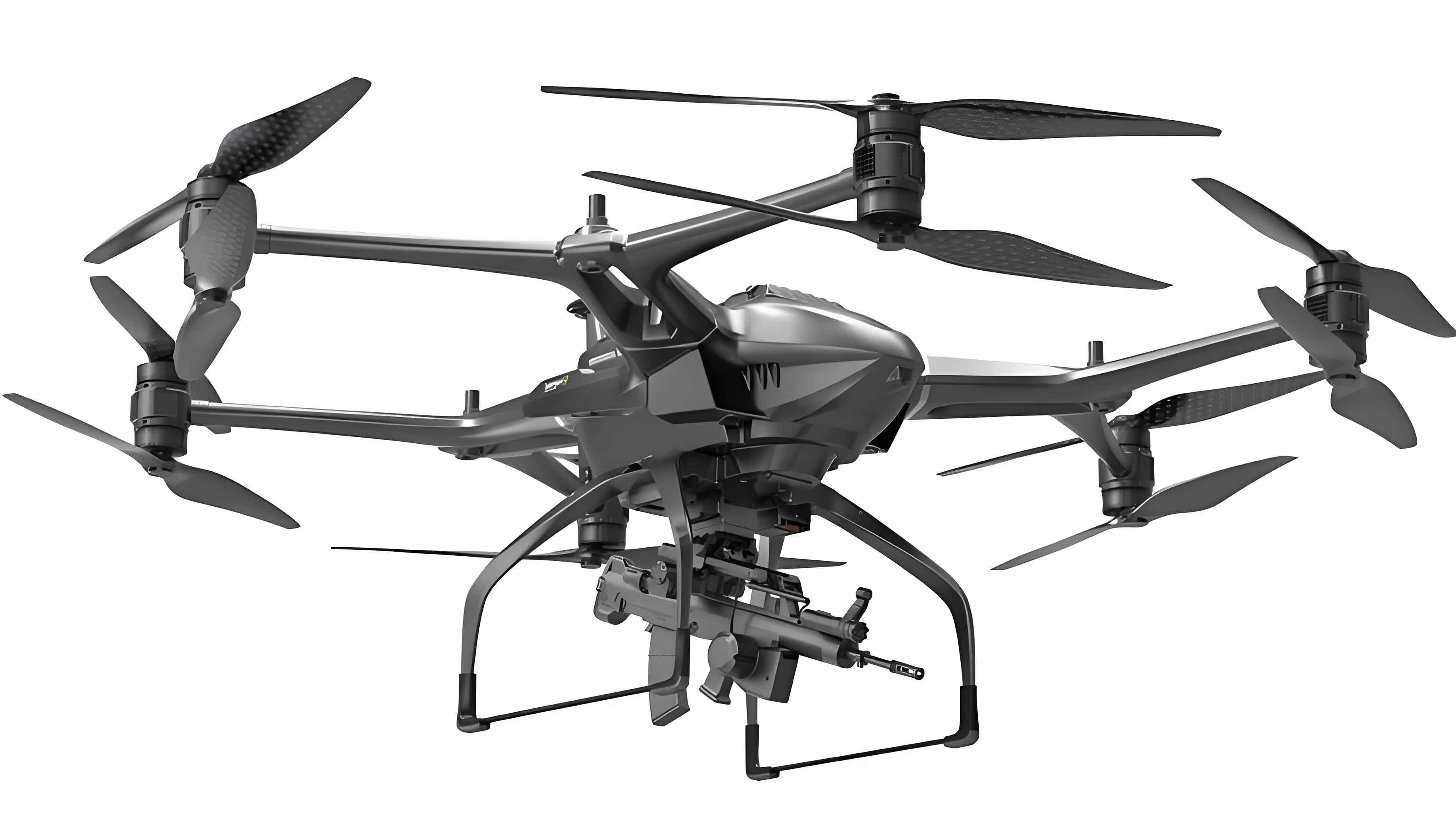
The operational history of unmanned systems, especially military drones, provides the most compelling evidence of their transformative impact. Their role has evolved from peripheral reconnaissance to a central, multi-role asset in the joint fight.
2.1 Early Operational Deployment
While UAVs originated in the early 20th century, their serious combat debut was during the Vietnam War. The U.S. employed BQM-34 Firebee reconnaissance drones to overfly high-risk areas in North Vietnam, dramatically reducing aircraft and pilot losses. The strategic value was proven: a significantly lower loss rate compared to manned missions.
The 1982 Bekaa Valley conflict served as a watershed moment. Israeli forces systematically used decoy drones (like the Mastiff and Scout) to stimulate Syrian air defenses. By emulating the radar signatures of strike aircraft, they tricked Syrian forces into activating their SA-6 missile batteries’ radars. This action revealed their locations and electronic fingerprints. Following this electronic reconnaissance, Israeli aircraft executed a precise suppression of enemy air defenses (SEAD) campaign, neutralizing the missile sites with remarkable efficiency in a matter of minutes. This operation was a masterclass in the integrated use of unmanned systems for electronic warfare and SEAD.
2.2 The Gulf War (1991) – The Emergence of a Persistent ISR Asset
The Gulf War marked the transition of the military drone into a widely recognized, multi-service tool. Systems like the Pioneer were deployed on U.S. Navy battleships for artillery spotting and coastal surveillance. They provided real-time video for battle damage assessment (BDA) and target designation. Crucially, drones were also used as low-cost decoys, mimicking attack aircraft to draw fire and exhaust enemy surface-to-air missile inventories. The conflict demonstrated that military drones could provide commanders with a persistent, low-risk surveillance capability that was previously unavailable.
2.3 Kosovo (1999) – Integration into a Coalition ISR Fabric
In Operation Allied Force, NATO’s air campaign over Kosovo, the use of military drones expanded in scale and diversity. Over a dozen different UAV types from multiple nations (U.S., France, Germany, UK, Italy) flew thousands of mission hours. The U.S. Predator, a medium-altitude, long-endurance (MALE) drone, began to demonstrate its potential for persistent stare over areas of interest. These systems became the “eyes” of the coalition, filling critical gaps in the intelligence picture, monitoring force movements, and providing post-strike imagery. The conflict underscored the importance of interoperability and data sharing from unmanned platforms within a coalition environment.
2.4 Afghanistan (2001-) – The Paradigm Shift: From Sensor to Shooter
The war in Afghanistan represented the most significant leap: the armed military drone. The iconic moment was the modification of the MQ-1 Predator to carry Hellfire anti-tank missiles. This transformed the platform from a pure intelligence asset into a hunter-killer, capable of finding, fixing, tracking, targeting, and engaging (F2T2E) time-sensitive targets. The 2002 strike in Yemen that eliminated al-Qaeda operatives from a CIA-operated Predator cemented this new role. Furthermore, high-altitude, long-endurance (HALE) drones like the RQ-4 Global Hawk were deployed, providing unprecedented broad-area surveillance coverage over a theater that lacked extensive forward basing. Miniaturization also reached the front lines, with hand-launched micro-drones being evaluated for tactical, platoon-level reconnaissance.
2.5 Iraq War (2003) – Maturation of the Armed Role and Tactical Integration
Building on the Afghan experience, armed military drones were employed from the outset of Operation Iraqi Freedom. Predators conducted strikes against air defense units and participated in the hunt for high-value targets. Their role in the decisive defeat of the Iraqi Medina Division is instructive. During a sandstorm that grounded many aircraft and blinded ground forces, UAVs like Global Hawk and JSTARS (a manned but specialized platform) maintained constant surveillance. They tracked the Iraqi armored columns, enabling the generation of precise targeting data that was used by other aircraft to devastating effect once weather cleared. This demonstrated the military drone‘s role as a key node in the “sensor-to-shooter” kill chain, even in degraded conditions. Newer tactical drones like Shadow and the experimental Silver Fox were also fielded, highlighting the push to provide unmanned ISR at every echelon.
| Conflict | Primary Drone Types | Key Roles Demonstrated | Technological/Doctrinal Leap |
|---|---|---|---|
| Vietnam War | BQM-34 Firebee | High-risk strategic reconnaissance | Proof-of-concept for reducing manned aircraft losses. |
| Bekaa Valley (1982) | Decoy Drones (Mastiff, Scout) | Electronic Warfare / SEAD Decoy | Integrated use of drones to enable SEAD campaign. |
| Gulf War (1991) | Pioneer, Pointer | Tactical Reconnaissance, BDA, Naval Gunfire Support, Decoy | Widespread multi-service adoption; proven tactical utility. |
| Kosovo (1999) | Predator, Hunter, CL-289 | Persistent Surveillance for Coalition Air Campaign | Scale of use; integration into multinational ISR network. |
| Afghanistan (2001-) | MQ-1 Predator, RQ-4 Global Hawk, Micro-UAVs | Armed ISR (Hunter-Killer), HALE Broad-Area Surveillance, Tactical Micro-Recon | Armed drone concept proven; strategic HALE ISR; miniaturization. |
| Iraq War (2003) | MQ-1 Predator, RQ-4 Global Hawk, RQ-7 Shadow | Direct Strike, Kill-Chain Integration, Persistent Surveillance in Degraded Weather, Tactical ISR | Maturation of armed role; critical node in networked kill web. |
III. Technical Deconstruction: Performance and Payloads
Understanding the capabilities of a modern military drone requires examining its fundamental performance parameters and sensor payloads. These factors determine its mission profile, from long-endurance strategic surveillance to close-range tactical engagement.
3.1 Endurance and Range Models
The operational reach of a military drone is a function of its aerodynamic efficiency, propulsion system, and fuel capacity. For propeller-driven MALE drones, endurance ($E$) can be approximated using the Breguet endurance equation for propeller aircraft:
$$E = \frac{\eta_p}{c_p} \frac{C_L}{C_D} \ln \left( \frac{W_{start}}{W_{end}} \right)$$
where:
- $\eta_p$ = propeller efficiency
- $c_p$ = specific fuel consumption
- $C_L$ = lift coefficient
- $C_D$ = drag coefficient
- $W_{start}$ = initial gross weight
- $W_{end}$ = final weight (after fuel burn)
This shows that maximizing the lift-to-drag ratio ($\frac{C_L}{C_D}$) and minimizing fuel consumption are critical for long loiter times. For jet-powered HALE drones like Global Hawk, a similar jet endurance equation applies, highlighting the importance of high-altitude, low-drag flight.
3.2 Sensor Payloads and Data Processing
The “value” of a military drone is generated by its payload. A typical multi-mission drone carries a suite of sensors:
- Electro-Optical/Infrared (EO/IR) Camera: Provides daylight and night-time video. The resolution at a given range depends on the sensor’s instantaneous field of view (IFOV). The Ground Sample Distance (GSD), the distance between pixel centers on the ground, is given by: $$GSD = \frac{H \cdot p}{f}$$ where $H$ is altitude, $p$ is pixel pitch, and $f$ is focal length.
- Synthetic Aperture Radar (SAR): Provides all-weather, day/night imaging capability. Its resolution is independent of range, a key advantage. The achievable azimuth resolution ($\rho_a$) is approximately half the antenna length ($L_a$): $$\rho_a \approx \frac{L_a}{2}$$
- Signals Intelligence (SIGINT) Payload: Intercepts and locates radio frequency emissions. The probability of intercept ($P_{int}$) depends on the drone’s location, the sensitivity of its receiver, and the emitter’s activity. Effective coverage is often modeled as an area search problem.
The data from these sensors creates a massive processing challenge. Onboard computing must filter, compress, and prioritize information before transmitting it via a bandwidth-limited data link. The link’s required data rate ($R$) is a function of the sensor’s data generation rate and the level of onboard processing:
$$R_{req} = \sum (S_{sensor} \cdot C_{compression}) + M_{metadata}$$
where $S_{sensor}$ is the raw sensor data rate, $C_{compression}$ is the compression ratio, and $M_{metadata}$ is overhead for targeting and navigation data.
| Drone Category | Example | Typical Endurance | Typical Payload Weight | Key Sensor Payloads |
|---|---|---|---|---|
| Mini/Micro UAV | RQ-11 Raven | 60-90 min | ~0.5 kg | EO/IR gimbal (day/night camera) |
| Tactical UAV | RQ-7 Shadow | 6-9 hours | ~25 kg | EO/IR gimbal, laser designator, SIGINT package |
| MALE UCAV | MQ-9 Reaper | 24+ hours | ~1700 kg | Multi-spectral Targeting System (MTS-B), Lynx SAR, Hellfire missiles, GBU-12/38 JDAMs |
| HALE UAV | RQ-4 Global Hawk | 32+ hours | ~1400 kg | EO/IR, SAR, SIGINT (ASIP), LR-100 |
| Combat UAV (Stealth) | X-47B / loyal wingman concepts | 6+ hours (combat radius) | ~2000 kg (internal) | EO/IR, AESA radar, internal weapons bay |
IV. The Future Trajectory: Swarms, Autonomy, and Countermeasures
Based on the current trajectory, the future of military drones will be defined by three interconnected trends: the proliferation of collaborative autonomous swarms, the deepening of artificial intelligence, and the consequent evolution of counter-drone systems.
4.1 Swarm Technology
The next major leap is the move from individual, remotely piloted military drones to collaborative autonomous swarms. A swarm consists of a large number of relatively simple, low-cost drones that operate as a collective, exhibiting emergent intelligence through local interaction rules (e.g., based on Reynolds’ flocking algorithms: separation, alignment, cohesion). The military advantages are profound:
- Resilience: The loss of individual units does not degrade the swarm’s overall mission capability.
- Saturation: Swarms can overwhelm traditional air defense systems through sheer numbers and distributed approach.
- Adaptability: The swarm can reconfigure itself to perform different tasks—from distributed ISR to coordinated electronic attack or kinetic strike.
Modeling swarm behavior often uses agent-based simulations where each drone $i$ updates its velocity $\vec{v_i}$ based on the states of its neighbors $N_i$:
$$\vec{v_i}(t+1) = w_1\vec{v_i}(t) + w_2\vec{F}_{sep} + w_3\vec{F}_{align} + w_4\vec{F}_{coh} + \vec{F}_{goal}$$
where the $w$ terms are weighting factors, and the $\vec{F}$ terms represent vectors for separation from neighbors, alignment with neighbor velocity, cohesion towards the group center, and movement toward a goal.
4.2 Advanced Autonomy and AI Integration
Future military drones will possess higher levels of autonomy, moving from “automated” (executing pre-programmed sequences) to truly “autonomous” (making independent decisions based on perceived goals). Key areas include:
- Advanced ATR and Cognitive Targeting: AI/ML models will enable drones to not just identify predefined targets but to classify behavior, infer intent, and prioritize threats based on command intent, with appropriate human oversight (“human-on-the-loop”).
- Adaptive Mission Planning: Drones will be able to dynamically re-plan routes and tasks in response to threats, weather, or new priority targets while maintaining communication constraints.
- Manned-Unmanned Teaming (MUM-T): A single manned aircraft (like a fighter jet) will control multiple “loyal wingman” drones, using them as sensor extensions, missile magazines, or decoys, effectively multiplying the combat power of the manned platform.
The decision-making process in an autonomous military drone can be modeled as a continuous loop of Perception ($P$), Processing ($\Pi$), and Action ($A$), informed by a constantly updated World Model ($W$):
$$A_{t} = \Pi( P(S_t), W_t, G )$$
where $S_t$ is sensor input at time $t$, $W_t$ is the internal world model, and $G$ is the mission goal or commander’s intent.
4.3 The Counter-Drone Challenge
The proliferation of military drones and their availability to non-state actors has created a urgent need for Counter-Unmanned Aerial Systems (C-UAS). This is a multi-layered challenge involving:
- Detection: Using radar, electro-optical, acoustic, and RF sensors to find small, low-flying, and slow-moving drones.
- Identification: Distinguishing hostile drones from friendly or civilian ones.
- Defeat: Employing kinetic (guns, missiles, nets), electronic (jamming, spoofing), or directed-energy (lasers, high-power microwaves) means to neutralize the threat.
The effectiveness of a jamming system, for instance, depends on the jamming-to-signal ratio ($J/S$) at the drone’s receiver. Successful command link jamming requires:
$$\frac{J}{S} = \frac{P_j G_j G’_r \lambda^2 R_t^2 L_r}{P_t G_t G_r \lambda^2 R_j^2 L_t} = \frac{P_j G_j G’_r R_t^2 L_r}{P_t G_t G_r R_j^2 L_t} > 1$$
where $P$ is power, $G$ is antenna gain, $\lambda$ is wavelength, $R$ is range, $L$ is loss, and subscripts $j$, $t$, $r$ refer to jammer, transmitter, and receiver respectively. This constant “cat-and-mouse” game between drone capabilities and C-UAS will drive innovation in both offensive and defensive technologies.
| Trend | Technological Drivers | Expected Impact on Operations | Key Challenges |
|---|---|---|---|
| Drone Swarming | Miniaturization, low-cost manufacturing, mesh communications, distributed AI algorithms. | Saturation attacks, distributed ISR nets, resilient and adaptive force structures. Changes the cost-imposition calculus dramatically. | Robust communications in contested environments; swarm-level AI for complex tasks; rules of engagement for autonomous collectives. |
| Advanced AI/ML Autonomy | Improved neural network architectures (e.g., transformers), edge computing, realistic simulation for training models. | Faster sensor-to-shooter timelines; reduced operator workload; ability to operate in GPS/comm-denied environments. | Explainable AI (XAI) for trust; vulnerability to adversarial AI attacks; ethical and legal frameworks for autonomous lethal decision-making. |
| Manned-Unmanned Teaming (MUM-T) | Secure, high-bandwidth data links (e.g., MADL, IFDL), AI for battle management, advanced human-machine interfaces. | Force multiplier effect for manned platforms; increased survivability of pilots; extended combat radius and persistence. | Interoperability between different platforms; dynamic tasking and control allocation; pilot cognitive overload management. |
| Counter-UAS (C-UAS) | Advanced sensor fusion, adaptive jamming waveforms, compact directed-energy weapons, AI for threat classification. | Essential for force protection and base defense; creates a new defensive layer. Becomes a critical capability for all maneuver units. | Detecting small, low, slow drones in cluttered environments; defeating large, coordinated swarms cost-effectively; avoiding collateral interference with friendly systems. |
In conclusion, my examination confirms that the military drone has evolved from a tactical novelty to a strategic necessity. Its development, driven by a confluence of exponential technologies, has fundamentally altered the conduct of intelligence, surveillance, reconnaissance, and precision strike. The operational history from Vietnam to the present day charts a clear course: increasing endurance, sensor sophistication, and, most decisively, autonomy and weaponization. The future points toward a battlespace densely populated by collaborative unmanned systems—swarms of drones operating with delegated autonomy, teaming with manned platforms, and posing novel challenges for defense. The nation or coalition that most effectively integrates these technologies into a coherent, resilient, and ethically sound doctrine will secure a decisive advantage in the conflicts of the 21st century. The age of the unmanned system is not approaching; it is firmly upon us.