
From my perspective, the ascendance of the military drone represents one of the most transformative shifts in modern warfare. These systems, transcending their initial roles as mere surrogates for high-risk missions, have evolved into sophisticated, multi-role platforms integral to intelligence, surveillance, reconnaissance (ISR), electronic warfare, and kinetic strike operations. The convergence of advancements in computing, artificial intelligence, materials science, and data-link technology has propelled the military drone from a tactical accessory to a strategic cornerstone. This essay will explore the historical trajectory, current capabilities, technical underpinnings, and future vectors of this pivotal technology, emphasizing its profound impact on contemporary and future battlefields.
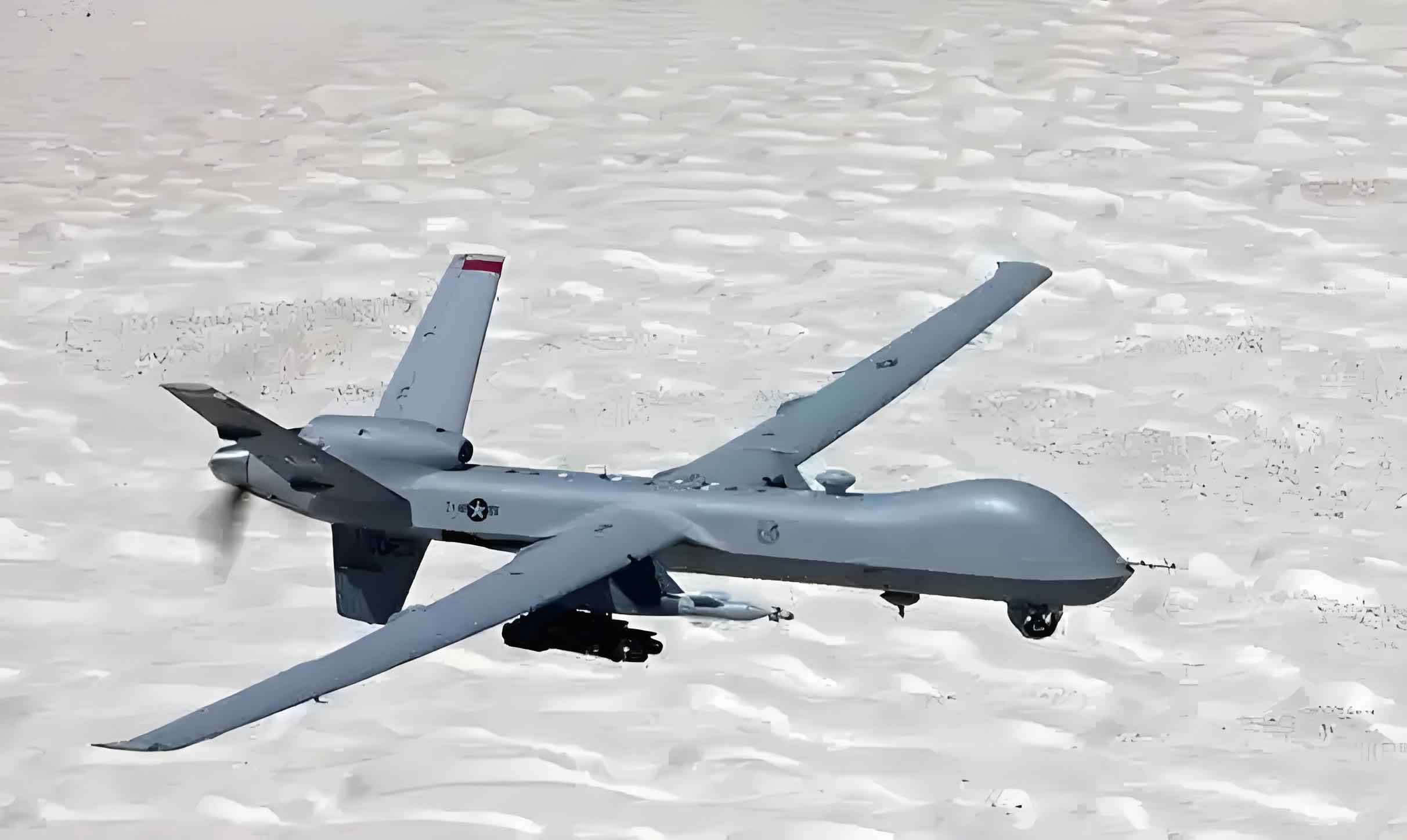
The conceptual genesis of unmanned flight dates back over a century, but the operational utility of the military drone was starkly demonstrated in the latter half of the 20th century. Early iterations served primarily as target practice, but visionary militaries soon recognized their potential for reconnaissance. The pivotal moments, however, came through combat experience. The use of decoy drones to probe and saturate enemy air defenses in the Middle Eastern conflicts of the 1970s and 80s illustrated a key asymmetric advantage: the ability to degrade sophisticated systems at a fraction of the cost and risk of manned platforms. This established a core doctrinal principle for the military drone. The 1990s saw a significant expansion of roles during major conflicts, where unmanned systems were leveraged for persistent surveillance, battle damage assessment, and signals intelligence, proving their worth as indispensable force multipliers.
Today, the ecosystem of military drones is highly stratified, encompassing a wide spectrum of sizes, endurance levels, and mission sets. The categorization below outlines the primary roles fulfilled by modern unmanned aerial systems (UAS):
| Category | Primary Role | Key Characteristics | Example Missions |
|---|---|---|---|
| Mini/Micro UAS | Tactical Reconnaissance & Surveillance | Hand-launched, short range (<50km), low altitude, high portability. | Company-level patrol overwatch, urban reconnaissance, target designation. |
| Medium-Altitude Long-Endurance (MALE) | Persistent ISR & Light Strike | Endurance 24+ hours, operational altitude 15,000-30,000 ft, satellite-linked. | Wide-area surveillance, communications relay, precision strikes with guided munitions. |
| High-Altitude Long-Endurance (HALE) | Strategic ISR & Communications | Endurance 30+ hours, altitude >60,000 ft, near-space operations. | National-level intelligence gathering, persistent wide-area maritime patrol, signals intelligence (SIGINT). |
| Unmanned Combat Aerial Vehicle (UCAV) | Suppression of Enemy Air Defenses (SEAD)/Strike | Low-observable (stealth) features, internal weapons bays, high-performance aerodynamics. | First-day-of-war penetration strikes, anti-radiation missions, high-value target interdiction. |
| Loitering Munitions (Kamikaze Drones) | Precision Attack & Time-Sensitive Strikes | Single-use, dwell over target area before committing to a kinetic attack. | Counter-battery fire, engaging moving vehicles, attacking opportunistic targets. |
| Electronic Warfare (EW) Drone | Electronic Attack & Protection | Equipped with jammers, signal decoys, or electromagnetic pulse (EMP) devices. | Radar jamming, communications disruption, protecting strike packages. |
The compelling advantages driving global investment in military drone technology are multifaceted. Firstly, the cost-benefit ratio is significant. The lifecycle cost—encompassing procurement, operation, maintenance, and notably, the absence of pilot training and life-support systems—is typically a fraction of that for a comparable manned aircraft. This economic calculus enables mass and attritable use. Secondly, the operational risk profile is fundamentally altered. Removing the human pilot from the cockpit eliminates the risk of casualty or capture, allowing commanders to authorize missions in politically sensitive or highly contested environments where the loss of a manned asset would be unacceptable. Thirdly, performance envelopes can be pushed. Unconstrained by human physiological limits such as G-force tolerance or fatigue, a military drone can be designed for extreme maneuvers, ultra-long endurance, and operations in environments hazardous to humans. The fundamental relationship for endurance can be simplified as:
$$ E = \frac{C \cdot L/D}{\eta \cdot g} \ln \left( \frac{W_{initial}}{W_{final}} \right) $$
Where \(E\) is endurance, \(C\) is specific fuel consumption, \(L/D\) is the lift-to-drag ratio (aerodynamic efficiency), \(\eta\) is propeller efficiency, \(g\) is gravity, and \(W_{initial}/W_{final}\) is the mass fraction of fuel. This formula highlights that maximizing endurance for a reconnaissance military drone requires optimizing aerodynamic efficiency and propulsive performance, design freedoms often enhanced without a human crew compartment.
The technological framework enabling modern military drones is a complex synergy of subsystems. The airframe and propulsion have diversified from simple piston engines to turboprops, turbojets, and even electric systems for small drones. Stealth technology, involving shape design, radar-absorbent materials (RAM), and engine inlet masking, is now critical for survivability in high-threat environments, particularly for the UCAV class of military drone. The sensor and payload suite is the heart of the system’s utility. Electro-optical/infrared (EO/IR) gimbals, synthetic aperture radars (SAR), SIGINT pods, and laser designators provide unparalleled situational awareness. For a military drone performing ISR, the ground resolution of its sensor is paramount:
$$ GSD = \frac{H \cdot p}{f} $$
Here, \(GSD\) is the Ground Sample Distance (a measure of resolution, e.g., in cm/pixel), \(H\) is the altitude above ground, \(p\) is the sensor pixel size, and \(f\) is the focal length of the optics. This shows that for a desired resolution, a lower altitude or a better (longer focal length) sensor is required, directly influencing mission planning for the military drone.
The command, control, communications, and computing (C4) architecture forms the neural network. Secure, robust, low-probability-of-intercept (LPI) datalinks are essential. The most significant leap forward is in autonomy. While most military drones are remotely piloted (RPV), advanced levels of autonomy using AI and machine learning (ML) are being integrated. This spans from automated take-off and landing and in-flight contingency management to advanced functions like cooperative flight in swarms, automatic target recognition (ATR), and dynamic mission re-tasking. The level of autonomy \(A\) for a military drone can be conceptualized on a spectrum from direct human control (\(A=0\)) to full AI agency (\(A=1\)), governed by an OODA (Observe, Orient, Decide, Act) loop where more functions are delegated to the machine:
$$ A = \frac{F_{auto}}{F_{total}} $$
where \(F_{auto}\) represents the number of decision/action functions performed autonomously, and \(F_{total}\) is the total number of functions required for a mission. The drive is to increase \(A\) for swarming and high-tempo operations.
The contemporary and future operational applications of the military drone are vast. In the ISR domain, they provide an unblinking eye, with HALE platforms like the Global Hawk offering days of coverage over continents. In strike warfare, the MQ-9 Reaper has become synonymous with targeted counterterrorism operations. The emergence of loitering munitions has democratized precision strike capabilities, a trend starkly visible in recent conflicts where they are used extensively for artillery and armor suppression. Electronic warfare drones can jam enemy communications or spoof radar systems, creating protective bubbles for friendly forces. Looking ahead, several key trends will define the next generation of military drone development:
- Proliferation of Small, Smart, and Swarming Drones: The future will see a massive increase in small, inexpensive, yet intelligent drones operating in collaborative swarms. These swarms, leveraging emergent behavior algorithms, could overwhelm traditional air defenses, perform distributed sensing, or conduct coordinated attacks. The collective capability \(C_{swarm}\) could potentially scale non-linearly:
$$ C_{swarm} \propto N^{\alpha} \cdot C_{unit} $$
where \(N\) is the number of drones, \(C_{unit}\) is the capability of a single unit, and \(\alpha > 1\) represents the networking/synergy exponent.
- Advanced Air Combat and Loyal Wingman Concepts: The sixth-generation fighter ecosystem envisions manned aircraft controlling “loyal wingman” drones. These semi-autonomous military drones would fly ahead, absorb enemy fire, extend sensor reach, and launch weapons, all under the direction of a human pilot in a command aircraft. This effectively multiplies the combat power and survivability of a single manned platform.
- Increased Autonomy and AI Integration: AI will move beyond辅助 functions to become central to mission execution. This includes AI pilots capable of dogfighting, AI mission commanders for drone swarms, and AI-based predictive maintenance. The ethical and command-and-control challenges of lethal autonomous weapons systems (LAWS) will be a major area of doctrinal and legal debate.
- Enhanced Survivability and Penetration: For high-end conflicts against peer adversaries, stealth, speed, and electronic warfare capabilities will be paramount. Next-generation military drones will feature more advanced low-observable designs, directed energy weapons for self-defense, and the ability to operate in GPS-denied and communications-jammed environments using alternative navigation (e.g., celestial, terrain-referenced) and mesh networks.
- Multi-Domain Integration: The military drone will not operate in isolation. Future systems will be nodes in a Joint All-Domain Command and Control (JADC2) network, seamlessly sharing data with satellites, naval vessels, ground troops, and other aircraft in real-time, creating a fused and rapidly actionable common operational picture.
The global landscape of military drone development is highly dynamic. A comparison of select high-profile programs illustrates the diversity of approaches:
| Country/Entity | Program/Platform | Category | Notable Features | |
|---|---|---|---|---|
| United States | RQ-4 Global Hawk | HALE ISR | Ultra-long endurance, multiple integrated sensor suites for strategic intelligence. | |
| United States | MQ-9 Reaper | MALE UCAV | Workhorse for strike/ISR, long loiter time, carries Hellfire missiles and GBU-laser guided bombs. | |
| United States | XQ-58A Valkyrie | Loyal Wingman / UCAV | Stealthy, runway-independent, designed to accompany F-35 or F-22 into combat. | |
| Turkey | Bayraktar TB2 / Akinci | MALE UCAV | Cost-effective, combat-proven, significant export success, catalyzed domestic drone industry. | |
| China | CH-4 / CH-5 | MALE UCAV | Reaper analogues, widely exported, part of a comprehensive and rapidly advancing UAS family. | |
| China | GJ-11 (Sharp Sword) | Stealth UCAV | Flying-wing stealth design, likely intended for penetrating strikes in high-threat environments. | |
| Various (Commercial) | Modified Commercial Quadcopters | Mini UAS / Loitering Munition | Ubiquitous on modern battlefields, used for reconnaissance, artillery correction, and as improvised grenade-dropping platforms. |
In conclusion, the trajectory of the military drone is one of relentless expansion in capability, accessibility, and strategic importance. It has evolved from a supporting player to a central actor in modern warfare, reshaping doctrines and forcing adversaries to develop costly countermeasures. The future military drone will be smarter, more connected, more autonomous, and more numerous. It will operate in swarms, team with manned platforms, and execute complex missions with minimal human intervention. This evolution promises to enhance military effectiveness but also raises profound questions about the future of conflict, escalation dynamics, and the role of human judgment in the use of force. As I analyze this landscape, it is clear that mastering the technology and developing the doctrines for the next generation of military drones will be a defining challenge—and a critical advantage—for armed forces in the 21st century.