
The advent of the military drone represents a paradigm shift in modern warfare. These systems, operating without an onboard human pilot, have evolved from simple reconnaissance platforms to sophisticated nodes in a networked battlespace, fundamentally altering the concepts of engagement, risk, and persistence. The successful deployment of various military drone types in recent conflicts has unequivocally demonstrated their value, unveiling a new chapter of warfare dominated by intelligent, remote-attack assets and non-contact engagements. From my perspective, the proliferation and advancement of these systems are not merely incremental improvements but are central to the realization of information-centric and network-centric warfare doctrines. This article will provide a comprehensive analysis of the defining characteristics, multifaceted military applications, pivotal enabling technologies, and essential strategic considerations for the development and integration of military drone capabilities.
A typical military drone system, or Unmanned Aerial System (UAS), is composed of several key elements: the air vehicle (the drone itself), a ground control station (GCS), and a data link for communication. The air vehicle’s architecture includes the airframe, propulsion system, flight control avionics, mission-specific payload, and, for combat variants, integrated weapon systems. Launch and recovery elements can vary widely, from conventional runways to portable catapults and net-based arrestment systems. This modularity allows the military drone to be tailored for an astonishingly diverse set of missions.
I. Defining Characteristics and Capabilities
The unique value proposition of the military drone stems from a set of characteristics that distinguish it from manned platforms. These features are not inherent but are the result of deliberate design choices that liberate the system from human physiological and psychological constraints.
1.1 Physical and Performance Flexibility
The physical form factor of a military drone is dictated solely by its mission profile, leading to an extreme variety in size and performance envelopes. Unlike manned aircraft, there is no need for life support systems, ejection seats, or canopies, allowing for highly optimized designs.
- Size and Configuration: The scale can range from the vast wingspans of High-Altitude Long-Endurance (HALE) strategic drones like the RQ-4 Global Hawk, designed for maximum fuel efficiency and sensor coverage, to palm-sized micro-drones used for squad-level reconnaissance. The configuration is equally diverse, encompassing fixed-wing, rotary-wing (helicopter), tilt-rotor, and even flapping-wing (ornithopter) designs for specialized tasks.
- Speed and Maneuverability: Freed from human g-force tolerance limits (typically +9G), a military drone can execute extreme maneuvers—rapid climbs, dives, and high-G turns—that would incapacitate a human pilot. This enhances survivability against anti-aircraft systems. Conversely, for stealthy ingress, drones can be designed for very low-speed, nap-of-the-earth flight to avoid radar detection.
- Endurance: Endurance is perhaps one of the most transformative attributes. Tactical drones may operate for a few hours, providing immediate battlefield oversight. In stark contrast, strategic HALE drones can remain aloft for over 30 hours, and experimental solar-powered models aim for weeks or months of continuous flight, offering a persistent stare capability that satellites cannot match due to orbital mechanics.
1.2 Operational Versatility and Survivability
The operational flexibility of the military drone extends beyond flight performance to its deployment and recovery paradigms.
- Deployment and Recovery: Launch methods are highly adaptable. They include conventional runway take-off, vertical take-off and landing (VTOL), catapult launches from vehicles or ships, and even air-drop from other aircraft. Recovery methods are similarly varied: runway landing, VTOL landing, net-assisted recovery, parachute descent, or, for expendable systems, controlled impact. This allows military drone operations from forward bases, ships, and mobile ground units with minimal infrastructure.
- Survivability and Risk Acceptance: The absence of a human crew fundamentally changes the risk calculus. Drones can be deployed into highly contested or chemically/radiologically contaminated environments deemed too risky for manned aircraft. They can perform suppression of enemy air defense (SEAD) missions by drawing fire, acting as sophisticated decoys. This attribute makes the military drone a potent tool for penetrating and degrading advanced integrated air defense systems (IADS).
| Category | Example | Typical Size | Endurance | Primary Mission | Key Feature |
|---|---|---|---|---|---|
| HALE (High-Altitude Long-Endurance) | RQ-4 Global Hawk, MQ-4C Triton | Large (Wingspan > 30m) | > 30 hours | Strategic ISR, Broad Area Maritime Surveillance | Extreme persistence, Satellite-like coverage |
| MALE (Medium-Altitude Long-Endurance) | MQ-9 Reaper, Heron TP | Medium-Large | 20-40 hours | Tactical ISR, Precision Strike | Multirole, “Find-Fix-Finish” capability |
| Tactical UAV | RQ-7 Shadow, ScanEagle | Small-Medium | 6-12 hours | Brigade/Division-level ISR, Artillery spotting | Rapid deployment, Organic to ground units |
| Small/Mini UAV | RQ-11 Raven, PD-100 Black Hornet | Hand-launched | 1-2 hours | Platoon/Squad-level reconnaissance | Portability, Immediate situational awareness |
| Combat/Attrition UAV | Bayraktar TB2, Harop | Medium | ~20 hours | ISR and Precision Strike (TB2), SEAD/Loitering Munition (Harop) | Cost-effective force multiplier, “Kamikaze” capability |
| Loyal Wingman/CCA | XQ-58A Valkyrie, BAE Systems Taranis | Fighter-sized | Classified | Escort for manned fighters, Penetrating ISR/Strike | Autonomous teaming, Enhanced survivability for crewed assets |
II. Spectrum of Military Applications
The utility of the military drone spans the entire spectrum of conflict, from persistent strategic intelligence gathering to tactical direct fire support. Their roles are continually expanding as technology and doctrine evolve.
2.1 Intelligence, Surveillance, and Reconnaissance (ISR)
ISR remains the cornerstone application. Drones provide an unparalleled “unblinking eye” over the battlefield. Equipped with electro-optical/infrared (EO/IR) cameras, Synthetic Aperture Radar (SAR), signals intelligence (SIGINT) suites, and hyper-spectral sensors, they create a multi-layered intelligence picture.
- Strategic ISR: HALE drones operate at altitudes above 60,000 feet, covering vast geographic areas. They complement satellites by offering more flexible tasking, higher revisit rates over specific points of interest, and the ability to carry heavier, more powerful sensors. Their data is crucial for tracking mobile targets, monitoring construction activities, and providing broad situational awareness for command centers.
- Tactical ISR: MALE and tactical drones provide direct support to ground commanders. They can loiter over a specific area for hours, tracking insurgent movements, conducting battle damage assessment (BDA) after an airstrike, or providing over-watch for a convoy. The real-time video feed, often dubbed “God’s eye view,” is a decisive tool for tactical decision-making. The miniaturization of sensors has empowered even squad-level infantry with organic reconnaissance via hand-launched military drone systems.
2.2 Precision Strike and Armed Reconnaissance
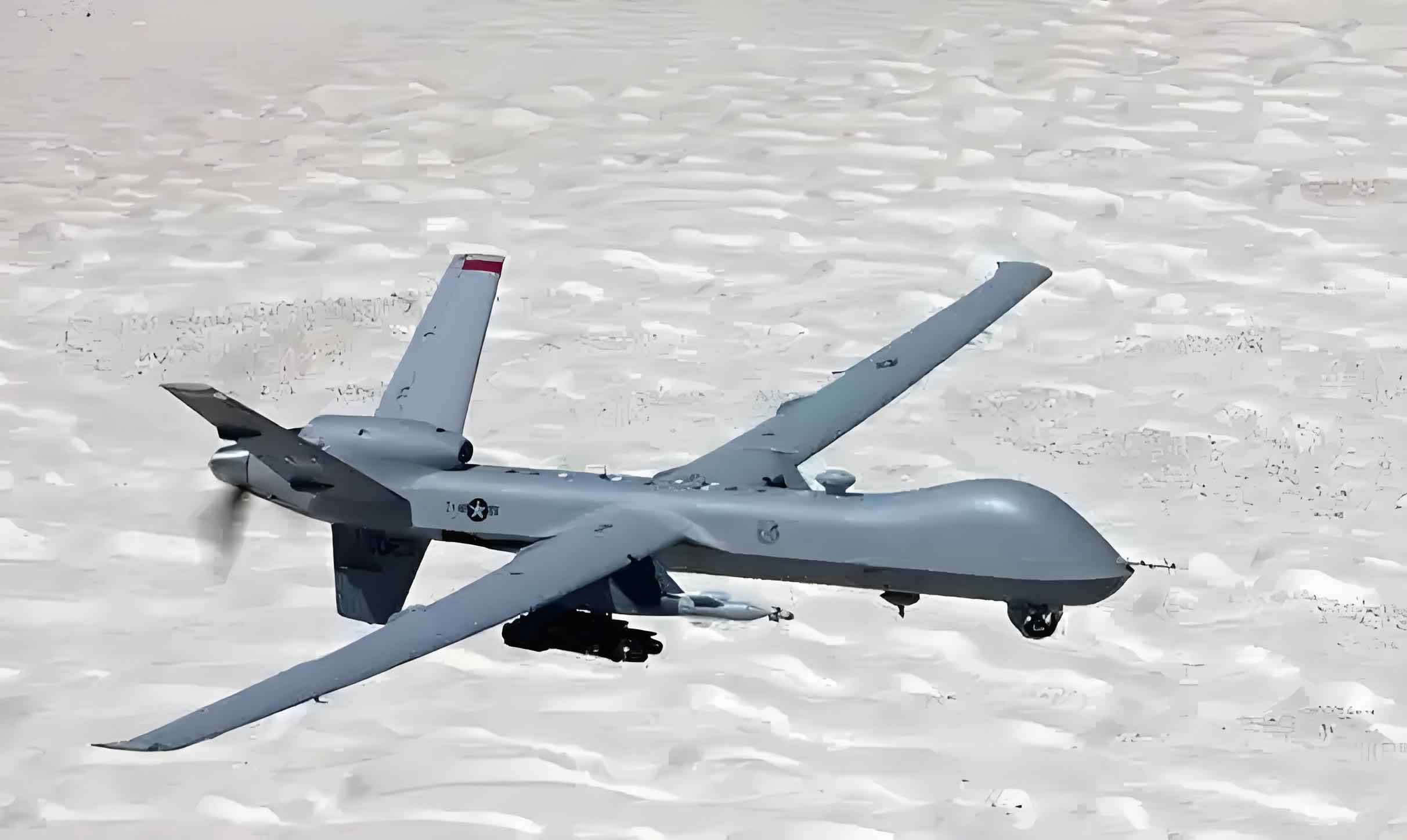
The integration of weapons onto the MQ-1 Predator created the archetypal “hunter-killer” military drone. This “sensor-to-shooter” fusion revolutionized counter-insurgency and counter-terrorism operations. Platforms like the MQ-9 Reaper can carry a mixed payload of laser-guided bombs and air-to-ground missiles (e.g., Hellfire). They can identify a target, maintain positive identification through extended surveillance, and prosecute the strike when authorized—all while being controlled from a ground station thousands of miles away. Loitering munitions, a sub-category, take this concept further by being designed as single-use, kamikaze systems that can hover over a target area for extended periods before diving onto a target.
2.3 Electronic Warfare (EW) and Information Operations
The military drone is an ideal platform for EW missions. It can be deployed closer to enemy emitters than manned aircraft, at lower risk.
- Electronic Attack (EA): Drones can jam enemy communications, radar, and GPS signals, creating localized “bubbles” of electronic denial.
- Electronic Protection (EP): They can provide protective jamming for friendly forces.
- Decoy Operations: Dedicated decoy drones, equipped with radar signature enhancers, mimic the radar cross-section of strike aircraft or bombers. They are launched in advance of a manned strike package to saturate and confuse enemy air defenses, forcing them to reveal their positions by activating radars or firing missiles.
2.4 Communication and Data Relay
In the network-centric battlespace, maintaining communication links is paramount. Drones can act as airborne communication nodes, extending the range of line-of-sight radios for ground troops operating in mountainous or urban terrain. A HALE military drone can serve as a pseudo-satellite, providing a resilient, survivable data link for command and control (C2) or for streaming high-bandwidth sensor data from other platforms back to headquarters.
2.5 Swarming and Collaborative Autonomy
This emerging application represents a leap in capability. Instead of a single, complex drone, a large number of simpler, cheaper drones operate as a coordinated collective or “swarm.” Using advanced algorithms, they can perform complex behaviors: distributed sensing, saturation attacks on defenses, or collaborative search patterns. The effectiveness of a swarm is based on principles that can be modeled. For instance, the number of assets a single defender can engage simultaneously is limited. A swarm’s survivability and effectiveness can be related to its size and the defender’s engagement capacity. A simplified representation of this concept draws from Lanchester’s laws, where the rate of attrition for the swarm ($N_s$) against a defender with engagement rate ($\beta$) and number of interceptors ($N_d$) can be conceptualized. The net effect is that a sufficiently large, coordinated swarm can overwhelm even advanced point defenses.
$$ \frac{dN_s}{dt} = – \beta \cdot N_d \cdot f(N_s) $$
Where $f(N_s)$ is a function representing the coordination and defensive tactics of the swarm. The key insight is that the cost-exchange ratio in such an engagement can be highly favorable to the attacker using low-cost swarm drones.
III. Critical Enabling Technologies
The rapid evolution of the military drone is fueled by breakthroughs across multiple technological domains. These technologies are pushing drones towards greater autonomy, stealth, connectivity, and lethality.
3.1 Advanced Propulsion
Endurance and performance are fundamentally tied to propulsion. While piston and turboprop engines dominate the MALE/Tactical sector, the frontier is expanding.
- High-Altitude & High-Speed Propulsion: For strategic drones and future hypersonic applications, advanced cycles like Turbofans for efficient high-subsonic cruise and emerging Turbine-Based Combined Cycle (TBCC) or rocket-based systems for hypersonic flight are under development.
- Alternative Energy: Solar-electric propulsion for pseudo-satellites, hydrogen fuel cells for silent endurance, and hybrid-electric systems are being explored to dramatically increase flight duration while reducing thermal and acoustic signatures.
The classic Breguet range equation still governs the fundamental design trade-off for endurance-centric military drone platforms:
$$ R = \frac{V}{g \cdot SFC} \cdot \frac{L}{D} \cdot \ln \left( \frac{W_{initial}}{W_{final}} \right) $$
Where $R$ is range, $V$ is velocity, $g$ is gravity, $SFC$ is specific fuel consumption, $L/D$ is lift-to-drag ratio (aerodynamic efficiency), and $W_{initial}/W_{final}$ is the mass fraction. This equation drives the pursuit of high-efficiency aerodynamics, lightweight composites, and frugal engines.
3.2 Low Observability (Stealth) Technology
Survivability against advanced air defenses requires stealth. This is a multi-disciplinary effort involving shape, materials, and tactics.
- Shaping: Faceted surfaces, aligned edges, and blended body-wing designs scatter radar waves away from the source. Internal weapon bays and shielded engine inlets are critical.
- Materials: Radar-absorbent materials (RAM) and structures (RAS) are applied to surfaces. These are often composites infused with carbon or ferrite particles. Advanced meta-materials are being researched to actively manipulate electromagnetic wave reflection.
- Infrared (IR) Suppression: Shielding hot engine parts, using mixed exhaust flows, and applying special low-emissivity coatings reduce the drone’s heat signature.
The goal is to minimize the Radar Cross Section (RCS), which for a simple shape can be approximated, but for a complex stealth platform is the result of meticulous computational design and testing. A fundamental measure is the monostatic RCS ($\sigma$):
$$ \sigma = \lim_{R \to \infty} 4\pi R^2 \frac{|E_s|^2}{|E_i|^2} $$
Where $R$ is the range to the target, $E_s$ is the scattered field strength at the radar, and $E_i$ is the incident field strength at the target. A stealthy military drone aims for an RCS value comparable to a small bird or insect.
3.3 Autonomy and Artificial Intelligence (AI)
This is the most transformative technological area. Moving from remotely piloted vehicles to truly autonomous systems requires advancements in:
- Perception: Using sensor fusion (EO/IR, radar, LiDAR) and computer vision algorithms to understand the environment, detect and classify objects, and navigate in GPS-denied conditions.
- Decision-Making: AI-driven mission planning, dynamic route re-planning to avoid threats, and eventually, within strict rules of engagement (ROE), autonomous target identification and engagement prioritization.
- Collaborative Autonomy: Algorithms that enable multiple drones to communicate, share situational awareness, and execute coordinated maneuvers without constant human direction—the foundation of swarm tactics and “Loyal Wingman” operations where drones team with manned fighters.
3.4 Modularity and Open Systems Architecture
To control costs and accelerate innovation, modern military drone programs emphasize modular, open architectures. This means:
- Payload Agnosticism: The air vehicle has standardized electrical, data, and mechanical interfaces. A sensor pod can be swapped for a communications pod or a weapon rack in hours, not months, enabling true multi-mission flexibility.
- Software-Defined Functionality: Much of the platform’s capability is defined by its software, allowing for upgrades and new applications to be fielded without modifying hardware.
- Interoperability: Adherence to common data and communication standards (like STANAG 4586) ensures drones from different manufacturers can share information and be controlled by common ground stations within a coalition force.
| Technology Area | Specific Advances | Impact on Drone Capabilities |
|---|---|---|
| Autonomy & AI | Machine Learning for target recognition; Swarm intelligence algorithms; Adaptive path planning. | Reduces operator workload; Enables complex collaborative missions; Allows operation in communication-denied environments. |
| Sensors & Payloads | Miniaturized AESA Radars; Hyper-spectral Imaging; Advanced SIGINT pods; Laser Designators. | Enhances situational awareness in all weather/day-night conditions; Provides precise targeting; Expands intelligence collection. |
| Communications | Secure, anti-jam datalinks (SATCOM, Tactical CDL); Mesh networking; Cognitive radio. | Enables beyond-line-of-sight control; Facilitates resilient swarm communications; Secures the command channel. |
| Stealth & Survivability | Low-RCS shaping; Advanced RAM; IR suppression; Electronic warfare self-protection suites. | Increases penetration capability against advanced IADS; Enhances survivability in contested airspace. |
| Propulsion & Power | High-efficiency turboprops; Hybrid-electric systems; Hydrogen fuel cells. | Extends range and endurance; Reduces acoustic and thermal signatures; Increases payload capacity. |
IV. Strategic Considerations and Developmental Imperatives
The integration of military drone systems into a nation’s defense posture is not merely a procurement exercise; it is a strategic endeavor that must be holistic and forward-looking. Based on the analysis of features, applications, and technologies, I argue that successful development hinges on harmonizing several critical relationships.
4.1 Synchronizing Development with Evolving Operational Doctrine
Technology must serve strategy. The development of a military drone force must be intrinsically linked to the evolution of warfighting concepts such as Multi-Domain Operations (MDO), Joint All-Domain Command and Control (JADC2), and distributed warfare. Drones should not be seen as standalone systems but as integral components of these broader architectures. This requires continuous wargaming, experimentation, and the codification of Tactics, Techniques, and Procedures (TTPs) that define how drones will cooperate with manned aircraft, cyber units, space assets, and ground forces. Doctrine must answer critical questions: What is the optimal human-machine teaming structure for a manned-unmanned team (MUM-T)? What are the rules of engagement for a autonomous swarm? Development programs must have direct feedback loops from operational experimentation units.
4.2 Achieving Systemic Integration with Legacy and Next-Gen Platforms
The true power of a military drone is realized when it is seamlessly integrated into the broader force structure. This requires:
- Interoperability: Ensuring data links and communication protocols allow drones to share targeting information with artillery systems, feed intelligence to command centers, and receive tasking from airborne early warning aircraft.
- Force Mix Optimization: Deliberately planning the mix of manned and unmanned platforms. Drones are superb for dull, dirty, and dangerous missions, freeing up expensive manned fighters for the most complex tasks. They can act as force multipliers, with one F-35 controlling multiple “Loyal Wingman” drones.
- Training Integration: Simulating drone support in combined arms training exercises for ground troops and integrating drone control into the training syllabi of fighter pilots and naval officers.
4.3 Dominating the Cyber-Electromagnetic Spectrum
The military drone is both a consumer and a guardian of the cyber-electromagnetic spectrum. Its reliance on datalinks and GPS makes it vulnerable, while its payloads make it a potent tool for electronic attack. A comprehensive strategy must:
- Harden Systems: Develop resilient, anti-jam, anti-spoof communication and navigation systems. Implement robust cybersecurity for ground control stations and data networks.
- Exploit Adversary Vulnerabilities: Field drones specifically designed for cyber-electronic warfare (CEW) to disrupt adversary C2 and sensing capabilities.
- Plan for Contested Spectrum: Develop and train for concepts of operation that allow drones to function in GPS-denied and communication-degraded environments using alternative navigation (vision-based, celestial) and pre-programmed autonomous behaviors.
4.4 Balancing Offensive Capabilities with Defensive Countermeasures
As drones proliferate, counter-drone (C-UAS) technology is advancing rapidly. A prudent strategy must address both sides of this equation.
- Invest in Counter-UAS: Develop layered defenses incorporating kinetic (microwave, lasers, interceptors) and non-kinetic (jamming, spoofing) systems to protect high-value assets and forces from adversary drone swarms or loitering munitions.
- Design for Survivability: Incorporate electronic warfare self-protection (EWSP), threat warning systems, and evasive maneuver algorithms into drone designs to increase their resilience against enemy C-UAS systems.
- Conduct Red-Teaming: Continuously test one’s own drone systems against emerging C-UAS tactics to identify and rectify vulnerabilities.
| Strategic Imperative | Associated Developmental & Operational Actions |
|---|---|
| Doctrine-Driven Development | Establish permanent joint experimentation units; Fund wargaming focused on UAS integration; Rapidly convert lessons learned into updated TTPs and procurement requirements. |
| Seamless Force Integration | Mandate open architecture standards for all new systems; Develop common control interfaces; Include UAS support in all major joint exercises. |
| Cyber-Electromagnetic Resilience | Prioritize funding for secure, resilient datalinks (e.g., quantum key distribution, advanced waveforms); Accelerate AI research for autonomous operation in denied environments. |
| Sustainable Industrial & Human Base | Invest in STEM education; Fund dual-use research in AI, composites, and micro-electronics; Develop career paths for UAS operators and AI specialists within the military. |
| Ethical & Legal Frameworks | Engage in international dialogues on lethal autonomous weapons; Develop clear, auditable rules for autonomy in targeting; Ensure robust human supervision protocols. |
4.5 Fostering a Sustainable Innovation Ecosystem
Finally, maintaining a leading edge in military drone technology requires a healthy national ecosystem. This includes investment in basic and applied research (especially in AI, materials science, and propulsion), support for a competitive industrial base that includes non-traditional defense companies, and the cultivation of a skilled workforce of engineers, data scientists, and operators. Procurement strategies should favor agility and rapid prototyping over decade-long development cycles, allowing for the continuous injection of commercial technological advancements into military systems.
In conclusion, the military drone has irrevocably changed the character of war. Its evolution from a niche surveillance tool to a central pillar of modern combat power is a testament to its inherent advantages in persistence, risk reduction, and flexibility. The future trajectory points towards greater autonomy, deeper networking, and more sophisticated human-machine collaboration. Success for any nation will depend not only on developing capable platforms but, more importantly, on strategically integrating them into a cohesive warfighting doctrine, hardening them for contested environments, and nurturing the innovation base that will produce the next generation of these transformative systems. The challenge is systemic, requiring synchronization across technology, operations, policy, and industry.