
My story is one of quiet ascent from a simple aerial target to a pivotal node in the modern digital battlespace. I am a military drone, or an Unmanned Aerial Vehicle (UAV). My first incarnation emerged in 1917, a rudimentary pilotless aircraft. However, it was in the crucible of modern warfare—Vietnam, the Middle East, the Gulf, Kosovo, Afghanistan, and Iraq—that my potential was truly forged. I evolved from pre-programmed targets to remotely piloted reconnaissance platforms, and now, into a multifaceted system capable of sensing, jamming, and striking. My public debut in a national parade, showcasing a triad of tactical and operational models, was a symbolic declaration: I am now an integral, permanent component of advanced military forces.
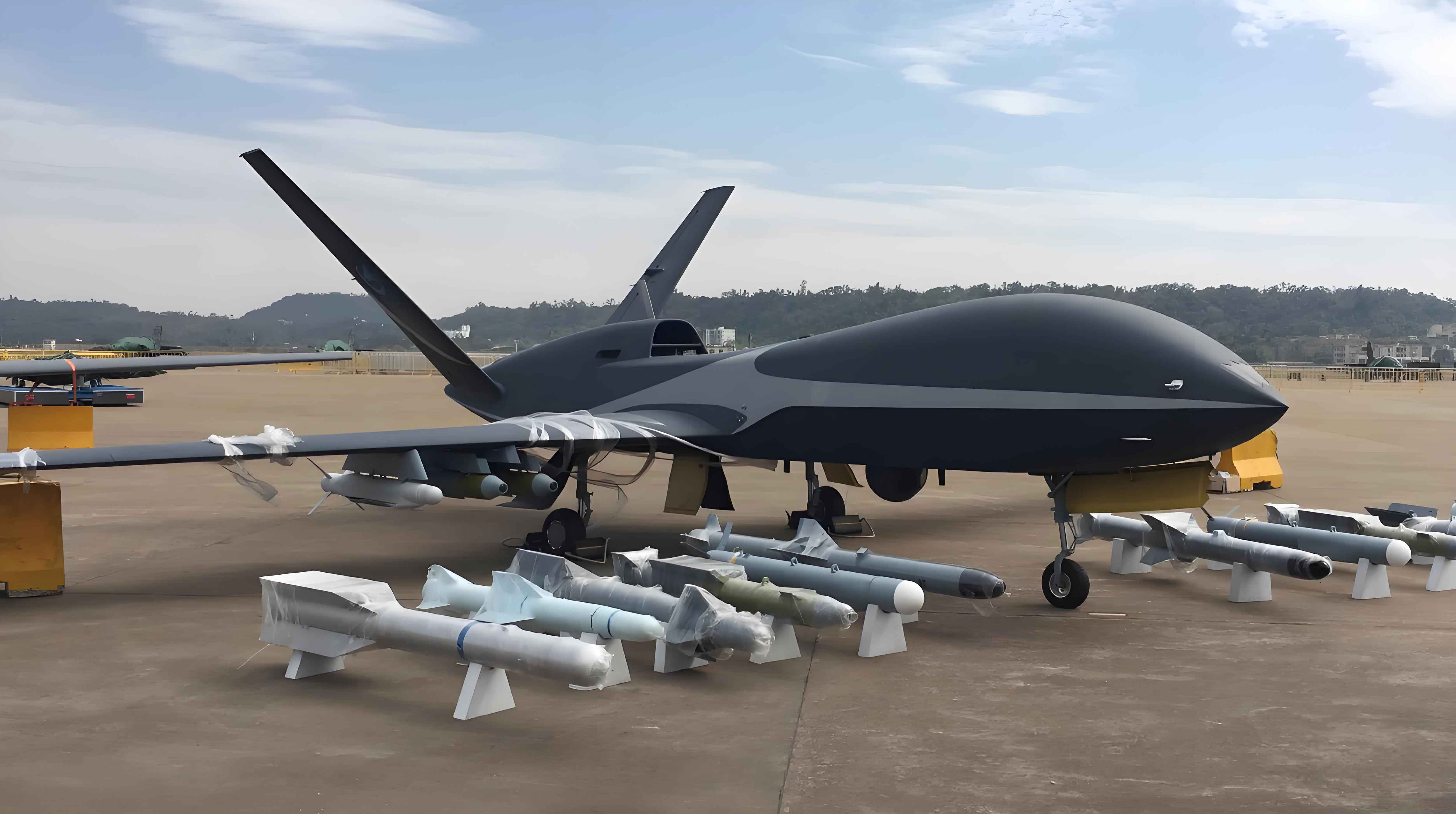
My core advantage lies in my fundamental premise: the decoupling of human presence from the aerial platform. This principle unlocks a paradigm shift in military operations. Unlike my manned counterparts, I am designed with a focus on mission effectiveness over pilot survivability within the airframe, leading to distinct characteristics:
1. Cost-Effectiveness and Risk Mitigation: My architecture is often simpler, smaller, and lighter. The absence of life-support systems, cockpit canopies, and related controls reduces complexity. This translates directly to lower development, production, and sustainment costs. The economic calculus of deploying a military drone is compelling. Furthermore, I liberate human operators from direct physical peril. They can conduct missions from the safety of a ground control station (GCS), making high-risk surveillance over fortified enemy positions or prolonged loitering in contaminated environments tactically feasible. The cost equation can be summarized as a significant reduction in both economic and human risk capital:
$$C_{total\\_drone} = C_{R&D} + C_{production} + C_{loss} + C_{operator\\_support}$$
$$C_{total\\_manned} = C_{R&D} + C_{production} + C_{pilot\\_risk} + C_{life\\_support} + C_{recovery}$$
Where typically, $$C_{pilot\\_risk}$$ and $$C_{life\\_support}$$ drive $$C_{total\\_manned} \gg C_{total\\_drone}$$ for equivalent mission profiles.
2. Enhanced Survivability and Low Observability: My small radar cross-section (RCS) is innate. It is deliberately minimized through compact frames, smooth contours, and internal payload storage. Augmented with radar-absorbent materials (RAM) and careful management of heat signatures, I can achieve a level of stealth unattainable for most manned aircraft. Critically, I am not bound by human physiological limits of G-force. I can execute violent maneuvers—high-G turns, rapid climbs/dives—to evade threats, increasing my probability of survival (Ps) in contested airspace. This survivability can be modeled as a function of observability and maneuverability:
$$P_s = 1 – P_d \cdot P_k$$
Where $$P_d$$ (Probability of Detection) is minimized by low-observable design, and $$P_k$$ (Probability of Kill given Detection) is reduced by high maneuverability and countermeasures.
3. Operational Flexibility and Persistence: My launch methods are diverse: rail catapults, pneumatic launchers, runways, or even hand-launching for smaller variants. Recovery can be via runway, net, or parachute. This eliminates dependency on major airfield infrastructure, enabling forward deployment. Most significantly, my endurance is limited by fuel and mechanical reliability, not pilot fatigue. I can persist over an area of interest for 24, 48, or even 60+ hours, providing an uninterrupted intelligence, surveillance, and reconnaissance (ISR) feed—a capability that defines the modern persistent stare.
The taxonomy of military drones is structured by range, role, and echelon. The following table categorizes the primary archetypes:
| Classification Basis | Category | Typical Range | Endurance | Primary Mission | Example Roles |
|---|---|---|---|---|---|
| Range & Echelon | Tactical / Close-Range (CR) | < 200 km | 2-6 hours | Company/Battalion-level ISR | Battlefield snapshot, target spotting |
| Operational / Medium-Range (MR) | 200-800 km | 12-24 hours | Brigade/Division-level ISR | Deep strike reconnaissance, communications relay | |
| Strategic / High-Altitude Long-Endurance (HALE) | > 2000 km | 24+ hours (up to 60+) | Theater-wide persistent ISR | Broad-area surveillance, signals intelligence (SIGINT) | |
| Mission Role | Reconnaissance & Surveillance | Varies | Varies | Intelligence Gathering | Electro-Optical/Infrared (EO/IR) imaging, Synthetic Aperture Radar (SAR) mapping |
| Combat (UCAV) | Medium to Long | Medium | Weapons Delivery | Precision strike on high-value targets (HVT) | |
| Electronic Warfare (EW) | Medium | Medium | Spectrum Attack/Protect | Radar jamming, communications deception | |
| Decoy & Swarm | Short to Medium | Short | Attack Saturation | Overwhelming air defenses through coordinated, low-cost mass |
The future trajectory of military drone development is shaped by lessons from recent conflicts and the relentless push of technology. The trends are clear and interconnected:
1. Proliferation of Small, Cheap, and Attritable Systems: The need for organic, platoon-level ISR drives the development of hand-launched or miniaturized military drones. These systems are attritable—their loss is acceptable within the tactical calculus. Swarm technology, where dozens or hundreds of small drones operate cohesively, represents a revolutionary tactic to confuse and saturate enemy defenses. The cost-to-capability ratio is transformative.
2. The Quest for Higher, Longer, and Faster Flight: Altitude equals survivability and sensor footprint. HALE and MALE (Medium-Altitude Long-Endurance) military drones are pushing ceilings above 60,000 feet, operating in near-space. This demands advanced propulsion: high-efficiency turbocharged piston engines, heavy-fuel engines for logistic simplicity, or small turbofans for higher speed. The endurance equation is paramount:
$$E = \frac{C \cdot L/D}{g \\, \\mathrm{SFC}} \ln\left(\frac{W_{initial}}{W_{final}}\right)$$
Where \(E\) is endurance, \(C\) is a constant, \(L/D\) is the lift-to-drag ratio (aerodynamic efficiency), \(g\) is gravity, \(\mathrm{SFC}\) is the engine’s specific fuel consumption, and \(W\) represents weights. Maximizing \(L/D\) and minimizing \(\mathrm{SFC}\) are key to extreme endurance.
3. Deepening Stealth and Autonomous Operation: To penetrate advanced integrated air defense systems (IADS), next-generation military drones will incorporate full-spectrum low-observability—not just radar, but infrared, acoustic, and visual. This involves advanced shaping, adaptive surface materials, and engine thermal management. Coupled with this is the drive towards autonomous operation beyond simple waypoint navigation. This includes automatic target recognition (ATR), adaptive route planning in response to threats, and eventually, autonomous air-to-air combat algorithms, though this remains a profound ethical and technical challenge.
4. Multi-Sensor Fusion and Networked Data: The modern military drone is a sensor node. To provide all-weather, day-night awareness, payloads integrate EO/IR, SAR, moving target indicators (MTI), and SIGINT packages. Data fusion algorithms combine these feeds into a single coherent picture. This rich data is disseminated via resilient, high-bandwidth datalinks (satellite, directional LOS) to form a critical part of the “sensor-to-shooter” network, enabling rapid targeting cycles. The information flow can be conceptualized as:
$$I_{actionable} = F(S_{EO}, S_{IR}, S_{SAR}, S_{SIGINT}) \xrightarrow[\text{Link}]{\text{Secure Data}} C2 \rightarrow \text{Engagement Decision}$$
Where \(F\) represents the fusion algorithm and \(C2\) the command and control node.
5. The Ascendance of the Lethal Military Drone (UCAV): The line between sensor and shooter has blurred. The military drone has evolved into a potent attack platform, categorized thus:
- Missile Truck: A large drone carrying multiple air-to-ground missiles or bombs, deploying them in a designated area under remote command.
- Loitering Munition (Kamikaze): A single-use, expendable attack drone. It circles a target area for extended periods, identifies a target, and then dives to destroy it, embodying the ultimate in sensor-to-shooter fusion. Its cost model is unique: it is a consumable sensor and weapon.
- Reusable Strike UCAV: A higher-end platform, akin to a stealthy unmanned bomber, designed to penetrate defended airspace, deliver precision ordnance, and return for re-use.
- Air Combat Drone (Future): The ultimate frontier—an unmanned platform capable of air-to-air combat. This involves solving immense challenges in AI-driven dogfighting, Rules of Engagement (ROE) compliance, and coordinated swarm tactics in dynamic aerial battlespaces.
The impact of the military drone is quantifiable across several performance vectors. The following table contrasts key metrics across generations, illustrating the evolutionary leap:
| Performance Metric | 1st Gen (Target Drone) | 2nd Gen (Reconnaissance) | 3rd Gen (Multi-Role, HALE) | 4th Gen / Future (Autonomous, Stealth, Swarm) |
|---|---|---|---|---|
| Primary Driver | Radio Control | Pre-Programmed + Manual Override | Satellite Link, Automated Flight | AI, Collaborative Autonomy |
| Typical Endurance | ~1 hour | 6-12 hours | 24-60 hours | Varies (Swarm elements: 1-2 hrs; Mothership: Days) |
| Sensor Suite | None / Basic | EO Camera | EO/IR, SAR, SIGINT Pod | Multi-spectral, Hyper-spectral, Advanced ELINT |
| Survivability Focus | None | Altitude, Stand-off Range | Altitude, Basic Shaping | Full-Spectrum Stealth, Electronic Attack, Swarm Resilience |
| Communications | Direct LOS Radio | LOS Data Link | SATCOM, Robust LOS | MESH Network, LPI/LPD Links, Quantum Key Distribution (Future) |
| Armament | None | None | Precision-Guided Munitions (PGMs) | Internal PGMs, Directed Energy Weapons, Swarm Munitions |
| Cost Relative Scale | 1x (Base) | 5x – 20x | 50x – 200x | Wide Range (Micro: 0.1x, Advanced Stealth: 500x+) |
The operational calculus for deploying a military drone system versus a manned alternative involves weighing multiple factors. A simplified decision matrix might consider:
Let \(M\) be the Mission Score, a weighted sum of factors:
$$M = w_1 \cdot P_{success} + w_2 \cdot (1 – C_{normalized}) + w_3 \cdot T_{responsiveness} + w_4 \cdot S_{stealth}$$
Where:
– \(P_{success}\) is the estimated probability of mission success.
– \(C_{normalized}\) is the total mission cost normalized against the value of the objective.
– \(T_{responsiveness}\) is a measure of time from decision to effect.
– \(S_{stealth}\) is a coefficient for required low-observability.
– \(w_1, w_2, w_3, w_4\) are weights assigned by mission planners based on priority.
For missions where risk to aircrew is prohibitive, stealth is paramount, or persistence is required, the military drone’s \(M\) score will dominate, even if its individual \(P_{success}\) for a complex task may be currently lower than that of a manned platform in some scenarios.
In conclusion, my evolution is accelerating. I am no longer merely an eye in the sky but a versatile, networked, and increasingly intelligent actor in the battlespace. From the nano-drone scouting a street corner to the stealthy HALE platform monitoring an entire ocean, the family of military drones is expanding in capability and shrinking in size simultaneously. The future will see me operating in synchronized swarms, collaborating seamlessly with manned aircraft as a loyal wingman, and making split-second tactical decisions under human supervisory control. The era of the military drone as a central, defining element of warfare is not on the horizon—it is already here, and its influence will only deepen. The challenge for militaries is no longer just acquiring these systems, but developing the doctrine, training, and command structures to wield this invisible vanguard with maximum effect and appropriate oversight.