
The evolution of military technology has placed military drones, or Unmanned Aerial Vehicles (UAVs), at the forefront of modern defense strategies. These sophisticated systems provide critical capabilities in intelligence, surveillance, reconnaissance (ISR), and strike missions, often without risking human pilots. Their development, however, is a complex and resource-intensive endeavor, inherently tied to the economic constraints of national defense budgets. Accurate prediction of development costs during the early conceptual and design phases is therefore paramount. It enables effective budget allocation, informs design trade-offs, and supports programmatic risk management. Traditional cost estimation methods, such as parametric models and analogy, often struggle with the unique, technology-driven nature of military drone projects, especially when historical data is scarce or non-linear relationships exist between cost drivers and the final cost.
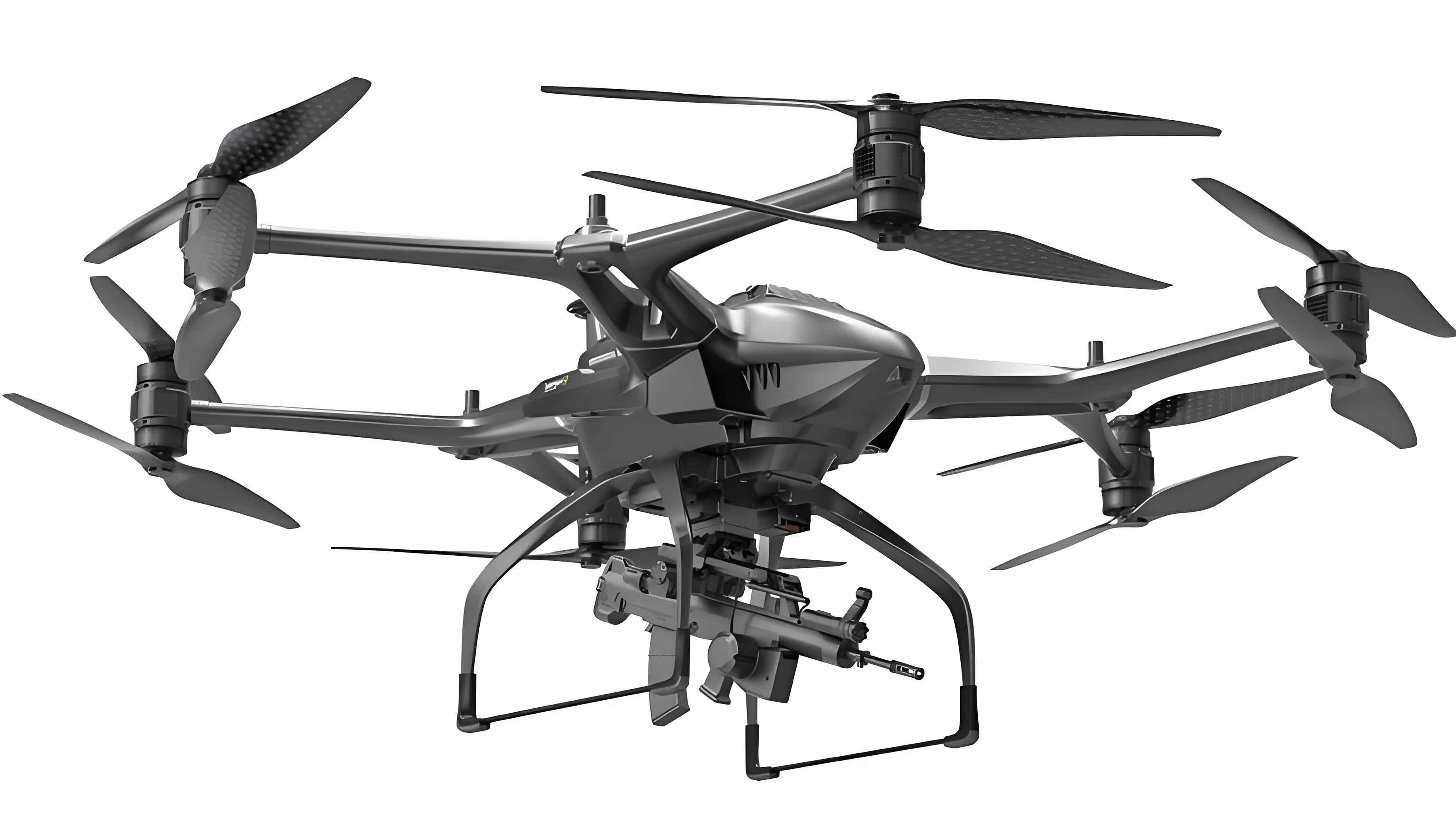
This article explores the application of Support Vector Machines (SVM), a powerful machine learning technique rooted in statistical learning theory, to the challenge of predicting military drone development costs. SVM offers distinct advantages in scenarios with limited sample data—a common reality in cutting-edge defense projects—by focusing on maximizing generalizability rather than merely minimizing error on training data.
The Imperative for Accurate Cost Forecasting in Military Drone Programs
Development cost encompasses all expenses from initial concept studies through design, prototyping, testing, and certification until the system is ready for production. For a military drone, these costs are influenced by a multifaceted set of factors:
- Performance Parameters: Specifications such as maximum range, endurance, service ceiling, payload capacity, and stealth characteristics directly drive design complexity.
- Technological Novelty: The integration of new materials (e.g., composites), advanced propulsion systems, novel sensor suites, and autonomous AI pilots significantly impacts non-recurring engineering (NRE) costs.
- System Integration: The complexity of fusing airframe, avionics, ground control stations, and data links into a cohesive system.
- Testing and Certification: Rigorous flight testing, safety validation, and meeting stringent military airworthiness standards constitute a major cost segment.
An underestimation can lead to budget overruns, program delays, and potential cancellation. An overestimation might render a viable project non-competitive or prevent it from being initiated. Thus, a robust, data-driven prediction model is not a luxury but a necessity.
Mathematical Foundations of Support Vector Regression (SVR)
Support Vector Machines for regression (SVR) seek to find a function $f(\mathbf{x})$ that deviates from the actual target values $y_i$ by a value no greater than $\epsilon$ for each training point $\mathbf{x}_i$, while remaining as flat as possible. The core formulation addresses a convex optimization problem.
Given a training dataset $G = \{(\mathbf{x}_i, y_i) | i = 1, 2, …, l\}$ where $\mathbf{x}_i \in \mathbb{R}^n$ and $y_i \in \mathbb{R}$, we aim to find a linear function in a high-dimensional feature space:
$$ f(\mathbf{x}) = \mathbf{w} \cdot \Phi(\mathbf{x}) + b $$
where $\Phi(\mathbf{x})$ maps the input vector $\mathbf{x}$ to the feature space, $\mathbf{w}$ is the weight vector, and $b$ is the bias term.
The flatness of the function is achieved by minimizing the norm $||\mathbf{w}||^2$. This leads to the following primal optimization problem:
$$
\begin{aligned}
& \min_{\mathbf{w}, b, \xi_i, \xi_i^*} \quad \frac{1}{2} ||\mathbf{w}||^2 + C \sum_{i=1}^{l} (\xi_i + \xi_i^*) \\
& \text{subject to} \quad y_i – \mathbf{w} \cdot \Phi(\mathbf{x}_i) – b \leq \epsilon + \xi_i, \\
& \qquad \qquad \quad \mathbf{w} \cdot \Phi(\mathbf{x}_i) + b – y_i \leq \epsilon + \xi_i^*, \\
& \qquad \qquad \quad \xi_i, \xi_i^* \geq 0, \quad i = 1, …, l.
\end{aligned}
$$
Here, $\xi_i$ and $\xi_i^*$ are slack variables that allow for some errors beyond the $\epsilon$-insensitive tube, and $C > 0$ is the regularization parameter that controls the trade-off between the flatness of $f$ and the amount up to which deviations larger than $\epsilon$ are tolerated.
It is more practical to solve the dual problem derived using Lagrange multipliers $\alpha_i$ and $\alpha_i^*$:
$$
\begin{aligned}
& \max_{\alpha, \alpha^*} \quad -\frac{1}{2} \sum_{i=1}^{l} \sum_{j=1}^{l} (\alpha_i – \alpha_i^*)(\alpha_j – \alpha_j^*) K(\mathbf{x}_i, \mathbf{x}_j) – \epsilon \sum_{i=1}^{l} (\alpha_i + \alpha_i^*) + \sum_{i=1}^{l} y_i (\alpha_i – \alpha_i^*) \\
& \text{subject to} \quad \sum_{i=1}^{l} (\alpha_i – \alpha_i^*) = 0, \\
& \qquad \qquad \quad 0 \leq \alpha_i, \alpha_i^* \leq C, \quad i = 1, …, l.
\end{aligned}
$$
The kernel function $K(\mathbf{x}_i, \mathbf{x}_j) = \Phi(\mathbf{x}_i) \cdot \Phi(\mathbf{x}_j)$ is a critical component, enabling computations in the high-dimensional feature space without explicitly performing the transformation $\Phi$. Common kernel functions include:
- Linear: $K(\mathbf{x}_i, \mathbf{x}_j) = \mathbf{x}_i \cdot \mathbf{x}_j$
- Polynomial: $K(\mathbf{x}_i, \mathbf{x}_j) = (\gamma \mathbf{x}_i \cdot \mathbf{x}_j + r)^d$
- Radial Basis Function (RBF): $K(\mathbf{x}_i, \mathbf{x}_j) = \exp(-\gamma ||\mathbf{x}_i – \mathbf{x}_j||^2)$
The final SVR function takes the form:
$$ f(\mathbf{x}) = \sum_{i=1}^{l} (\alpha_i – \alpha_i^*) K(\mathbf{x}_i, \mathbf{x}) + b $$
Only a subset of training points will have non-zero coefficients $(\alpha_i – \alpha_i^*)$; these are the support vectors that define the $\epsilon$-tube.
Constructing the Military Drone Cost Prediction Model
To apply SVR to military drone development cost prediction, we define a structured modeling approach. The model’s effectiveness hinges on the careful selection of input features that are both quantifiable early in the design process and strongly correlated with development effort.
1. Input Feature Vector ($\mathbf{x}$): We select a set of key performance parameters (KPPs) that are primary cost drivers. For a military drone, these typically include:
$$
\mathbf{x} = [x_1, x_2, x_3, x_4, x_5, x_6]^T
$$
where:
- $x_1$: Length (m)
- $x_2$: Maximum Take-Off Weight (MTOW) (kg)
- $x_3$: Cruise Speed (km/h)
- $x_4$: Service Ceiling / Operational Altitude (km)
- $x_5$: Endurance (hours)
- $x_6$: Payload Capacity (kg)
2. Output Target ($y$): The development cost in millions or billions of standardized monetary units (e.g., USD adjusted to a base fiscal year).
3. Data Normalization: Given the different scales of the input parameters (e.g., weight in kg vs. speed in km/h), it is crucial to normalize the data. This prevents features with larger numerical ranges from dominating the kernel computation. A common method is min-max scaling:
$$ x’_{ij} = \frac{x_{ij} – \min(x_j)}{\max(x_j) – \min(x_j)} $$
where $x_{ij}$ is the $j$-th feature of the $i$-th military drone sample.
4. Model Topology: The SVR model acts as a single processing layer that maps the 6-dimensional input vector $\mathbf{x}$ to the 1-dimensional cost estimate $y$. The “learning” occurs by determining the optimal set of support vectors and their corresponding Lagrange multipliers during the training phase on historical data.
Parameter Selection and Optimization Strategy
The performance of an SVR model is highly sensitive to the choice of its hyperparameters: the regularization parameter $C$, the insensitivity parameter $\epsilon$, and the kernel parameters (e.g., $\gamma$ for the RBF kernel). Unlike neural networks, SVR has fewer hyperparameters, but their tuning is critical.
1. Regularization Parameter ($C$): $C$ controls the penalty assigned to errors outside the $\epsilon$-tube. A large $C$ leads to a smaller-margin hyperplane that fits the training data more tightly, risking overfitting. A small $C$ allows for a larger margin, potentially improving generalization but risking underfitting. An empirical starting point can be derived from the target variable’s statistics:
$$ C = \max(|\bar{y} + 3\sigma_y|, |\bar{y} – 3\sigma_y|) $$
where $\bar{y}$ is the mean and $\sigma_y$ the standard deviation of the normalized cost data. For normalized data ($\bar{y} \approx 0$), this simplifies to $C \approx 3\sigma_y$.
2. Insensitivity Parameter ($\epsilon$): This defines the width of the error-insensitive tube. The value of $\epsilon$ should be related to the noise level in the data. A practical heuristic for small datasets is:
$$ \epsilon = \tau \sqrt{ \frac{\sum_{i=1}^{n} (y_i – \hat{y}_i^{kNN})^2 \ln n}{(k-1)n^2} } $$
where $\hat{y}_i^{kNN}$ is the estimate for $y_i$ using a $k$-nearest neighbors regressor (typically with $k=3$), $n$ is the number of training samples, and $\tau$ is a scaling factor often set to 3 based on empirical studies.
3. Kernel Parameter ($\gamma$ for RBF): The $\gamma$ parameter in the RBF kernel defines the influence radius of a single training point. A low $\gamma$ creates a broad influence, making the decision boundary smoother (approaching a linear model). A high $\gamma$ makes the model fit the training data more closely, capturing complex patterns but again risking overfitting. A common heuristic is to set $\gamma$ within the range related to the feature distances:
$$ \gamma \propto \frac{1}{\text{range}(\mathbf{x})} \quad \text{or} \quad \gamma = \frac{1}{n \cdot \text{var}(\mathbf{x})} $$
A practical search range is $\gamma \in [2^{-15}, 2^{3}]$ on a logarithmic scale.
Optimization Approach: For the small datasets typical in military drone cost estimation, exhaustive grid search combined with $k$-fold cross-validation is a reliable method. The dataset is split into $k$ subsets; the model is trained on $k-1$ folds and validated on the remaining fold, iteratively. The hyperparameter set ($C$, $\epsilon$, $\gamma$) that yields the lowest average cross-validation error (e.g., Mean Absolute Percentage Error – MAPE) is selected.
Illustrative Instance: Training and Predicting with a Sample Dataset
Let’s consider a hypothetical but realistic dataset of seven military drone systems. Six are used for training the SVR model, and one is held back as a test case to evaluate predictive accuracy. All costs are normalized to a common base year.
| Drone Model | Length (m) | MTOW (kg) | Cruise Speed (km/h) | Ceiling (km) | Endurance (h) | Payload (kg) | Dev. Cost (Billion USD) |
|---|---|---|---|---|---|---|---|
| UAV Alpha | 13.50 | 11622 | 557 | 19.8 | 42 | 900.0 | 3.71 |
| UAV Bravo | 5.25 | 480 | 306 | 4.0 | 7 | 130.0 | 1.33 |
| UAV Charlie | 2.08 | 160 | 218 | 4.0 | 4 | 65.0 | 0.95 |
| UAV Delta | 4.27 | 400 | 308 | 6.5 | 5 | 45.0 | 1.02 |
| UAV Echo | 13.50 | 10395 | 648 | 20.4 | 46 | 905.0 | 4.19 |
| UAV Foxtrot | 4.60 | 390 | 555 | 15.2 | 12 | 45.0 | 2.65 |
| Drone Model | Length (m) | MTOW (kg) | Cruise Speed (km/h) | Ceiling (km) | Endurance (h) | Payload (kg) |
|---|---|---|---|---|---|---|
| UAV Kilo (Test) | 8.22 | 1020 | 339 | 7.3 | 40 | 204.0 |
Step 1: Preprocessing. Normalize all input features (Length, MTOW, etc.) from Table 1 and Table 2 using the min-max scaler fitted on the training data only. Normalize the development cost target for the training set.
Step 2: Model Training. Using the normalized training data from Table 1, perform a grid search with 5-fold cross-validation. Assume we search over $C = [0.1, 0.78, 10, 100]$, $\epsilon = [0.01, 0.05, 0.1, 0.2]$, and $\gamma = [0.1, 0.5, 1, 2]$. Suppose the optimal configuration found is $C=10$, $\epsilon=0.1$, $\gamma=0.5$ with an RBF kernel, yielding the lowest MAPE on cross-validation.
Step 3: Prediction. Train the final SVR model on the entire normalized training set using the optimal hyperparameters. Present the normalized feature vector for “UAV Kilo” to the model, which outputs a normalized cost prediction. This value is then inverse-transformed to the original cost scale.
Step 4: Results Comparison. Assume the actual development cost for UAV Kilo is 2.07 Billion USD. We compare the SVR prediction against other common estimators.
| Method | Predicted Cost (Billion USD) | Absolute Error | Percentage Error (%) |
|---|---|---|---|
| Actual Cost | 2.07 | – | – |
| SVR (Our Model) | 2.14 | 0.07 | 3.38 |
| RBF Neural Network | 1.96 | 0.11 | 5.31 |
| Backpropagation Neural Network | 1.89 | 0.18 | 8.70 |
| Multiple Linear Regression | 1.78 | 0.29 | 14.01 |
The SVR model demonstrates superior predictive accuracy in this small-sample scenario. The $\epsilon$-insensitive loss and regularization inherent in SVR help prevent overfitting to the limited training data, leading to better generalization on the unseen test military drone.
Comparative Analysis with Other Prediction Methodologies
It is instructive to position SVR within the broader landscape of cost estimation techniques for military drone systems.
| Method | Principle | Advantages | Disadvantages for Military Drones | Sample Size Requirement |
|---|---|---|---|---|
| Support Vector Regression (SVR) | Statistical Learning Theory, Structural Risk Minimization | Excellent generalization with small samples; robust to non-linearity; deterministic solution (global optimum). | Sensitive to hyperparameter tuning; kernel selection required; model interpretability is lower. | Low to Moderate |
| Parametric / CERs | Establishes mathematical Cost Estimating Relationships (CERs) from historical data. | Fast and repeatable; good for trade-off studies; easily auditable. | Assumes linear or pre-defined non-linear relationships; requires stable, parametric historical data; struggles with technological leaps. | High |
| Analogy | Direct comparison with one or more similar past systems, adjusted for differences. | Intuitive; useful when very few analogous systems exist. | Highly subjective; difficult to quantify adjustment factors; limited by availability of true analogues. | Very Low |
| Neural Networks (e.g., RBF, MLP) | Connectionist models that learn complex mappings through iterative error minimization. | Can model highly complex, non-linear relationships; no need for explicit functional form. | Prone to overfitting with small data; multiple local minima; architecture selection is non-trivial. | Moderate to High |
| Detailed Engineering Build-Up (Bottom-Up) | Summation of detailed cost estimates for all components, labor, and processes. | Potentially very accurate if design is mature; high level of detail. | Extremely resource-intensive; requires a highly mature design (not available early); myopic to systemic interactions. | Not Applicable (Design-based) |
For early-stage military drone development, where the design is not yet mature enough for a bottom-up estimate and historical parametric data is scarce or non-linear, SVR offers a compelling balance. It systematically leverages the limited available data to build a predictive model with strong theoretical guarantees on its generalizability, outperforming both traditional regression and standard neural networks in low-data regimes.
Practical Implementation and Future Directions
Implementing an SVR-based cost model for military drone programs requires a structured approach:
- Data Curation: Build a consistent, normalized database of past and current military drone programs, capturing the selected KPPs and their actual development costs (adjusted for inflation).
- Feature Engineering: Beyond basic physical parameters, consider composite metrics that might be stronger cost drivers, such as a “complexity index” combining materials, autonomy level, and sensor sophistication, if quantifiable data can be obtained.
- Model Lifecycle Management: As new military drone programs are completed, their data should be incorporated into the training set, and the model should be periodically retrained and re-validated.
- Uncertainty Quantification: While SVR provides a point estimate, it is crucial to communicate prediction uncertainty. Techniques like bootstrap aggregation (bagging) of SVR models or calculating prediction intervals based on the residuals can provide a cost range, which is more useful for risk-informed decision-making.
Future research avenues could explore:
- Integration of expert judgment or categorical data (e.g., stealth technology: yes/no) into the SVR framework using specialized kernels or hybrid models.
- Application of advanced meta-heuristic optimization algorithms (e.g., Genetic Algorithms, Particle Swarm Optimization) for more efficient and robust hyperparameter tuning specific to the military drone cost domain.
- Development of SVR ensembles that combine predictions from multiple models trained on different feature subsets or kernel functions to further enhance robustness and accuracy.
Conclusion
The development of a military drone represents a significant investment fraught with technical and financial uncertainty. Accurate early-stage cost prediction is a critical enabler for successful program management. Support Vector Regression, grounded in the principles of statistical learning theory, provides a powerful and theoretically sound framework for this task. Its capacity to deliver high generalization accuracy from limited historical data addresses a fundamental challenge in estimating costs for novel, technologically advanced systems like modern military drones. By effectively capturing complex, non-linear relationships between key performance parameters and development cost while mitigating the risk of overfitting, SVR establishes itself as a superior analytical tool compared to traditional parametric methods and conventional neural networks in data-scarce environments. As the database of completed military drone programs grows and modeling techniques evolve, SVR-based models will become an increasingly indispensable component of the defense acquisition and systems engineering toolkit, ensuring that vital UAV capabilities are delivered within realistic fiscal constraints.