
In my years of engineering and logistics support for advanced military systems, I have witnessed a profound transformation. The rapid ascent of the military drone as a cornerstone of modern intelligence, surveillance, reconnaissance, and strike operations has been nothing short of revolutionary. These systems, prized for their persistence, reduced risk to human life, and operational flexibility, have proliferated across services and mission sets. However, this very proliferation has exposed a critical vulnerability in the sustainment chain. As a novel asset with relatively short service history and limited production runs, the comprehensive, robust, and mobile support infrastructure for these military drones has often lagged behind their operational deployment. It was within this context that my team and I embarked on the design and development of a dedicated Readiness Shelter System—a high-mobility, containerized solution aimed at revolutionizing how we store, transport, maintain, and rapidly deploy the complex ecosystem supporting a military drone unit.
The impetus for this project stemmed from a clear and pressing set of operational demands. Unlike manned platforms, a military drone is wholly dependent on its ground control segment. This segment is not a single unit but a dense aggregation of sophisticated electronics, computing hardware, communication relays, and maintenance equipment. The failure of any critical component can render the entire system combat-ineffective. Furthermore, the sensitive nature of avionics, flight control systems, and sensor payloads demands exceptional care during transport and storage. Vibration, temperature extremes, and humidity are not just inconveniences; they are threats to system integrity and readiness. Our design philosophy, therefore, was forged around several non-negotiable core requirements: Mobility (compatibility with road, rail, sea, and air transport), Protection (against environmental and mechanical hazards), Spatial Efficiency (maximizing payload density within standard freight dimensions), and <strong{rapid deployment (enabling quick setup and breakdown in austere, forward operating conditions). The shelter had to be more than a box; it had to be a unified, intelligent, and resilient backbone for military drone sustainment.
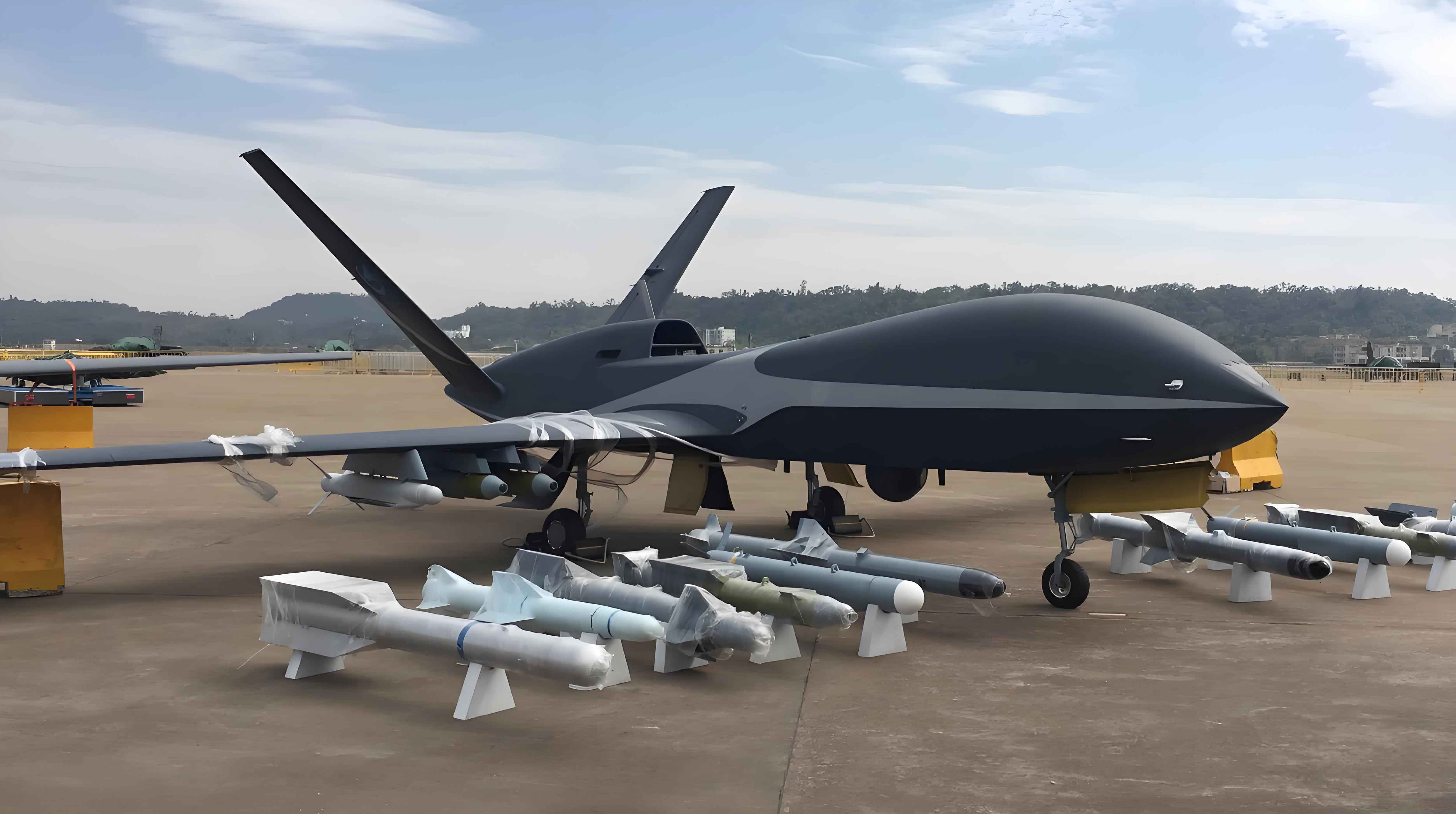
The primary functional goals of the Readiness Shelter are multifaceted, acting as a force multiplier for military drone units. First and foremost, it serves as a consolidated, mobile warehouse. By systematically collocating the drone airframes, ground control stations, spare parts, support equipment, and specialized tools, we eliminate the logistical chaos of multiple disparate storage units. This consolidation is not merely about convenience; it directly enables rapid mission packing and accountability. Secondly, the shelter is designed as a field-deployable maintenance and operations facility. In a pinch, with the addition of environmental control and power units, it can provide a controlled workspace for troubleshooting, minor repairs, or even serving as a protected node for mission planning. This functionality is crucial for extending the operational reach and endurance of military drone detachments beyond fixed bases. Finally, its standardized external interface allows it to function as a modular building block. Multiple shelters can be linked to create larger command posts or maintenance depots, showcasing the scalable nature of the design to support various sizes of military drone deployments.
Our structural design process began with the external envelope, adhering strictly to international intermodal container standards (aligned with ISO 668 and related MIL-STDs) to guarantee seamless global transportability. The base structure is a rigid steel frame constructed from high-tensile strength rectangular hollow sections, providing the primary load-bearing skeleton. The key mechanical performance criteria for this frame, derived from standards like GB/T 5338 (referenced for its rigorous testing protocols), can be summarized by the following stress and deflection requirements under designated loads:
$$ \sigma_{max} \leq \frac{S_y}{FOS} \quad \text{and} \quad \delta_{max} \leq \frac{L}{K} $$
Where:
$\sigma_{max}$ = Maximum calculated stress in the frame member
$S_y$ = Yield strength of the steel material
$FOS$ = Factor of Safety (typically ≥ 1.5 for dynamic loads)
$\delta_{max}$ = Maximum allowable deflection
$L$ = Length of the member
$K$ = Deflection constant (e.g., 200 for roof members under uniform load)
The external cladding presented a classic engineering trade-off: strength versus weight versus insulation. We opted for a sandwich panel construction for the walls, roof, and doors. This design utilizes inner and outer “skins” separated by a core material. The skins carry in-plane tensile and compressive stresses, while the core sustains shear stresses, leading to a high stiffness-to-weight ratio. The shear flow $q$ in such a panel under bending can be described as:
$$ q = \frac{VQ}{I} $$
Where $V$ is the shear force, $Q$ is the first moment of area, and $I$ is the second moment of area of the panel section. To facilitate rapid access and efficient cargo handling, we implemented a multi-door configuration with robust multi-point locking mechanisms on all four sides. Standard corner fittings and integrated forklift pockets ensure compatibility with all standard military and commercial material handling equipment (MHE).
The internal layout was arguably the most complex puzzle, as it had to accommodate an incredibly diverse set of items for a military drone system. We moved away from a fixed shelving concept to a modular, adjustable racking system. The core principle is expressed in a spatial optimization function, aiming to maximize total utility volume $U_v$ while respecting item-specific placement constraints $C_i$ for each of $n$ equipment types:
$$ \text{Maximize: } U_v = \sum_{i=1}^{n} (v_i \cdot x_i) $$
$$ \text{Subject to: } \sum_{i=1}^{n} (a_{ij} \cdot x_i) \leq b_j \quad \text{for all constraints } j $$
$$ \text{and } C_i(x_i, l_i, h_i, d_i, w_i) = \text{True} $$
Where $v_i$ is the utility value (a combination of priority and volume) of item $i$, $x_i$ is the number of units stored, $a_{ij}$ is the consumption of resource $j$ (like a specific shelf space dimension) per unit of $i$, and $b_j$ is the total available resource. The constraints $C_i$ ensure that items are stored according to their sensitivity, size ($l_i, h_i, d_i$), and weight ($w_i$). Heavy, robust items like propulsion units are stored on lower, reinforced levels, while delicate avionics are placed in shock-isolated, centrally located drawers. The racking system allows for adjustable shelf heights and the integration of custom cradles for irregularly shaped items like drone wings or rotor assemblies, ensuring every cubic inch is utilized effectively and safely for the military drone suite.
The selection of materials was driven by performance under extreme conditions. For the sandwich panel skins, we chose pre-finished, corrosion-resistant steel sheet for its excellent strength-to-weight ratio and durability. The core material was the subject of extensive evaluation. We compared polymer foams and honeycomb structures, ultimately selecting a rigid, closed-cell polyurethane foam for its superior combination of thermal insulation, moisture resistance, and ease of bonding. The thermal resistance (R-value) of the panel is critical and is given by the sum of the resistances of its layers:
$$ R_{total} = R_{outer\ skin} + R_{core} + R_{inner\ skin} = \frac{t_o}{k_o} + \frac{t_c}{k_c} + \frac{t_i}{k_i} $$
Where $t$ is thickness and $k$ is thermal conductivity. A high $R_{total}$ is essential to protect sensitive military drone components from external temperature swings. The bonding adhesive, joining the skins to the core, was equally critical. It required high shear strength, temperature resilience from -40°C to 70°C, and flexibility to handle transportation-induced flexing. A comparative analysis of candidate adhesives is shown below:
| Adhesive Base Material | Operating Temp. Range | Shear Strength (MPa) | Key Characteristic |
|---|---|---|---|
| Standard Polyurethane | -40°C to 80°C | ~8-10 | Good flexibility, moderate strength |
| Standard Epoxy Resin | -55°C to 120°C | 20-27 | High strength, brittle |
| Toughened Epoxy Resin | -60°C to 120°C | 15-20 | Excellent strength & fracture toughness |
| Modified Epoxy (e.g., H-6) | -70°C to 150°C | >25 | Superior temp. resistance & strength |
Based on this analysis, a toughened or modified epoxy system was selected for its optimal balance of high strength, toughness, and temperature performance, ensuring the long-term durability of the shelter structure protecting our valuable military drone assets.
Looking beyond the physical structure, the integration of smart technologies is what transforms the shelter from a passive container into an active logistics node. The cornerstone of this is Radio-Frequency Identification (RFID). Every major component within the shelter—from a complete military drone airframe to a specific circuit card assembly—is tagged with a ruggedized, passive RFID tag. This enables real-time, non-line-of-sight inventory management. The system’s read range $d$ can be approximated by the Friis transmission equation for passive tags:
$$ d \approx \frac{\lambda}{4\pi} \sqrt{\frac{P_t G_t G_r \tau \eta}{P_{th}}} $$
Where $\lambda$ is wavelength, $P_t$ is reader transmit power, $G_t$ and $G_r$ are antenna gains, $\tau$ is power transmission coefficient, $\eta$ is tag IC efficiency, and $P_{th}$ is tag power threshold. Strategically placed readers at shelter doors and logistical hubs automatically capture all ingress and egress events, providing an immutable digital ledger. This data feeds into a central Fleet Management system, enabling predictive logistics. By analyzing usage rates and failure modes of components across the military drone fleet, the system can proactively generate resupply requests, schedule preventative maintenance, and optimize the load-out of shelters for specific mission types, drastically reducing downtime.
Furthermore, we incorporated basic environmental monitoring sensors (temperature, humidity, shock/vibration) within the shelter. This data is logged and can be transmitted via satellite or tactical network when in the field. An alert is generated if pre-set thresholds are exceeded, allowing maintainers to assess potential damage to the military drone equipment before deployment. For power management, the shelter is pre-wired to integrate with standardized military generator sets or renewable sources like solar panels. An integrated power distribution unit with smart breakers manages loads and provides clean, stable power to sensitive military drone ground control electronics.
In conclusion, the design of a Readiness Shelter System for military drone equipment is a deeply integrative engineering discipline. It is not merely about creating a strong box, but about architecting a mobile, intelligent, and protective ecosystem that aligns with the agile and dispersed nature of modern military drone operations. It requires a synthesis of structural mechanics, materials science, thermal dynamics, human factors, and information technology. From my firsthand experience, the successful fielding of such a system directly translates to enhanced operational readiness, faster deployment cycles, improved asset preservation, and ultimately, a higher mission success rate for the military drone units it supports. As drone technology continues to evolve towards greater autonomy and complexity, so too must the support infrastructure, with future shelters potentially incorporating automated robotic arms for internal handling, advanced climate control for specific chemical batteries, or even integrated launch and recovery apparatus. The shelter, therefore, stands as a critical enabler, ensuring that the formidable capabilities of the modern military drone are fully realized wherever the mission demands.