
As a naval systems analyst with decades of focus on emerging maritime technologies, I have observed a transformative shift. The future of naval warfare is not solely defined by larger ships or faster missiles, but increasingly by the silent, persistent eyes and potent sting of unmanned systems. In my view, the integration of military drones—unmanned aerial vehicles carried, launched, and recovered by surface combatants and submarines—represents the most significant force multiplier since the advent of the shipboard helicopter. This is not a distant promise; it is an ongoing revolution, fundamentally altering the concepts of naval operations, from reconnaissance to strike warfare.
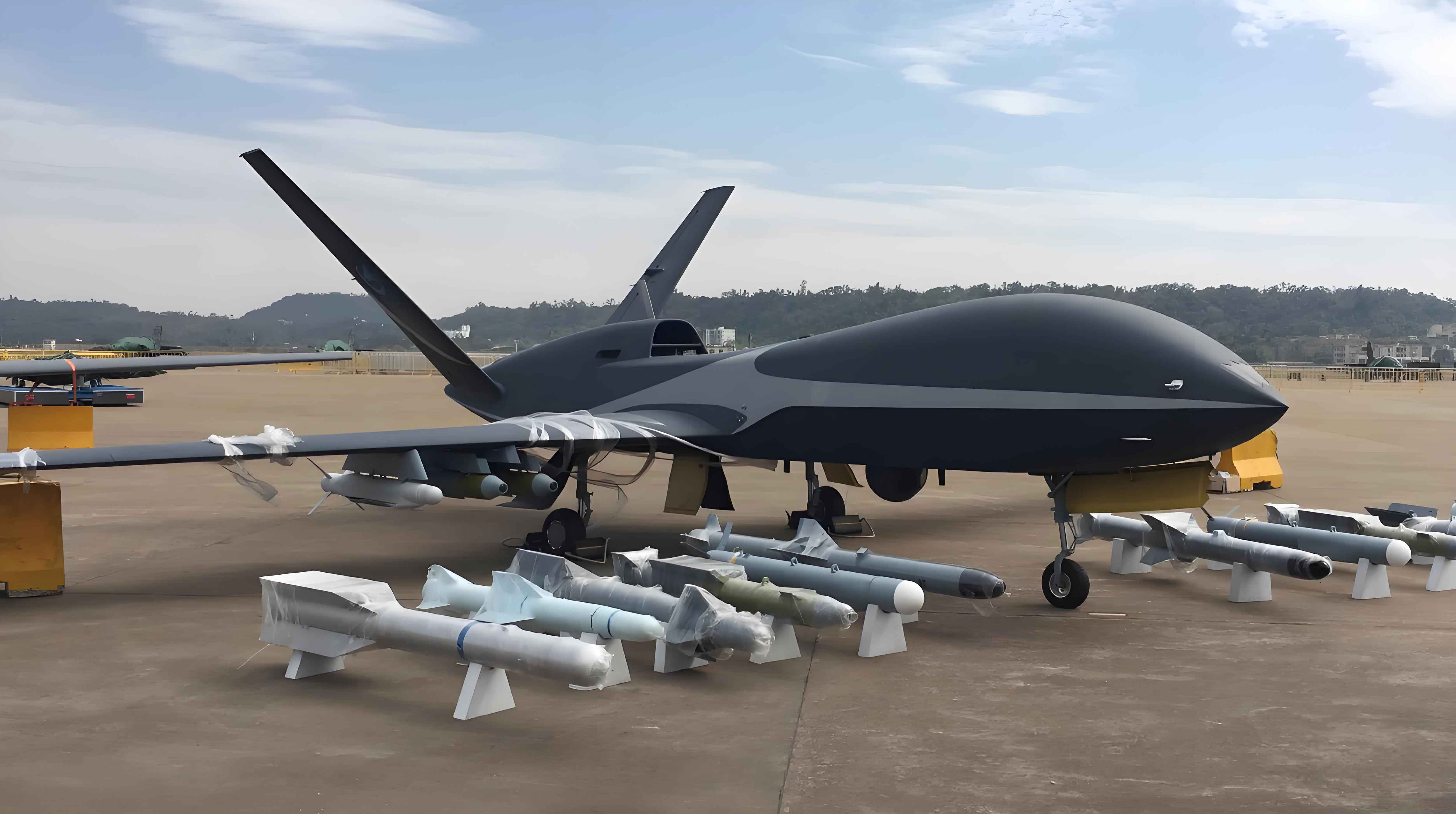
The journey of the naval military drone began with modest ambitions. Initially perceived as extensions of land-based systems or simple targets, their evolution has been propelled by breakthroughs in miniaturization, autonomy, and data fusion. While deploying large military drones on aircraft carriers showcased advantages like reduced risk to personnel and lower operational costs, the true paradigm shift occurs when these systems are democratized across the fleet. The ability to field capable military drones from destroyers, frigates, and even submarines transforms every vessel into a potential intelligence, surveillance, and reconnaissance (ISR) node or a tactical strike platform. This dispersal of capability denies the adversary a single point of failure and complicates their targeting calculus exponentially.
Defining the Naval Military Drone Spectrum
Naval military drones are not a monolith. They span a vast continuum of size, capability, and mission profile, dictated by the constraints and opportunities of the maritime environment. A useful categorization can be based on platform size, launch/recovery method, and endurance.
| Category | Typical Platform | Size/Weight | Launch/Recovery | Endurance | Primary Mission Examples |
|---|---|---|---|---|---|
| Group 1-2 (Small) | Patrol Boats, Corvettes | Wing: < 2.5m Wgt: < 25 kg |
Hand/rail launch; Net/parachute recovery | 1-6 hours | Tactical ISR, Over-the-horizon (OTH) spotting |
| Group 3 (Medium) | Frigates, Destroyers | Wing: 3-8m Wgt: 25-600 kg |
Catapult/Rocket Assist; Arresting wire/net, VTOL | 6-24 hours | Maritime ISR, OTH Targeting, Electronic Warfare |
| Group 4-5 (Large/Combat) | Aircraft Carriers, Support Ships | Wing: >10m Wgt: >600 kg |
Catapult/Take-off Run; Arresting gear, Autonomous Landing | 24+ hours | Strategic ISR, Strike, Air-to-Air Combat, Suppression of Enemy Air Defenses (SEAD) |
| Vertical Take-Off & Landing (VTOL) | Any vessel with deck space, Submarines | Varies (Small-Large) | VTOL; VTOL recovery | Varies | ISR, ASW (sonobuoy deployment), Cargo, Tactical Strike |
Core Technological Subsystems: The Anatomy of Capability
The effectiveness of a naval military drone is a product of its integrated subsystems. The harsh, corrosive, and electromagnetically complex maritime environment demands exceptional robustness, compactness, and autonomy.
1. Airframe & Propulsion: Durability against saltwater corrosion is paramount. Advanced composite materials are standard. Propulsion choices balance endurance, signature, and power. For long-endurance ISR, high-bypass turbofans or efficient diesel engines are key. For strike missions, low-bypass turbojets or even scramjets for hypersonic concepts are explored. Electric propulsion is dominant for small, tactical military drones, offering low acoustic and thermal signatures. The endurance for an electric military drone can be modeled as a function of battery energy density and power draw:
$$ E_{flight} = \frac{E_{battery} \times \eta_{total}}{P_{avionics} + P_{propulsion}} $$
Where \( E_{flight} \) is flight endurance, \( E_{battery} \) is total battery energy, \( \eta_{total} \) is total system efficiency, and \( P \) values are power draws.
2. Command, Control, Communications, and Computers (C4): This is the central nervous system. A robust, jam-resistant datalink is non-negotiable. For beyond-line-of-sight (BLOS) operations, satellite communications (SATCOM) relays are essential. The core advancement is in autonomous control systems. Modern naval military drones use waypoint navigation, automatic take-off and landing (ATOL) algorithms, and are evolving towards manned-unmanned teaming (MUM-T) and collaborative autonomous swarms. The decision logic for an autonomous military drone in a contested environment can be represented as a cost-function optimization:
$$ Action_{optimal} = \min_{a \in A} \left( \lambda_1 \cdot Risk(a) + \lambda_2 \cdot Fuel(a) + \lambda_3 \cdot (1 – Intel\_Gain(a)) \right) $$
where \( A \) is the set of possible actions, and \( \lambda \) are weighting factors for risk, fuel cost, and intelligence gain.
3. Payloads: The “Business End”: Modularity is critical. A single military drone airframe should accept different mission pods. Key payload families include:
- EO/IR/SAR Sensors: Electro-optical/Infrared cameras and Synthetic Aperture Radars provide all-weather, day/night surveillance. Resolution and area coverage rate are key metrics.
- Signals Intelligence (SIGINT): Passive sensors to detect and geolocate radar and communication emissions.
- Electronic Attack (EA): Jammers to disrupt adversary sensors and communications.
- Lethal Payloads: From small precision-guided munitions for tactical strikes to anti-radiation missiles for SEAD missions or even air-to-air missiles.
- Communications Relay: Acts as an airborne node to extend network ranges for the fleet.
| Subsystem | Key Technologies | Naval-Specific Challenges | Impact on Mission |
|---|---|---|---|
| Airframe/Structure | Carbon composites, Corrosion-resistant alloys, Folding wings | Salt spray corrosion, Limited storage space, Deck dynamics (pitch/roll) | Determines launch platform compatibility and survivability |
| Propulsion | Turbofan, Turbojet, Diesel, Electric, Hybrid | Ingestion of saltwater/moisture, Low acoustic signature for ASW, High endurance for patrol | Defines operational radius, persistence, and detectability |
| C4 & Autonomy | SATCOM, Resilient datalinks, AI/ML for navigation & targeting, Swarm algorithms | Limited bandwidth at sea, GPS-denied environments, Autonomous ship landing in high seas | Enables BLOS ops, reduces operator workload, enables complex tactics |
| Payloads | Miniaturized AESA radars, Hyperspectral imagers, EW suites, Modular weapon bays | Size/weight constraints, Need for stabilization on moving platform, EMI from ship systems | Directly defines the mission capability (ISR, Strike, EW, etc.) |
Multi-Domain Applications: Reshaping Naval Warfare
The operational impact of naval military drones permeates every warfare domain.
1. Intelligence, Surveillance, and Reconnaissance (ISR): This remains the most mature application. A ship-based military drone extends the vessel’s organic sensor horizon from tens to hundreds of kilometers. Persistent surveillance over a chokepoint or around a task force creates a dense information picture. The effective surveillance area \( A_{surveillance} \) for a drone loitering at altitude \( h \) with a sensor field-of-view angle \( \theta \) is approximately:
$$ A_{surveillance} \approx \pi (h \cdot \tan(\frac{\theta}{2}))^2 $$
Deploying multiple military drones in a coordinated pattern can dramatically increase coverage and provide persistent stare on multiple targets simultaneously.
2. Over-the-Horizon Targeting (OTHT): This is a game-changer for surface warfare. Modern anti-ship cruise missiles (ASCMs) have ranges far exceeding a ship’s radar horizon (typically ~40 km due to Earth’s curvature). A military drone acting as a communications relay or forward sensor node provides the critical fire control quality track for a BLOS engagement. The engagement sequence involves the drone detecting a target, relaying data via datalink to the launch ship, which then fires a missile. The drone continues to provide mid-course guidance updates until the missile’s own seeker activates. This turns every ship with a compatible military drone and long-range missile into a potential area-denial asset.
3. Electronic Warfare (EW): Military drones are ideal platforms for EW. They can be risked in high-threat environments to perform signals intelligence (SIGINT) collection, enticing enemy radars to activate and reveal their locations and parameters—a mission traditionally deemed extremely hazardous. They can also carry jammers to create localized denial bubbles, protecting a high-value unit or masking an assault force’s approach. The effectiveness of a jamming military drone can be analyzed using the power balance in the radar range equation, where the drone’s jammer power \( P_j G_j \) must overcome the radar’s signal at the target:
$$ \frac{P_j G_j}{4\pi R_{jr}^2} \cdot \frac{G’_r \lambda^2}{4\pi} > \frac{P_t G_t \sigma}{{(4\pi)}^2 R_{tr}^4} \cdot \frac{G_r \lambda^2}{4\pi} $$ Simplified, this shows jamming effectiveness depends heavily on the ranges \( R_{jr} \) (jammer to radar) and \( R_{tr} \) (target to radar), and the respective antenna gains \( G \). A forward-placed military drone minimizes \( R_{jr} \), giving it a major advantage.
4. Strike and Air Combat: This is the frontier. Unmanned Combat Aerial Vehicles (UCAVs) for carrier decks, like the X-47B prototype, have demonstrated autonomous aerial refueling and precision strike. The next generation envisions loyal wingmen operating alongside manned fighters and dedicated air-combat military drones. Freed from human physiological limits (e.g., ~9 G), a military drone can be designed for extreme maneuverability (>15 G) and endurance, performing high-risk suppression of enemy air defense (SEAD) missions or engaging adversary aircraft with advanced algorithms.
5. Anti-Submarine Warfare (ASW): VTOL military drones are particularly suited for ASW. They can rapidly deploy sonobuoy patterns over a wide area, monitor them via a datalink, and even deploy lightweight torpedoes. Their low acoustic signature is a significant advantage compared to manned helicopters when trying to localize quiet submarines.
| Warfare Domain | Drone Role | Key Advantage over Manned Platform | Operational Impact |
|---|---|---|---|
| Maritime ISR | Persistent Wide-Area Surveillance, Target Identification | Longer endurance (>24h), Lower cost per hour, No crew fatigue | Extends fleet situational awareness, enables long-term pattern-of-life analysis |
| Strike Warfare | Over-the-Horizon Targeting, Stand-off Strike, SEAD | Permissible in high-threat environments, Enables surprise from unexpected vectors | Extends lethal range of surface action groups, complicates enemy defense planning |
| Electronic Warfare | Stand-in Jamming, SIGINT Collection, Decoy | Expendable for high-risk missions, Can loiter close to threat emitters | Degrades enemy sensor and communication nets, protects high-value units |
| Air Warfare | Loyal Wingman, Air Interception, Swarm Tactics | High-G maneuverability, Reduced sensor cross-section, Algorithmic speed | Augments limited numbers of manned fighters, overwhelms defenses with mass |
| ASW | Sonobuoy Deployment & Monitoring, Magnetic Anomaly Detection (MAD) | Low acoustic signature, Rapid response from distributed ships | Creates a dense, persistent ASW search network, increases submarine detection probability |
Future Trajectories and Strategic Implications
The evolution of naval military drones points toward several convergent trends that will define the next generation of maritime conflict.
1. Autonomous Swarms: The future lies not in individual sophisticated drones, but in cooperative groups—swarms. A swarm of low-cost, attritable military drones could perform coordinated ISR, saturate enemy defenses, or conduct distributed electronic attacks. Control shifts from tele-operation to distributed algorithms where the swarm exhibits emergent, resilient behaviors. The mathematical models for swarm control often draw from biological systems (flocking, pheromone trails) or use game theory and consensus algorithms to manage task allocation and formation keeping.
2. AI and Machine Learning Integration: Onboard AI will progress from assisted navigation to full cognitive engagement. Machine learning algorithms will enable real-time target recognition, classification, and even engagement authorization within predefined rules of engagement. This will drastically reduce the sensor-to-shooter timeline and allow military drones to operate effectively in communications-degraded or -denied environments.
3. Hypersonic and Stealth Platforms: For penetrating the most advanced anti-access/area denial (A2/AD) bubbles, speed and low observability are key. Hypersonic military drones would compress decision times for defenders to seconds. Combined with stealth shaping and materials, they would represent nearly indefensible reconnaissance-strike assets. The kinetic energy of a hypersonic vehicle itself becomes a weapon: \( KE = \frac{1}{2}mv^2 \), where the velocity \( v \) term dominates, making even a non-explosive impact devastating.
4. Submarine Integration: The ultimate stealth platform launch. Concepts for submarine-launched military drones, either from torpedo tubes or specialized containers, have been demonstrated. A submarine could covertly deploy a military drone for ISR or targeting, remaining hidden while gaining unprecedented situational awareness or designating targets for other assets.
5. The “Drone-Centric” Fleet Architecture: Looking decades ahead, we may see a fundamental shift from large, crewed capital ships centered on manned aircraft to distributed fleets built around smaller motherships hosting diverse unmanned systems—air, surface, and underwater. A future task force might be centered on a large-deck amphibious ship or a dedicated “drone carrier” operating a mix of long-endurance ISR military drones, strike UCAVs, and ASW rotorcraft military drones, escorted by unmanned surface vessels. This architecture promises greater resilience, lower cost, and reduced risk to human life.
| Future Concept | Description | Key Enabling Technologies | Potential Timeline |
|---|---|---|---|
| Collaborative Combat Drones | Manned-unmanned teams (MUM-T) where fighter jets control multiple “loyal wingman” drones for sensing, strike, and defense. | Advanced secure datalinks, AI for tactical autonomy, common combat cloud | 2030-2035 (Initial Operating Capability) |
| Attritable Autonomous Swarms | Massive numbers of low-cost drones operating with decentralized control to overwhelm defenses. | Miniaturized components, swarm AI algorithms, low-cost manufacturing | Ongoing development, capabilities increasing incrementally |
| Hypersonic ISR/Strike UCAV | High-Mach (>5) unmanned platform for rapid penetration and time-sensitive strike. | Scramjet propulsion, thermal management, high-temperature materials | 2040+ |
| Integrated Undersea/Unmanned Warfare | Submarines as motherships for UUVs and UAVs, creating a covert, multi-domain presence. | Submarine UAV launch/recovery systems, underwater communication to UAVs | 2030+ for specialized missions |
The Global Landscape and Strategic Calculus
The development and deployment of naval military drones is a global phenomenon, driving a new form of naval competition and asymmetric warfare.
The United States Navy has been the pioneer, with programs spanning from the small, shipboard Scan Eagle to the carrier-based X-47B demonstrator and the current MQ-25 Stingray tanker drone. The focus is on developing a family of systems (Small Tactical UAS, VTOL UAS, Carrier-Based UAS) to provide layered capabilities across the fleet. The strategic aim is to maintain overmatch by leveraging unmanned systems for persistent ISR, extended range, and distributed lethality.
Other nations are rapidly closing the gap. Israel remains a world leader in tactical UAV and UCAV technology, with systems like the Harop loitering munition posing a significant anti-radiation threat to naval forces. Several European navies have operational shipborne drones for surveillance and gunnery spotting. The incident where Iranian drones reportedly conducted close reconnaissance of a U.S. carrier strike group, evading interception, starkly illustrated the asymmetric challenge even a relatively low-tech military drone can pose. It demonstrated how small, low-observable drones can penetrate traditional defense perimeters, gathering intelligence or potentially guiding attacks.
From my analytical perspective, the nation that most effectively integrates advanced, networked military drones into its naval doctrine and fleet architecture will gain a decisive advantage in the next major maritime conflict. The capability to see first, decide faster, and strike from unexpected directions and domains will be paramount. The naval military drone has evolved from a supporting tool to a central pillar of maritime power. Its continued advancement will not merely augment existing forces; it will fundamentally redefine what it means to fight and win at sea. The race is not just for technological superiority in individual platforms, but for the conceptual mastery of a new, unmanned way of war on the world’s oceans.