
The pervasive adoption of Unmanned Aircraft Systems (UAS), or ‘military drones’, has irrevocably altered the modern battlespace and security landscape. Their ability to perform Intelligence, Surveillance, and Reconnaissance (ISR), precision strikes, electronic warfare, and logistics support with reduced risk to human operators has made them indispensable assets for state and non-state actors alike. Consequently, the threat posed by adversarial or unauthorized military drones—from tactical reconnaissance to coordinated swarm attacks—has elevated Counter-Unmanned Aircraft Systems (C-UAS) technology to a critical priority for national defense and force protection. This article provides a detailed, first-person perspective analysis of military drone countermeasures, encompassing threat analysis, detection and mitigation methodologies, system integration, and the enduring challenges in this rapidly evolving domain.
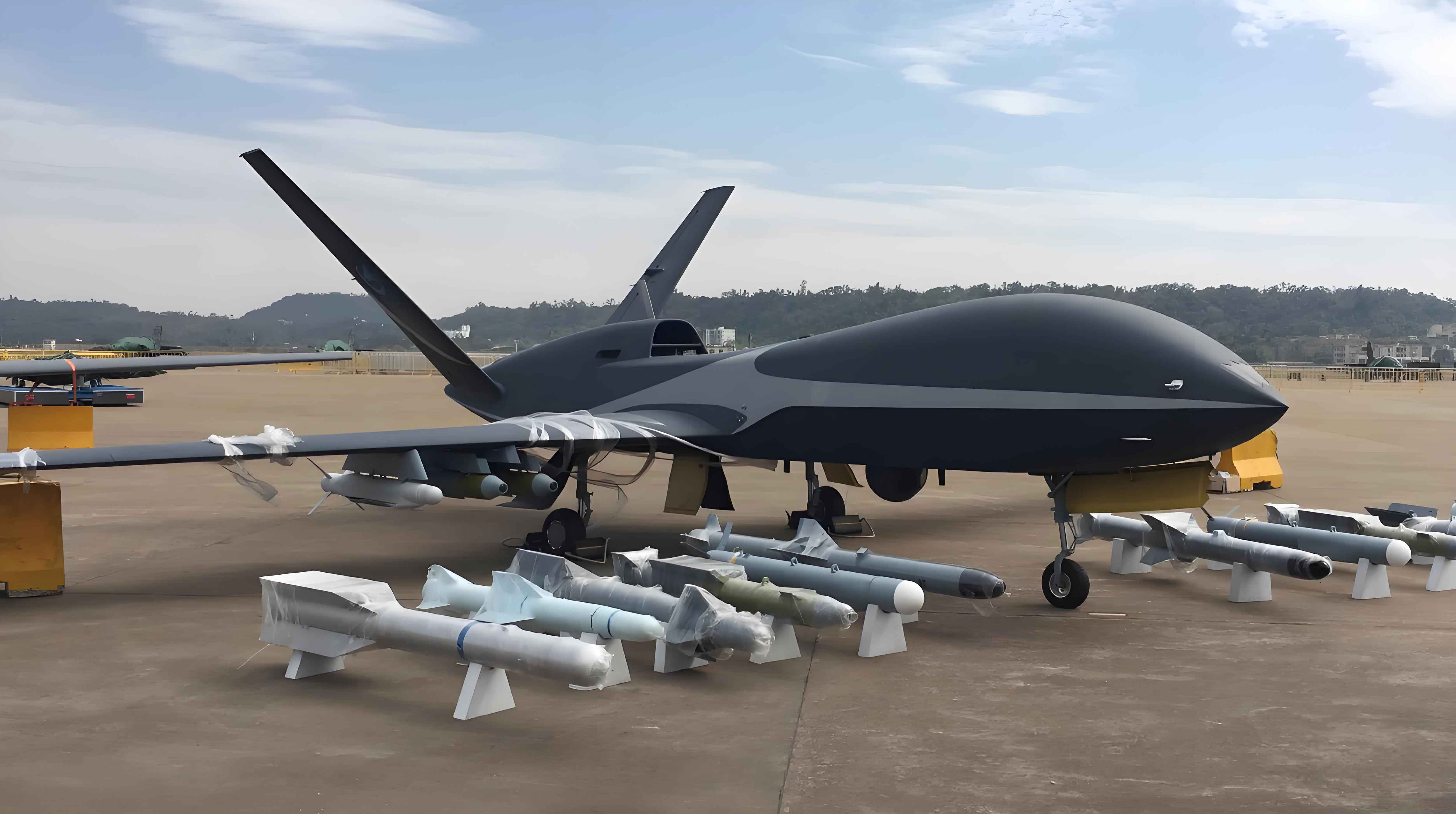
The imperative for robust C-UAS capabilities is clear. In peacetime, hostile entities can employ military-grade or commercial-off-the-shelf (COTS) drones modified for military purposes to surveil sensitive installations, disrupt critical infrastructure, or carry out asymmetrical attacks. In conflict, adversary military drones seek to deny our operational freedom, attrit our forces, and degrade our command and control. Therefore, developing and fielding effective countermeasures is not merely a defensive measure but a fundamental enabler for maintaining air superiority, protecting assets, and ensuring mission success. We will dissect this complex field, starting with a thorough understanding of the threat itself.
Classification and Characteristics of Military Drones
Effective countermeasures begin with precise threat identification. Military drones are not a monolithic threat; they span a vast spectrum of sizes, capabilities, and operational envelopes. We classify them primarily to tailor our detection and interception strategies. A common classification, adapted from major defense frameworks, uses parameters like maximum gross take-off weight, operational altitude, and speed to categorize military drones into five distinct groups. Understanding these categories allows us to predict their likely mission sets, sensor payloads, and vulnerabilities.
| Group | Weight | Typical Operating Altitude | Typical Speed | Example Systems | Primary Echelon & Role |
|---|---|---|---|---|---|
| Group 1 | < 20 lbs (9.1 kg) | < 1,200 ft AGL | < 100 kts | RQ-11 Raven, PD-100 Black Hornet | Platoon/Company: Hand-launched, man-portable ISR. |
| Group 2 | 21 – 55 lbs (9.5 – 25 kg) | < 3,500 ft AGL | < 250 kts | RQ-20 Puma, ScanEagle | Battalion: Extended endurance, catapult-launched ISR. |
| Group 3 | < 1,320 lbs (600 kg) | < 18,000 ft MSL | < 250 kts | RQ-7 Shadow, RQ-21 Blackjack | Brigade: Tactical ISR, some light strike capability. |
| Group 4 | > 1,320 lbs | Medium Altitude (10,000-30,000 ft MSL) | Subsonic | MQ-1C Gray Eagle, MQ-9 Reaper | Division/Corps: Armed ISR, persistent strike. |
| Group 5 | > 1,320 lbs | High Altitude (> 30,000 ft MSL) | Subsonic | RQ-4 Global Hawk, MQ-4C Triton | Strategic: HALE (High Altitude Long Endurance) ISR. |
This classification reveals a direct correlation between group size and capability. Smaller military drones (Groups 1-3) present a unique “low-slow-small” (LSS) challenge. They have low radar cross-sections (RCS), can fly slowly or hover, and are difficult to distinguish from birds or clutter. Their primary threat is localized ISR or as part of a swarm. Larger military drones (Groups 4-5) resemble traditional aircraft in their radar signature and flight profiles but offer persistence and payload capacity that manned platforms often cannot match, posing a significant strategic threat.
To further refine our countermeasure approach, we analyze key characteristics across the spectrum. The choice of countermeasure against a hand-launched Group 1 military drone will be vastly different from that against a high-altitude Group 5 military drone.
| Characteristic | Group 1 & 2 (Small UAS) | Group 3 & 4 (Tactical/MALE) | Group 5 (Strategic/HALE) |
|---|---|---|---|
| Launch/Recovery | Hand/Catapult; Net/Parcel Catch | Runway or Rail Launcher | Conventional Runway |
| Typical Payloads | EO/IR gimbals, simple comms relay | Multi-spectral sensors, SAR, SIGINT, light weapons | Large SAR, HYPERSPECTRAL, strategic SIGINT |
| Command & Control (C2) Link | Short-range RF (ISM band, military UHF), often unencrypted for COTS. | Secure military datalinks (e.g., CDL, TCDL), SATCOM for BVLOS. | Secure SATCOM, robust encrypted links. |
| Navigation | Primarily GNSS (GPS/GLONASS), visual inertial. | GNSS with robust INS, alternative PNT. | Advanced INS/GNSS, stellar navigation. |
| Key Vulnerabilities | Weak RF link, GNSS dependence, low durability. | Datalink, mission systems, aerodynamic control surfaces. | High-value asset; vulnerabilities in complex mission systems and SATCOM. |
The C-UAS Kill Chain and System Architecture
Neutralizing a hostile military drone is not a single action but a process, often conceptualized as a “kill chain.” We model our C-UAS systems around this chain to ensure a layered, sequential defense. A generalized but effective C-UAS processing chain consists of: Detect → Track → Identify → Defeat → Assess.
1. Detect: The initial sensing of a potential target in the monitored airspace. The probability of detection ($P_d$) is a critical metric, influenced by the sensor’s performance and the military drone’s signature. It can be expressed in relation to the signal-to-noise ratio (SNR):
$$P_d = f(SNR) = f\left(\frac{S_{drone}}{N_{sensor} + N_{clutter} + N_{interference}}\right)$$
Where $S_{drone}$ is the signal reflected or emitted by the military drone, and the denominator represents the total noise from sensor, environmental clutter, and intentional interference.
2. Track: Once detected, the object’s kinematic state (position, velocity, acceleration) is estimated over time using algorithms like the Kalman Filter. The track quality is measured by estimation error covariance.
3. Identify: Determining the object’s type and intent. Is it a bird, a friendly drone, or a hostile military drone? This step often employs sensor fusion and library-based recognition of RF signatures, acoustic profiles, or visual features.
4. Defeat (or Mitigate): The application of a physical or electronic effect to neutralize the threat. The choice depends on rules of engagement, environment, and the identified drone type.
5. Assess: Verifying the defeat effect through continued sensing (e.g., radar track termination, loss of RF emissions).
Modern C-UAS systems integrate multiple sensors and effectors onto various platforms to execute this chain. These systems fall into several types:
- Fixed/Semi-Fixed Site Systems: Protecting critical national infrastructure or forward operating bases. These employ powerful, large-area sensors and high-energy effectors.
- Mobile Ground Systems: Vehicle-mounted for convoy protection or rapid deployment. They balance capability with mobility.
- Naval Systems: Integrated into ship defenses to counter maritime drone threats.
- Man-Portable/Autonomous Systems: For dismounted infantry, offering immediate, localized protection against small military drones.
Military Drone Detection and Tracking Technologies
Detection is the foundational pillar of C-UAS. No single sensor is perfect; therefore, a multi-domain, sensor-fused approach is essential. We evaluate the primary technologies:
| Sensor Modality | Operating Principle | Advantages vs. Military Drones | Limitations & Challenges | Key Performance Parameters |
|---|---|---|---|---|
| Radar | Active RF emission and reception of reflected signals. | Long range, all-weather, day/night, provides precise kinematics. | Difficulty with low-RCS drones (Group 1/2), high false alarms from birds/clutter, active emission reveals location. | Update Rate, Range Resolution ($\Delta R = c/(2B)$), Minimum Detectable Velocity, Clutter Rejection. |
| Radio Frequency (RF) Sensing | Passive detection and analysis of drone C2 and telemetry signals. | Passive (covert), long range for RF-loud drones, provides immediate identification (protocol fingerprinting), can geolocate pilot. | Ineffective against pre-programmed/autonomous drones with RF silence. Congested spectrum causes interference. | Frequency Coverage, Probability of Intercept (PoI), Direction Finding (DF) Accuracy, Signal ID Library Depth. |
| Electro-Optical/Infrared (EO/IR) | Passive imaging in visual and thermal spectra. | Provides high-confidence visual identification, excellent for tracking and final engagement assessment. | Short to medium range, degraded by weather (fog, rain), requires line-of-sight, processing-intensive for wide-area search. | Field of View, Detection Range ($\propto \sqrt{N_{pixels}}$), Noise-Equivalent Temperature Difference (NETD) for IR. |
| Acoustic Sensing | Passive detection of unique acoustic signatures from drone motors and propellers. | Passive, low-cost, effective in urban canyons or against RF-silent drones, provides crude DF. | Very short range (< 500m), severely degraded by ambient noise and wind, requires extensive signature library. | Array Geometry, Signal-to-Noise Ratio (SNR) in band, Classification Algorithm Accuracy. |
The optimal architecture fuses data from these disparate sensors. A radar cue can steer an EO/IR camera, while RF detection can classify a target before it enters radar coverage. Fusion algorithms (e.g., Bayesian inference, Dempster-Shafer) resolve conflicts and provide a unified air picture with a higher confidence track on a potential military drone than any single sensor could achieve. The fused probability of detection ($P_{d,fused}$) from N independent sensors can be modeled as:
$$P_{d,fused} = 1 – \prod_{i=1}^{N} (1 – P_{d,i})$$
This shows how even sensors with moderate individual $P_d$ can yield a very high combined detection probability.
Military Drone Mitigation and Defeat Technologies
Once a hostile military drone is confidently identified, we must decide how to neutralize it. Defeat mechanisms are broadly categorized into “kinetic” (physical destruction) and “non-kinetic” (electronic and cyber) effects.
Non-Kinetic / Electronic Defeat
These methods aim to disrupt the drone’s operation without necessarily destroying the airframe, potentially allowing for capture and forensic analysis.
1. Global Navigation Satellite System (GNSS) Jamming: This transmits high-power noise-like signals on GNSS frequencies (e.g., GPS L1, L2). The drone’s receiver is overwhelmed, causing it to lose position lock. Most drones will then enter a pre-programmed fail-safe mode, typically hover, land, or return-to-home (which requires a home point stored before jamming). The jamming power required at the drone’s receiver ($P_{j,req}$) follows the jammer-to-signal ratio (J/S) equation:
$$J/S = \frac{P_j G_j}{P_s G_s} \cdot \frac{R_s^2}{R_j^2} \cdot \frac{B_s}{B_j}$$
Where $P$ is power, $G$ is antenna gain, $R$ is range, $B$ is bandwidth, and subscripts $j$ and $s$ denote jammer and satellite, respectively.
2. RF Link Jamming: This targets the specific C2 frequency (e.g., 2.4 GHz, 5.8 GHz, 900 MHz) to sever the connection between the pilot and the military drone. Similar to GNSS jamming, this triggers fail-safe modes. It requires less power if the exact frequency and modulation are known.
3. Spoofing: A more sophisticated technique than jamming. It involves generating false but legitimate-seeming signals to take control of the drone.
- GNSS Spoofing: Transmits counterfeit GNSS signals to manipulate the drone’s perceived location, potentially commanding it to fly to a designated capture point. The spoofing signal ($S_{spoof}$) must be coherent and slightly more powerful than the authentic signal ($S_{auth}$): $|S_{spoof}| > |S_{auth}|$.
- C2 Spoofing/Hijacking: Exploits protocol vulnerabilities to disengage the legitimate pilot and establish a new command link to the military drone. This requires deep protocol reverse-engineering.
Kinetic Defeat
These methods cause physical damage to the target military drone.
1. Directed Energy (DE) Weapons:
- High-Energy Laser (HEL): Focuses coherent optical energy on a spot, causing thermal ablation and structural failure. The time to effect depends on laser power ($P_{laser}$), range ($R$), atmospheric transmission ($\tau_{atm}$), and target material properties. A simplified engagement equation considers the energy density required for defeat ($F_{defeat}$):
$$Time \approx \frac{F_{defeat} \cdot R^2}{P_{laser} \cdot \tau_{atm} \cdot \text{Spot Size}}$$ - High-Power Microwave (HPM): Emits a burst of wideband RF energy to couple into the drone’s electronics, frying semiconductors and causing permanent system failure. Effective against swarms due to wide beam.
2. Projectile-Based Systems:
- Net Guns/Cannons: Fires a net to entangle the drone’s rotors. Effective at very short ranges (< 100m) against slow, low-altitude military drones.
- Interceptor Drones: Uses a friendly drone to physically collide with or deploy a net over the threat drone. Requires agile drone platforms and effective guidance.
- Conventional Munitions: Modified air defense guns or missiles. Often cost-ineffective against cheap small drones, but necessary for larger, more threatening military drones.
The selection of a defeat mechanism involves a complex trade-off analysis. We must consider factors like probability of kill ($P_k$), collateral damage risk ($R_{collateral}$), cost per engagement ($C_{engage}$), and re-attack time. A simplified cost-effectiveness metric for a C-UAS effector might be:
$$\text{Effectiveness Score} = \frac{P_k \cdot (1 – R_{collateral})}{C_{engage} \cdot \text{Re-attack Time}}$$
This highlights why electronic warfare (EW) systems, with low cost per shot and rapid re-attack, are favored for countering inexpensive, proliferated military drones, while kinetic systems are reserved for high-value or imminent threats.
Enduring Challenges and Future Outlook
Despite rapid advances, countering military drones remains a formidable challenge. Several key issues persist:
1. The Swarm Threat: Adversarial drone swarms represent a paradigm shift. Defeating dozens or hundreds of coordinated, autonomous military drones overwhelms traditional “one-shot, one-kill” systems. Solutions require scalable effectors (like HPM or swarming interceptor drones), AI-powered battle management to prioritize threats, and disruptive technologies that target the swarm’s coordination logic.
2. Autonomous Operation: Military drones with advanced AI that can navigate via computer vision and execute missions without real-time RF links are immune to traditional jamming and spoofing. This shifts the countermeasure focus entirely to hard-kill and deception of the onboard AI sensors.
3. Sensor Confusion and Low Observability: Improving drone materials and flight profiles (mimicking birds, using low-RCS designs) continues to stress detection systems. Dense urban environments create horrific clutter for radar and acoustic sensors. Advanced signal processing and AI/ML for target discrimination are critical but not foolproof.
4. Regulatory and Collateral Damage Concerns: In contested or civilian-heavy environments, the use of jamming can disrupt friendly communications and navigation. The uncontrolled descent of a kinetically defeated military drone poses a significant collateral damage risk. These factors heavily constrain the rules of engagement.
5. Adaptation and Asymmetric Cost: The development cycle for military drones, especially COTS-based systems, is far shorter and cheaper than for complex C-UAS systems. Adversaries can rapidly adapt and field new drone models or tactics, forcing a continuous and expensive countermeasure development cycle.
In conclusion, countering the military drone threat is a dynamic, multi-disciplinary struggle encompassing radar engineering, EW, cyber operations, and AI. There is no single “silver bullet.” Success depends on a layered, integrated, and adaptive approach that combines diverse sensors and effectors within a coherent command and control framework. The future will belong to networked, intelligent C-UAS systems capable of autonomously detecting, classifying, and responding to a wide spectrum of military drone threats—from the smallest quadcopter to the largest HALE platform—while minimizing collateral effects and adapting to new tactics as they emerge. The technological race between the military drone and its countermeasure will undoubtedly define a significant portion of future aerial warfare and security operations.