
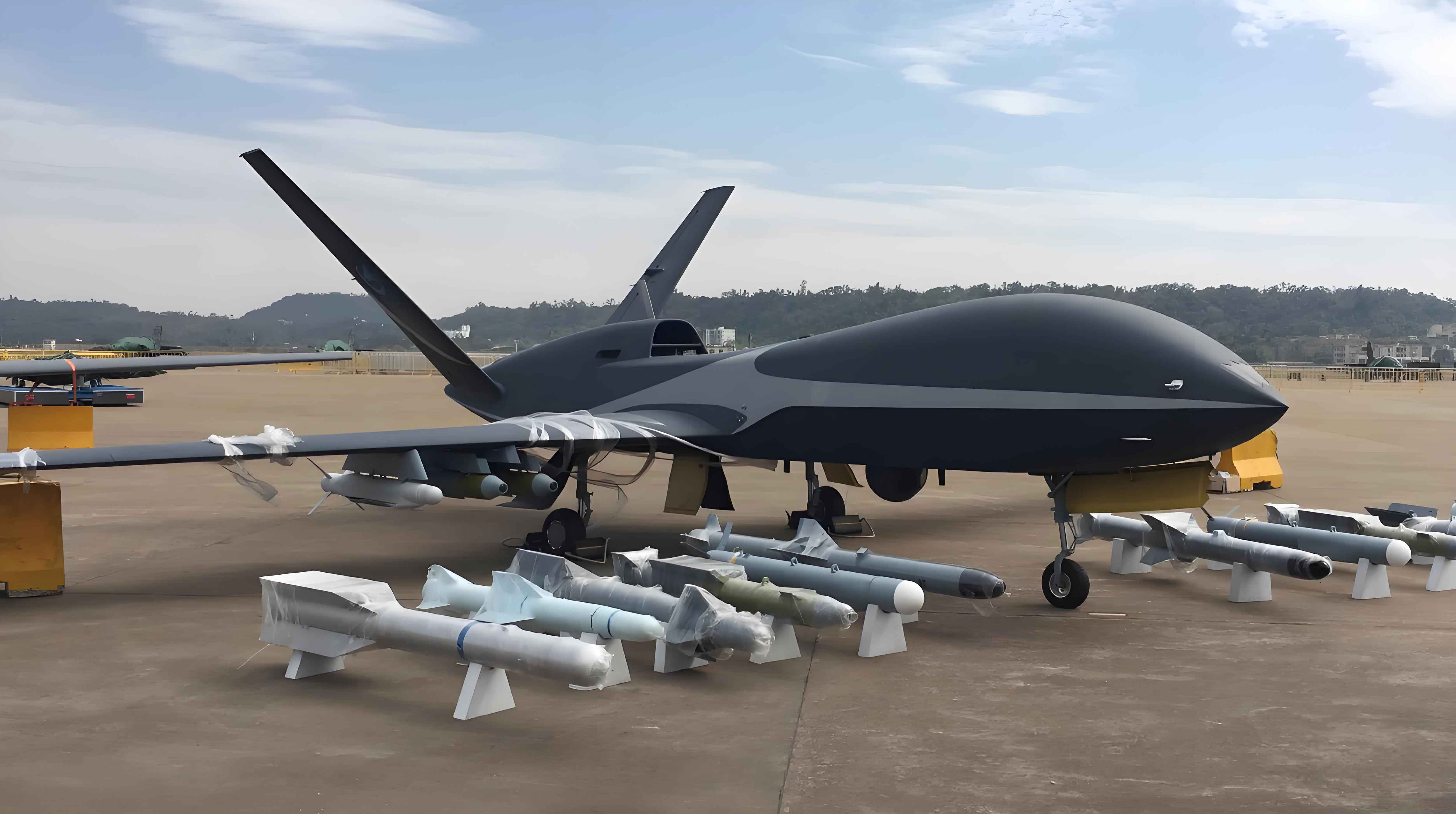
The proliferation and operational deployment of **military drone** systems have become a defining feature of the Middle Eastern security landscape in the post-2011 era. This phenomenon transcends traditional state-centric arms races, encompassing a diverse array of non-state actors who have integrated these systems into their strategic arsenals. The region has effectively become the world’s foremost laboratory for **military drone** warfare, testing concepts from high-altitude strategic strikes to tactical swarm attacks. Understanding this evolution requires examining not just the technical capabilities of the systems but the underlying drivers of their spread, the diverse strategic logics guiding their use, and the profound, often destabilizing, impact on regional security dynamics. This analysis contends that while **military drone** technology offers tactical advantages to a wide spectrum of actors, its proliferation and application have fundamentally altered risk calculations, conflict patterns, and governance challenges, ultimately contributing to a more complex and precarious security environment.
### 1. The Trajectory of **Military Drone** Proliferation in the Middle East
The spread of **military drone** capabilities across the Middle East has not been linear but evolutionary, marked by distinct phases of technological adoption and horizontal diffusion. This progression can be segmented into three key stages, characterized by shifts from monopoly to accessibility, from surveillance to lethality, and from indigenous development to a mixed acquisition model.
**Stage 1: Initial Proliferation (1971–2004)**
This period was defined by state-led development and exclusive possession. Capabilities were limited primarily to Intelligence, Surveillance, and Reconnaissance (ISR).
* **Key Actors:** Israel and Iran.
* **Characteristics:** Early systems were basic, used for battlefield monitoring (e.g., Iran’s use in the Iran-Iraq War). Acquisition was through indigenous programs or limited imports from the United States.
* **Capability:** Almost exclusively non-kinetic, ISR-focused.
**Stage 2: Slow Proliferation (2004–2014)**
This phase witnessed the weaponization of drones and the entry of the first non-state actor. The focus remained on vertical diffusion (improving capabilities) among a small group.
* **Key Events:** Israel’s first kinetic strike with a **military drone** in Gaza (2004); Hezbollah’s first operational drone flight into Israeli airspace (2004).
* **Characteristics:** The shift from “seeing” to “seeing and striking.” Iran and Israel advanced their indigenous systems. Turkey began imports.
* **Capability:** Emergence of armed, multi-role **military drone** platforms.
**Stage 3: Rapid Proliferation (2014–Present)**
Marked by explosive horizontal diffusion (more actors) and significant vertical advances. The market opened, and drones became tools of proxy warfare.
* **Catalyst:** The war against the Islamic State (ISIS) and the intervention of new exporters like China.
* **Characteristics:** Dozens of state and non-state actors acquired systems via import, external sponsorship, or DIY改装. **Military drones** became central to conflicts in Syria, Libya, Yemen, and Nagorno-Karabakh.
* **Capability:** Wide spectrum, from commercial-grade armed UAVs to advanced MALE/HALE systems with satellite links. Introduction of swarm tactics and early autonomous operations.
This evolution is summarized in the table below:
| Stage | Timeframe | Primary Diffusion | Key Capability | Notable Actors |
|---|---|---|---|---|
| Initial | 1971-2004 | Vertical (State-focused) | ISR | Israel, Iran |
| Slow | 2004-2014 | Vertical | Armed ISR | + Turkey, Hezbollah |
| Rapid | 2014-Present | Horizontal & Vertical | Full-Spectrum Warfare | Multiple states & non-state actors |
A salient feature of the current landscape is the pronounced stratification of **military drone** capabilities, which can be modeled as a function of indigenous production capacity, inventory sophistication, and integration into a combined arms framework:
$$ C_{drone} = f(P_{ind}, S_{inv}, I_{ca}) $$
Where:
* $C_{drone}$ = Composite **Military Drone** Capability
* $P_{ind}$ = Indigenous Production & R&D Capacity
* $S_{inv}$ = Sophistication of Inventory (Range, Payload, Avionics)
* $I_{ca}$ = Integration into Combined Arms/Networked Warfare Doctrine
Applying this framework yields a clear hierarchy:
| Capability Tier | Exemplar States | Key Characteristics |
|---|---|---|
| Top Tier | Israel | Global leader in R&D, export, and operational art; integrated network-centric systems. |
| High Tier | Turkey, Iran, UAE | Strong indigenous production (with foreign components); sizable, diverse fleets; demonstrated operational proficiency in expeditionary and proxy wars. |
| Medium Tier | Saudi Arabia, Egypt | Reliant on high-end imports (e.g., Chinese CAIG Wing Loong); limited indigenous production; operational use is often tactically focused (counter-terrorism). |
| Low Tier | Iraq, Qatar, Morocco | Pure importers of limited systems; operational use is minimal or nascent. |
| Non-State Actors | Houthis, Hezbollah, ISIS | Reliant on sponsorship, capture, or DIY改装; use tactical and loitering munitions; high asymmetry and psychological impact. |
### 2. Drivers of the **Military Drone** Proliferation Surge
The accelerated spread of **military drone** capabilities post-2014 is not monocausal but stems from a convergence of demand-side imperatives and supply-side facilitations.
**Demand-Side Drivers: The Quest for Security and Advantage**
1. **Acute Security Threats:** The post-Arab Spring environment created severe security dilemmas. States faced insurgencies (ISIS), civil wars, and heightened interstate rivalry. Non-state actors fought for survival and influence. **Military drones** offered a perceived optimal tool to address these threats with lower risk and cost.
2. **The Strategic Appeal of Drone Technology:** The operational advantages of **military drones** create powerful demand:
* **Cost-Benefit Ratio:** The relative affordability compared to manned aircraft ($\frac{C_{manned}}{C_{drone}} \gg 1$) allows for force multiplication.
* **Risk Transfer:** The removal of the pilot from the cockpit radically alters the political and human cost calculus of using force: $$ R_{op} \approx 0 $$ where $R_{op}$ is the risk to operational personnel.
* **Persistent Presence:** Long endurance enables constant ISR, a critical advantage against irregular adversaries.
* **Asymmetric Equalizer:** For non-state actors and weaker states, drones provide an aerial strike capability bypassing traditional air defense investments.
**Supply-Side Drivers: Lowering the Barriers to Entry**
1. **Technology Democratization:** The Fourth Industrial Revolution (advanced composites, 3D printing, improved computing) has lowered the technical threshold for building capable **military drone** systems. Non-state actors like the Houthis now manufacture their own long-range drones.
2. **The Opening of the Global Market:** China’s entry as a willing exporter of capable MALE drones after 2014 broke the Western monopoly, providing Arab states with an accessible source of advanced systems.
3. **Proxy Warfare & Alliance Networks:** Regional powers (Iran, Turkey, UAE) actively transfer **military drone** technology, training, and systems to allied states and non-state proxies as a force multiplier in regional competitions (e.g., Iran to Houthis; Turkey to Libya’s GNA).
The decision calculus for an actor to acquire **military drones** can be expressed as a function of threat perception and opportunity:
$$ A_{drone} = \alpha(T_{exist}) + \beta(O_{tech}) + \gamma(O_{market}) $$
Where $A_{drone}$ is the propensity to acquire, $T_{exist}$ is the level of existential threat perception, $O_{tech}$ is the availability of technology, and $O_{market}$ is the openness of the export market. Coefficients $\alpha$, $\beta$, and $\gamma$ vary by actor type.
### 3. Strategic Application of **Military Drones**: A Typology of Coercion
Actors in the Middle East employ **military drones** not merely as tactical tools but as instruments of coercion, with distinct strategic logics. These can be categorized into three primary modes of use.
**1. Tactical Support (ISR & Battlefield Awareness)**
This is the most ubiquitous function, underpinning all others. **Military drones** provide real-time intelligence, surveillance, target acquisition, and battle damage assessment. This enhances situational awareness, reduces the “fog of war,” and increases the lethality and efficiency of combined arms operations. The value can be modeled as an increase in information superiority ($IS$):
$$ \Delta IS = \int_{t_0}^{t_1} (R_{drone}(t) – R_{default}(t)) \, dt $$
where $R$ is the rate of relevant intelligence gathering over the mission period.
**2. Denial Strategy (Anti-Access & Force Degradation)**
This strategy uses **military drones** to directly degrade an adversary’s military capabilities, denying them the means to fight effectively. The coercive logic is to convince the adversary that continued conflict is futile or too costly.
* **Methods:** Targeted killings of military leaders; destruction of weapon depots, supply lines, and air defense systems; direct engagement of enemy formations.
* **Exemplars:** Turkey’s use of Bayraktar TB2 drones to destroy Syrian/Russian armor and air defenses in Idlib (2020); Israeli strikes on Iranian weapon shipments in the region.
* **Effectiveness Function:** This strategy’s success depends on the rate of attrition inflicted relative to the adversary’s cost tolerance: $$ S_{denial} = \frac{k \cdot A_{inflicted}}{C_{tolerance}} $$ where $S_{denial}$ is the success probability, $A_{inflicted}$ is the attrition inflicted, $C_{tolerance}$ is the adversary’s cost tolerance, and $k$ is a constant for operational effectiveness.
**3. Punishment Strategy (Political & Economic Coercion)**
This strategy targets civilian infrastructure, economic assets, or political symbols to inflict pain, sow fear, and erode political will. The coercive logic is to pressure the adversary’s leadership to concede by raising domestic political costs.
* **Methods:** Strikes on oil facilities, airports, electrical grids, and urban centers.
* **Exemplars:** Houthi drone and missile attacks on Saudi Aramco facilities (2019); attacks on UAE’s capital, Abu Dhabi (2022).
* **Effectiveness Function:** Success is less about material destruction and more about psychological and political impact, often following a diminishing returns pattern as the adversary adapts: $$ I_{punishment} = P_{max} \cdot (1 – e^{-\lambda \cdot N}) $$ where $I_{punishment}$ is the inflicted political impact, $P_{max}$ is the maximum potential impact, $\lambda$ is a resilience constant, and $N$ is the number of attacks.
The following table contrasts these strategic modes:
| Strategic Mode | Primary Target | Coercive Logic | Typical Perpetrator | Tactical Innovation |
|---|---|---|---|---|
| Tactical Support | Battlefield Information | Enhance own force efficacy | All state actors | Network-centric warfare integration |
| Denial | Military Capabilities | Degrade enemy’s ability to fight | States (Turkey, Israel, UAE) | “Drone-on-drone” warfare; SEAD/DEAD missions |
| Punishment | Civilian/Economic Infrastructure | Break enemy political will | Non-state actors (Houthis), some states | Long-range, low-cost swarm attacks |
### 4. The Security Impact: Altered Dynamics and New Dilemmas
The proliferation and use of **military drones** have reconfigured Middle Eastern security in profound ways, creating a paradox where tactical empowerment often leads to strategic instability.
**1. Reallocation of Risk and Reshaped Offense-Defense Balance**
Drones fundamentally alter the traditional risk calculus of warfare. By separating the operator from the platform, they transfer physical risk almost entirely to the adversary: $$ R_{self} \rightarrow 0, \quad R_{adversary} \rightarrow \text{max} $$ This lowers the perceived political and human cost of using force, potentially making conflicts more likely—a phenomenon known as the “low-cost coercion” dilemma. Furthermore, the low radar signature and low cost of many drones have, for now, tilted the offense-defense balance in favor of the attacker, making critical infrastructure vulnerable to asymmetric aerial attacks.
**2. Escalation Dynamics and the Deterrence Paradox**
The widespread use of **military drones** has complex effects on conflict escalation and deterrence.
* **Lowering the Threshold for Use:** The perceived low risk and cost can lead to “mission creep” and more frequent military interventions, as seen in Turkey’s cross-border operations.
* **The Challenge of Attribution and Response:** Deniable drone attacks (e.g., on oil tankers) create “gray zone” conflicts, complicating deterrence and retaliation. The credibility of retaliation may be weakened if the attacker can plausibly deny responsibility.
* **Spirals of Escalation & Arms Racing:** Victims of drone attacks seek to restore deterrence by acquiring their own **military drones** or advanced air defense systems (e.g., Saudi Arabia after 2019). This fuels regional arms races and can lead to higher-intensity conflict, as seen in the tit-for-tat strikes between Iran and Israel.
**3. Exacerbated Governance Challenges**
The **military drone** phenomenon strains existing international security norms and mechanisms.
* **Erosion of Sovereignty Norms:** Routine cross-border drone strikes by states and non-state actors violate territorial integrity, normalizing extraterritorial military action.
* **Accountability and IHL Compliance:** The physical and legal distance of the operator, combined with frequent use in contested spaces, complicates compliance with International Humanitarian Law (IHL) principles of distinction and proportionality. Civilian casualty reporting and accountability are often lacking.
* **Regulatory Void:** Existing export control regimes like the Missile Technology Control Regime (MTCR) are ill-suited to govern the spread of many categories of **military drones**, leaving a critical governance gap.
The net security impact ($SI_{net}$) on the region can be conceptualized as a balance between the tactical benefits accrued by individual actors and the systemic instability generated:
$$ SI_{net} = \sum_{i=1}^{n} B_{tactical(i)} – \sum_{i=1}^{n} \sum_{j\neq i}^{n} I_{systemic(i,j)} $$
where $B_{tactical}$ is the tactical benefit to actor $i$, and $I_{systemic}$ is the instability generated by actor $i$’s actions for actor $j$. The evidence suggests the second term is growing larger than the first.
### 5. Conclusion and Pathways Forward
The Middle East is at the forefront of the **military drone** revolution. What began as a niche capability for a few states has rapidly evolved into a ubiquitous tool of warfare, reshaping tactics, strategies, and the very fabric of regional security. The drivers are clear: a perilous security environment, the compelling cost-risk-benefit profile of drone technology, and a permissive supply ecosystem. Actors employ these systems across a spectrum of coercive strategies, with varying degrees of success. However, the aggregate security effects are deeply concerning: a reallocation of risk that encourages conflict, complex escalation dynamics that undermine deterrence, and significant challenges to sovereignty and legal accountability.
Addressing the security threats posed by the proliferation of **military drone** technology requires moving beyond a purely competitive, arms-race mindset. A sustainable approach must be grounded in two pillars:
1. **Respect for Legitimate Security Interests:** A stable security architecture must acknowledge the legitimate defense needs of all states. A framework where one state’s security is not pursued at the direct, uncompensated expense of another’s is a prerequisite for any meaningful dialogue on restraint. The concept of indivisible security is crucial.
2. **Developing Norms and Rules for Responsible Use:** The international community, with regional players taking the lead, must work to establish clear norms and, where possible, rules governing the use of **military drones**. This should include:
* **Strengthening Export Controls:** Adapting regimes like the MTCR to better cover the full range of armed UAV technology.
* **Promoting Transparency and Accountability:** Encouraging reporting on drone use and investigations into alleged IHL violations.
* **Clarifying Legal Frameworks:** Reinforcing that the use of **military drones**, whether in armed conflict or counter-terrorism operations, must comply with international law, including sovereignty, distinction, proportionality, and necessity.
Without such efforts, the Middle East’s “game of drones” will continue to be a primary driver of instability, proving that a tool of tactical empowerment can simultaneously be an engine of strategic insecurity.