
As an integral part of modern warfare, military drones have revolutionized combat operations with their versatility and reduced risk to human life. I have observed that the increasing deployment of military drones in various missions, from reconnaissance to strike roles, imposes significant demands on maintenance and logistics. The traditional three-level maintenance system, comprising organizational, intermediate, and depot levels, often proves cumbersome and resource-intensive. In contrast, the two-level maintenance system, which eliminates the intermediate level, offers a streamlined approach that enhances operational readiness and reduces lifecycle costs. This article delves into the two-level maintenance support system for military drones, exploring its evolution, advantages, key technologies, and applicability, while providing detailed analyses through formulas and tables to underscore its efficacy.
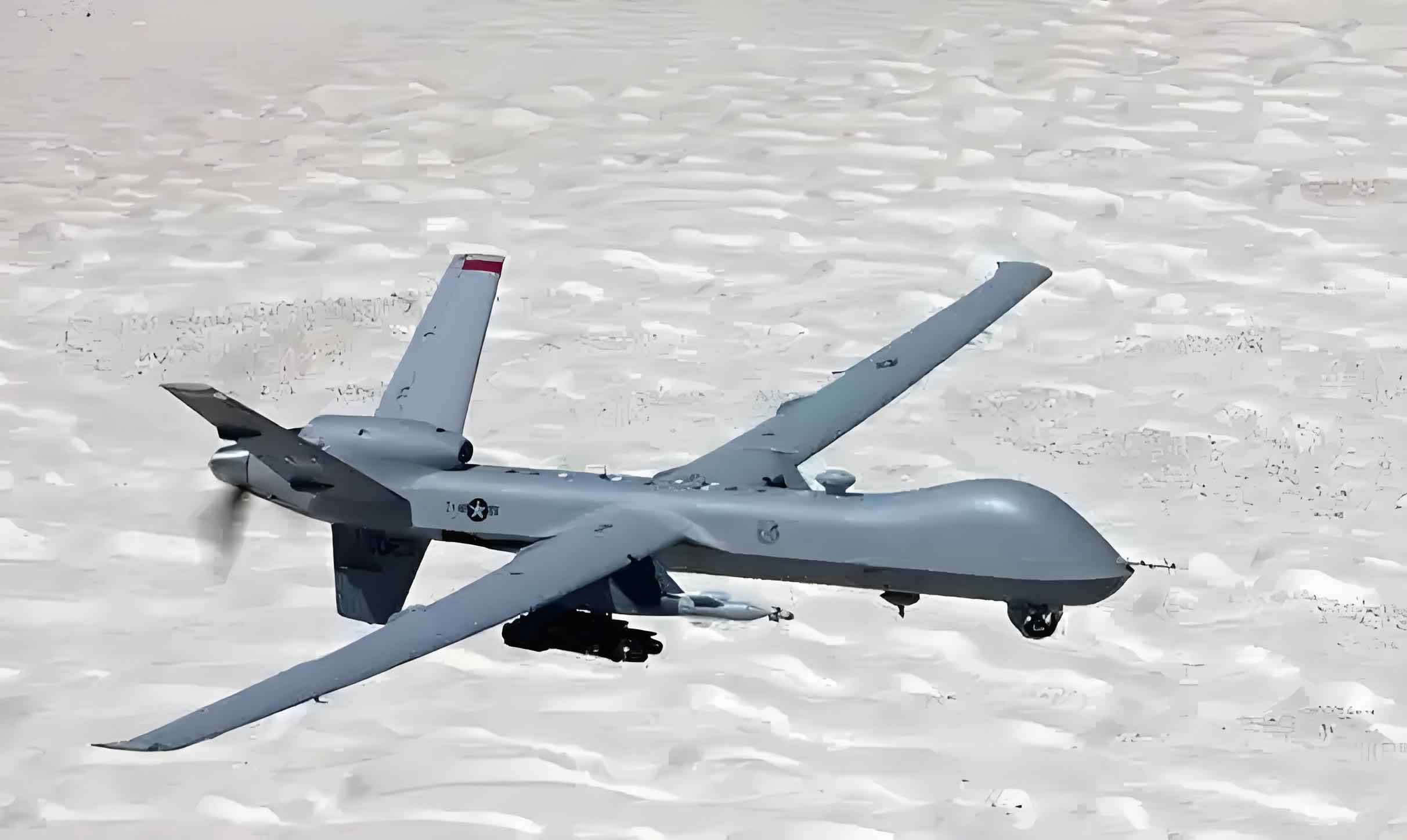
The prominence of military drones in recent conflicts underscores their critical role in achieving tactical and strategic objectives. However, with expanded missions comes the challenge of maintaining high availability and rapid response capabilities. I believe that adopting an efficient maintenance system is paramount to ensuring that military drones remain operational in diverse environments. The two-level maintenance system, pioneered by military forces such as the U.S. Air Force, has demonstrated its potential through实战检验 in engagements like the Kosovo War. By simplifying repair processes and leveraging advanced technologies, this system addresses the unique needs of military drones, which often feature complex architectures and stringent reliability requirements. In this discourse, I will examine how the two-level maintenance framework can be tailored to military drone operations, highlighting its流程 and the technological enablers that make it viable.
The two-level maintenance system fundamentally redefines how military drones are serviced. Instead of routing故障件 through an intermediate repair facility, it directs them from the organizational level directly to the depot level. This approach minimizes downtime and reduces the logistical footprint, which is crucial for agile deployments of military drones. I have analyzed that the system’s development stems from a need to enhance mobility and cut costs, particularly as drone technologies evolve. For instance, modern military drones incorporate built-in test (BIT) capabilities and modular designs, allowing for swift fault isolation and component replacement at the frontline. This aligns perfectly with the two-level paradigm, where organizational-level technicians focus on replacing line replaceable modules (LRMs), while depot-level experts conduct deeper repairs. The transition to this system reflects a broader trend in military logistics toward precision and efficiency, driven by the increasing reliance on unmanned systems like military drones.
To understand the advantages of two-level maintenance for military drones, consider the following table comparing it with the traditional three-level system:
| Aspect | Three-Level Maintenance | Two-Level Maintenance |
|---|---|---|
| Deployment Speed | Slower due to multiple handoffs | Faster with direct depot routing |
| Logistical Burden | Higher, requiring intermediate facilities | Lower, reducing transport and storage needs |
| Cost Over Lifecycle | Elevated from additional infrastructure | Reduced through simplification |
| Skill Requirements | Varied across levels, increasing training overhead | Streamlined, with focus on organizational and depot skills |
| Applicability to Military Drones | Less suited due to complexity and保密性 | Highly suited, leveraging drone-specific technologies |
The evolution of two-level maintenance dates back to the 1960s, but it gained momentum in the 1990s as military organizations sought to reform logistics after experiences in conflicts like the Gulf War. I recall that the U.S. Air Force’s implementation on aircraft such as the F-22 and F-35 set a precedent for extending it to military drones. The system’s benefits are manifold: it enhances the deployability of military drones by cutting down on support equipment, improves战备完好性 through quicker turnaround times, and fosters innovation in维修技术. For military drones, which often operate in remote or contested environments, these advantages translate to sustained mission capability. Moreover, the use of commercial off-the-shelf (COTS) components in military drones aligns with the two-level approach, as it simplifies supply chains and reduces reliance on proprietary parts.
Key technologies underpin the success of two-level maintenance for military drones. These enablers facilitate the seamless transition between organizational and depot levels, ensuring that故障件 are handled efficiently. Below, I outline the core technologies in a detailed table:
| Technology | Description | Impact on Military Drone Maintenance |
|---|---|---|
| Line Replaceable Module (LRM) | Modular units that can be swapped at the organizational level, replacing traditional LRUs. | Enables rapid fault isolation and replacement, reducing downtime for military drones. |
| Logistics and Transportation | Advanced systems for moving故障件 and spare parts, often leveraging commercial networks. | Ensures timely delivery of components, critical for maintaining operational tempo of military drones. |
| Test and Diagnostic Tools | Includes BIT, automatic test equipment (ATE), and portable maintenance aids (PMA). | Enhances accuracy in fault detection, allowing technicians to quickly identify issues in military drones. |
| Commercial Off-the-Shelf (COTS) | Integration of commercially available products into military drone systems. | Lowers costs and improves availability of spare parts, supporting two-level maintenance. |
| Maintenance Management | Systems for coordinating repairs, inventory, and priorities across levels. | Streamlines workflows, ensuring that military drones receive prompt and effective support. |
Among these, LRM technology is particularly vital for military drones. By designing drones with modular components, repairs become a matter of swapping out faulty modules rather than conducting intricate repairs on-site. This is expressed mathematically through the维修时间 formula: $$ T_{repair} = T_{detect} + T_{isolate} + T_{replace} + T_{test} $$ where \( T_{detect} \) is the time to detect a fault, \( T_{isolate} \) is the isolation time, \( T_{replace} \) is the replacement time, and \( T_{test} \) is post-repair testing time. For military drones using LRMs, \( T_{isolate} \) and \( T_{replace} \) are minimized due to BIT and modular designs, leading to: $$ T_{repair}^{LRM} \approx T_{detect} + T_{replace}^{min} + T_{test} $$ This reduction directly boosts the availability of military drones, a critical metric defined as: $$ A = \frac{MTBF}{MTBF + MTTR} $$ where \( MTBF \) is mean time between failures and \( MTTR \) is mean time to repair. With two-level maintenance, \( MTTR \) decreases, thus increasing \( A \) for military drones.
Logistics technology also plays a crucial role. The transportation of故障件 from organizational to depot levels must be rapid to avoid bottlenecks. I have studied that the use of just-in-time delivery systems, coupled with advanced tracking, ensures that military drones do not suffer from prolonged groundings. The运输时间 can be modeled as: $$ T_{transport} = \frac{D}{v} + T_{handle} $$ where \( D \) is distance, \( v \) is transport speed, and \( T_{handle} \) is handling time. By optimizing \( v \) and \( T_{handle} \) through commercial partnerships, two-level maintenance enhances the responsiveness for military drones. Furthermore, inventory management for spare parts is streamlined, with depot-level stocks serving as centralized hubs. The inventory level \( I \) can be expressed as: $$ I = I_{base} – \lambda t + \mu t $$ where \( I_{base} \) is initial stock, \( \lambda \) is demand rate for military drone parts, and \( \mu \) is repair rate. Two-level maintenance aims to balance \( \lambda \) and \( \mu \) to prevent shortages.
Test and diagnostic technologies are equally important for military drones. BIT systems embedded in drones allow for continuous monitoring and fault reporting, reducing the need for extensive manual checks. The effectiveness of BIT can be quantified using fault detection率: $$ FDR = \frac{N_{detected}}{N_{total}} \times 100\% $$ where \( N_{detected} \) is the number of faults detected and \( N_{total} \) is total faults. High FDR in military drones means that most issues are caught early, facilitating quick organizational-level actions. Additionally, ATE at depot levels enables detailed analysis of LRMs, isolating faults to the component level. This process can be described with the故障隔离公式: $$ P_{isolation} = 1 – e^{-\alpha t} $$ where \( P_{isolation} \) is the probability of isolating a fault within time \( t \), and \( \alpha \) is a constant dependent on ATE capabilities. For military drones, advanced ATE boosts \( \alpha \), speeding up depot repairs.
The applicability of two-level maintenance to military drones hinges on their unique characteristics. Military drones are diverse in form and function, ranging from small surveillance units to large combat platforms, but they share common traits: high complexity, stringent reliability needs, and保密性 concerns. I have found that these traits make them well-suited for two-level maintenance. For instance, the modular nature of many military drones allows for LRM-based repairs, while their use of COTS components simplifies supply chains. Moreover, the保密性 requirements often dictate that repairs be conducted at secure depot facilities, aligning with the two-level model where deeper repairs are centralized. The feasibility can be assessed through a cost-benefit analysis. The total lifecycle cost \( C_{LCC} \) of a military drone under two-level maintenance is: $$ C_{LCC} = C_{acquisition} + C_{operation} + C_{maintenance} $$ where \( C_{maintenance} \) includes organizational and depot costs. Studies show that \( C_{maintenance} \) is lower in two-level systems due to reduced intermediate expenses, making it economically viable for military drones.
To illustrate the process, consider a typical two-level maintenance scenario for military drones. At the organizational level, technicians use BIT and PMAs to diagnose issues, isolating them to LRMs. The faulty LRM is replaced with a spare, and the drone is quickly returned to service. The故障件 is then shipped to the depot level, where experts use ATE to repair it at the component level. The repaired LRM re-enters the spare pool, ready for future use. This cycle enhances the availability of military drones by minimizing ground time. The workflow can be summarized in the following table, detailing activities at each level:
| Maintenance Level | Primary Activities for Military Drones | Key Technologies Employed |
|---|---|---|
| Organizational Level | Fault detection, LRM replacement, basic tests, and operational support. | BIT, PMA, LRM systems, and简易工具. |
| Depot Level | In-depth repair of LRMs, component-level fixes, overhaul, and spare part management. | ATE, specialized tools, COTS integration, and logistics software. |
In this process, the flow of故障件 and spare parts is critical. I have modeled this as a queueing system where military drones arrive for repair at rate \( \lambda_{org} \) at the organizational level, and故障件 are sent to the depot at rate \( \lambda_{depot} \). The service rates \( \mu_{org} \) and \( \mu_{depot} \) depend on technician efficiency and tool availability. The overall system efficiency \( E \) can be expressed as: $$ E = \frac{\mu_{org} \cdot \mu_{depot}}{\lambda_{org} \cdot \lambda_{depot}} \cdot (1 – \rho) $$ where \( \rho \) is the utilization factor. For military drones, optimizing \( E \) ensures that maintenance does not become a bottleneck during密集 operations.
Looking ahead, the two-level maintenance system is poised to become the standard for military drones. Its alignment with trends like modularization and digital logistics makes it a forward-looking choice. However, I acknowledge that not all军事无人机 components may be immediately suitable; for instance, highly specialized systems might still require intermediate support. In such cases, a hybrid approach combining two and three-level elements could be adopted. Nonetheless, the core principles of two-level maintenance—simplicity, speed, and cost-effectiveness—are highly beneficial for sustaining military drone fleets. As drone technologies advance, with improvements in autonomy and durability, the maintenance demands will evolve, but the two-level framework offers the flexibility to adapt.
In conclusion, the two-level maintenance support system represents a transformative approach for military drones, offering significant advantages in deployment agility, cost savings, and operational readiness. Through the integration of key technologies like LRMs, advanced logistics, and diagnostic tools, it addresses the unique challenges posed by military drones. I am confident that as更多 military drones enter service, adopting this system will enhance their effectiveness on the battlefield. The formulas and tables presented here underscore the analytical basis for this claim, highlighting how two-level maintenance can optimize维修 processes. Ultimately, for military drones to fulfill their potential, a robust and efficient maintenance system is essential, and the two-level model provides a compelling solution.
The ongoing development of military drones will likely see further refinements in two-level maintenance. For example, the incorporation of artificial intelligence for predictive maintenance could reduce故障 rates, while blockchain technology might enhance supply chain transparency for spare parts. These innovations will build on the foundation laid by two-level systems, ensuring that military drones remain reliable assets. I encourage continued research into this area, as the synergy between drone design and maintenance strategies is key to future军事 success. By embracing two-level maintenance, operators of military drones can achieve higher availability and lower costs, contributing to overall mission effectiveness in an increasingly complex operational environment.